Tag: AWD

  • GKN Brings the Next-Gen Drive System

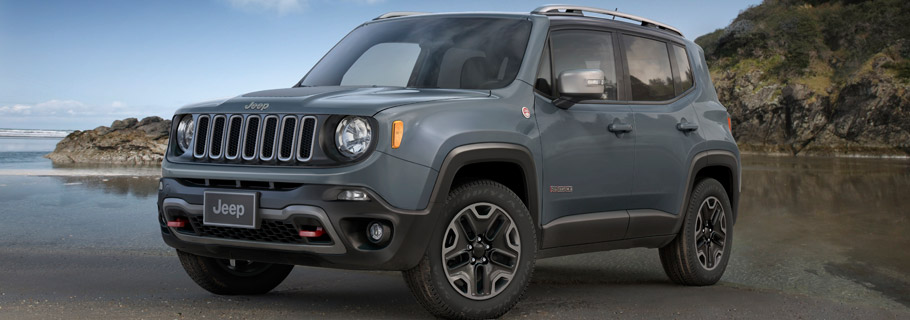
    Jeep RenegadeYou may know, that the GKN Driveline is the first high-end brand to deliver the all-wheel drive (AWD) for the vehicle world. And with the natural evolution of GKN come the latest products. For example, the brand revealed the latest, most intelligent and high-tech drive system. The project is launched by FCA US LLC (FCA) and is especially designed for FIAT 500X and Jeep Renegade.

    The GKN platform brings complete set of technology and design, that includes transmission-to-wheel tweaks and different fine-tuning modes. Every single part and detail is carefully crafted and manufactured by GKN and is offered to the global market by worldwide production facilities.

    This time GKN focused on tight pack targets, that include optimized fuel and power efficiency, rather than usual for the brand heavy and massive machines. With the latest design, GKN changed the standard power transfer unit (PTU) and went for a monoblock housing, that perfectly boosts the overall performance of the drive system.

    The overall design of the hardware is precisely constructed to bring overall wonderful performance on the road and on off-road terrains. And this same hardware is especially created to meet the requirements of different brands and different types of driving. Definitely a gadget you want to check out.


    Source: GKN

  • Kia to Reveal Mysterious Electric AWD in Chicago

    2015 Kia Concept ChicagoIn exactly two weeks from now Kia is going to premiere a mysterious vehicle at the upcoming Chicago Auto Show. The company is keeping tight-lipped about it and didn’t reveal even the name. What we have just received is the first teaser image of the vehicle and scarce information. The first big thing about it is that it will be advanced and capable electric vehicle, and the second is that it will feature all-wheel drive. This means that it will be an e-AWD concept.

    The bold off-roader was created by Kia’s California design studio. Now the car is in real form and aims at the city dwellers seeking the ultimate urban escape. The concept is intended to enable a wide array of outdoor activities such as skiing or snowboarding, camping or hiking, and even mountain biking.

    It definitely promises adventures at higher elevations and more importantly – it focuses on the environmental side of the automotive industry. This concept will prove that practical urban wheels can also be rugged and capable.

    Rumors say that the off-roader will be based in the Soul EV model. And we are wondering whether it will use its powetrain. The aforementioned vehicle is driven by a 27 kWh lithium ion polymer battery and an electric motor. The motor produces 110 hp (81 kW) and 285 Nm (210 lb.-ft.) of maximum torque. The range that it can cover is around 80-100 miles.

    Kia’s newest concept will be fully unveiled at the show in Chicago on 12th of February.

    Source: Kia 

  • 2015 Subaru WRX Debut at Los Angeles Auto Show

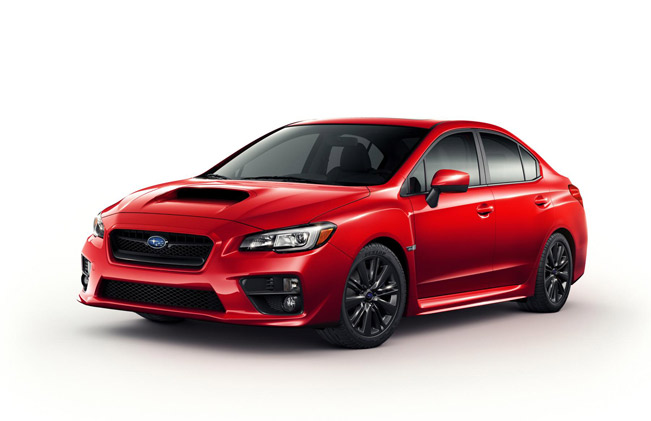
    2015-Subaru-WRX-shadow2015-Subaru-WRX-medium

    Exciting news from the LA Auto Show. The 2015 Subaru WRX is now a fact of life. It’s more powerful and better handling than its iconic predecessors. It is also the first WRX to feature a six-speed manual or, as an option, the newly developed Sport Lineartronic CVT that has two manual modes.

    Subaru say that this latest WRX is an important evolutionary step for their rally-bred performance line. Technologically speaking, we see a new torque-vectoring system that adds to the already sophisticated Symmetrical All-Wheel Drive setup. The chassis is supposedly stiffer, the brakes are larger while the new powertrain returns more fuel-economy. In case you are wondring what that powertrain actually is, we are talking about a 2.0-liter, 4-cylinder BOXER engine complemented by a twin-scroll turbocharger and an intercooler. Because of that, plus an unusally high compression rate (10.6:1), direct-injection, and Subaru’s Dual Active Valve Control System (D-AVCS), it develops 268 hp at 5,600 rpm and 258 lb.-ft of torque between 2,000 and 5,200 rpm. Not exactly the most powerful 2.0 engine in the world, but still blisteringly impressive.

    There are also visual highlights worthy of mentioning. The hood, front fenders, rear doors and quarters, bumpers, and tailight clusters are all new. The now narrower headlights are supposed to remind us of a raptor’s stare. Maybe someone with more imagination can see that. We, on the other hand, will slowly back away and maybe remark on the standard 17-inch wheels which are “more aerodynamic” than before and are wrapped in 235/45 R17 94W Dunlop SP Sport Maxx RT tires.

    What is the Sport Linetronic CVT then? Obviously, it is a continuously variable transmission. But one that can also switch between manners of changing gears – one mode allows stepped automatic shifting of eight pre-selected ratios. The other two are 6-speed and 8-speed “manual shifting modes” where the steering wheel paddle switches can be used.

    If you go for the 6-speed manual, the Subaru WRX will be equipped with the brand’s Continuous AWD system. In normal circumstances a distribution box sends equal amounts of torque to both the front and back wheels. When grip becomes a luxury, however, most torque is sent to the wheel with most traction.

    Should you go for the Sport Linetronic, you will also get the Variable Torque Distribution (VTD) type of Symmetrical All-Wheel Drive – again a type of center differential but with an electronically controlled hydraulic transfer clutch control torque distribution (sheesh!) between the front and rear wheels. Most of the time you will be enjoying 55 percent of the toque going towards the back while the rest ends up at the front. But that can be subject to change depending on the driving conditions, steering wheel input, yaw and the lateral g-forces you are generating. Also, because of the Sport Lineartronic CVT, you get to play with Subaru’s Intelligent Drive (SI-DRIVE) which offers three modes of powertrain settings – “Intelligent”, “Sport”, and “Sport Sharp”. Who’s going to use the second one?! “Oh, I don’t really want to drive economically but let’s be reasonable now.”

    Because the wheel base is now one inch longer and the A-pillers are eight inches pulled forward at the bottom, there is a general feel of roominess. At the back, passengers will enjoy two inches more legroom and there’s more space in the boot. There’s leather on the flat-bottomed steering wheel and “soft-touch” materials on the dashboard, door trim and center console armrest. No expenses were spared on the IT department as well. A 4.3-inch LCD screen displays a plethora of information – you can put the rear-view camera display on it, or you can set the audio, Bluetooth and climate control settings from it. An additional 3.5-inch LCD sits between the two gauges in front of you. There you can keep track on the oil level, selected gear, and, of all things, window washer fluid. This will be also the first WRX that can come with a premium 440-watt, 9-speaker harman/kardon premium audio system and navigation with Aha® smartphone integration. Cool beans!

    Source: Subaru
  • Kia Cee’d at Geneva and More

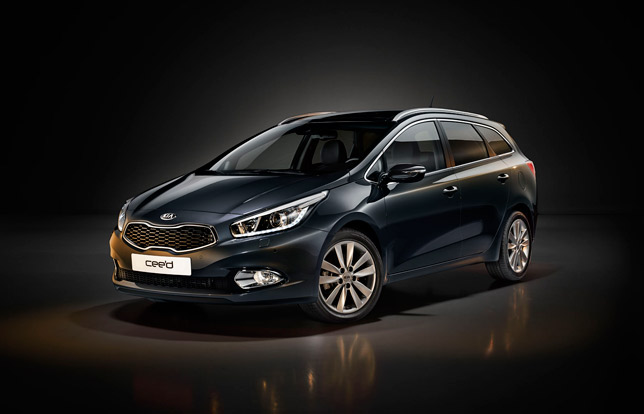
    2012-Kia-Ceed-thumbThe new Kia Cee’d premiers to the world at the 82nd Geneva Motor Show. Although South Korean, the Cee’d is quintessentially European – It’s designed, engineered and made in Europe. What we have here, is most definitely a poke in the eye for the big players on the hatchback market.
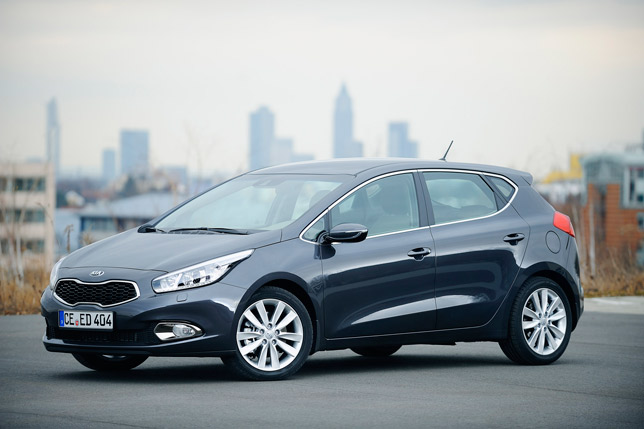
    Building on the success of the old model, this one is longer (4.3 meters in total) and more slippery. Inside, higher quality materials are now being used and the options list is longer than ever.

    There will be four engines available through most of Europe – two petrol and two diesel ones among which the most powerful will be a 1.6 GDI (it’s a petrol). The abbreviation stands for “Gasoline Direct Injection” – Kia‘s latest. Power comes in the form of 135 PS and 165 Nm of torque. If you go with Dual Clutch Transmission option you’ll get some additional frugality from the engine.

    If economy is what you are after however, a 128 PS diesel version with Kia’s EcoDynamics fuel saving technologies achieves fuel consumption of as low as 3.7 l/100km and CO2 emissions of just 97 g/km.

    Kia Cee'd (2012)
    Kia Cee'd (2012)

    The Cee’d is not alone at the Geneva stand. There’s an SW (estate) version of it which will go on sale later this year.

    Then there’s the Kia Ray EV‘s European premiere – a zero-emission city car with a range of up to 139 km (86 miles) on a single charge. Though developed exclusively for the Korean market, the Ray EV showcases Kia’s technical expertise in developing a battery electric vehicle and highlights its commitment to provide a comprehensive technical solution to reduce dependence on fossil fuels.

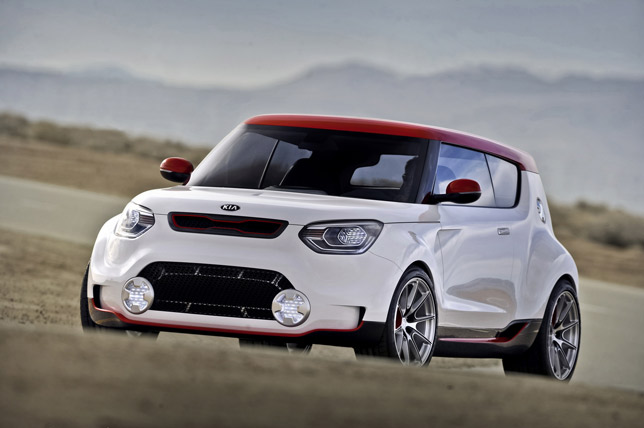
    Lastly, the Kia Track’ster Concept with electronic AWD adds some sportiness to the stand. The 1.6 GDI turbocharged engine in that one delivers 38 PS (215 PS) less than the 2.0 Track’ster we saw at the Chicago Auto Show earlier this year. It still is however, a brilliant spin-off of the Kia Soul.

    Kia Ceed SW (2012)
    Kia Cee'd SW (2012)
    Kia Track'ster Concept
    Kia Track'ster Concept

    Source: Kia

  • Drag Racing – Times and Power [part 2]

    Let’s continue with the reaction time. With several words, it is the time between the green light signal and when the car passes the starting line. Normal reaction time is between 0.5 to 1 second and if it is under that, the driver is either lucky or trying to “cheat”.
    All this characteristics are connected and can explain everything that happens on the race track, even how the driver controls the car.

    The time and the terminal speed are the most important characteristics and normally the proportions are these: 15 to 14 seconds on ¼ mile – 150 to 160 km/h, 14 to 13 seconds – 160 km/h to 175 km/h, 13 to 12 seconds 175 km/h to 190 km/h, 12 to 11 seconds from 190 km/h to 210 km/h and all cars in the 10 second mark and below that have terminal speeds of more than 210 km/h.

    So, what happens, when the car have high terminal speed and bad ¼ mile. Usually, there are two reasons – bad start and low traction after that. The cars, which are not 4×4 and have a lot power like turbocharged BMWs, Porsches or Mercedeses. The conclusion is more wheel spin leads to bad ¼ mile time and high terminal speed.

    So, it turns that drag racing is not only a chase between two cars on a straight line and changing gears or waiting for the automatic transmission to do that. There are a lot for very important factors, which can work in your benefit, if you know them and try to improve not only your car, but yourself, too.

    More power, less weight and good, prepared driver – the formula of the success at ¼ mile races.

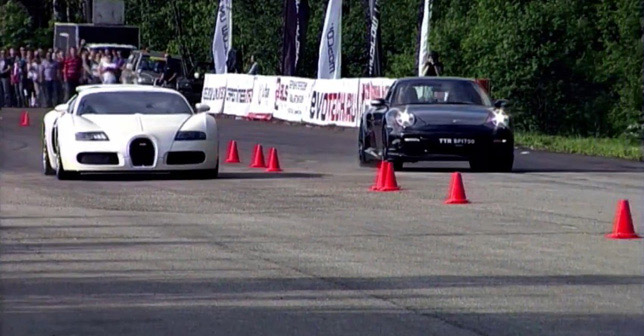
    Bugatti vs Porsche Drag
    Bugatti vs Porsche Drag


    [Part 1]

  • Drag Racing – Times and Power [part 1]

    Drag racing is one of the most interesting events in the automobile world, especially for the spectators. Essentially, it is a race between two vehicles on a special dragstrip, which is a long straight facility for conducting acceleration events. When we say vehicles, we mean everything that can run… fast! – motorcycles, cars, sports cars, “funny” cars and top fuellers.  This time we will talk about ¼ mile races – 402.33 meters.
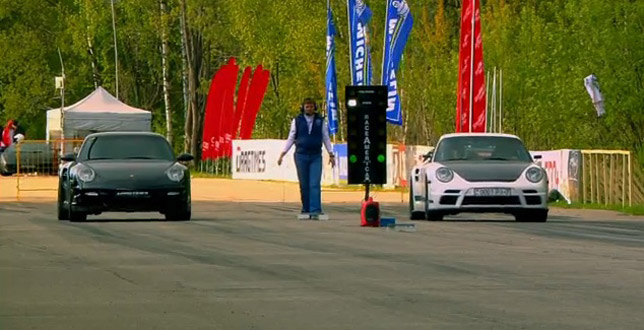
    There are two main types of events – start-and-fast beat, which is very “easy” to do. Just step on the gas pedal, when the lights are green and change gears (if you drive manual). The second type is bracket racing, which is very popular, too. The contestants choose their fastest time that they think is possible and who finishes first is a winner, but if you beat your announced time of 14.20 with for example 14.05, you will lose. These rules give opportunity to slow cars to catch up with very fast ones.

    Now to say something about times just to have some idea for what’s really going on at the dragstrip. Usually, the normal cars around and under 200HP are in the range of 18 to 15 seconds. Those, which have sports nature, are from 14.9 to 13 seconds and the best of them are under 13 to 12 seconds. The cars with times under 15 seconds has at least 200HP and they are not very heavy like 1500kg (3306 lbs) or more. The cars around 13 seconds have 300 to 400HP and those under 13 seconds are extremely powerful – 500HP and more. Of course, there are a lot of exceptions, but normally this is the situation.

    Other very important thing is the terminal speed, which again can show you how powerful the car is and how it uses that power and puts in on the tarmac. Again, usually the normal cars have terminal speeds of 120-140 km/h. The sports ones – 140 to 160 km/h and the best 160 to 190 km/h. If you see a car with over 200 km/h, it is either very tuned or very powerful with poor driver.

    The start is extremely difficult, because the driver needs to know his car very well. Of course, a start with powerful car is more tricky and, but if you have launch control – congrats.

    The first 60 feet (20 m) usually take from 1.6 to 2.4 seconds or more, if the driver can’t drive his car very well. Once again, the normal cars (if driven perfectly) are between 2.8-2.4 seconds, the sports ones from 2.4 to 1.8 seconds and if the time is around 1.4-1.5 seconds, this is either very powerful 4×4 vehicles or a RWD with slick tires.

    To be continued…

    [Part 2]

  • Lancia at Geneva

    Lancia-Flavia-Cabrio-thumbLancia will be bringing a touch of luxury and elegance to the 82nd Geneva Motor Show with six vehicles at their booth. It is a sort of a reincarnation for the company as it has had a glorious history, then a bit of a decline and now it’s back. Highlights deserve the B segment Ypsilon, the flagship Thema, the Voyager MPV and the not yet released Flavia Cabrio.

    Lancia Flavia Cabrio

    Yes, the Geneva Show will be a debut for the production version of the Flavia Cabrio – For now the setup destined for this convertible is a 175 HP 2.4 l unit mated to a 6-speed automatic transmission. It will be generously equipped with an electronic stability control system, traction control, ABS (naturally), climate control and much much more in the sole trim package offered, baring the name “all inclusive”. At the show, the Flavia Cabrio segment will be represented by two models: one distinguished by a sophisticated Bright White body with interiors in two-tone black/white fine leather and the other characterized by an exterior Mineral Grey paint with black leather interiors.

    Lancia Flavia Cabrio (2012)
    Lancia Flavia Cabrio (2012)

    Lancia Thema AWD

    The Thema AWD is basically a Chrysler 300C underneath but is that a bat thing? It has a clever four-wheel drive system and is driven by an aluminum, 286 HP Pentastar V6 3.6 engine. Throw in an 8-speed automatic transmission developed by ZF and you have yourself a perfectly good executive saloon. What image does the Thema radiate? That is pretty much up to the buyer – the car can be customized with several exclusive products, among which are the 18” and 20” rims and three grilles having different colors and treatments.

    Lancia Thema AWD (2012)
    Lancia Thema AWD (2012)

    Lancia Ypsilon

    A refreshed 2012 Ypsilon will also be present there – we are talking about new equipment and styling enhancements. The now 5th Ypsilon meets the “Blue&Me–TomTom LIVE” and “Smart fuel” system”. Furthermore it has Magic Parking, a 500 W 360° Hi-Fi Music system, Xenon headlights and LED taillights.

    As a car and not a Playstation, the Ypsilon will also feature a range of drivetrains which come with TwinAir technology or MultiJet II and Start & Stop. All very green stuff really.

    The Ypsilon presentation will also foresee the arriving of the Black&Red trim level in all European markets. Again, we have a wide range of drivetrains – a 69 HP 1.2 Fire EVO II, a 85 HP 0.9 TwinAir and a 95 HP 1.3 Multijet II turbodiesel engine. The Black&Red is targeted to the younger generation which will be enchanted by the 360° Hi-Fi Music system, 15″ alloy rims and the tinted windows. Body colors are said to be four but they are frankly shades of black and red while inside we have one choice…. black and red.

    Lancia Ypsilon
    Lancia Ypsilon

    Lancia Voyager

    At the show, the Lancia Voyager will get two new trim levels – Silver and Platinum. Two new colors (Cashmere Pearl and True Blue) will also be made available. The Premium one displayed at the boot will boas some Alcantra from the inside and it will harbor a 163 HP 2.8L turbo diesel.

    Lancia Voyager (2012)
    Lancia Voyager (2012)

    Source: Lancia

  • New Audi RS 4 Avant

    Audi-RS4-Avant-thumbIt has been 3 years since the RS4 got off Audi’s production line but today we can indulge ourselves once again in the roar of a V8, shelled by a familiar body – It’s the new Audi RS4. The resurrection kicks off with an Avant version which is here to show it’s rivalries what’s what.

    The RS4 is back with a bang as it gets the powertrain usually found in the RS5 Coupe – a hand-built 4.1 liter plant, producing 450 PS at 8,250 rpm and 430 Nm of torque from 4,000 to 6,000 rpm. In true RS tradition, that power goes trough a permanent Quattro AWD system. The ‘permanent’ term however, should not scare you off as the Quattro in the latest RS4 is exceptionally flexible – it incoroprates a self-locking crown-gear centre differential that allows up to 85 percent of the power to go to the rear axle or up to 70 towards the front wheels. By default, one would find that the power bias ratio is 40:60 in favor of the back wheels. So for the people who like to travel sideways everywhere that is a relief.

    The whole power thing translates into a time of 4.7 seconds for the 0 to 60 mph sprint and a top speed of 174 mph (limited to 155 mph). Stunning performance, keeping in mind that this estate returns 25.7mpg on the combined cycle.

    Compared to the standard A4, the RS4 is 20 mm lower thanks to the truly complex suspension – a five-link set-up at the front and a self-tracking trapezoidal-link rear assembly. We don’t know what all that means but chances are its beneficial. The power steering is clever too. It has a conscious mind that takes into account the current speed of the car to determine the steering firmness.

    Audi RS4 Avant (2013)
    Audi RS4 Avant (2013)

    The car sits on 19-inch (20-inch optional) wheels wrapped in four 265/35-series tires. The 10-spoke design of the wheels are rather revealing and it’s not like the Audi hasn’t got anything to hide. We are talking about internally vented wave disc brakes – an innovation in stopping power as the brakes are around 3 kg lighter (in total weight) and more heat-efficient due to their “wave” outer, perforated contour.

    Inside, black is the predominant finish with occasional carbon inlays and chrome clasps lining the switches and buttons. One would also find that the front sports seats are heated and that the driver information system has an RS menu with a lap timer.

    There are tons of other optional extras that might be worthwhile ticking – the Dynamic Ride Control ensures even more stability at high speeds and sharp bends and a sports exhaust system for that kid in everyone of us.

    Prices for the Audi RS4 are yet to be released and hopefully we’ll see the arrival of a sedan version so that everyone is happy. In the mean time do not hesitate to look around in the RS4 gallery.

    Source: Audi

  • BMW xDrive – World’s Most Intelligent AWD System

    BMW xDrive is claimed to be the world’s most intelligent all-wheel-drive system. It was firstly introduced back in 2003 with the previous BMW X3 (E83). Since then, it has been offered with X1, X3, X5 and X6 as standard and in 3-Series (E90,F30), 5-Series (E60, F10) and the latest 7-Series (F01) as an option.

    The xDrive system helps providing perfect traction at any driving conditions. It works just perfectly no matter you drive your BMW at snow, rain, mud or dry asphalt.

    The world’s most intelligent all-wheel-drive system operates by using data from the DSC (Dynamic Stability Control) sensors and from the gas pedal. It continuously monitors the car’s driving condition and when wheel spin is detected, the electronically controlled multidisc clutch (situated at the rear end of the gearbox) reacts immediately to transfer drive force wherever is needed – front or rear axle. Everything happens in only few milliseconds so drivers can hardly feel it. The system optimizes the torque split based on the available traction. Furthermore, brakes can be applied as needed to prevent unnecessary wheel spin. As you may suggest, the xDrive is connected to the ABS and DSC systems.

    2008 BMW X6 xDrive50i
    2008 BMW X6 xDrive50i

    The xDrive doesn’t have limited slip differentials, so it relies on brake application by the DSC system to transfer power from the slipping wheel to the wheel with traction.

    The most fascinating thing about xDrive is that the driver can enjoy all the advantages of rear drive like precise control, neutral cornering behavior and a good separation between the operation and management.

    In normal driving conditions, the xDrive sends 60% of the torque to the rear axle and 40% to the front. However, it can draw up to 100% of power to either front or rear axle.

    Remember to keep the DSC system always on, which will guarantee supreme safety combined with the xDrive. Still, in some cases, you can turn of the DSC system and to have a lot of fun the world’s most intelligent all-wheel-drive system – BMW xDrive!

  • Tesla Model X reveal [VIDEO]

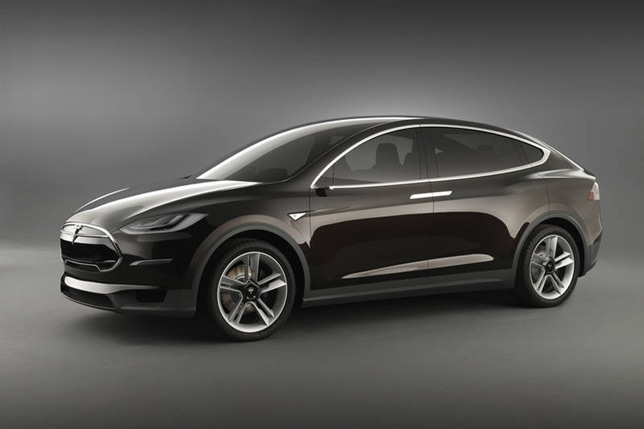
    Tesla-Model-X-thumbHere’s a longish video of Tesla co-founder and CEO Elon Musk unveiling the Model X – an electric SUV with the practicality of a minivan and the efficiency of a … well… electric SUV.

    It features a unique design that makes use of gullwing doors, although Tesla would prefer the term “Falcon Wing” but the principle remains the same. Third-row access is easy. Even with child seats installed, the second-row seats slide all the way forward. Open Falcon Wings will allow you to stand upright whether getting in or out. Kids will no longer leap and tumble over the second row, and adults will find the third-row seats as accessible as the passenger seat.

    In terms of performance, as expected from an EV, torque is instantly available and the center of gravity is very low. Drivetrain composition comes in three different types – Model X with RWD, Model X with AWD (a second motor is added to the front axle). Last but certainly not least is the AWD setup with a performance package. With it the X is good for a time of under 5 seconds in the 0 to 60mph sprint. Strikingly fast. Presumably one would be able to do many sprints from 0 to 60 thanks to the voluminous battery pack which comes with capacity of either 60 kWh or 85 kWh.

    Sales are expected to kick off in 2014, production 2013 while reservations are open now. Because the X is actually based on the S it will be around the same price as well.

    Tesla Model X (2014)
    Tesla Model X (2014)

    httpv://vimeo.com/36534892

    Source: Tesla Motors

  • Subaru BRZ, Impreza 5-door First Time in Europe

    Subaru-BRZ-thumbWith the 82nd Geneva Motor Show approaching, more and more information is let loose to the world about premiers and lineups and surprises. Today, Fuji Heavy Industries Ltd. (Subaru makers) confirmed that they will debut (for Europe) “Subaru BRZ” and the “Impreza 5-door”.

    The fourth incarnation of the Impreza is designed to be a symbol of reliability, handling and safety. As always it comes with Subaru’s symmetrical AWD and a flat engine. In Europe that engine would be a very green 1.6 petrol that is said prsereve the sporty legacy of the brand. On a side note, the company’s own symmetrical AWD system, which first appeared on the “Subaru Leone Estate Van” in 1972, is turning 40 years this year. So at the Geneva Subaru booth, tech enthusiasts will have the opportunity to visit a gallery illustrating the history of Subaru’s AWD and tryout a 3D virtual thematic game.

    Subaru Impreza (2012)
    Subaru Impreza (2012)

    The Subaru BRZ, which is almost identical to the Toyota GT 86 but is at the same time somehow better, will also make a European Premiere. This car will be the AWD exception as it is a front engined, RWD composition that throws us back in the days when tail-happy cars were appreciated. That said, it won’t be an uncontrollable lunatic car this, but rather a finely balanced GT car with a low center of gravity. That’s the beauty of a flat engine – it offers flexibility and compactness so the Subaru engineers have put it as low as possible and lo and behold, we have a performance fun house.

    Subaru BRZ (2012)
    Subaru BRZ (2013)

    Press day for the Geneva Motor Show is set for the sixth and seventh of March and on the eight, the public can join in. The Subaru press conference is scheduled at 11:45am on March 6th

    Source: Subaru

  • Subaru XV Price – from £21,295

    2012-Subaru-XV-thumbThe Subaru XV is getting even more close to assuming the position of one of the most value-for-money crossovers in the world. The office in the UK has released a list of specifications, trimmings and prices with the lowest one starting at £21,295 for the 1.6i S model (the base one).

    The XV boasts a considerable amount of occupant safety (especially for children) while remaining stylish and practical without an effort. Two very important highlights give it away that it is a Subaru: A Boxer engine and a Symmetrical AWD. In other words we have a great centre of gravity and a brain that ensures the best possible grip under a variety of conditions.

    Power comes from three Euro 5 power plants – 1.6 and 2.0-litre petrol, and 2.0-litre diesel.  The 1.6-litre and 2.0-litre petrol engines develop 114ps and 150ps respectively, while the 2.0-litre diesel produces 147ps and 350Nm. All those figures can go after that trough a six-speed manual or a CVT automatic gearbox, depending on customer choice

    Null to sixty is done in 9.3 seconds with the 2.0 diesel. It gets even more impressive when we know that it offers a class-leading fuel economy of 50.4mpg on the combined cycle and  emits 146g/km of CO2. The petrol units also go easy on the precious liquid as they benefit from Subaru’s Auto Start Stop System for non-diesels. Seamless cut out/kick off guaranteed.

    Subaru XV (2012)
    Subaru XV (2012)

    The features which are included in the entry model, the S, are just mind boggling –  ABS, traction control, Subaru Vehicle Dynamics Control (SVDC), front, side, curtain and knee airbags, 17-inch alloy wheels, daytime LED running lights and automatic air conditioning as standard. To step it up a notch, the SE adds cruise control, rear-view camera, Bluetooth functionality and USB/iPod connectivity to all the standard equipment while the SE Lux leather seats and satellite navigation, a start button, sunroof and keyless entry.

    Source: Subaru