Tag: Avant

  • Audi RS6 Avant performance

    More powerful and faster than any RS 6 and RS 7 to date: new Audi RS 6 Avant performance and the RS 7 Sportback performance are bursting with extras that sharpen the models’ appearance and make for a more emotive driving experience. The potent 4.0-liter V8 biturbo TFSI engine now has an engine power of 463 kW (630 PS) and a maximum torque of 850 Nm. From December 8, the RS 6 Avant performance and the RS 7 Sportback performance are available for 135,000 euros each.

    At Audi, ‘performance’ means more power. For example, larger turbochargers and an increase in boost pressure from 2.4 to 2.6 bar in the 4.0-liter V8 biturbo TFSI engine that both the RS 6 Avant performance and RS 7 Sportback performance boast, allow an increase of 30 PS in engine power and 50 Nm more torque compared to the base versions. This means a total increase in power from 441 kW (600 PS) to 463 kW (630 PS) and in maximum torque from 800 to 850 Nm. The performance models sprint from 0 to 100 km/h in 3.4 seconds, 0.2 seconds faster than the RS 6 / RS 7 base versions.

    Yet less is sometimes more: reduced insulation between the engine compartment, the interior, and the rear of the vehicle ensures the RS 6 Avant performance and the RS 7 Sportback performance will thrill customers with an exciting, next-level sound experience – the reduction also makes the car eight kilograms lighter. The RS 6 Avant performance has a total unladen weight of 2,090 kg whilst the RS 7 Sportback performance weighs 2,065 kg.

    For heightened driving dynamics: new self-locking center differential

    Power from the 4.0 TFSI engine flows through a standard eight-speed tiptronic with faster shifting times to the permanent all-wheel drive quattro. The strictly mechanical center differential distributes engine power to the rear axle at ratio of 40:60 and if slippage occurs, more drive torque is automatically applied to the axle with better traction – up to 70 percent can flow to the front axle and up to 85 percent to the rear axle. The self-locking center differential is lighter and more compact, improving driving dynamics plus offering noticeably more precise cornering which makes for less understeering at the handling limits. As an added improvement, the self-steering response is more exact with passengers benefitting from a more agile driving experience overall.

    Exclusive and high-performance: 22-inch wheels with high-performance tires

    The new RS 6 Avant performance and RS 7 Sportback performance roll off the line on standard 21-inch aluminum cast wheels in a ten-spoke star design and 273/35 tires. For an even sportier appearance, 22-inch lightweight wheels are also available, alongside the standard 22-inch aluminum cast wheels – in burnished glossy metallic black, matte gray, matte black, or matte neodymium gold. Inspired by motorsport, the airy 5-Y spoke design aids brake cooling and the lighter rims are manufactured in a high-tech forging-milling process. The new lightweight wheel is around five kilograms lighter than the 22-inch aluminum wheel on the current RS 6 Avant or RS 7 Sportback – this 20-kilogram weight reduction in unsprung masses improves the throttle response.

    New high-performance Continental “Sport Contact 7” 285/30 tires, which are part of the new lightweight wheel, play a key role in reducing weight. The tires offer consistently better grip on both dry and wet roads and reduce understeering when cornering at speed, making for overall more precise handling across the entire speed range. Additionally, the brake path is up to two meters shorter with the new wheels when braking from 100 to 0 km/h.

    The Audi drive select dynamic handling system lets the driver control the vehicle’s character. Six profiles are available: efficiency, comfort, auto, dynamic, as well as two customizable RS-specific RS1 and RS2 modes.

    But experience of the driving modes in the performance models is much more unique. For example, the coasting mode now only activates automatically in the efficiency profile, which means in speed ranges up to 160 km/h, it switches off the combustion engine and coasts with no fuel consumption or drag torque from the engine. Additionally, fine-tuning to the engine control unit software makes for tighter load changes in S mode when the “dynamic” drive select mode or driving mode S is active, further increasing the emotionality. The updated software in the transmission control unit makes for faster shifting times and a noticeably increased spread between the various driving modes.

    RS Dynamic Package as standard

    The RS Dynamic Package is standard equipment in the RS 6 Avant performance and RS 7 performance models. This includes the increase in maximum speed to 280 km/h (180 mph), dynamic all-wheel steering (the RS-specific software update helps the driver with active steering corrections on the front and rear axles), and the quattro sport differential on the rear axle.

    The RS Dynamics Package plus is also available as an option, which in addition to the RS Dynamics Package, raises the top speed to 305 km/h and includes an RS ceramic brake system. Customers can order the calipers in gray, red, or blue and discs measure 440 mm (front) and 370 mm (rear). The RS ceramic brake system weights a total of approx. 34 kg less than its steel counterpart for a reduction of the unsprung masses.

    Fresh exterior colors and optics packages

    The new RS 6 Avant performance and RS 7 Sportback performance are available in a total of 16 exterior colors – for the first time, metallic and matte Ascari Blue and matte Dew Silver are included.The performance models stand out with standard RS exterior components in matte gray, including the exterior mirrors, the front spoiler, the front side flaps, the side sill inserts, the roof rails, and the trim on the side windows and rear diffuser. A matte carbon/black optics package is also an option, in which the roof rails and trim on the side windows are black. The Audi rings and model name is available in the customer’s choice of chrome or black.

    Out of the blue: new interior accents and features

    In the interior, the familiar RS design packages in gray and red have been expanded to include the color blue. The steering wheel rim in Alcantra black features contrasting stitching in Mercato blue, whilst the floor mats, the side of the center console, and the selector lever cuff also come with blue contrasting stitching. The seat belts are full-surface ocean blue with the decorative inlays in a carbon twill structure with optional blue accents. The selector lever knob and the side of the center console are made with Dinamica microfiber, which consists of around 45% recycled PET fibers and the sports seats feature high-quality Valcona leather upholstery perforated with honeycomb stitching with contrasting stitching in Mercato blue. Another distinguishing feature is an entrance LED in the front doors that projects the lettering “RS performance” onto the ground next to the car.

    Customers can order RS design packages in the three available color variants with optional additional features: decorative inlays, door armrests and center armrest in Dinamica microfiber. An added benefit of this equipment variant is the seat center panel with a gray, red, or blue inlay, whilst the customer’s chosen color shows through the perforated sports seats and the seat backs feature RS embossing in matching colors.

    Customers can use the new “Audi Exclusive Customizer” visualization tool to design their vehicles in thousands of individual combinations and thus create their own personal special edition. They can choose from a wide range of individual paint finishes as well as leather and stitching colors; the tool uses a 3D model to visualize the customization process. Check out the configurator here.

    The displays of the standard 12.3-inch Audi virtual cockpit plus offer new features including a blinking shift indicator in manual transmission mode which changes the rpm display from green to yellow to red, blinking in a manner identical to that used in motorsport, to indicate the optimal time to change gears. Plus, Launch Control, which fully exploits the acceleration potential of the RS 6 Avant performance and the RS 7 Sportback performance by signaling the ideal moment to accelerate off the line, with new traffic light icons.

    Performance by tradition: from the RS 6 Avant plus to today

    The RS 6 Avant performance and RS 7 Sportback performance in the C8 generation continue Audi’s long-standing sport strategy of plus and performance models. It all began with the RS 6 Avant plus in the C5 generation, shortly before the series was discontinued in 2004, quattro GmbH (now Audi Sport GmbH) launched a special limited series of 999 units with a subtle upgrade in power. The engine power climbed by 30 PS to 480 PS and the model bore the distinction of being the first Audi to officially go faster than 250 km/h. Audi Sport throttled the RS 6 plus to 280 km/h, making it the fastest sport wagon. Without the engine control unit, it reached a top speed of more than 300 km/h.

    The plus variant in the C6 generation hit the market in 2008 and was limited to 500 units. Unlike its predecessor, it did not feature any additional power; the V10 kept its 580 PS. But Audi limited the top speed of the special Avant and Sedan to 303 km/h; the only faster vehicle at the time was the R8.

    In the C7 generation, “plus” became “performance” – the Audi RS 6 Avant and RS 7 Sportback performance rolled off the line in 2016, with a slightly tweaked engine, the power rose to 605 PS, 45 PS more than in the base model. The overboost function increased briefly to 750 Nm in “dynamic” driving mode and depending on equipment, the speed was limited at 250, 280 or 305 km/h.

  • The storage champ – Audi A6 Avant e-tron concept

    Audi A6 Avant e-tron concept - Front View

    Audi A6 e-tron concept, the second: as part of its 2022 Annual Media Conference, Audi is presenting the next model in its future electrically-powered A6 Luxury Class: the Avant. The company with the four rings introduced the Audi A6 Sportback with an electric drive system almost a year ago at the Shanghai Auto Show in April 2021. The production-oriented A6 Avant e-tron concept car now illustrates the synthesis of pioneering drive technology and Audi’s traditional design world: the Avant.

    Like the Audi A6 e-tron concept that was exhibited in 2021, the A6 Avant also has an exclusively electric drive system based on the forward-looking PPE platform, developed under Audi’s leadership. At the same time, it represents a new design concept with the same dimensions as the A6 Sportback e-tron. At 4,960mm (16.3 ft.) long, 1,960mm (6.4 ft.) wide, and 1,440mm (4.7 ft.) tall, its proportions put it in the luxury class. Its lines are a consistent development in Audi’s contemporary formal language. Significant elements like the closed Singleframe and the continuous strip of lights in the rear emphasize its kinship with the other electrically powered Audis in the e-tron fleet.

    The Audi A6 Avant e-tron concept exterior model that is making its debut in March 2022 is not just a simple design exercise. Its lines and elegant proportions preview future Audi production models and offer clues about how dynamic and elegant the electrically-powered luxury class will look.

    “With the Audi A6 Avant e-tron concept, we are offering a completely tangible look at future production models on our new PPE technology platform,” says Audi Board Member for Technical Development Oliver Hoffmann. “We’re not just electrifying the Avant’s successful 45-year history. What we want most of all is to use technical skills to add an exclamation point. In particular, this includes powerful 800-volt technology, 270 kW of charging capacity, and a WLTP range of up to 700 kilometres (435 miles).”

    Sporting the A6 emblem, the concept car underscores its place in the brand’s business class. This family has represented the brand in one of the world’s highest-volume segments since 1968 (until 1994, as the Audi 100). There have been Avant models in the series since 1977 – a revolutionary, very emotionally designed reinterpretation of the station wagon class.

    With the Avant, whose dynamic lines combine with a high degree of variability, the company created a new kind of car that has often been copied by the competition. Avant, a term derived from avant-garde and a 1995 Audi ad slogan, is a word that has taken off: beautiful station wagons are called Avant.

    For its part, the PPE technology will ensure that what the car’s lines imply is translated into a standard of dynamic driving performance and everyday suitability befitting use for long drives. That means that, in the future, an Audi A6 e-tron will deliver up to 700 kilometres (435 miles) of range (under the WLTP standard), depending on the drive system and model variant. And the strongest representatives of the series will sprint from 0-62mph in less than four seconds. The values of the Sportback and the Avant only deviate slightly from one another.

    The Audi A6 Avant’s back end, which is as beautiful as it is spacious, is by no means the only thing that qualifies it as the storage champ – the drive system and battery technology also justify that title. With its 800-volt system and a charging capacity of up to 270 kW, it can take in enough energy in just 10 minutes at a fast-charging station to drive about 300 kilometres (186 miles).

    Unmistakable e-tron: the design

    Based on its dimensions, the Audi A6 Avant e-tron concept represents the upscale segments – 4,960mm (16.3 feet) in length, 1,960mm (6.4 feet) in width, and 1,440mm (4.7 feet) tall, the same as the current models in the Audi A6/A7 series. With its dynamic proportions and elegant lines, including the Avant back end typical of the brand, it’s obvious at first glance that this vehicle was conceived in a wind tunnel.

    Aerodynamics has always played a key role in Audi’s long history of success in the luxury class. The cW value of the Audi 100 / C3 – the aerodynamics world champion of all classes in its day – is legendary: with its cW value of 0.30, Audi was already far outperforming its competitors as early as 1982 and continued to do so for many years thereafter.

    Now the electrically-powered family of the Audi A6 e-tron concept is writing a new chapter in this success story, proving once again that the brand always combines form and function in perfect symbiosis. The Sportback’s cW value of just 0.22 is unprecedented in the electrified C-segment. With its expansive roofline, the Avant’s cW value is just 0.02 units above that. In layman’s terms, this means the car exhibits minimal aerodynamic drag – which initially translates into lower energy consumption and therefore extended range. At the same time, the fine-tuning in the wind tunnel has once again resulted in an organic design with exceptional elegance and harmony down to the last detail.

    Large 22-inch wheels and short overhangs, the flat cabin, and a dynamic roof arch give the Avant proportions that are distinctly reminiscent of a sports car. The absence of hard edges results in smooth transitions between convex and concave surfaces throughout the body, as well as in soft shadows. The Audi A6 e-tron concept appears monolithic, as if from a single mould – particularly when viewed from the side.

    The gently backward sloping roof arch with the slanted D-pillar is a typical feature of Audi Avant window design; the D-pillar rises from the stable base of the vehicle’s back end in an especially streamlined manner. The eye-catching quattro wheel arches effectively accentuate the width of the body and are simultaneously integrated organically into the side surfaces.

    The wheel arches are connected by the specially sculpted battery area above the rocker panel, which is highlighted with a black inlay – a design element that is now a hallmark of the Audi brand’s fleet of electric vehicles. Also typical of Audi e-tron models are the sleek, camera-based virtual exterior mirrors at the base of the A-pillar.


    Audi A6 Avant e-tron concept (2022) - Side Angle

    Looking at the front, it is immediately apparent that the Audi A6 e-tron concept is an electric-powered representative of the brand with the four rings. A characteristic feature is the large enclosed Singleframe grille, which is bordered at the bottom by deep air intakes for cooling the drivetrain, battery, and brakes. The flat headlight bezels extend far into the sides of the laterally sweeping front end, underscoring the horizontally aligned architecture of the vehicle body.

    The influence of the wind tunnel on the rear end is unmistakable. The upper rear end is shaped to create an aerodynamically functional and circumferential breakaway edge. The rear spoiler with coloured trim visually emphasizes the elongated, horizontally oriented silhouette of the A6 Avant e-tron concept. It also does important work with airflow to improve aerodynamics.

    And in the lower section, the rear diffuser’s two generously sized air outlets are integrated into the bumper area. These components, which also have coloured trim, channel the air that flows under the vehicle in a manner that reduces turbulence – a perfect combination of reduced aerodynamic drag and minimized lift.

    The showcar’s sporty silhouette is emphasized by its warm shade of grey called Neptune Valley. While the paint has a modern, understated look when it is in the shadows, its full effect opens up in the sun, draping the showcar in shades of softly iridescent gold with its effect pigments.

    Illuminating from every perspective – light technology

    The flat headlights and taillights are slim and flush with the overall composition of the lines. Digital Matrix LED and digital OLED technology make it possible to achieve maximum brightness and a wide range of features even with a minimal surface area, while at the same time offering customizable light signatures. The team of Audi lighting designers and developers has once again done an amazing job – this concept car packs a host of new features and personalization options into its lighting units.

    Three small, high-resolution LED projectors are built into each side of the body, transforming the ground beneath them into a stage when the doors are opened – small, extended, dynamic lighting effects greet the occupants with messages in their own language.

    The combination of safety features and aesthetic design is particularly important to Audi. That’s why the small, high-resolution projectors also display warning symbols on the ground – to warn a bike rider that the car door is about to open, for example.

    Another four high-resolution LED projectors – inconspicuously integrated into the corners of the vehicle – generate turn signal projections. The design of these projections can be modified to address different markets and approval regions as required.

    The Digital Matrix LED front headlights deliver almost cinematic quality. If, for example, the Audi A6 Avant e-tron concept is parked in front of a wall during a break to recharge the battery, the driver and passengers can pass the time playing a video game projected onto it. Instead of on a small screen in the cockpit, they’ll see their current game’s virtual landscapes projected onto the wall in XXL format – and all this via the Digital Matrix LED headlights.

    The rear end of the concept car features a new generation of digital OLED elements that, as a continuous strip of lights, act as a display. They can also be used to create almost unlimited customizable variations of digital light signatures and dynamic lighting displays that can be adapted to the customer’s taste.

    One new feature in the taillights is the three-dimensional architecture of the digital OLED elements, that – adapted to the shape of the body – makes it possible to perfectly integrate the night design into the overall look. This makes it possible to experience the dynamic light show not only in two dimensions – as was previously the case – but with an impressive, 3D spatial effect.

    The combination taillights, like the headlights, meet their developers’ requirements when it comes to the traditional functions of vehicle lighting, namely seeing and being seen – in the front, a clearly and brightly illuminated road with headlights that intelligently adapt to the traffic situation, weather, and surroundings, as well as communicate with other road users. In the rear, the ultrabright, homogeneous, and high-contrast digital OLED combination taillights can particularly and significantly increase the level of safety on the roads of the future.

    In addition, the projections around the vehicle allow its communication range to be extended beyond the vehicle for the first time. With the help of intelligent connectivity in the vehicle, the A6 e-tron concept provides information to other road users with visual signals.

    PPE – high ground clearance and low ride height

    The PPE is designed exclusively for battery-electric drive systems and can therefore take full advantage of all the benefits of this technology. The key element of the future PPE fleet is a battery module between the axles that holds around 100kWh of energy in the Avant version of the A6 e-tron concept. Using the entire vehicle base makes it possible to achieve a relatively flat layout for the battery. This means that it will be possible to use this single platform both for vehicles with high ground clearance and vehicles with a decidedly dynamic, flat architecture – such as the Audi A6 Avant* – without any changes to the basic architecture.

    The battery size and wheelbase of PPE vehicles are scalable, making them suitable for use in different market segments. However, the proportions of a fairly long wheelbase and very short overhangs are something they will all have in common and this, together with the large wheels, results in basic proportions that are simply perfect – and not just in terms of design. This is because the occupants of the future PPE models will also benefit from the long wheelbase, which translates into a longer interior and more legroom in both rows of seats – a key benefit across all segments. In addition, electric vehicles are also generally more spacious thanks to the absence of a transmission tunnel, which is simply not needed due to the technology.

    But even without the transmission tunnel, Audi customers will not have to give up the brand’s trademark quattro drive system. The future range of PPE models will include versions with one electric motor each mounted to the front and rear axles that use electronic coordination to deliver all-wheel drive on demand and achieve a perfect balance between driving dynamics and energy efficiency. In addition, the e-tron family will also include basic versions optimized for minimum consumption and maximum range – in this case, propulsion will come from a single electric motor mounted to the rear axle.

    The Audi A6 Avant e-tron concept’s two electric motors are capable of delivering 350kW (469ps) of total output and 800Nm of torque.

    The front wheels of the Audi A6 e-tron concept are connected via a five-link axle specially optimized for electric vehicles with a multi-link axle in the rear. The concept car features Audi air suspension with adaptive dampers.

    A6 Avant e-tron – the storage champ

    The heart of the Audi A6 Avant e-tron concept’s drive technology – and that of all future PPE models – will be the 800-volt charging technology. Like the Audi e-tron GT quattro* before it, this ensures that the battery can be charged with up to 270kW in a very short time at fast-charging stations. This revolutionary technology will enter the high-volume mid-range and luxury segments with the PPE for the very first time.

    Thus, the A6 Avant will become the storage champ in a double sense – not only because of its spacious back end. The PPE technology enables charging times that come close to a conventional stop to refuel a car powered by a combustion engine. Just 10 minutes is enough time to charge the battery to a level sufficient to power the car for more than 300 kilometres (186 miles). And in less than 25 minutes, you can charge the Audi A6 Avant e-tron concept’s 100kWh battery from 5 to 80 percent.

    Together with a range of up to 700 kilometres (435 miles) – depending on the selected drive system and power output – the models in the Audi A6 e-tron family are uncompromisingly suitable for long trips. Furthermore, their range and charging speed keep pace with those of combustion engines, making them perfect universal cars for everyday needs, from short trips to the store to longer road trips when going on vacation.

    In terms of dynamic qualities, the Audi A6 e-tron concept – as is typical for an electric car – truly outshines its rivals with combustion engines. Thanks to its high torque right from the first revolution, even entry-level models designed for efficiency will accelerate from 0-62mph in less than seven seconds. And in the top-of-the-line, high-performance models, this sprint can even be reduced to well under four seconds.

    PPE – versatile, variable, electric

    2018 saw the debut of Audi’s first fully electric production vehicle – the Audi e-tron*. Since then the brand has systematically and rapidly pushed ahead with the widespread introduction of electric mobility across its entire product range. Following the Audi e-tron* SUV and e-tron Sportback*, the highly dynamic e-tron GT quattro* – based on a new technology platform developed jointly with Porsche AG – made its debut in February 2021. And just two months later, the Audi Q4 e-tron* and Q4 Sportback e-tron* premiered – two extremely unique SUVs in the compact segment with a common technological platform, the Volkswagen Group’s MEB.

    The Audi A6 e-tron Sportback and Avant concept cars are now the first members of a family of vehicles – initially in the C-segment and later also in the B- and D-segments – to be based on another innovative technology platform: the Premium Platform Electric, or PPE for short. This modular system is being developed under Audi’s leadership together with Porsche AG. The first Audi production vehicles built on the PPE platform will be successively unveiled starting in 2023.

    The PPE is the first platform designed to accommodate an unprecedented range of high-volume automobiles – including SUVs and CUVs with high ground clearance as well as cars with a low ride height that are part of Audi’s core product range, such as the Audi A6 series. But there are also plans to expand the PPE range into the B-segment, which has been the highest-volume market segment for Audi for decades. And even when it comes to the top-of-the-line D-segment, the PPE is an excellent technological platform to build on.

    With the PPE, electric vehicles will now also be attractive to customers who prefer automobile concepts beyond the SUV segment – like an Avant, for example, which is characteristic of the brand.

    As a result, Audi can effectively expand the range of electric vehicles in its portfolio – via the high-volume B- and C-segments. In addition, economies of scale will allow luxury-class technology and different model versions to be incorporated into a wide-ranging lineup of models that is unrivalled in the premium market.

  • Audi team announces first details about the upcoming RS 6 Avant!

    2020 Audi RS 6 Avant The new Audi RS 6 Avant makes its US debut on Sunday, November 10th in Malibu, California, at the bi-weekly Cars & Coffee event. Featuring top performance rates, refined Quattro all-wheel drive and sexy design, the new family member will finally become a reality in the US.

    The vehicle itself comes with visceral design, and exhilarating dynamics: the 4.0-liter twin-turbo V8 power unit is capable of generating a total of 600hp (441kW) and 800Nm of torque. There’s also a standard eight-speed Tiptronic gearbox with sport program and launch control function. It transmits the power the wheels with a dedicated sport differential.

    Additionally, the RS 6 Avant features a new design language. There’s a new three-dimensional RS-specific honeycomb structure within the revised Singleframe grille in glossy black finish, all along with flat D-pillars and long and straight roofline. The rear-end of the machine consists of a roof-edge spoiler and RS-specific bumper with rear diffuser and design components also in glossy black finish. Sweet!

    In terms of interior, the RS 6 Avant includes neat accents and driver-focused technologies. There’s new MMI touch response system with black-panel design and an entire new interior architecture and user interface.

    SEE ALSO: Ringbrothers proudly present 1969 Mustang UNCL! Check it out!

    The highly anticipated vehicle will arrive in the US in 2020 and will be available for customer orders after a later announcement. Additional performance specs will also be revealed closer to market introduction.

    Source: Audi 

  • Audi announces details about new RS 6 Avant model

    2019 Audi RS 6 AvantAudi of America announced details about the upcoming RS 6 Avant. Representing a new chapter in the Audi Sport segment, the new family member offers visceral design, exhilarating driving dynamics and neat tweaks and gadgets. Let’s check out more, shall we?

    Exterior design

    The design of the new RS 6 Avant is made solely of RS-exclusive parts. The body, which is wider than the predecessor features broad flared wheel arches, while the three-dimensional RS-specific honeycomb is finished with glossy black.

    The characteristics of the Avant feature elongated front section, straight and long roofline, and flat D pillars. The fenders are dramatically flared, while the rear of the vehicle consists of roof edge and RS-specific bumper with rear diffuser and components in glossy black. And, of course, in pure RS style, the exhaust system flows on both sides into oval chrome-colored tailpipes.

    Interior design

    2019 Audi RS 6 Avant

    The refined cabin features tons of utility goodies and driver-focused technologies. There’s a brand new MMI Touch Response system with black-panel design, Audi virtual cockpit, exclusive RS displays, and overall contemporary and sophisticated ambiance.

    Drivetrain system

    The new family member comes with a 4.0-liter twin-turbo V8 power unit and delivers a total of 600hp and 800Nm of torque. This massive output ensures a rather fast sprint and 0-100km/h run in a mere 3.6-seconds. The top speed is 250km/h.

    What makes this configuration special is the standard eight-speed Tiptronic gearbox and the new launch control function, which transmits the massive engine power output to the Quattro permanent all-wheel drive.

    SEE ALSO: Lambo presents new Huracan EVO GT Celebration limited model!

    What is also special about this particular model is the suspension system with controlled damping, which was fine-tuned exclusively for the RS 6 Avant. It can be set to several modes, including an automatic level control. The widespread of the RS adaptive air suspension offers drivers a choice between long-distance comfort and high-performance adrenaline-boosted sprints.

    2019 Audi RS 6 Avant

    Source: Audi 

  • Audi reveals the latest A6 Avant machine

    2018 Audi A6 Avant Avant represents Audi’s dedication to elegance and technological advancement. Definitely an impressive new addition to the lineup, this guy surely has a lot to demonstrate. It is both athletic and sexy and features tons of goodies that are worth mentioning. So, without more hesitation we will see what this bad boy is all about.

    Exterior styling

    2018 Audi A6 Avant

    It is definitely an Audi vehicle. With its sharp lines and large surfaces the new A6 Avant catches the eye of both fans and sceptics. It comes with a wider and refreshed front grille, revised blisters and trapezoidal window shapes. Furthermore, the muscular roofline flows in a low-profile D-pillar and accents the sporty spirit of the machine. At the same time the rear showcases a decorative trim that links the lights. Sweet.

    Interior design

    2018 Audi A6 Avant

    The cabin features a minimalistic approach – there isn’t anything, but the necessary. The thing that catches the eye the most is the black panel surface with MMI touch response display. It is further accented by the horizontal lines and progressive color schemes. Also, the wooden inserts do contribute to that luxurious feel and appearance.

    SEE ALSO: Jaguar reveals the I-TYPE 3 ahead of its global debut

    Drivetrain system

    2018 Audi A6 Avant

    A6 Avant comes with a choice of two power units: a four- and a six-cylinder TDI and TFSI engines. Both support the hybrid technology and benefit from a separate lithium-ion battery. Furthermore, both units can be paired to either a seven-speed S tronic twin-clutch or an eight-speed tiptronic automatic gearbox systems. Also, in addition to the exclusive dampers and air springs, the electronic chassis platform can control the dynamic all-wheel steering and works in perfect harmony with the updated sport differential.

    Source: Audi 

  • Audi RS 6 Avant and RS 7 Performance Beasts are Almost Here!

    Audi RS 6 Avant PerformanceAudi RS 6 Avant performance and Audi RS 7 Sportback performance are the two new vehicles which will demonstrate that a vehicle can not only be high-performance-oriented, but also efficient. How you ask? Let’s find out.

    First of all, both vehicles are geared with 4.0 TSI units that provide the stunning 605 hp (445 kW) and up to 750 Nm. But this stunning power doesn’t ultimately mean that the vehicles are not efficient. The fuel consumption remains unchanged at 9,5 and 9,6 per 100 kilometers and the CO2 emissions are estimated 223 and 221 per kilometer. How cool is that?

    2016 Audi RS 7 Sportback Performance

    The RS 6 Avant Performance  and the RS 7 Sportback Performance need just 12.1 seconds to go from 0 to 200 km/h (123 mph) and in addition, the optional Dynamic pack enhances the top speed from 250 to 280 and 305 km/h (155 to 174 and 189 mph).

     SEE ALSO: HplusB Design and the Fulminant Audi R8 V10

    The power units are paired to eight-speed tiptronic gearbox, which is especially designed to enhance the sporty spirit of the vehicles and now the drive can choose between modes D and S that bring further dynamics and pleasure of driving. And let’s not forget that both vehicles are geared with integrated damping control and sporty RS suspension. This combination ensures fast response, stability and reliability on the road.

    2016 Audi RS 7 Sportback Performance  03

    On the other hand, the engineering team has comprehensively restyled the exterior of the cars. Now the design strikes with new sporty bumpers, heavily reshaped diffuser insert, glossy black honeycomb grille and flared side sills. The RS Performance exterior finishes the sporty affair with Ascari Blue Metallic as an optional finish. The RS Performance models also come with stylish 21-inch cast alluminum wheels and 275/30 tires. Furthermore, the four internally ventilated brake disks offer and that sweet weight-saving wave design.

    Audi RS 6 Avant Performance

    This sporty, yet elegant affair continues and into the interior of the RS Performance sport cars. Both models are geared with sport seats with pronounced side bolsters and integrated head restraints. Audi also offers the seats in color combination of black and blue. And along the hi-tech units, the interior proudly presents its stylish and sophisticated details, carbon materials and metal features.

    2016 Audi RS 7 Sportback Performance

    Both RS 6 Avant and RS 7 Sportsback will be available for order in November.

    Source: Audi

  • 2016 Audi S4 Avant Debuts Today at 2015 FIAA! [VIDEO]

    2016 Audi S4 AvantAudi will present the latest S4 and S4 Avant models at the 2015 FIAA in Frankfurt. The models are constructed to deliver flexibility, light weight and of course, tons of gadgets. So, let’s see what is going on in the Audi camp and let’s find out what could we expect at this year’s FIAA.

    Drivetrain System

    The latest Audi models come with an especially created V6 unit with petrol direct injection and turbocharge system. It is a 3.0 TFSI engine which provides a total of 354 hp (260 kW) and 500 Nm of torque and it is paired to a new eight-speed tiptronic transmission. This system outstrips its predecessor in every aspect and now it is even built with light-weight materials.

    This system allows the S4 to go from 0 to 100 km/h (0 to 62 mph) in 4.7 seconds and from this start it can chase the top speed, electronically limited to 250 km/h (155 mph).

    2016 Audi S4 Avant

    And along with the drivetrain and the gearbox, the S4 and S4 Avant models also offer and impressive straight-line stability via the redesigned suspension. The five-link system on the front and rear axle separates the longitudinal and transverse forces, ensuring maximum handling and flexibility in every road situation.

    Design

    The latest S4 models has a lot to demonstrate, when it comes to design and style. At the front, the Singleframe grille and the nicely done horizontal lines enhance the feel of massiveness and width. Furthermore, the bumpers and the air inlets are completely reshaped and many of the additional parts are now painted in graduated matt gray and chrome colors.

    2016 Audi S4 Avant

    https://youtu.be/R4XtoRPAtqM

    Source: Audi

  • Audi Unveils Hybrid Prologue Avant Concept

    The awaited Audi Prologue Avant Concept has been revealed before its official premiere at the Geneva Auto Show next week. We have seen from the teasers that the car has a revolutionary design, which hints to the possible direction of company’s creative philosophy. The car is fitted with new infotainment system and entertainment technology, but most importantly it comes with a hybrid drivetrain.

    The high-performance unit is capable of a total of 455 hp (335 kW) and 750 Nm (553 lb-ft) of torque. As a matter of fact, the plug-in hybrid drive of the prologue Avant is almost similar to this of the Q7 e-tron Quattro.

    This means that the car is driven by a 3.0 TDI engine combined with a powerful electric motor. The first unit produces 353 hp, while the second one (which by the way is integrated in the transmission) generates additional 100 hp. Speaking about transmissions, the one used here is eight-speed and has the special designation “tiptronic”.  Of course it translates the power to all four wheels.

    In terms of acceleration time from 0 to 100 km/h, this car does not show anything impressive. In fact, I’ve always thought that Audis are little tardy. The number I am referring to is 5.1 seconds and the top speed is 155 mph.

    The “big deal” here is the CO2 gases emitted as well as the efficiency. Audi prologue Avant returns up to 176mpg and emits only 43 grams of CO2 per kilometre. In pure electric drive, the car performs average and shows a range of 33.6 miles. Next thing that must be addressed is the AWC. This abbreviation stands for Audi wireless charging, meaning that the battery of the car can also be charged inductively.

    New in the design of the car is the Singleframe grille integrated into the body. The headlamps are another element that needs to be mentioned. They comprise of high-resolution Matrix Laser technology, thanks to which the light is decomposed into many tiny pixels.

    The sides of this Audi include flat D-pillars and huge 22-inch wheels fitted with size 285/30 tyres. The car is painted in dark blue color, the outside rear-view mirrors are made from aluminium, while a frame made from polished and matt aluminium surrounds the side windows.

    Inside, there is nothing but luxury. The spacious interior is in dark hues and features a dashboard that is composed of three touch displays, showing important information. Furthermore, the upper instrument panel is in lifestyle blue, while sarder brown color has been chosen for the bottom instrument panel, seats and the carpet.

    Just like the exterior, the interior features aluminium elements. These include the spokes of the steering wheel, the frames of the driver displays, the door inserts and the mountings and switches of the seats. Natural Unikat leather has been used for the upholstery of the seats, dashboard and centre tunnel console.

    You already know that Audi Prologue Avant will have an official world premiere next week in Geneva, and this is the time when we expect to see some more from it. Whether this concept will become a production model, I sincerely doubt, but it is definitely a step further in company’s range of vehicles.

    Source: Audi 

  • 2013 Audi RS 4 Avant – 450HP and 430Nm

    Audi has presented the new 2013 RS4 Avant, which is powered by a naturally aspirated V8 FSI. The family touring car managed to win “Most Popular High Performance Car” award in 2013 Honest John Awards.

    “While crossovers and family hatchbacks may seem the obviously popular markets, performance and sports cars take a big share of views on honestjohn.co.uk – usually the more powerful the better.”, said Dan Harrison, Editor of honestjohn.co.uk.

    “And it’s easy to see why the thunderously quick Audi RS 4 Avant has proved so popular. A Big V8 engine, 450hp and quattro all-wheel-drive along with estate car practicality make it unique. That combination certainly appeals to our users who clearly love it.”, he added.

    The 4.2 liter V8 FSI delivers 450HP (331 kW) and 430Nm (319 lb-ft) of torque. 0-100 km/h in just 4.7 seconds and a top speed of 280 km/h (174 mph). The 2013 Audi RS4 Avant is now available to order with pricing starting from £55,525 OTR.

    Source: Audi

  • Audi A6 Avant Allroad

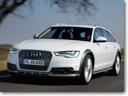
    Audi-Allroad-A6-thumbWelcome, to the Audi A6 Allroad. It’s like that beefy relative of yours that’s always around when a pickle jar needs to be opened. The one that also has a degree in geology… anyways. What we have here is a quattro Avant that comes with smart, stop/starting, thermo-efficient engines, a light body and a sturdy look.

    There are four engine choices available – three diesels and a TFSI, all in the V6 category. That last one, the petrol, doesn’t make much sense. It’s 3.0-liter displacement accommodates 310PS and 440Nm of torque. It will get the A6 to 60 mph from a stand still in no more than 5.9 seconds and, supposedly, it will return around 31.7 mpg on the combined cycle. That sounds impressive by itself but when a 3.0-liter BiTDI engine is out there as an alternative, the choice is a no brainer really. “Bi” as in two turbochargers, this one has the same power output as the TFSI (313PS) and almost a third more torque – 650 Nm. 0 to 60 mph is done in 5.6 seconds and the economy amounts to 42.2mpg – better in every way really.

    If it’s economy you’re after however, then the “standard” TDI is the engine for you – respectable power of 205PS and an economy figure of 46.3mpg with a CO2 output rate of 159 g/km – just bellow a taxation threshold in many countries. For those who won’t be comfortable even with that, there will always be a fourth option which is the mid-range TDI that has 40PS more than the base one and a healthy lump of torque that amounts to 580 Nm. The 60 mph run is done in 6.6 seconds and the cost of it won’t be much as the economy figures are the equally impressive 44.8 mpg.

    Except for the BiTDI Allroads, a seven-speed S tronic dual-clutch transmission comes as standard. The BiTDI ones get the latest eight-speed tiptronic automatic transmission.

    Regardless of what you might choose, know that power will always go trough Audi’s quattro all-wheel-drive that splits the incoming torque in a 40:60, front to back manner. Know also that, the engines will have the task to propel the lightest A6 generation so far – 70 kg less then the previous models.

    Audi A6 Allroad Avant
    Audi A6 Allroad Avant

    To affirm itself as an Allroad, the A6 has to flare its wheel arches a bit. The side sills are kind of extended and there are front and rear stainless steel underbody guards that keep rocks out of the sump department.

    It’s not all rough-and-tumble with the Allroad. Inside, there’s cleverness as well – a 6.5 inch display, sat nav, an electromechanical steering, Bluetooth and a drive selector that lets you choose how all the gizmos, as well as the adaptive suspension and the engine, work – Comfort, Dynamic, Automatic, Individual and Efficiency are the modes to chose from.

    So, does it do better than the VW Passat Alltrack? As a bigger brother, it should so.

    Source: Audi

  • 2012 Audi A6 Avant 3.0 BiTDI Quattro – Price £45 650

    A lot after the astonishing success of BMW’s 3.0 liter twin-turbocharged diesel, Audi has announced their new BiTurbo TDI, which is now available for A6 Saloon and Avant and A7 Sportback models.

    The manufacturer also announced the price list for these models – £43 810 OTR for 2012 Audi A6 Saloon with BiTurbo TDI, £45 650 OTR for A6 Avant with the same engine and £51 645 OTR for the premium A7 Sportback.

    The new BiTDI 3.0 liter V6 delivers 313PS (230 kW) at 3900RPM and 650Nm (480 lb-ft) at just 1450RPM. This means 0 to 100 km/h in 5.1 seconds and a top speed of 250 km/h (155 mph) – electronically limited. The combined cycle is 44.1 mpg and emissions of just 169 g/m CO2. The engine is mated to an 8-speed tiptronic automatic gearbox.

    Other interesting highlight is the Sound actuator, which is positioned in the auxiliary channel of the exhaust system. The actuator system essentially consists of a speaker which imposes a defined oscillation pattern on the exhaust flow and transforms the typical TDI exhaust note into a more sonorous roar that is closer to the output of a high-performance petrol engine.

    2012 Audi A6 Avant 3.0 BiTDI Quattro
    2012 Audi A6 Avant 3.0 BiTDI Quattro

    The mighty new BiTDI engine is available in conjunction with SE and S line specification in the A6 Saloon, A6 Avant and A7 Sportback. The forthcoming A6 Allroad Quattro, due to open for order in February, will also offer this exceptional unit.

    Stand-out features common to all these models include satellite navigation linked to a 6.5-inch retractable colour monitor, Milano leather upholstery, the Audi drive select adaptive dynamics system controlling throttle response, transmission shift points and steering feel, the Audi parking system plus, light and rain sensors, cruise control and keyless go push-button engine ignition.

    AUDI A6, A6 AVANT AND A7 SPORTBACK – UK OTR PRICING

    MODEL TRIM PS TRANSMISSION CO2
    (g/km)
    ECONOMY
    mpg
    (Combined)
    OTR
    A6 Saloon 3.0 BiTDI quattro SE 313 8 sp Tiptronic 169 44.1 £43,810
    A6 Saloon 3.0 BiTDI quattro S line 313 8 sp Tiptronic 169 44.1 £46,160
    A6 Avant 3.0 BiTDI quattro SE 313 8 sp Tiptronic 169 44.1 £45,650
    A6 Avant 3.0 BiTDI quattro S line 313 8 sp Tiptronic 169 44.1 £48,000
    A7 3.0 BiTDI quattro SE 313 8 sp Tiptronic 169 44.1 £51,645
    A7 3.0 BiTDI quattro S line 313 8 sp Tiptronic 169 44.1 £53,435

    Source: Audi

  • ABT Audi AS6 Avant

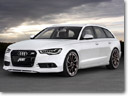
    ABT Sportsline has introduced their tuning program for the latest Audi A6 Avant. The tuner offers both performance and styling packages to boost the individuality of the premium vehicle.

    There are  performance upgrades for the 3.0 TDI in both versions – 204PS (150 kW) and 245PS (180 kW) as well as the petrol 3.0 TFSI with standard 300PS (221 kW).

    The exterior include complete aerodynamics package – ABT side skirts, ABT front spoiler, ABT rear skirt insert and 4-end pipes and ABT rear spoiler. There are also ABT sport rims with dimensions from  19” to 21” and sports tyres for them.

    Whatever engine the customers choose – they will always get a balanced vehicle which meets the highest demands: everyday reliability and suitability for long journeys in combination with maximum sportiness characterise the new ABT AS6 Avant. After all you don’t want to go without comfort and luxury just because you are in a particular hurry.

    You can check the full list of upgrades, below!

    ABT Audi AS6 Avant
    ABT Audi AS6 Avant

    ABT Audi AS6 Avant:

    • ABT ENGINE TECHNOLOGY

      Engine:                         3.0 TDI, 2967 ccm capacity
      Performance tuning:    ABT POWER
      Performance:               240 PS/177 kW (standard: 204 PS/150 kW)

    • ABT ENGINE TECHNOLOGY

      Engine:                         3.0 TDI, 2967 ccm capacity
      Performance tuning:    ABT POWER S
      Performance:               300 PS/221 kW (standard: 245 PS/180 kW

    • ABT ENGINE TECHNOLOGY

      Engine:                         3.0 TFSI, 2995 ccm capacity
      Performance tuning:    ABT POWER
      Performance:               420 PS/309 kW (standard: 300 PS/221 kW)

    • ABT AERODYNAMICS

      ABT side skirts
      ABT front spoiler
      ABT rear skirt insert and 4-end pipes
      ABT rear spoiler

    • ABT WHEEL TECHNOLOGY

      ABT sport rims – 19” to 21”
      Available also as complete set of wheels with sports tyres

    Source: ABT