Tag: autonomous driving

  • Ford to become a leader in Autonomous technology by 2021?

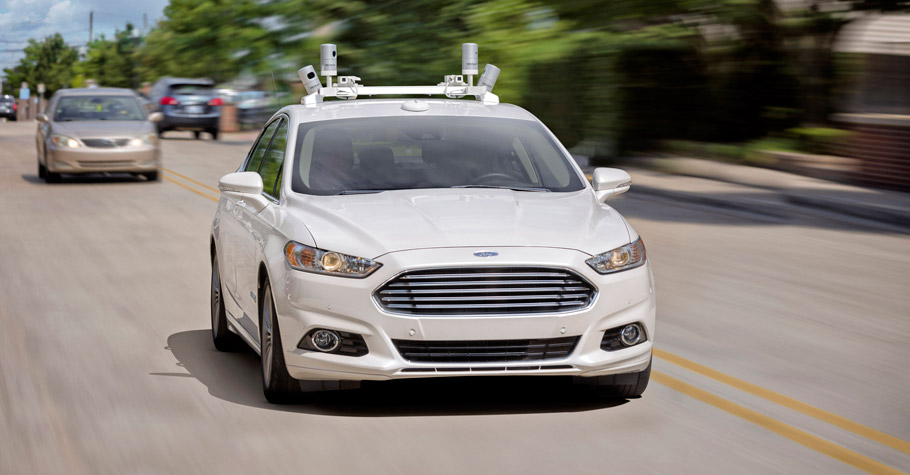
    Ford Fusion Autonomous car front view

    Ford autonomous vehicles target Ride Sharing in 2021

    With the burst of the autonomous technology, brand are in some sort of unannounced battling, constantly improving it and trying to bring the first innovations in the field. The latest news about the fully autonomous technology comes from Ford. It has just announced the intent of creating high-volume, fully autonomous SAE level 4-capable vehicle, that will be absolutely ready for commercial use in 2021 (in a ride-hailing or ride-sharing service).

    To achieve the set goal, Ford is investing in or collaborating with four startups. This will enhance the autonomous vehicle development, and in addition will double company’s Silicon Valley team.

    SEE ALSO: A tale of Super Trucks and Drones: Ford’s challenge towards all technicians out there!

    In fact, the autonomous vehicles are part of Ford Smart Mobility, which aims to bring this kind of driving in 2021 for commercial use. This will make Ford among the winners in the field of autonomous vehicles, connectivity and mobility.
    Ford Fusion Autonomous car front view pic two

    Another interesting fact is that the company will triple its autonomous vehicle test fleet, and this will make for the largest test fleet of any automaker. Precisely, there will be about 30 self-driving Fusion Hybrid sedans on the roads in California, Arizona and Michigan. There are plans to triple the number again next year.

    And how about company’s plans? The self-driving vehicle will be a Society of Automotive Engineers-rated level 4-capable car, which won’t have a steering wheel or gas and brake pedals. In addition, the vehicle has been specifically designed for commercial mobility services. This means ride sharing and ride hailing.

    Ford has also announced the four key investments and collaborations it is targeting, including 3D mapping, LiDAR, and radar and camera sensors. The first investment is in Velodyne, a Silicon Valley-based leader in light detection and ranging (LiDAR) sensors. The second one is in SAIPS: Israel-based computer vision and machine learning company. It will work for expanding the expertise in artificial intelligence and enhance computer vision. The third investment is in Nirenberg Neuroscience LLC, a machine vision company focused on developing a powerful machine vision platform for performing navigation, object recognition, facial recognition and other functions. At last, Civil Maps investment is not the least of importance. This is California-based Company, which will further develop high-resolution 3D mapping capabilities.

    There is no doubt that the next decade will be dominated by automation of the automobile!

    Source: Ford Motor Company
  • Autonomous cars – when will they take over? [w/video]

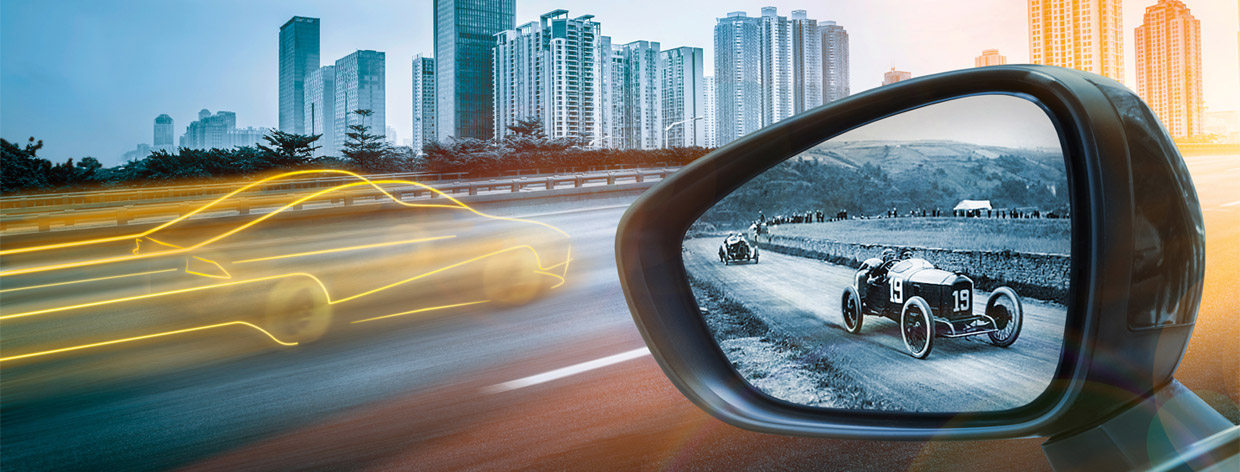
    Autonomous cars front cover imageThere are various forecasts which predict when autonomous driving cars will take over. In general, the expectations are set around the year 2020, which isn’t far from now. And the aforementioned year signifies the market release of these vehicles. Would they take the market by storm or fail to do so is a matter of clairvoyance, but we will still try to see the options ahead.
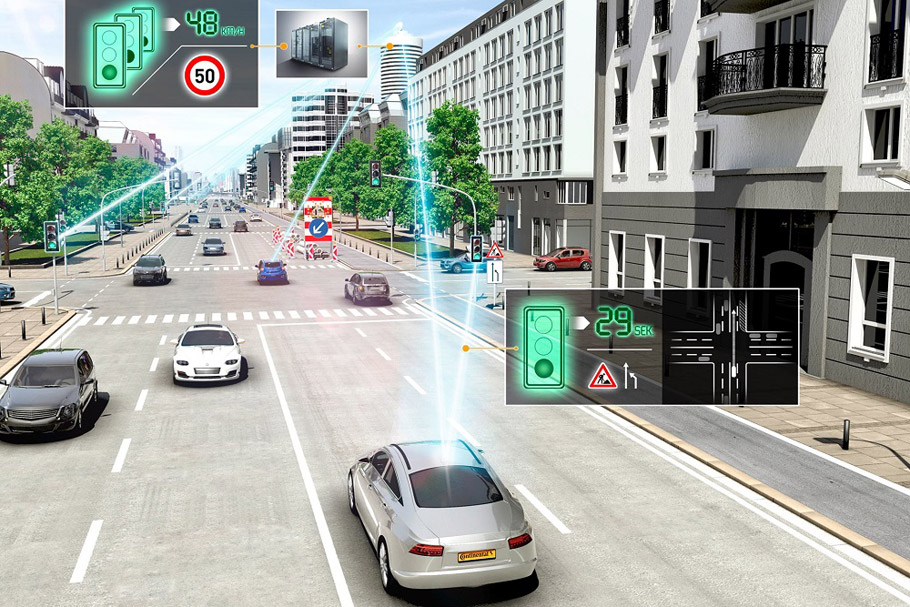
    Volkswagen’s experts say that driverless cars will hit the market by 2019, while GM and Ford predict this to happen around 2020 (“or sooner”). Mercedes is being more safe in their predictions, saying autonomous vehicles would appear no sooner than 2025. By the way, Daimler-Benz has more than 30 years of research into autonomous driving, starting with the Eureka-Prometheus technology, developed in 1985. Anyway… there are even predictions that truly autonomous cars will populate roads by 2028-2032, and that by 2040 they would be 75 per cent of all vehicles out there.

    SEE ALSO: Nissan joins the already elating autonomous-driving technology world 

    While everyone else is still “predicting”, not producing, companies like BMW are about to launch their first autonomous models. We are speaking about the iNext that is set to appear in 2021. In addition, Toyota’s first self-driving car is to hit the market in 2020.

    Elon Musk, who seems to be the major force (and the strongest one) behind this idea, expects an entirely autonomous Tesla to appear two years from now (June, 2016). Well, note that for Tesla’s model to be “road-legal”, governmental approval is required and it is possible it might take up to three years, so we are generally speaking about the same year of market appearance.

    Cars, which can move without human intervention, and in contrast to Google’s cars that need detailed 3D maps for local navigation, are currently in the making by Nissan’s professionals. They are also expected to appear in 2020.

    What do drivers say?

    Autonomous cars - the future

    “How about NO” say more than 60 per cent of the drivers out there, when it come to autonomous driving. Although there are many benefits to self-driving vehicles (safer roads, efficient driving, etc), there are also various disadvantages at hand and they mainly about the safety, technology and trust of the “drivers”. Surveys show that six in ten people worry about the safety matters of this type of vehicles. Another problem associated with autonomous cars is the technology mistrust.

    So, there are two major factors which will influence the “taking-over” of autonomous vehicles: the first is the manufacturers side, with vehicles to start “flooding” the market in 2020. On the other hand are customers and passionate drivers, who would mainly distrust the innovative technology and want the control in their hands. And here we must put the attention on the passion that enthusiasts experience when driving a car. A major factor, that is excluded in the surveys.

    Well, it is about time to witness how everything will eventually unfold… but I wouldn’t keep my hands off the steering wheel for sure!

    To cheer you up, the self-steering car in the video below provokes many laughs during a demonstration (jump to 1:15). Traveling at 40km/h the brakes seem to… not work the way that was expected. Note that no real kangaroos were harmed in this autonomous driving fail.

    httpv://youtu.be/G6gz344tt6U

    Video Source: YouTube 

    Images Source: Continental Tyres

  • Self-driving car, enhanced by Google and FCA? Sounds good to me!

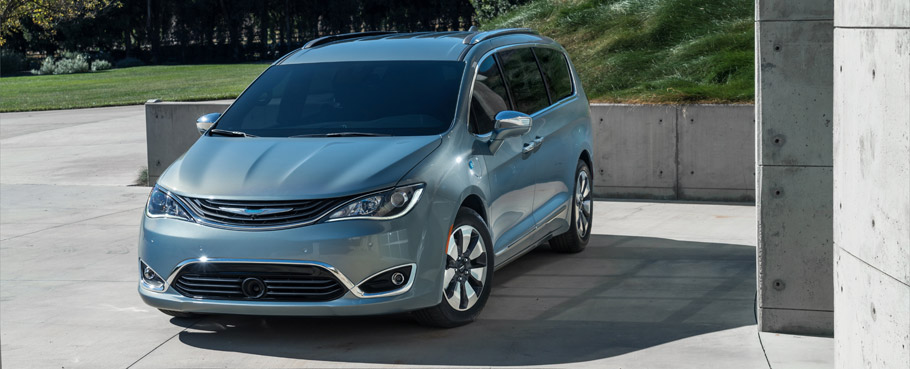
    2017 Chrysler Pacifica HybridThe Google Self-Driving Car Project and FCA announced that the advanced Google technology will be incorporated into the all-new 2017 Chrysler Pacifica Hybrid minivan to expand and improve Google’s self-driving test project. As you might know, this is the first time that Google chooses to work directly with an automaker in order to deliver technologies and advanced systems.
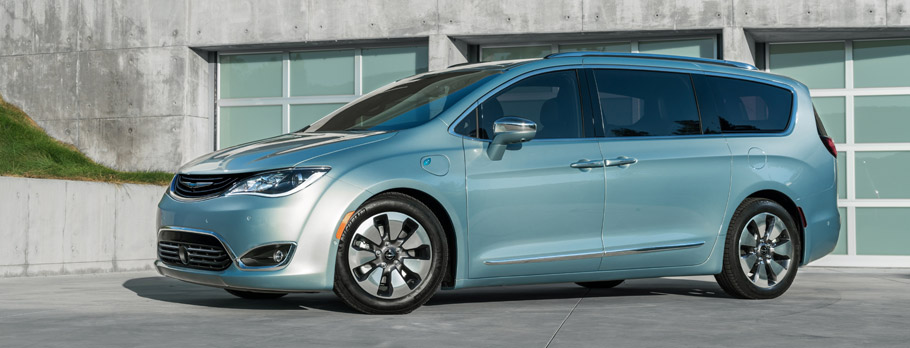
    Engineering responsibilities will be further shared on each brand’s respective expertise. FCA will design and engineer 100 vehicles exclusively for Google’s systems, while the Internet giant will integrate the suite of sensor and computers into these cars.

    Both brands will also co-locate part of their engineering teams at a special place in Michigan in order to accelerate the design, tests and manufacturing of the autonomous Chrysler Pacifica.

    SEE ALSO: 2017 Chrysler Pacifica can Now be Yours for $28,595 USD

    Based on recent researches, experiments show that self-driving cars have the potential to prevent about 33,000 deaths yearly only on US roads. Sad thing is that about 95% of these fatal crashes are caused by human mistake. Luckily, collaborations as this one will bring us next generation of vehicles and technologies that will prevent road accidents and fatal injuries.

    2017 Chrysler Pacifica Hybrid

    Furthermore, these self-driving vehicles, produced by Google are currently being tested in four US cities and the Chrysler Pacifica Hybrid will be tested in California, prior to operating in public.

    Source: FCA US LLC

  • Volvo is about to launch an ambitious autonomous drive campaign. Here are some details

    Volvo autonomous drive campaign Volvo cars, the premium Swedish automobile manufacturer is about to start its incredible and ambitious experiment: a promising autonomous test drive that aims to deliver solution for the countless car accidents and injuries.

    As you might know, Volvo is notorious for its safety features and it has been leader in safety and utility technologies since 1959 when showcased the three point seat belt. Indeed this was the year that started brand’s domination in the field of safety and injury prevention in the automobile world.

    The whole campaign bears the name “Drive Me London” and will be completely different from other AD programs and campaigns. Furthermore, there will also be a special seminar, sponsored by Volvo and Thatcham, the insurance industry’s research organization, in London on May 3rd with the aim to demonstrate Volvo’s future plans in details.

    Volvo autonomous drive campaign

    What is special about the autonomous drive campaign is that it will be gathering data from everyday users and everyday routines rather than unrealistic conditions and situations on test tracks. Also, Thatcham Research will be providing everything needed in terms of technical data analysis and test drivers.

    SEE ALSO: Volvo’s Latest Plan for World Domination: Green Ideas or Greedy Desires?

    “Drive Me London” will begin in the beginning of 2017 with limited number of semi-autonomous vehicles and is scheduled to expand its activities with up to 100 AD cars until 2018.

    So, what is the big deal with AD vehicles? There are numerous independent researches that reveal a rather interesting statistics. Based on the sources, using AD cars can reduce the number of car accidents significantly and can also solve the annoying congestion issue. In fact, as we talk about congestions, AD cars are also believed to be far more practical: they allow traffic to move more smoothly, reducing traffic jams and pollution. And last, but not least, all of these optimizations can save up some sweet precious time.

    Volvo autonomous drive campaign

    So, what do you think about all this AD trend? Is there any chance that this technology can help the modern fast-paced society?

    Source: Volvo