At the 2012 North American International Auto Show, Maserati has unveiled their new SUV concept vehicle named Kubang. The concept demonstrates the power of the modern Maserati. The idea of this sport luxury SUV is not new to Maserati. To remind you, the first Kubang concept was presented in the distant 2003 again at NAIAS. While the project starts with firm fundamentals and capability, the model eventually produced will unquestionably be a Maserati. All major system components will be fully produced by Maserati in picture-perfect continuity with the brand’s core values of sportiness, elegance, glamour, luxury, performance and craftsmanship. There will also be included a new generation of Maserati high-tech proprietary engines. Interesting information is that they were designed in Modena, Italy at Maserati Headquarters. More importantly the production of the new Maserati engines will be performed by Ferrari in Maranello, Italy and they will be mated to a new 8-speed automatic transmission! In addition there are also components with specific performance settings: suspension, brakes, steering and electronics, which will be exclusively developed by Maserati engineers.
Maserati Kubang SUV Concept at 2012 NAIAS
As you already know, Maserati brand is a founder of the modern granturismo. Long ago Maserati broke the boundaries of the original GT concept and made it from two to four doors. The result was Quattroporte, which now is considered by many to be the first modern super sedan. Moreover it maintained not only the brands core values of style and luxury, but also delivered genuine performance thanks to components and design.
Nowadays Maserati again provokes with innovation by giving more sportiness and luxury to an SUV and thus giving the form of a very dynamic looking, incredibly elegant and high performing sport luxury vehicle with the capability of getting its passengers through all types of climates over a variety of surfaces on and off the road.
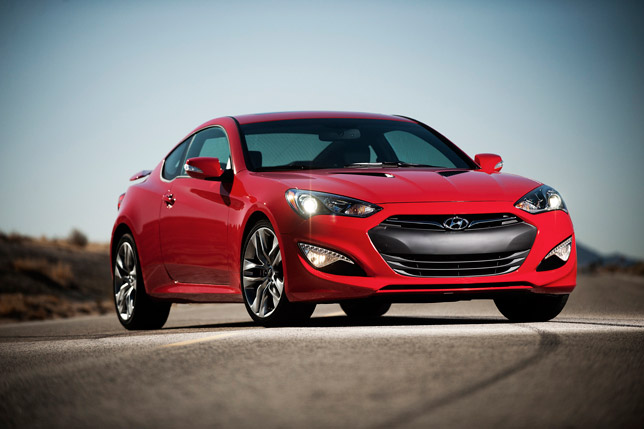
2013 Hyundai Genesis Coupe has just made its North American debut at the North American International Auto Show. The highlights about the refreshed and significantly redesigned model are the impressive performance upgrades, the more aggressive coupe styling, the improved interior materials and design. It also includes both 4-cylinder and V6 engines, which benefit from significant technology enhancements. On the other hand with the 3.8-liter V6 engine it receives sophisticated direct-injection technology and with the the 2.0-liter turbocharged engine it upgrades to a more precise twin-scroll turbocharger and larger intercooler. These two vehicles are of course with automatic transmissions and 8-speeds, with paddle-shift SHIFTRONIC® manual-shifting capability.
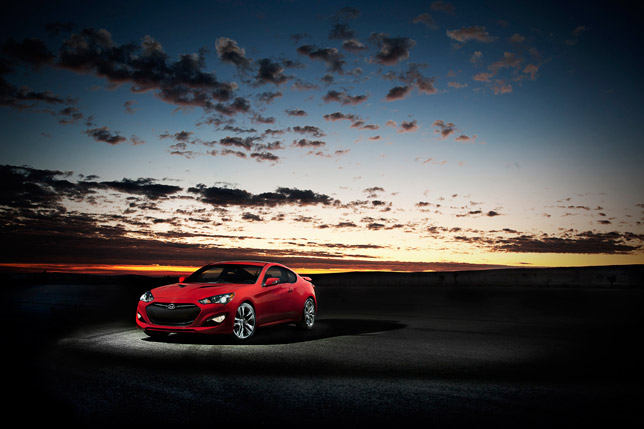
The refreshed 2013 Hyundai Genesis Coupe captures the attention with aggressively redesigned front fascia, grille, headlights, LED daytime running lights, fog lights and hood with heat extractor cues. The side view reveals new, aggressive 18- and 19-inch alloy wheel designs with deeper dimensional sculpting. Eventually, the rear taillights provide a visual spark via premium LED illumination and new contours. Nevertheless the traditional rear-drive sport coupe proportions remain the same. Moreover Genesis Coupe’s arching roofline and tapering greenhouse highlight the exterior. And to make everything perfect the depth between the fenders and the greenhouse has been maximized. In addition enlarged openings in the front fascia allow for better engine breathing along with a more aggressive look. At last, dual asymmetrical exhaust tips integrated with the blackout rear diffuser treatment complete the performance.
2013 Hyundai Genesis Coupe
The two Genesis Coupe engines have been significantly upgraded. In particular the 3.8-liter Lambda DOHC V6 engine adds sophisticated direct-injection technology, adding 42 horsepower (a generous 14 percent increase) and 29 lb.-ft of torque (an 11 percent increase). Peak horsepower rises to 348 (255 kW) at 6,400 RPM, with peak torque increasing to 295 lb.-ft. (218 Nm) at 5,300 RPM on premium fuel. Additionally the unique lambda-engine anti-knock technology allows the V6 engine to run on regular fuel. The result is a possible acceleration from 0 to 60 mph in less than 5 seconds. The top speed is electronically limited to an impressive 149 mph. Additionally the 3.8-liter engine uses Dual Continuously Variable Valve Timing (Dual CVVT) and a Variable Intake System (VIS) that helps cylinders breathe most efficiently at both low and high RPM. The result is an outstanding throttle response and off-the-line acceleration combined with remarkable fuel efficiency. All these new technologies are included in order to give Genesis Coupe 3.8 an impressive power-to-weight ratio of only 10.0:1. On the other hand the turbocharged, intercooled 2.0-liter DOHC inline four-cylinder substitutes a new twin-scroll design for its turbocharger in addition to a larger intercooler with enhanced thermal efficiency. This twin-scroll design is more efficient at recovering exhaust energy and produces cooler cylinder temperatures than. Furthermore it is also more precise, with improved combustion efficiency, reduced turbo lag, leaner air/fuel ratios and more evenly distributed pressure in the exhaust ports. All of this results in improvements in power, efficiency and emissions. The 53 percent larger intercooler further reduces the intake temperatures, providing denser, cooler air from which to develop even more power. This turbocharged engine also benefits from Dual CVVT on both intake and exhaust camshafts. The 2.0-liter turbo now generates 274 horsepower (201 kW) and 275 lb.-ft. (203 Nm) of torque on premium fuel. The highlight here is that the turbo’s anti-knock sensors automatically adjust ignition timing and engine mapping to run perfectly on regular fuel, yielding 260 horsepower (191 kW) at 6,000 RPM and 260 lb.-ft. (191 Nm) of torque at 2,000 RPM. The turbo engine also features a cast-aluminum cylinder block and cylinder head. All these improvements give the Genesis Coupe 2.0T a great power-to-weight ratio of 12.3. Both V6 and 4-cylinder engines also feature deeper, baritone-sounding dual cat-back exhausts to complement more efficient breathing on the intake side. To ensure that all this new power is evenly distributed to the pavement, Genesis Coupe also offers an available Torsen® limited-slip differential on R-Spec and Track models. Genesis Coupe’s body shell makes generous use of ultra-high-tensile steel. The rear-wheel drive powertrain configuration provides a well-balanced 55:45 front-to-rear weight distribution for the 2.0T, and 56:44 for the 3.8 model.
The new 2013 Hyundai Genesis Coupe has newly tuned sport suspension: spring, damper, and bushing ratings all have been precisely recalibrated to match these new powertrains. Of course they are not on the account of the road feel, precise body motion control and ride comfort, which are now all improved. Moreover Genesis Coupe employs a MacPherson strut dual-link front suspension and a five-link rear suspension setup. In more details, the front suspension is mounted to the body via a solid subframe that is lighter and stronger than a comparable multi-piece component would be. And in order to help reduce body roll and tune the cars at-the-limit handling for maximum predictability, there are fitted 23-mm diameter front and 19-mm diameter rear stabilizer bars. Another important fact that has to be mentioned is that the high-performance Genesis Coupe R-Spec and Track models raise the bar even higher with differentiated, track-tuned suspension calibrations. To be more precise, the R-Spec/Track suspension features both firmer front spring rates and rear spring rates with matched damper rates. The Genesis Coupe R-Spec/Track models also deliver a significant increase in roll control over other versions of the Genesis Coupe via thicker stabilizer bars (24mm front/20mm rear). Of course all models receive improved low-velocity-control dampers for refined ride comfort combined with improved body control. What about the suspension of the car: it uses hydraulic, RPM-sensing rack-and-pinion steering which now has been recalibrated with a quicker 13.8:1 ratio. The new models are also with further optimized driver ergonomics, and telescopic adjustment. The transitions mated with the both engines are the standard six-speed manual transmissions. However they have been significantly to provide more driver-friendly shift gating and balanced weighting precision. Additionally the clutch take-up, feel, and engagement characteristics also have been refined for optimum shifting ease and feel. Both engines now offer an in-house-developed eight-speed automatic with paddle-shift SHIFTRONIC® manual-shifting capability. In addition to the steering wheel-mounted paddle shifters, each automatic offers shift capability via the shift lever. Of course Hyundai can not go without high performance braking systems used in the design of the new 2013 Genesis Coupe. And as usual there are Brembo® four-piston calipers clamp down on fade-resistant 13.4-inch ventilated front brake rotors and 13-inch ventilated rear rotors on both R-Spec and Track models. However, all other models get substantial 12.6-inch front ventilated rotors and 12.4-inch rotors in the rear with floating single-piston calipers.
The 2013 Genesis Coupe interior has been significantly improved. It now has more distinctive, upscale features and design cues. Firstly the instrument panel crash pad features a stitched-seam appearance. Secondly, the parking brake lever is leather-wrapped on leather-equipped models. Next, the instrument cluster now features an electroluminescent gauge cluster for premium ambience and superior readability. In addition a new driver-side rear seat walk-in assist function has been added for more convenient rear seat access from the driver’s side. Further options are: driver seat power lumbar support; front seatback; a center stack multi-gauge cluster with instantaneous mpg, torque level (3.8 models) or turbocharger which boost pressure (2.0T models) and oil temperature; a center fascia tray with cover; interior surfaces with softer touch and lower sheen; sport front seats with deep side bolsters; Infinity® premium audio system; two-stage front seat heaters. Genesis Coupe also offers the convenience of a Proximity Key and push-button start. Furthermore the model also features innovative technologies such as Xenon high-intensity discharge (HID) headlights, which deliver brighter illumination intensity, more daylight-like lighting character and reduced power consumption. And for the audiophiles the new Genesis Coupe has a standard auxiliary input jacks (3.5 mm mini-jack and USB input) to accommodate and charge personal audio devices such as an iPod®. Of course the new Hyundai Blue Link telematics is available on 2013 Genesis Coupe, however with a 90-day complimentary trial period. The Blue Link platform is available on 3.8 Grand Touring/Track and 2.0T Premium trim levels. Blue Link can be accessed from the buttons on the rearview mirror inside the Genesis Coupe, the web and via smart phone. In addition the Blue Link System is offered in three telematics service packages: Assurance, Essentials and Guidance.
2013 Hyundai Genesis Coupe
Other important features are the included safety technologies. The 2013 Genesis Coupe has a wide range of both active and passive safety features. For example a standard safety technology includes driver and front passenger advanced frontal airbags, front seat-mounted side airbags, side air curtains and active front head restraints. The vehicle is also built with strong body construction; front and rear crumple zones; bodyside reinforcements and five-mph energy-absorbing bumpers. The hood also includes buckling creases and safety stops. In addition the front seatbelts have pretensioners and force limiters, and the rear seats feature LATCH (Lower Anchors and Tethers for Children), which make affixing child safety seats easier. Furthermore all Genesis Coupe models feature standard four-channel ABS with Electronic Brake-force Distribution (EBD). Hence this optimizes the brake performance under various dynamic loading conditions. The system also includes Brake Assist, which provides maximum ABS-level braking force in accidental and unexpected stops. Of course there is featured Electronic Stability Control (ESC), which is one of the industry’s most effective life-saving technologies. The highlight here however is that the 2013 Genesis Coupe now offers a specially-tuned three-stage driver-selectable ESC modes: Full-on ESC function (default mode on start-up); Intermediate ESC function with driver powertrain override control and retained ESC/TCS braking function; Full-off ESC function for uninhibited driver vehicle control in all conditions. The driver-selectable full-off ESC mode has been calibrated to provide drivers with a larger performance envelope should they choose to participate in competitive events such as autocrosses or track days. The Genesis Coupe anti-lock braking system function (ABS) remains fully functional in all ESC modes to help drivers maintain steering control under adverse braking conditions.
Finally all Genesis Coupe models have more aggressive exterior which is emphasized with secen new color offerings: Parabolica Blue, Catalunya Copper, Monaco White, Becketts Black, Circuit Silver, Gran Premio Gray, and Shoreline Drive Blue. To further improve and refresh Genesis Coupe’s interior design there is new tan leather interior, a new red leather bolster/red cloth insert interior, and a new gray leather bolster/gray cloth insert interior have been added to the interior color environment selections.
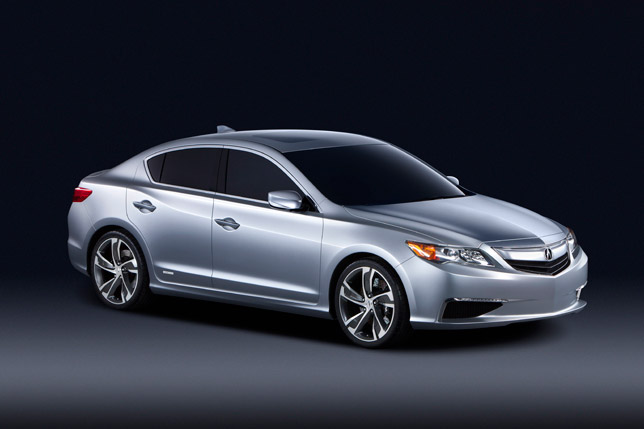
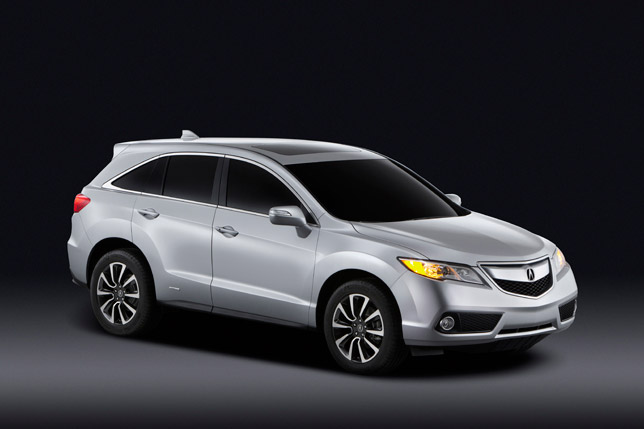
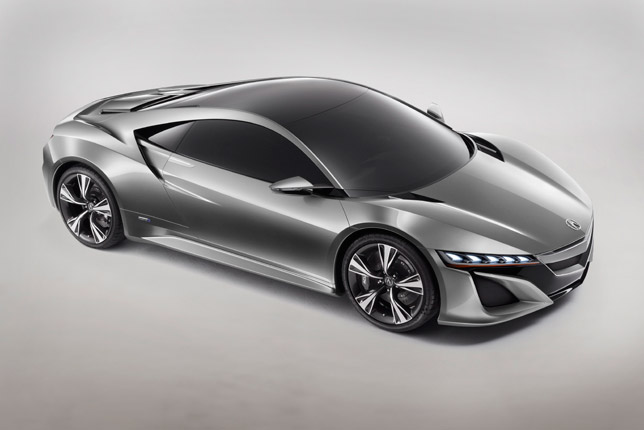
The brand Acura has just unveiled today their three new vehicles at the North American International Auto Show in Detroit: a concept version of the all-new ILX luxury compact sedan, a prototype of the 2013 RDX crossover sport utility vehicle, and the NSX Concept. The company has also announced that the next-generation NSX will feature Acura’s innovative new Sport Hybrid SH-AWD® technology and that the vehicle will be developed by Honda R&D Americas and manufactured in Ohio.
The Acura ILX Concept is the precursor to the Acura luxury compact sedan which is going to be launched in the spring of 2012. The new ILX will feature three different powertrains, including Acura’s first-ever gas-electric hybrid! The focus is on exterior styling, affordability and environmental issues. Moreover the new concept vehicle is sleek, sporty and aerodynamically efficient. As seen in the exterior of the all-new Acura ILX, the model combines luxury, performance and efficiency. Another advantage is that it has a compact, yet formal proportion, delivering a very professional image. Furthermore the lineup of ILX models will include an entry-level model powered by a 2.0-liter inline 4-cylinder engine; a high-performance model with a 2.4-liter inline 4-cylinder engine paired with a six-speed manual transmission; and a 1.5-liter gasoline-electric hybrid powertrain (Acura’s first-ever hybrid offering). The ILX will include a high–quality interior which is spacious and sporty. It will also offer a number of new valuable features such as a smart entry keyless access system and pushbutton start, Pandora internet radio interface and SMS text message function for smart connectivity with the world. In addition the ILX will have a long list of standard options, different trim levels (that will include a Technology Package), multiple transmission choices, and excellent standard safety features— including Acura’s acclaimed Advanced Compatibility Engineering™ body structure, front, side and side-curtain airbags, 4-channel anti-lock brakes and Vehicle Stability Assist™ (VSA™).
Acura ILX Concept
The second vehicle that has been just unveiled is the 2013Acura RDX. It is a prototype variant of the 2013 RDX – the second generation five-passenger crossover SUV. The goal in its design was the approach to advanced performance and fuel efficiency via a new engine; transmission and all-wheel drive system. The 2013 RDX is scheduled for launch in the spring of 2012. It will have as standard equipment a 3.5-liter V-6 engine which produces 273 horsepower (200 kW). In order to improve the performance and fuel economy, the RDX makes use of a 6-speed automatic transmission with a new lock-up torque converter. In addition the RDX also gets a new, lighter all-wheel-drive system which provides the required performance and safety with increased efficiency. The fuel economy ratings range is 20 mpg in the city and 28 mpg on the highway, which makes the front-wheel-drive models of the 2013 RDX the best fuel economy of any gasoline-powered luxury SUV in its class. Furthermore the RDX exterior incorporates a sleek, more aerodynamic body, with a longer, sculpted hood and styling that is more classy and sophisticated. Furthermore the chassis updates feature a longer wheelbase and wider track, all-new Amplitude Reactive Dampers, and a new motion adaptive electronic power steering system. Inside the 2013 RDX, new sweeping shapes, matte surface trim, and generous use of leather combine to give the RDX interior an upscale look and luxury feel. In the interior is also used sound deadening materials and Active Sound Control team. They all provide an exceptionally quiet cabin. The larger door openings, widened passenger room, increased cargo volume and a power rear tailgate make the RDX interior more accommodating and flexible. The new 2013 RDX will also receive a host of new technologies including Pandora internet radio interface, SMS text message feature, a smart entry keyless access system, pushbutton start, and a three view rear camera. There’s an optional Technology Package which features AcuraLink® Satellite Communication System, Acura Navigation System with Voice Recognition™, AcuraLink Real-Time Traffic with Traffic Rerouting™, and AcuraLink Real-Time Weather™ with radar image maps. New for 2013, the even more advanced navigation system utilizes a hard disk drive (HDD) with 60 gigabytes of storage capacity – including 15 gigabytes that can be allocated for music storage.
2013 Acura RDX Prototype
The third vehicle is Acura NSX Concept which is dynamically-styled and gives an indication of the next great performance vehicle from the Acura brand. The designers used lightweight materials and a mid-mounted V-6 engine to build the NSX Concept. The car also employs several new technologies for Acura, including application of Acura’s innovative new Sport Hybrid SH-AWD® (Super Handling All Wheel Drive™) hybrid system. In addition it makes use of the unique 2 Electric Motor Drive Unit with a bilateral torque adjustable control system. It also has the all-new hybrid all-wheel-drive system which can instantly generate negative or positive torque to the front wheels during cornering. Moreover the new Sport Hybrid SH-AWD® will offer unmatched handling performance. In addition to the handling advantages of the Sport Hybrid SH-AWD® system, a powerful next-generation VTEC® V-6 engine with direct-injection works in concert with a dual clutch transmission with built-in electric motor. This results in supercar acceleration while at the same time it also offers outstanding efficiency. While most supercars opt for huge force delivered from a large engine, the NSX Concept champions the true racing strategy of a favorable power-to-weight ratio. The new Acura supercar, expected to debut in the next three years.
The new 2012 Volkswagen E-Bugster Concept is actually the latest Beetle which is powered purely by electricity! It is the environmentally conscientious version of the famous model, now even more appealing in shape and design! The new concept vehicle was just revealed at the North American International Auto Show in Detroit. As we can see the new two-seat E-Bugster continues Beetle’s sporty theme. However this version is powered by an electric motor which provides 85 kWh of power. This means that it can accelerate the car from 0 to 100 km/h in 10.9 seconds! Yet, it offers a range of at least 110 miles from the 28.3 kWh lithium-ion batteries!
Another important feature here is that it can be completely recharged for only 35 minutes when it is in the function fast-charging. This quick charging is possible due to a new Combined Charging System. The latter was developed in co-operation with Audi, BMW, Daimler, Porsche, Ford and General Motors/Opel, and more importantly allows charging via single-phase AC sources (for example a 120-Volt US or 230-Volt European domestic outlet) or via ultra-fast DC sources at specific charging stations.
Volkswagen E-Bugster Concept
Furthermore the E-Bugster doesn’t only charge when plugged in. Here’s the deal: as soon as the driver’s foot leaves the accelerator pedal kinetic energy is transformed into electricity and stored in the battery. Isn’t that brilliant! In addition, applying the brakes increases the intensity of regeneration – a function which informs the driver through the instrument panel. Other instruments feature driving range and battery state indicators, and a measuring tool which shows how much energy the driver is requesting via the accelerator pedal.
The size of the 2012 Volkswagen E-Bugster Concept is 4,278 mm long and 1,838 mm wide, which makes it the same length as the Beetle, however 30 mm wider. On the other hand the new roof lowers the height by around 90 mm to 1,400 mm. This was done in order to give the E-Bugster more dynamic and sporty look. And it definitely does! The low, swept-back windscreen ensures maximum visibility, as does the wide rear screen, which shows that speedster-style vehicles need not be impractical.
Volkswagen E-Bugster Concept at 2012 NAIAS in Detroit
Other differences from the production Beetle are the front and rear bumpers, which have been substantially modified. In details, at the front, LED daytime running lights at the outer edges of the central air intake form a C-shape on the left that is mirrored on the right. This is a signature which is featured on all Volkswagen’s electric vehicle concepts. This is also happens at the back, where reflectors take the place of LEDs. Additionally there are 20-inch alloy wheels which were adapted from the 18-inch ‘Twister’ alloys of the production car. They come along with 235/35 tyres. Around the bottom edge of the side windows is a chrome strip that loops around the vehicle from A-pillar to A-pillar. From this chrome strip to the top of the E-Bugster’s hard top the height is a low 400mm.
The interior of the car is also as impressive as the exterior – it reflects the E-Bugster’s blend of high-tech and spottiness. In particular it includes sports seats nestling either side of a continuous centre console, plus aluminium door handles and seatbelt guides. Starting the E-Bugster is pure enjoyment and fun. Only with pressing the Start button the interior is bathed in white light, then blue light. It starts with a light pulse in the instrument cluster, from where the light emanates in a millimetre-wide strip, coursing into the doors and around the air nozzles.
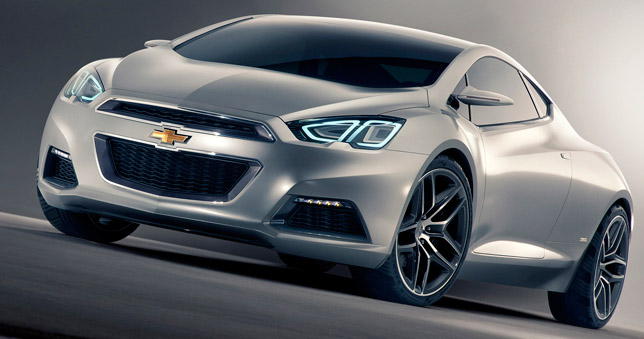
Chevrolet has just introduced today their two new concept vehicles at the 2012 North American International Auto Show – Chevrolet Code 130R Concept and Chevrolet Tru 140S Concept. The first car is a four-seat coupe with a simple upright profile. It is painted in red metallic paint with matte anodized gold wheels. Moreover Code 130R includes heritage performance-inspired styling and rear-wheel drive. It also has an extremely appealing look thank to its aggressive front fascia, Chevrolet fender flares, straight body side and Chevy crossflag emblem. The designers have worked on the engine as well. They decided that the turbocharged engine will be tuned to work in tandem with eAssist technology. Thus they have managed to balance turbocharged performance with fuel economy simply by shutting off the engine at stops, recapturing braking energy, and smoothing torque during acceleration. Hence this concept takes the automotive electrification to the next level.
The second concept is Tru 140S and it is a front-wheel-drive, “affordable exotic” four-seat sporty coupe. Furthermore it is a three-door hatchback and obviously it was designed to be an attractive-yet-affordable sports car. As we can see Tru 140S is designed to look confident, exotic, expensive and fast, thank to the paint finish in matte white with Chevy performance chrome wheels featuring crossflag emblems. In addition Tru 140S is based off the same platform as the Chevrolet Cruze and the groundbreaking Chevrolet Volt electric vehicle with extended range. The goal of the designers here was to demonstrate technologies typically found in more expensive cars, including direct injection and a starter-based stop-start technology, balancing internal combustion and electrification in order to deliver high value and improved fuel economy.
Furthermore the new concepts feature options which nowadays are extremely appreciated. First of all they have sedan-sized functionality in performance coupe form that seats four passengers. Secondly, the interior connectivity and convenience feature innovative storage, WiFi, smart phone integration with Chevrolet MyLink and heads-up display. Next, the highlight is the 40 MPG with a 1.4L Turbo Ecotec engine with approximately 150 horsepower (110 kW). And eventually there is the chance of possible production price range in the low $20,000s!
CHEVROLET CODE 130R CONCEPT COUPE SPECIFICATIONS
Overview
Model:
Chevrolet Code 130R Concept Coupe
Body style / driveline:
four-passenger coupe, rear-wheel drive
EPA vehicle class:
compact car
Engine
1.4L Ecotec turbocharged DOHC I-4 w/ eAssist
Displacement (cu. in. / cc):
83 / 1364
Bore and stroke (in. / mm):
2.85 x 3.25 / 72.5 x 82.6
Block material:
cast iron
Cylinder head material:
cast aluminum
Valvetrain:
overhead camshafts, four valves per cylinder, continuously variable valve timing
Ignition system:
individual coil on plug
Fuel delivery:
sequential multi-port fuel injectors with electronic throttle control
Compression ratio:
9.5:1
Horsepower (hp / kW):
150 / 110
Torque (lb.-ft. / Nm):
148 / 200
Recommended fuel:
regular unleaded
Max engine speed (rpm):
6500
Emissions controls:
close-coupled and underfloor catalytic converters; Quick-Sync 58x ignition system; returnless fuel rail; fast light-off O2 sensor
Chrysler Group and Beats™ by Dr. Dre™ announced at the 2012 Consumer Electronics Show in Las Vegas today the next level in their bold new partnership. It will bring about the studio quality sound experience of Beats™ Audio into the new 2012 Dodge Charger. The goal is to integrate a recording-studio quality audio experience for everyone who wants to feel and hear their favorite music as it was intended. In addition the project will debut at the same time at the North American International Auto Show in Detroit and the Consumer Electronics Show in Las Vegas, where audiophiles will be able to experience for the first time demonstrations of the Beats by Dr. Dre audio system. The two companies have worked together in order to design and tune the 10-speaker audio system. Thus the effect is a unique combination of high performance car and a high performance audio experience.
Chrysler Group is the first automaker which has integrated the Beats by Dr. Dre audio system in its vehicles. It was firstly introduced less than a year ago at the 2011 New York International Auto Show. The system currently is standard with the 2012 Chrysler 300S and available as an audio upgrade in additional Chrysler 300 models. Now the Beats Audio system will also be standard equipment on the new 2012 Dodge Charger R/T Max and included with the Blacktop Package or Rallye Appearance Group on Dodge Charger SXT models. The Beats Audio system is also included with the Sound Group and Wheels and Tunes Group on Dodge Charger R/T models.
2012 Dodge Charger RT
But let’s look up into the details of the vehicle and the audio system included. First of all there is featured state-of-the-art Uconnect®Touch 8.4, which provides 2012 Dodge Charger passengers with the segment’s largest touchscreen display (8.4-inch), and next-generation mobile connectivity, convenience and multimedia features. Moreover the Uconnect Touch also controls the 12-channel amplifier that integrates the heart of the Beats proprietary equalizer algorithm, creating the high-definition sound Beats Audio founders Dr. Dre, and Jimmy Iovine, Chairman of Interscope Geffen A&M Records. Next to be highlighted is that the integration of Beats™ by Dr. Dre™ audio system delivers the mid- to high-range needed for studio-quality sound. The system includes three 3.5-inch speakers located in the instrument panel, two 3.5-inch speakers located in the rear doors, two 6 x 9-inch front-door woofers provide bass, two 6 x 9-inch speakers and a center-mounted 8-inch speaker located in the rear-shelf area provide full-range audio, maximizing how music genres from hip hop to Motown should sound and feel, an 8-inch Beats Audio trunk-mounted dual-voice coil subwoofer with sealed enclosure delivers tight, powerful, punchy bass.
2012 Dodge Charger Blacktop
With this unique system, the Dodge Charger will be even more appealing. However the vehicle provides the ultimate combination of dramatic Dodge heritage styling, award-winning premium interior, the reassurance of an IIHS Top Safety Pick and full-size spaciousness with the fuel efficiency of a mid-size car. The new feature for 2012 is a ZF eight-speed automatic transmission paired with the award-winning Pentastar V-6 engine, which delivers an impressive 292 horsepower (215 kW) and a best-in-class 31 miles per gallon (mpg) on the highway. In fact, that fuel economy not only surpasses any full-size V-6 sedan but any mid-size V-6 sedan, while offering all of the driving dynamics and distinctive style for which Charger is renowned. Moreover the new eight-speed transmission delivers the astonishing 15 percent increase in fuel economy and 10 percent improvement in acceleration! Additionally, new for 2012 are die-cast paddle shifters, available with the Pentastar V-6 and HEMI® V-8 engines. Furthermore the Charger’s available legendary 5.7-liter HEMI V-8 with four-cylinder mode Fuel Saver Technology and variable valve timing delivers best-in-class power with 370 horsepower (272 kW) and 395 lb.-ft. (292 Nm) of torque. It has to be highlighted that the starting price is thousands of dollars less than the competition. In addition Charger’s all-wheel-drive system is the most advanced in its class, with segment exclusive active transfer case with front-axle disconnect to maximize fuel economy of up to 27 mpg highway while delivering outstanding performance and handling inherent to a rear-wheel drive car.
To sum up, Dodge Charger proudly delivers premium, world-class sedan precision at an incredible value, starting at a U.S. MSRP of only $25,495.
The 2012 Dodge Charger models powered by Beats by Dr. Dre audio system will arrive at Dodge dealerships in the U.S. in the first-quarter of 2012.
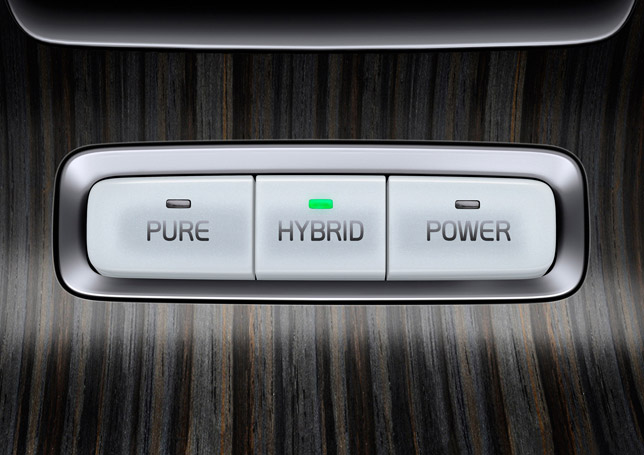
At the 2012 North American International Auto Show in Detroit, Volvo Car Corporation will reveal an innovative petrol plug-in hybrid, which is going to be a unique blend of petrol and electric power. The project is called Volvo XC60 Plug-in Hybrid Concept and it is an electric car, a highly economical hybrid and a powerful high-performance car. All this comes in one package! The great news is that the driver can choose which one of the options they want to drive, with only one touch: there is a button, with which the driver decides how the available power from the combination of the high-performance petrol engine and the electric motor is to be used.
This is undeniably world-class petrol plug-in hybrid technology. Moreover it features a state-of-the-art four-cylinder engine from the upcoming Volvo Environmental Architecture engine family. However we will have to wait a couple of years to see it reaching the American showrooms. As we have already stated, the driver chooses the driving mode via three buttons on the instrument panel. Through these buttons the car “receives” three different modes: Pure, Hybrid or Power. In the first one, the vehicle is powered solely by its electric motor. The range according to the European certification driving cycle NEDC is 28 miles. In the next, Hybrid mode (which by the way is the standard setting whenever the car is started), the petrol engine and electric motor co-operate to provide maximum driving pleasure with minimum environmental impact. According to the European certification driving cycle NEDC, CO2 emissions are 53 g/km (2.3 l/100 km) – which translates into fuel economy of over 100 mpg. The car has a total operating range of up to 600 miles (960 km). The last mode is a technological optimization which creates the optimum possible power. Here the petrol engine with 280 hp (206 kW) and 380 Nm (280 lb.-ft.) is combined with the electric motor with 70 hp (52 kW) and 200 Nm (148 lb.-ft.). This results in car’s acceleration from 0 to 100 km/h 6.1 seconds.
Volvo XC60 Plug-in Hybrid Concept features three Modes
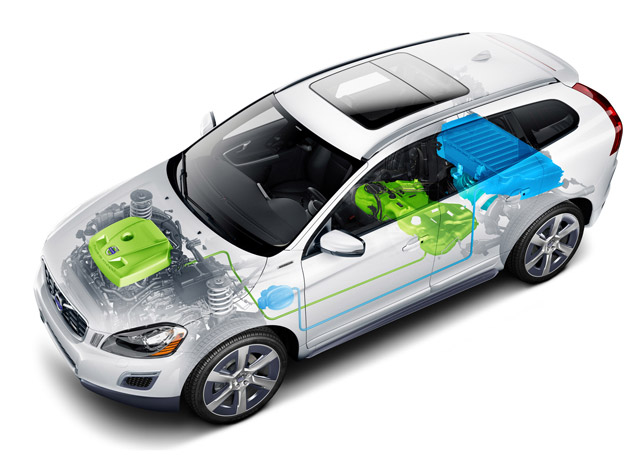
In addition the front wheels of the XC60 Plug-in Hybrid Concept are powered by a four-cylinder turbocharged petrol engine from the forthcoming VEA (Volvo Environmental Architecture) engine family. This is the engine which produces 280 horsepower (206 kW) and maximum torque of 380 Nm (280 lb.-ft.). Power delivery to the wheels comes via a newly developed eight-speed automatic transmission. Moreover the concept car carries a “T8” badge, which emphasises the combined 350 horsepower of the high-performance four-cylinder engine and the electric motor. The highlight here is that this moves the car into a range previously occupied solely by eight-cylinder engines.
Volvo XC60 Plug-in Hybrid Concept
In details, VEA is a modular range of diesel and petrol engines. To be more precise, the petrol versions come with direct injection, minimised internal losses and balance shafts for maximised comfort. Several levels of turbocharging open up for flexibility that encompasses the whole range from high power and torque variants to extremely fuel-efficient derivatives. In addition certain engines will have added performance via hybrid drive or other spearhead technology. The modular format is based on a standard of 500cc (30 cubic inches) per cylinder for optimum thermodynamics. Additionally, it could also be used to develop three-cylinder engines. What is more important here is that VEA offers several advantages. The first thing to be mentioned is that the number of unique parts is reduced. Therefore this promotes manufacturing efficiency, quality assurance and efficiency of new development projects. Secondly, the new powertrains are considerably lighter weight than the present engines with similar performance. Next, the fuel economy is improved by up to 35 percent, again in comparison to the engines with similar performance. And at last, the modularity and compact transverse design are also ideal for future electrification developments.
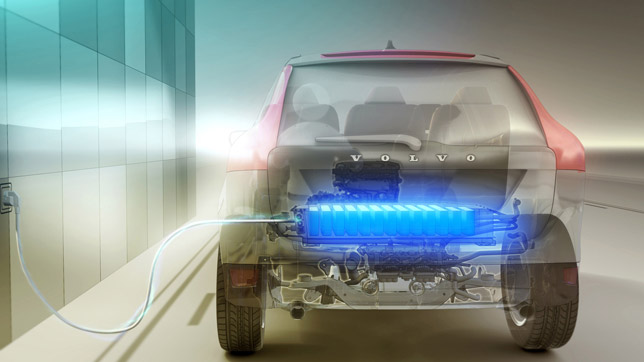
In addition the engine in the XC60 Plug-in Hybrid Concept has no conventional starter motor or alternator. On its place there is an Integrated Starter motor and Generator (ISG) connected to the crankshaft, which is located between the engine and the transmission. In details, the ISG is capable of delivering the additional 34 kW (45 hp) during acceleration. Moreover it also charges the battery during braking. Furthermore the rear axle of the XC60 Plug-in Hybrid Concept is driven by an electric motor which produces 70 horsepower (52 kW). It is supplied with power from a 12 kWh lithium-ion battery pack installed under the floor of the load compartment.
Volvo XC60 Plug-in Hybrid Concept
The battery pack can recharged from a regular power outlet, at home or at a parking place. The recharging time varies with the current. If 220V is available, a full charge with 12A takes just 3.5 hours. On the other hand, with the 110V/12A a full charge takes 7.5 hours. In addition it is also possible while recharging the car to heat or cool the passenger compartment. Therefore this also means that more battery power is available to propel the car.
There is no doubt that the car will feature an infotainment system, called Volvo Sensus. It will keep the driver constantly updated on everything that makes the journey simpler, more efficient and more entertaining. For example it can show the best route to a destination depending on whether the driver prioritises low energy consumption, the fastest route or the shortest distance. Moreover it can also show Low Emission Zones where sufficient capacity is needed for running on pure electricity. Next instance is that it provides information about charging stations with access to renewable electricity or locations along the route with access to quick-charging facilities. The driver can also connect to the car via a mobile phone application. Thus way making it possible for the driver to see remotely the battery’s charge level, remaining range, and the location and capacity of the nearest recharging station. Moreover via the app, it is also possible to verify if the charger cable is hooked up and it is also possible to pre-program the car’s interior climate.
The exterior of the Volvo XC60 Plug-in Hybrid Concept is painted in white colour and the 21-inch wheels enhance the muscular appearance. On the other hand the interior includes unique detailing and colours, such as sober dark-blue leather upholstery and inlays of blue-grey wood. The instruments have been tailored to give the driver all the necessary information about petrol and electricity consumption, battery charge level, remaining range and so on.
Volvo XC60 Plug-in Hybrid Concept
Moreover the electric four-wheel drive in this exceptional concept is activated by pressing the AWD (All Wheel Drive) button. Instead of the mechanical power transfer of conventional four-wheel drive, the central control unit distributes power between the petrol-driven front wheels and the electrically driven rear axle. This electric four-wheel drive system has been designed to provide better traction when starting and when driving on slippery roads. The car will be designed in order to give the driver the option to choose to save battery power for later in order to drive on pure electricity later in. For instance while driving in an urban green zone or in the heart of a city. When Save is activated, the generator charges and tops up the battery pack if necessary. The goal is to ensure sufficient battery power for about 12 miles (20 km) of driving on electricity.
Everything about this year’s North American International Auto Show will spin around small vehicles. As the population grows big and hence the customers of vehicles too, there is obviously the tendency of making more downsized automobiles. The North American International Auto Show will take place next week in Detroit. In addition, there will also be a premiere of the automotive world’s most eagerly anticipated new vehicle. The North American International Auto Show in Detroit next week will also be full of luxury and innovation. Another important highlight is that there will be a huge “invasion” of hybrid vehicles as automakers compete to boost fuel economy. The North American International Auto Show 2012 is undeniably where the global automotive community comes together to catch up on the latest news and events.
In short this is what we are going to see just in few days:
Strongly anticipated at this Auto Show is the Acura brand. First, there will be presented a brand new concept called Acura NSX. This is a high-performance hybrid with a V-6 engine mated to a lithium ion battery pack. It will be developed and expected on the market in three years. Speaking about the immediate future there is the 2012 and 2013 Acura ILX Sedan, and also the redesigned 2013 RDXCompact Crossover, which will be powered by a V-6 replacing a turbocharged four-cylinder engine.From Audi we expect to see a refreshed model of a small sporty sedan and a crossover concept. The next brand with a downsized automobile is Buick, which will reveal a newsmall crossover, called 2013 Buick Encore. From Cadillac we expect the ATS Sedan, which, as promised will be launched in the second half of this year. Chevrolet will present a sporty RS modification of the Sonic Subcompact with a new front image and grille, and a six-speed manual included. In addition we are going to see two concept vehicles from Chevrolet. Dodge will thrill us with the new 2013 Dodge Dart with a lot of powertrain options and Dodge Charger styling cues. The Dart will be at dealerships in the first half of this year. Ford brand will present at the NAIASits renewed version of 2013 Fusion which now is with smoother lines, has an engines with direct injection and turbochargers, and a hybrid. Honda will redesign its Accord model in the middle of the year and will also show a new Accord Coupe Concept. This will be a great show for the brand Hyundai which will unveil the turbocharged four-cylinder Veloster. Another preview will be made with a 2013 Hyundai Genesis Coupe which has now a new grille and front fascia and a brand new interior. From Lexus we expect to see the LF-LC Coupe Concept and we also expect to get the answer whether this vehicle will be hybrid or not. Lincolnwill appear with a concept of the new generation MKZ Sedan. A lot of success is going to be expected again from the brand Mercedes-Benz. First of all there will be a presentation of the redesigned 2013 Mercedes SL Roadster, which is now longer and lighter than the previous model and has a new all-aluminum body. In addition the SL550 will be powered by a new 4.6-liter direct-injection V-8. Furthermore the luxury brand will present two E-Class Hybrids: the E400 Hybrid Sedan and the E300 BlueTec Hybrid. We can’t continue without mentioning the MINI brand which will “show-off” with their 2012 Roadster which will be in dealerships in February. NissanPathfinder Concept will be previewed by Nissan which will also show an electric version of the NV200. The luxury of Porsche will be presented by the 911 Carrera and Carrera S models which will go on sale in few months. Scion is a Toyotasub-brand which will show a new model of FR-S Coupe. The smallest of all small cars – Smart, will exhibit a two-seat electric pickup concept called the Smart For-Us. The Toyotabrand of course will compete with a plug-in hybrid concept called the NS4. In addition it will also show the production version of the 2012 Prius C Hatchback. Another European car – Volkswagen will preview a hybrid, called 2013 Jetta Hybrid. And at last the Swedish brand Volvo has prepared for us a surprise with a new Hybrid concept will be firstly revealed at the North American International Auto Show.
To sum up, at the NAIAS we expect to see these production vehicles: 2012/2013 Acura ILX sedan, 2013 Acura RDX Crossover, 2013 Buick Encore Crossover, 2013 Cadillac ATS Sedan, 2013 Dodge Dart Compact, 2013 Ford Fusion, 2013 Mercedes SL Roadster, 2013 Mercedes E-Class Hybrids, 2012 Mini Roadster, 2012 Toyota Prius C Hatchback; and these Concepts: Acura NSX, Audi crossover, Honda Accord Coupe, Lexus LF-LC Coupe, Lincoln MKZ Sedan, Nissan Pathfinder, Scion FR-S Coupe, Smart For-Us Pickup, Toyota NS4 Hybrid, Volvo hybrid. All this makes us eager to expect what will happen next week! Stay tuned!
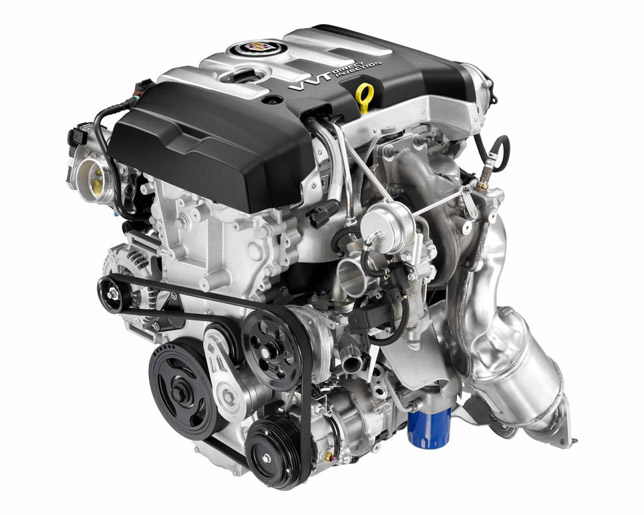
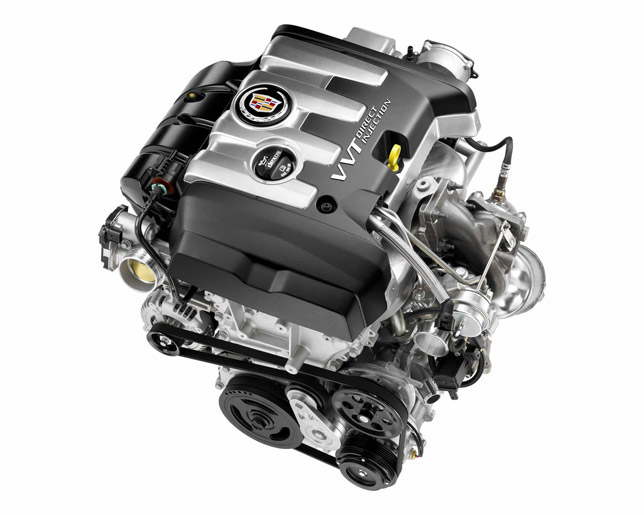
General Motors Company has introduced their latest creation – a 2.0 liter turbocharged four-cylinder petrol engine, which will have its official debut in the 2013 Cadillac ATS next month at the Detroit Motor Show.
“This engine is the perfect match for the new ATS, which will be a refined performance luxury sedan,” commented Don Butler, Cadillac vice president of Global Marketing.
“The 2.0T has an exceptionally smooth and responsive power curve that will make the ATS nimble, quick and fun to drive.”, he added.
The features direct-injection technology, four-valve-per-cylinder with CVVT, twin-scroll turbocharger, forged-steel crankshaft, and a two-stage variable-displacement oil pump with jet-spray piston cooling. It boasts 273PS (201 kW) and 353Nm (260 lb-ft) of toque at just 1500RPM, which is an impressive 136PS per liter.
Overall engine friction is reduced by up to 16 percent. The low-friction design means engine power is delivered more efficiently.
Proprietary computational fluid dynamics analysis techniques were used to develop an all-new combustion system with a higher compression ratio, which also helped boost efficiency.
Additional details on the ATS will be announced at the 2012 NAIAS. The ATS will be built at the Lansing Grand River plant alongside the Cadillac CTS Sedan, Coupe and Sport Wagon and V-Series performance cars.
GMC 2.0 liter turbo petrol engineGMC 2.0 liter turbo petrol engine
 At the 2012 North American International Auto Show, Maserati has unveiled their new SUV concept vehicle named Kubang. The concept demonstrates the power of the modern Maserati. The idea of this sport luxury SUV is not new to Maserati. To remind you, the first Kubang concept was presented in the distant 2003 again at NAIAS. While the project starts with firm fundamentals and capability, the model eventually produced will unquestionably be a Maserati. All major system components will be fully produced by Maserati in picture-perfect continuity with the brand’s core values of sportiness, elegance, glamour, luxury, performance and craftsmanship. There will also be included a new generation of Maserati high-tech proprietary engines. Interesting information is that they were designed in Modena, Italy at Maserati Headquarters. More importantly the production of the new Maserati engines will be performed by Ferrari in Maranello, Italy and they will be mated to a new 8-speed automatic transmission! In addition there are also components with specific performance settings: suspension, brakes, steering and electronics, which will be exclusively developed by Maserati engineers.















 General Motors Company has introduced their latest creation – a 2.0 liter turbocharged four-cylinder petrol engine, which will have its official debut in the 2013 Cadillac ATS next month at the Detroit Motor Show.