Category: Reviews

Expert car reviews – road test and reviews of the latest models in the automobile industry. Read what the professionals have to say about your favorite automobile. Join Now!

  • Lexus LS 600h

    Lexus LS 600hThe new LS 600h adds Lexus’ revolutionary hybrid technology to the unique values of L-finesse design, the world’s most advanced safety technology and the highest possible standards in production, quality and comfort expressed in the LS 460, to create a vehicle which explores the outer reaches of luxury car performance, design, safety and efficiency, whilst offering the ultimate in sophisticated and engaging driving experiences.

    From the outset, the Lexus philosophy has been to develop cars that establish new frontiers in quality, luxury and performance through a radical approach to advanced vehicle design, whilst stressing absolute customer orientation at the very core of the marque.

    In taking a leading global role in the development of performance hybrid vehicles, Lexus has revolutionised the premium automotive segment by awarding its customers a unique, sophisticated, intelligent driving experience which utilises the ultimate in high technology power trains to marry environmental responsibility with peerless quality and involving driving dynamics.

    Toyota Motor Corporation’s (TMC) credentials in developing environmentally-friendly hybrid vehicles date back over 40 years to 19 65, when it began the investigation of the use of gas turbines to power an electric drive system for cars. TMC’s inception of the Toyota Eco Project in January 1997 was followed, in March, by the completion of the Toyota Hybrid System (THS), a brand new powertrain in which a petrol engine and an electric motor operate in tandem, each within their optimum efficiency range.

    THS was installed in Prius, the world’s first volume production hybrid passenger car, which went on sale in the Japanese market in November 1997 and has since sold over 639 ,000 units around the world. In 2005, the RX 400h SUV’s Lexus Hybrid Drive, a second generation development of THS, introduced class-leading performance to the equation through a 150% increase in electric motor power. And in 2006, the GS 450h became the world’s first hybrid luxury saloon, and the first full hybrid to combine front engine mounting with rear-wheel drive.

    Following the RX 400h and the GS 450h, the new LS 600h luxury flagship is the marque’s third vehicle to feature the revolutionary hybrid system. Lexus remains the first, and only, premium automotive segment manufacturer offering a comprehensive hybrid model range available today.

    The LS 600h introduces Lexus’ revolutionary, high-performance hybrid drive technology to the flagship of the luxury marque for the first time.

    The LS 600h is the world’s first vehicle to feature a full hybrid V8 powertrain, combining a technologically peerless 5.0 litre petrol engine with a powerful, high-output electric motor, a newly designed, largecapacity battery pack, electronically controlled continuously variable transmission and permanent all-wheel drive. As with the Lexus RX and GS hybrid models, the LS 600h’s ‘600’ suffix refers not to the cubic capacity of the engine but, rather, a power output comparable to that of a conventional, 6.0L V12 petrol engine.

    This state-of-the-art powertrain technology will equip the LS 600h with an unequalled balance of performance and environmental efficiency. A peak combined output rating of over 327kW/445DIN hp (*) offers the power and performance of a normally aspirated V12 engine. Conversely, the hybrid Lexus flagship offers a class-leading combined fuel consumption figure of less than 9.5l/100km(*) and CO2 emissions below 220g/km(*).

    Owing to the inherent Noise, Vibration and Harshness (NVH) improvements offered by its hybrid powertrain, the LS 600h is designed to set a new standard for silent running in the premium automotive segment, with an unparalleled depth and density of cabin quietness, resulting in quite possibly the quietest luxury car in the world.

    The long-wheelbase LS 600h L offers the ultimate ownership experience with an additional 120mm dedicated entirely to rear passenger legroom. It can be equipped with a range of comfort features unique to this class, including reclining seats with leg rest, a Rear Seat Relaxation System and a second DVD changer for individualised rear seat entertainment. In addition, the LS 600h L features innovative technology such as a rear seat cushion airbag and a sophisticated, infrared, body heat sensing climate control system to offer rear seat passengers the ultimate, 1st class luxury travelling experience.

    DE SIGN

    The new LS 600h is the ultimate expression of L-finesse, the unique Lexus design philosophy, demonstrating that a premium automotive segment saloon can be understated, yet inspiring. L-finesse has its roots in the creation of a harmonious balance of contrasting elements. The new LS 600h encompasses this design direction with styling which is both vivid and forceful yet, at the same time, warm, inviting and entirely contemporary. With its long cabin, broad, purposeful groundhugging stance, and elegantly sculpted, streamlined body contours, the hybrid Lexus luxury flagship emphasises simplicity and style in a stunning, modern package.

    The LS 600h may be differentiated from the rest of the LS model range through discreet ‘hybrid’ badging, bespoke, hand-polished alloy wheels, Black Opal –a hybrid-exclusive jet-black body colour revealing blue and purple undertones in bright sunlight, and the world’s first LED low-beam headlamps. The circumference of each of three LED projector lenses is fitted with a transparent blue ring, giving the Lexus hybrid flagship a unique, readily identifiable headlamp signature. In addition, discreet blue detailing of the rear lights and the front logo sets the LS 600h apart.

    On board, the LS 600h may be further identified as the flagship of the LS model range through a painstakingly crafted, full-leather instrument panel, and the peerless finish of real wood highlights, including the gear shift lever and over-door assist grips.

    POWERTR AIN

    The Lexus Hybrid Drive employed in the high performance flagship of the LS model range combines an all new, longitudinally-mounted 5.0L V8 petrol engine with a high-output electric motor and a newly designed, large-capacity battery pack. This state-of-the-art hybrid drive system equips the LS 600h with an unparalleled balance of performance and environmental efficiency. Generating a peak combined power output of 327kW/445DIN hp (*), whilst delivering a class-leading combined fuel consumption figure of less than 9.5l/100km (*) and CO2 emissions below 220g/km (*).

    Hybrid System Components

    Derived from the LS 460’s 4.6L powerplant with the stroke extended by 6.5mm and the bore unchanged, the new 5.0L V8 engine is a showcase of precision mechanical engineering, the most technologically advancedinternal combustion engine ever to have been developed by Lexus engineers. The painstaking development of high rigidity components, optimum balance in all moving parts, minimisation of friction and unprecedented precision of assembly awards the new V8 benchmark performance in the fields of refinement and quietness.

    To reduce the overall weight of the engine, the cylinder block is die-cast from a lightweight, high strength aluminium alloy. The block structure and rib reinforcement design have been finalised through the incorporation of cylinder combustion pressure data to minimise both vibration and noise, and the cylinder head cover is constructed in a lightweight magnesium alloy to lower the powerplant’s centre of gravity.

    In addition to an increase in cubic capacity over the 4.6L 1UR-FSE powerplant, the new 2UR-FSE 5.0L V8 has undergone significant component modification in order to handle its unprecedented power output, including revisions to the pistons, crankshaft, connecting rod, damper pulley, VVT-iE (Variable Valve Timing intelligent by Electric motor), exhaust manifold and all-wheel drive-compatible oil pan.

    Due to the fuel economy penalties inherent in both the increase in engine capacity and the LS 600h’s all-wheel drive system, Lexus engineers have also fine-tuned numerous aspects of the powerplant’s operation, including adjusting the operating angle of Dual VVT-i, to achieve a 3.0L-class fuel economy.

    Furthermore, particular attention has been paid to the absolute minimisation of Noise, Vibration and Harshness, as befitting the uniquely quiet operation of the Lexus hybrid system. To minimise engine stop/start vibration, the intake valve timing has been delayed to lower the compression ratio during restarts. Insulation materials have been applied to the cylinder head covers, and the size and location of engine mounts have been optimised.

    The new V8 features a D-4S stoichiometric direct injection system, the world’s only high compression ratio injection system to adopt two injectors per cylinder. It combines the strengths of both direct and port injection, realising optimum engine efficiency throughout the power band and improving torque by 7.5% across the rev range, whilst minimising fuel consumption and emissions. D-4S also substantially reduces combustion fluctuations in comparison to any conventional, direct or port injection system.

    The 5.0L powerplant is also equipped with Dual VVT-i. This optimised, low pressure loss, variable intake and exhaust timing system incorporates VVT-iE, the world’s first electric motor driven intake camshaft, which operates across the full engine revolution and temperature spectrum. The LS 600h’s Lexus Hybrid Drive employs a highly compact, three-phase, permanent magnet AC synchronous type motor, operating on a 650 Volt current to deliver more than 165kW/224DIN hp. Extensive remodelling of magnet distribution has achieved extraordinarily quiet operation, whilst coiling the magnetic alternate for optimum magnetic force retention has resulted in a smoother, more stable motor rotation.

    In addition to both petrol engine and electric motor power sources, the hybrid system further comprises a generator, a high-performance battery, a power split device which combines and re-allocates power from the engine, electric motor and generator according to operational requirements, and a Power Control Unit (PCU) to govern the high speed interaction of the system components.

    To optimise delivery of the Lexus hybrid system’s immense power, a new, mechanical, all-wheel drive system offers superior traction and handling stability, whilst a newly developed, two-stage motor-speed reduction device and electronically controlled continuously variable transmission offers smooth, linear power delivery and superlative overtaking performance.

    As in the GS 450h, the Lexus’ hybrid system electric motor, generator, power split device and two-stage motor-speed reduction device are all housed in one lightweight, highly compact transmission casing. The combined installation of these components within a single casing directly comparable in size to that of a conventional gearbox is fundamental to the successful installation of Lexus’ sophisticated hybrid drive system in a longitudinal, front-engined sedan platform.

    Equipped with an Electronically Controlled Continuously Variable Transmission, the LS 600h provides breath-taking, linear acceleration. As the hybrid ECU selectively controls both engine and electric motor rpm, the Electronically Controlled Continuously Variable Transmission simulates a continuous variation of the transmission’s current ratio. Similar to that of the GS 450h, the two-stage motor speed reduction device is automatically and seamlessly switched between low and high motor reduction ratio settings by a hydraulic control unit, generating maximum low-gear torque for significantly enhanced acceleration, as well as extended high-gear performance for quiet, high speed cruising with improved fuel efficiency. Via a centre console mounted Mode Select switch, the new transmission offers a choice of three power settings; ‘Normal’, for the optimum balance of power and traction, ‘Power’, for maximum acceleration, and ‘Snow’, for excellent traction control under the most slippery road conditions.

    The hybrid system in operation

    Over the course of any journey, Lexus’ Hybrid System operates in several different modes to maximise the LS 600h’s overall efficiency: Under operating conditions of low engine efficiency such as start up and low to mid-range speeds, the vehicle runs on the electric motors alone, thus eradicating both engine noise and CO2 emissions. Furthermore, the system imbues the vehicle with similar in-gear ‘creep’ to that of a conventional automatic transmission.

    Under normal driving conditions, the ultra-efficient V8 powerplant serves as the main power source. Engine output is divided by a power split device to both drive the wheels directly and power the generator which, in turn, drives the electric motors and simultaneously charges the high-voltage battery. In these circumstances, power allocation is constantly monitored and adjusted between engine and motors to maximise efficiency. When sudden acceleration is required, engine and electric motors again operate in tandem, with extra power supplied from the battery to boost motor response, providing a superlative, seamless, linear power delivery.

    During deceleration and under braking, the combustion engine switches off and the high-output electric motor acts as a generator to effect regenerative braking, optimising energy management in the Lexus Hybrid Drive by recovering kinetic energy (wasted as heat under braking and deceleration) as electrical energy for storage in the high performance battery.

    When the engine is cold and the ignition is switched on, the system will start the engine to warm the unit, running at an engine speed that provides the highest possible efficiency. Thereafter, at rest, the engine stops automatically to conserve fuel. However, if the vehicle is at idle for prolonged periods, the engine will automatically run whenever necessary to charge the high-voltage battery via the generator. Furthermore, under all driving conditions, battery power level is constantly managed via a hybrid ECU that prevents it from reaching extreme levels, hence maximising battery life expectancy.

    The Lexus hybrid powertrain delivers extremely smooth, linear acceleration, with none of the expected ‘jumps’ between gears of a conventional drivetrain. Under every driving condition, at whatever speed, Lexus Hybrid Drive offers a significantly higher level of drive-train refinement than that of a conventional powerplant.

    AMICS

    The Lexus LS 600h features the world’s first, full-time, all-wheel drive hybrid powertrain. The LS flagship further benefits from electrical air suspension system, optional Active Stabiliser control and the second generation of Lexus’ state-of-the-art Vehicle Dynamics Integrated Management (VDIM) system incorporating Variable Gear Ratio Steering (VGRS) cooperation.

    All-wheel drive

    The LS 600h’s all-wheel drive features a three differential configuration and a propeller shaft, coupled directly to the hybrid transmission. A permanently engaged mechanical transfer system distributes drive power with a ratio of 40% to the front wheels and 60% to the rear. A TORSEN® Limited Slip Differential (LSD) was adopted for its highly responsive torque distribution qualities, enhancing grip, traction, stability and vehicle handling under all road conditions, whilst delivering the rear wheel drive characteristics essential to a dynamic, premium segment sedan. In order to accommodate the gear transfer without sacrificing interior legroom, Lexus engineers rejected even the smallest and lightest TORSEN® LSD system currently available, developing a new unit some 30% smaller and lighter than any in existence, with both transfer and differential housed in a single casing.

    Lexus LS 600h Interior

    Air Suspension with Active Stabilisers and Adaptive Variable Suspension (AVS)

    Featuring a significantly revised front suspension configuration to harness the power of the LS 600h’s all-wheel drive transmission, The Lexus flagship’s all-round multilink suspension system utilises new pneumatic cylinder operating in co-operation with an improved Adaptive Variable Suspension system (AVS), which features a vehicle posture control system to synchronise vehicle roll and pitch when cornering, for maximum passenger comfort. The Lexus hybrid flagship further benefits from Active Stabilisers to reduce body roll when cornering and, hence, achieve the LS 600h’s excellent dynamic abilities.

    The Active Stabiliser system features an actuator centrally located on both front and rear stabiliser bar. The actuator comprises a DC brushless motor with attendant reduction gear, capable of applying torque to both left and right hand sections of the stabiliser bar. A system ECU calculates the twist torque output required based on sensor fed steering angle and vehicle velocity information. The twist force applied to both front and rear stabiliser bars by the highly responsive system controls vehicle roll motion, reducing body roll angle to promote ensured vehicle stability, superior cornering performance and improved agility through enhanced steering response.

    Adaptive Variable Suspension (AVS) allows the driver to fine tune the LS 600 h’s ride characteristics with a choice of three damper settings activated via a switch adjacent to the gear lever; ‘Normal’ mode, for everyday driving, ‘Comfort’, for improved comfort on more degraded road surfaces, and ‘Sport’ mode, for improved body control and precise responses to steering input whilst cornering. In any mode, AVS automatically adjusts the erformance of the suspension at all four wheels independently, monitoring data from numerous sensor locations to continuously optimise the damping force of each shock absorber through 9 incremental steps via actuators. Simultaneously, VGRS automatically reduces the steering gear ratio by approximately 10% whilst the Electric Power Steering (EPS) simultaneously increases steering assist torque by some 4%. These measures combine to minimise body roll, sharpen vehicle handling and optimise steering feel for the ultimate in sports sedan driving.

    A new damping force control logic is incorporated within the Adaptive Variable Suspension system to minimise the phase difference between body roll and pitch angles during cornering. Research by Lexus engineers has revealed that a large phase difference between roll and pitch angles can cause driver discomfort by exacerbating the perception of vehicle body roll whilst cornering.

    This phase synchronisation elicits a smooth, controlled roll whilst cornering, with a well-matched vehicle response to steering, yaw and roll, and an enhanced perception of rear tyre grip.

    Vehicle Dynamics Integrated Management (VDIM)

    The new LS 600h is equipped with the latest generation of Lexus’ state-of-the-art Vehicle Dynamics Integrated Management (VDIM) system, specifically developed in conjunction with the Lexus hybrid flagship’s all-wheel drive transmission to enhance traction control and vehicle stability. With comprehensive status data provided by sensors throughout the vehicle, VDIM integrates the LS 600h’s Electronically Controlled Braking (ECB), Anti-Lock Brakes (ABS), Electronic Brakeforce Distribution (EBD), Traction Control (TRC) and Vehicle Stability Control (VSC) active safety systems with the Adaptive Variable Suspension (AVS), Electric Power Steering (EPS) and Variable Gear Ratio Steering (VGRS) systems.

    Unique to the Lexus flagship, the LS 600h drive-train’s Driving Response and Acceleration Management System (DRAMS) alsoaffords VDIM unprecedented interaction with both engine and transmission, employing engine and electric motor output control to effect a faster, smoother and more precise response to situations involving the possibility of a loss of traction, such as mid-corner gear changes.

    Whereas conventional active safety systems are only activated immediately after a limit of the vehicle’s performance envelope has been reached, VDIM progressively engages before that limit is realised. As a result the system offers smoother vehicle behaviour at this threshold through less obtrusive intervention and, hence, a more pleasurable drive.

    PRE VENT IVE SAFETY AND DR IVER ASSISTANCE SYSTEM S

    Appropriate to the high-performance flagship of the Lexus brand, the new LS 600h is a showcase of numerous revolutionary developments in the field of preventive safety technology, based on the principle of accident avoidance through intelligent anticipation. Unique to the luxury hybrid saloon, the LS 600h is also equipped with the world’s first application of low-beam LED headlamp technology.

    Advanced Pre-Crash Safety system (PCS)

    A significant development of the system already featured in the IS and GS model range, the LS 600h’s Advanced Pre-Crash Safety system (Advanced PCS) offers maximum assistance to the driver in collision avoidance, either by day or night. The Advanced PCS now incorporates four world firsts; an Advanced Obstacle Detection System, a Driver Monitoring System, Emergency Steering Assist and a Rear Pre-Crash Safety system. These sophisticated innovations alert the driver to potentially hazardous situations, promote optimum vehicle responsiveness during evasion manoeuvres and reduce the consequences of a collision.

    Advanced Obstacle Detection System

    The Advanced Obstacle Detection System combines information sourced from both a millimetre wave radar and an infrared stereo camera. The millimetre wave radar is mounted within the LS 600h grille, scanning the road ahead. The stereo camera consists of two near-infrared CCD lenses mounted 350mm apart at the head of the windscreen, which transmit digital video images. Near-infrared projectors built into the highbeam function of the headlamps help obstacle detection at night, beyond the range of the low-beam headlamps. Subject to weather conditions, the Advanced Obstacle Detection System can identify a wide range of obstacles, including, for the first time, pedestrians.

    Driver Monitoring System (DMS)

    The Advanced Pre-Crash Safety system also features the world’s first Driver Monitoring System. This system employs a CCD camera, mounted on top of the steering column cover, which is equipped with six built-in near infrared LEDs to give an identical detection performance by day or night.

    First using an algorithm to detect the position of the facial features (eyes, nose and mouth) and measure the width and centre line of the face, the Driver Monitoring System is able to monitor the movement of the driver’s head when looking from side to side. If the driver turns his or her head away from the road ahead at an angle of more than 15 degrees whilst the vehicle is in motion and an obstacle is detected in front of the LS 600h, the system will automatically activate the Pre-Crash warning buzzer function and even briefly apply the brakes to alert him to the situation. If the driver does not respond immediately, The PCS system will automatically engage the subsequent operational sequence of the Pre-Crash functions.

    Emergency Steering Assist

    Through a close interaction between the Variable Gear Ratio Steering (VGRS), Vehicle Dynamics Integrated Management (VDIM) and Adaptive Variable Suspension (AVS) systems, Emergency Steering Assist substantially improves the LS 600h’s response to the driver’s steering input in the likelihood of a collision, increasing the chance of avoiding the obstacle.

    To effect a rapid evasion manoeuvre, the VGRS actuator reduces the steering gear ratio to provide more direct steering and a faster response to driver inputs. Simultaneously, the AVS suspension adopts a stiffer damper setting to minimise body roll, optimising chassis balance for an improved vehicle response to sharp steering inputs. In addition, VDIM offers selective brake control through the integration of the LS 600’s active safety systems to maintain vehicle stability throughout the evasion manoeuvre.

    Rear Pre-Crash Safety system (RPCS)

    Operating whether the LS 600h is stationary or in motion, the Rear Pre-Crash Safety system employs a millimetre-wave radar installed within the rear bumper to constantly scan the area around the back of the vehicle. If a collision is deemed unavoidable, the system automatically activates the front seat Pre-Crash Intelligent headrests, which move up to 60mm forwards and 25mm upwards to cushion the occupant’s head in anticipation of an impact, greatly reducing the risk of whiplash injury.

    Adaptive Cruise Control with Full-Speed Following Function

    Complementary to the Advanced PCS system, the LS 600h also features a new Adaptive Cruise Control with Full-Speed Following Function. As with standard ACC, the system offers two modes -constant speed control, and vehicle-to-vehicle distance control- but is now capable of operating at any vehicle speed between 0 and approximately 17 0 km/h.

    The vehicle-to-vehicle distance control system employs both the millimetrewave radar sensor and stereo imaging camera of the Advanced Obstacle Detection System. Thanks to the system’s full-speed range following function, aclose proximity distance measuring ability, the new Low Speed mode enables ACC to operate in slow or congested traffic for the first time, and, with limited braking and acceleration performance, the system can both bring the Lexus flagship to a complete standstill, and accelerate away once the road ahead is clear.

    LED Low-Beam Headlamps

    The LS 600h is equipped with the world’s first application of low-beam LED headlight technology, offering excellent illumination and significantly improved durability over conventional lighting systems. Based on multiple LED lamp design principles explored in the LF-X concept car, the new system employs a 5-lamp low-beam configuration. Three upward oriented LED lamps focus high intensity illumination directly ahead via an overlapping horizontal array of three projector lenses.

    The remaining two, downward oriented LED lamps employ a shielded parabolic cylinder to create wide angle light projection the three projector lenses are fitted with a transparent blue ring, giving the Lexus hybridflagship a unique, readily identifiable headlamp signature.

    The LS 600h’s low-beam LED lamps boast instantaneous lighting, in approximately 0.1 seconds, emit a white-light colour closest to that of natural daylight and have an lifespan longer than conventional lighting systems, with minimal degradation in light intensity. The combination of a three lamp projector array and twin lamp parabolic reflector optimises illumination across the full width of the road ahead, significantly improving visibility of the opposite side of the road with no increase in glare to oncoming traffic.

  • B&B Audi TT

    To become member in the club of “300” was first point on – German Tuner – B&B’s to-do-list regarding development of this extraordinary TT. To reach the necessary power for a top speed of 300 and more, completely new developed turbocharger and intercooler are installed in the 3.2ltr V6 engine of the Audi TT. The air intake system has been optimized in a significant way. The oil temperature is kept on a perfect level by the help of a special slim line oil cooling system. (more…)
  • Lotus Europa S Luxury Touring Pack

    The Europa S, the Lotus that introduces the brand to enhanced levels of practicality and refinement, has a new Luxury Touring Pack Option which stretches the Europa S towards the more luxurious end of the spectrum.

    The Luxury Touring Pack Option dresses the interior in the smart attire of saddle tan leather, chocolate coloured leather and brown carpets. Where the standard Europa S uses lightweight composite components for items such as the steering column shroud, dash top, instrument and ventilation binnacles and sill covers, the Luxury Touring Pack Option on the Europa S covers these and other components with four hides of soft high-grade saddle tan coloured and chocolate coloured leather.

    Supportive sports seats are fitted and are also clad in saddle tan and chocolate coloured leather in a stripe pattern. Safety critical composite components such as the passenger airbag door are coated in a high-tech soft-to-the-touch material. An engine start button and a solid Walnut and Tulip wood gearknob finish off the interior package.

    Lotus Europa S Luxury Touring Pack
    Lotus Europa S Luxury Touring Pack

    The Luxury Touring Pack Option also stretches to the boot: with brown carpet covering the whole of the boot area including the battery cover, a saddle tan coloured leather trimmed tailgate inner, luggage straps to prevent luggage from moving in the boot (Lotus still expects a laden Europa S to be driven hard!), and a saddle tan coloured leather oddment bag which is fixed to the boot compartment.

    Exterior additions to the Luxury Touring Pack Option include tinted rear and rear three-quarter glass, body coloured front driving lamp surrounds, side air-intake surrounds and roof air-outlet grill. All other exterior grilles such as the front radiator grilles and the rear light grille surrounds are coloured silver.

    All these added luxuries add very little weight to the feather-light Europa S so spirited drivers will not be penalised by opting for the Luxury Touring Pack.

    Availability

    The Luxury Touring Pack Option is available on the Lotus Europa S from April 2007 priced at £1,250 in the UK and £1,75

  • Nissan X-Trail

    Nissan has revealed its second-generation X-TRAIL at the Geneva Motor Show, and it appears the new model is almost identical to the outgoing version. Major changes are the all-new chassis and body design, a range of four different engines including two diesel variants with an automatic transmission, upgraded Intelligent ALL MODE 4WD and a more comfortable interior.

    The first X-TRAIL was an exceptional success for Nissan, so when it came time to develop that car’s replacement, designers weren’t willing to muck with the basic formula. This meant that the new model would have to remain a hugely capable compact SUV with serious off-road credentials and class-leading performance.

    Nissan X-Trail
    Nissan X-Trail

    Each model comes standard with air conditioning, power windows front and rear, and Bluetooth mobile phone connectivity, as well as a side and curtain airbags, ABS and EBD. Optional extras include Xenon headlamps, roof rails with fully integrated driving lamps, and satellite navigation with a full color screen shared with the rear parking camera.

    The new chassis features strut-type suspension at the front with a multi-link system at the rear. Engines on offer include a revised version of the 2.5L gasoline four-cylinder unit found in the current model, two new turbo-diesel units and third 2.0L gasoline unit, with all three engines sourced from Renault. Standard on all versions is a six-speed manual transmission, though a new six-speed auto and another CVT unit are optional on some models.

  • Cadillac XLR-V

    The Cadillac XLR-V, a recent addition to the luxury nameplate’s growing family of high-performance V-Series vehicles, combines luxury with power, performance, personal amenities and style. The XLR-V is equipped with the Northstar V-8 SC (supercharged) engine, producing 331 kW (448 horsepower). Combined with a rear-mounted, six-speed automatic transmission, the XLR-V’s supercharged engine helps delivers 0-to-100 km/h (0-62 mph) acceleration in less than five seconds.

    Measuring a compact 4.51 meters (14.8 ft.) by 1.84 meters (6 ft.), the XLR is based on the iconic Evoq concept car that redefined the perception of Cadillac around the world. The Cadillac XLR-V shares with the XLR the combination of distinctively bold styling with contemporary luxury, ingenious technologies, rear-wheel-drive performance and near 50/50 weight distribution for enhanced balance and vehicle dynamics – yet it does so on an entirely different performance level.

    As with all members of the V-Series family, exterior and interior appointments clearly set the two-seater apart. These include the signature wire mesh grille, larger, 19-inch wheels at all four corners, and Ebony wood and aluminum accents throughout the interior. Chassis refinements enable equal surefootedness and driver appeal on the street or the track, including larger brakes, stabilizer bars, wheels and tires, and a performance-calibrated Magnetic Ride Control (MR) system.

    Cadillac XLR-V
    Cadillac XLR-V

    Supercharged Northstar engine

    At the heart of the XLR-V is the 4.4L version of the Northstar engine outfitted with an intercooled, positive-displacement supercharger. The dual overhead cam (DOHC) V-8 engine, called the Northstar V-8 SC (supercharged), produces 331 kW (448 hp) at 6,400 rpm and 561 Nm (414 lb.-ft.) of torque at 3,900 rpm – and the engine’s performance is reinforced by its ability to deliver 90 percent of its peak torque between 2,200 and 6,000 rpm.

    The Northstar V-8 SC generates 124 horsepower (91 kW) and 138 Nm (102 lb.-ft.) of torque more than its naturally aspirated counterpart, while its specific output of 100-horsepower-per-liter makes it one of the world’s highest specific output production V-8 engines. However, the Northstar V-8 SC used in the XLR-V is more than just power and torque. The DOHC engine includes variable valve timing that provides outstanding top-end performance while maintaining the expected refinement and quality associated with a luxury marque. The aggressive torque curve enabled by the choice of a supercharged engine gives the XLR-V acceleration capable of placing it firmly in the under-five-second-club for 0-to-100 km/h (0-62 mph) time – a signature capability of V-Series vehicles.

    Air induction and exhaust

    The air induction system on the XLR-V was redesigned to address packaging needs created by the larger engine and addition of the supercharger. These modifications increased the flow of air to the engine by 30 percent, funneling it from the front air intake over the radiator and to the supercharger via two ducts, which converge into one prior to reaching the supercharger, so that only one mass air flow sensor is required.

    The system was designed to be as free-flowing as possible, bringing in the maximum amount of air to the supercharger. Each duct has been carefully tuned to minimize supercharger whine and resonance in order to achieve the most pleasing intake sound quality. The exhaust system features a unique muffler design, which effectively combines the construction of a more conventional muffler with a high-performance flow-through design.

    To keep sound levels at a pleasant, throaty pitch during everyday driving on streets and expressways, the exhaust is routed through a series of internal chambers that muffle sound levels. During more aggressive driving, a vacuum-actuated Pierburg valve in the muffler opens to allow straight exhaust flow-through. There are perforations in the pipe to allow dissipation into the other muffler chambers, but the overall effect is to reduce backpressure and increase power.

    Six-speed automatic transmission

    The Northstar V-8 SC is mated to the Hydra-Matic 6L80 six-speed automatic transmission – the first use of GM’s new six-speed automatic in a rear-mounted configuration. The 6L80 uses clutch-to-clutch operation and an advanced, integrated 32-bit transmission controller to deliver smooth and precise shifts. In addition, a wide 6.04:1 overall ratio spread enhances performance and fuel economy.

    The 6L80 also incorporates a host of advanced driving enhancement features, including advanced Performance Algorithm Shifting (PAS), Performance Algorithm Liftfoot (PAL) and Driver Shift Control (DSC). PAS lets the electronic transmission controller override the automatic gear selection during closed-throttle, high-lateral-acceleration maneuvers, rapidly downshifting with the release of the torque converter clutch for smooth powering up when the throttle is reopened. PAL minimizes transmission upshifts during closed throttle driving and cornering to maintain the correct gear and alleviate “busyness.” Driver Shift Control allows the driver to sequentially shift gears manually via the gearshift lever.

    The refined shift feel is enabled by careful electronic calibration of both the engine and transmission. During shifts, power is instantaneously lowered, then ramped back up carefully to make gear changes virtually unnoticeable.

    Performance-tuned chassis systems

    Chassis modifications on the XLR-V include larger brakes, recalibrated Magnetic Ride Control (MR); larger front stabilizer bar and the addition of a rear stabilizer bar, stiffer rear lower control arm bushings, larger wheels and tires, a power steering fluid cooler and a higher-capacity fuel pump.

    The most noticeable change was made in the braking system to assure strong stopping power and smooth, confident brake operation, given the increased power and handling capabilities of the XLR-V. To achieve this, chassis engineers turned to J55 brakes, essentially the same application used in the Z51 Corvette, with larger cross-drilled rotors and high-performance brake linings. Front rotors are 340 mm (13.4 in.) in diameter; rear rotors are 330 mm (13 in.). The thickness of the rotor cheeks on both the front and rear has been increased for added thermal capacity. The brake system incorporates dual-piston front calipers and single-piston rear calipers.

    Magnetic Ride Control on the XLR-V has been recalibrated to account for the enhanced handling characteristics the roadster’s supercharged performance demands. The system seeks to keep the body on an even plane at all times, giving drivers a comfortable ride by dramatically reducing disturbances to the vehicle body. The MR recalibration – combined with a stiffer front stabilizer bar, the addition of a rear stabilizer bar, and stiffer rear control arm bushings – subtly changes the driving characteristics of the XLR-V when compared to the standard XLR. Another V-Series staple is a four-channel/four-selection mode chassis control system (StabiliTrak), enabling the driver to switch between four stability settings, including a “less-governed” performance mode for the performance enthusiast.

    Wheels and tires have been increased in size for enhanced sure-footedness, to 235/45R19 on the front and 255/40R19 at the rear. The tires are Pirelli run-flats.

  • Jaguar XKR Portfolio

    Jaguar Cars is adding even more appeal to the ‘must have’ XKR with the unveiling of the all-new special edition Portfolio model. The 4.2-litre supercharged sports car will be sold worldwide and each one will feature notable additions to the already strong specification of the XKR, which is capable of hitting an electronically controlled top speed of 155mph and can accelerate to 60mph in just 4.9 seconds (5.0 seconds for the convertible).

    The XKR’s already powerful sporting styling cues – an enhanced front bumper, bonnet louvres and aluminium-finish grilles and side power vents – will remain and exclusive Celestial Black exterior paint and 20-inch polished Cremona five-spoke alloy wheels add to the overall presence.

    The XKR’s interior represents a truly sophisticated yet driver-focussed environment thanks to class-leading ergonomics, user-friendly in-car technology and simple, clear information displays in the instrument panel and main dashboard area.

    Jaguar XKR Portfolio
    Jaguar XKR Portfolio

    The XKR Portfolio will combine this acclaimed design and performance with Jaguar’s engineering and craftsmanship skills to take the XKR to an even higher level. Every XKR benefits from its class-leading, advanced aluminium construction, which ensures that its power is matched by a dynamic, lightweight chassis that handles supremely, rides exceptionally well and stops with surefooted reassurance time after time.

    Now, to offer even greater braking ability, Jaguar’s Special Vehicles team has worked alongside leading brake manufacturer Alcon to create the largest, most powerful brakes a production Jaguar has ever carried. After extensive testing by experts at Jaguar’s specialist engineering centre (which is based next to the legendary Nürburgring race circuit in Germany), the new XKR Portfolio braking system was conceived.

    400mm front brake discs – an increase of 45mm over the standard XKR – are retarded by powerful six-piston callipers, while at the rear four-piston calipers operate on 350mm discs. Innovative race-developed crescent-shaped grooves cut into the surface of the discs prevent a build-up of deposits on the brake pads and improve braking performance under extreme use.

    By allowing the heat created within the system to dissipate quickly and efficiently the XKR Portfolio’s brakes produce fade-free performance whilst maintaining Jaguar renowned blend of refinement and stopping power. Unique ‘R’ branding on the front brake calipers reveals the six-piston set-up beneath.

    Surrounding the XKR Portfolio’s brakes are polished 20-inch five-spoke Cremona wheels, while behind the front wheels sit all-new Power Vents which are hewn from polished aluminium and incorporate the indicator side repeater and Jaguar signature ‘ingot’. An exclusive Celestial Black exterior paint will also serve to differentiate the XKR Portfolio edition. (UK and Switzerland have a Liquid Silver paint option as well.)

    A host of new additions to the interior further the luxurious look and feel of the XKR Portfolio. A unique, and quite beautiful, Engine-Spun aluminium veneer is standard on the Portfolio, while customers will also have the option of an elegant Satin American Walnut veneer. A new alloy and leather gearshift selector, soft-grab door handles, contrast stitching throughout the cabin, leather-edged mats with a Jaguar logo and distinctive Portfolio treadplates on the doorsills complete the effect.

    The XKR Portfolio also marks another first for Jaguar: the first production example of its new partnership with renowned audio entertainment specialists Bowers & Wilkins. This world-leading loudspeaker manufacturer worked alongside Jaguar to create a stunning speaker system for the recent C-XF concept car, but the XKR Portfolio is the first production Jaguar to benefit from the relationship.

    Taking Jaguar’s 525W Premium Audio system with Dolby Pro Logic II surround sound as a starting point, Bowers & Wilkins have crafted a signature speaker system specifically for the XKR’s cabin. High-output, low-distortion Kevlar mid-range speakers and specially designed aluminium-dome tweeters deliver superb mid-range and extended high-frequency responses.

    The new Jaguar XKR Portfolio special edition is available to order from the end of March 2007.

  • Lotus Exige GT3 Concept Road Vehicle

    The Most Extreme Exige Variant To-date – Geneva, Switzerland (6th March 2007), Lotus Sport, the race car performance arm of Lotus Cars Ltd, today unveiled the Lotus Exige GT3 concept road vehicle. With its debut at the 77th annual Geneva International Motor Show, the 275 PS (271 bhp / 203 kW) Exige GT3 is a bold, no-holds-barred, lap record-breaking, breathtaking performance machine that embraces all that is expected of a race-bred Lotus.

    Building on the Lotus racing pedigree, this concept car can deliver more grin-factor than ever before; there are no intended compromises and no limits except those that are self imposed by the driver.

    This is one concept that commands your full attention.
    Said Mike Kimberley, Chief Executive Officer for Group Lotus plc: ” The Exige GT3 concept road car is a fantastic showcase product from our race car performance division, Lotus Sport. The car’s racing background becomes immediately obvious from its aggressive stance, extreme width of rear track and innovative three-dimensional rear wing. The foundation of all Lotus products is phenomenal handling and ride characteristics, but the Exige GT3 takes these into another dimension altogether where supreme road holding and outrageous acceleration come evenly matched with sensational stopping ability.”

    Lotus Exige GT3 Concept
    Lotus Exige GT3 Concept

    The Exige GT3’s pure bred racing brother will be again competing in the GT race arena in 2007, taking over the mantle from the hugely successful 2006 British GT3 Championship-winning car. On road or track the Lotus Exige GT3 winning pedigree will continue in time honoured Lotus racing tradition.

    A new one-piece front clam-shell with fully masked front wheels and wheel arch venting leads the aerodynamically cleaned silhouette of this car.

    A menacing stance is enhanced by the aggressively flared rear wheel arches and aero-efficient three-dimensional rear wing and blended end-plates. The visual message is clear; this vehicle means business and the squat wide hindquarters symbolise the latent power harnessed within.

    That power is provided by the same charge-cooled supercharged engine that the GT3 race car employs, producing 275PS (271bhp / 203kw) driven through ten inch rear wheels with 255 width tyres making the final connection to the road. Max speed (257kph / 160mph) and peak torque have been electronically limited but acceleration is left untouched and unimpaired. The up-rated front brakes and brake pads all round ensure that on road or track this car’s stopping ability is more than capable of harnessing its acceleration performance.

    The end-plate mounted three-dimensional rear wing is highly efficient and fully complements the widened and flattened rear deck shape in reducing the overall drag as well as maintaining front to rear downforce balance. The performance of this car will amaze and reward all drivers with incredible road holding (developed with the help of its 2-way Ohlins adjustable dampers together with Lotus Sport adjustable front stabiliser bar and rear suspension double-shear track control arms) and stunning acceleration.

    Simply put, the Lotus Exige GT3 will redefine your concept of a road car by re-affirming that unique proposition that is, above all else, a Lotus.

    It is intended that the Lotus Exige GT3 concept road vehicle will be further developed into a full production car for limited markets, to go on sale in late 2007 with an estimated price tag of between £50,000 and £60,000.

    Engine

    The supercharged and intercooled 1796 cc engine in the Lotus GT3 has a maximum power output of 275 PS (271 bhp / 203 kw) at 8000 rpm and a torque figure of approximately 258 Nm (190 lb/ft) at 7000 rpm. This significant amount of extra power and torque now available together with the VVTL-i variable cam system ensures that there is a smooth and linear surge of power from low engine speeds all the way to the maximum 8000 rpm. The Roots-type Eaton M62 supercharger (with a sealed-for-life internal mechanism meaning that it does not require the use of the engine’s oil) is run from the crankshaft and has an integral bypass valve for part load operation. Four high capacity injectors and an up rated fuel pump add additional fuel under hard acceleration or high speed driving.

    An Accusump (engine oil accumulator unit) is included in the whole package as an oil reservoir back-up for extreme track use ensuring that, under those conditions, the engine oil pressure remains constant. Twin oil coolers complete the powertrain package.

    Transmission

    A sports-type clutch plate and heavy duty clutch cover transfer the engine power and torque to the lightweight aluminium C64 six-speed gearbox – with the same perfectly spaced ratios as the Exige S. An open type limited slip differential is fitted as standard. The Lotus switchable traction control system (LTCS) works through the engine, reducing power to maintain traction; it is active above 8 kph (5 mph) and reacts much more quickly than many brake-based systems.

    Chassis Structure

    Lotus designed lightweight structure of epoxy bonded aluminium alloy extrusions with crash structure, extruded aluminium door beams, integral steel seat-belt support structure and lightweight galvanized steel rear sub frame incorporating a structural shear panel.

    Body

    GT3 derived one-piece front clamshell and wide track rear clamshell with full length roof scoop design taken from the Cup Exige 255. New full width rear wing with integral end plates mounting to rear clam. Race style full width front splitter; standard Exige door and body sides retained. Multi element rear diffuser with carbon option.

    Wheels & Tyres

    5-spoke lightweight forged alloy wheels (front 7Jx16 and rear 10Jx17) are shod with Lotus Sport specific Yokohama A048 R LTS tyres (front 195/50 R16 and rear 255/40 R17), designed to maximise grip and achieve the ride and handling targets set by Lotus.

    Brakes

    The brake system includes 308 mm diameter 2 piece aluminium belled cross drilled and ventilated front discs and 288 mm diameter cross-drilled and ventilated rear discs. AP Racing two-piece radially mounted 4 piston calipers at the front and Brembo single sliding piston at the rear. Pagid

    RS14 sports brake pads all round. High grade silicone brake fluid; stainless steel braided brake hoses. In addition, the proven Lotus track tuned servo-assisted four-channel ABS system enhances braking performance and minimises stopping distance without taking over from the skill of the driver.

    Suspension

    Fully independent suspension utilising unequal length wishbones; Öhlins 2-way adjustable dampers with coil over springs and Lotus Sport adjustable front anti-roll bar. A rear double shear track control arm brace is provided to cope with the expected kerb abuse during heavy track day driving.

  • Koenigsegg CCGT

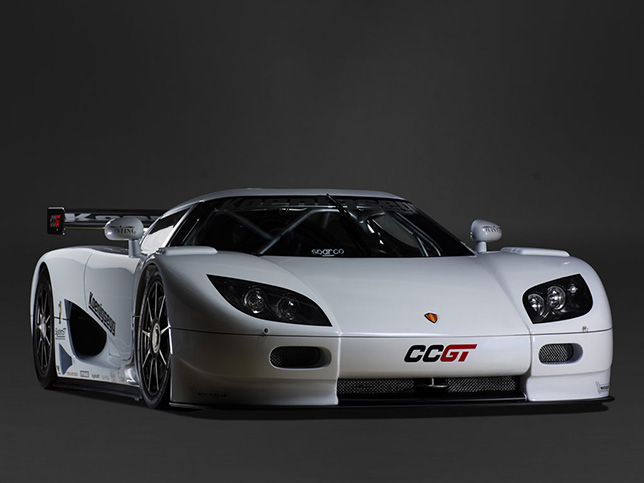
    DOWN TUNED TO 600+ HP in order to comply with race regulations. Koenigsegg has created a new race car – the CCGT, based on the production CC-model range. The CCGT complies with the ACO and FIA GT1 regulations.

    The CCGT engine is based on the Koenigsegg CCX production engine with the superchargers removed but enlarged to 5.0 litre.

    The reliability of the race engine is expected be exceptional as it is based on the proven strength and durability of the signifi cantly more powerful road car engine.

    The minimum weight allowed for a GTI race car is 1,100 kg and most manufacturers struggle to meet this target, having to undergo massive weight saving programs.

    Due to the fact the Koenigsegg CC cars are very light and stiff in road confi guration, the racing CCGT weighs in at just under an astounding 1,000 kg. This gives the possibility to place 100 kg of ballast freely within the car structure, still following the set rules. This should give Koenigsegg an interesting advantage over the competition.

    Koenigsegg CCGT
    Koenigsegg CCGT

    The CCGT has very short overhangs, which could be seen as an issue when it comes to generating enough downforce. However, by further developing the clever and “slippery” design concept of the CC range, Koenigsegg believes they have created a unique package incorporating a surprising amount of down-force combined with a very compact package and optimal weight distribution. Since the CCGT has a short overall length and low overall height, whilst still maintaining adequate track width and length, it is thereby gifted with superior agility compared to most of the competition, which should be evident in future heated racing combats.

    The Koenigsegg CCGT development team, headed by Dag Bölenius, has done a superb job by refi ning the CC into the CCGT.

    The race engine is being developed in-house in parallel with the production units by Koenigsegg engineers, supported by Anders Hoglund from Cargine engineering and JP Motorsport.

  • Audi Q7 4.2 TDI

    240 kW/326 bhp and 760 Nm of torque – Audi proudly presents the most powerful diesel SUV on the world market. A state-of-the-art eight-cylinder engine with common rail fuel injection and Piezo injectors not only stands out on account of its sheer output but also demonstrates outstanding efficiency: the 4.2 TDI has an average fuel consumption of just 11.1 litres of diesel per 100 kilometres. (more…)
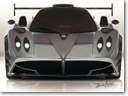
  • Pagani Zonda R – Ultimate Racetrack Performance

    While we certainly cannot say the Zonda F lacks performance figures, driving around the Nürburgring in 7:32 and achieving lateral G forces of almost 1.5 G, it is however a road car, easy to drive, intuitive and setting the benchmark for comfort, safety and lightweight. Paired with a quality finish and the attention to detail this made the Zonda F one of the most desirable supercars resulting in the 25 Coupé models being sold out in record time. (more…)

  • Hyundai i30

    A European C-segment 5-door hatchback, codenamed FD, a new nomenclature and a concept Crossover Utility Vehicle (CUV) made of alternative materials that help save fuel and offer enhanced pedestrian safety are the highlights to be presented at Hyundai’s press conference at this year’s Geneva Motor Show.

    With the FD Hyundai introduces a new model range firmly positioned in the mainstream European C-segment. Cultivated dynamics, a sleek, sophisticated styling, and a generous convenience and safety package are the FD’s main characteristics. A choice of three gasoline and three diesel power options, combined with manual or automatic transmission means the FD can meet virtually every driving, or powertrain preference. It can also match above average occupant space with generous, easy access luggage capacity.

    The FD’s styling is a continuation of the recent “wave-like and sculpted” showcar design. Flowing curves, emphasised by strong character lines highlight the broad stance and long wheelbase of the FD. The clearly defined unbroken waistline unifies the classic proportions. The sculpted rear appearance is achieved by a combination of qualified curves that extend the waistline and reflect the curvaceous front and side styling. Says Thomas Bürkle, Hyundai European Chief Designer: “The FD offers a dynamic and sporty styling, although it has kept the chic and elegant touch of the Arnejs concept car.”

    Hyundai i30
    Hyundai i30

    Hyundai plans to launch the modern understatement FD in summer of 2007. Initially available as a 5-door hatchback and later on as an estate car the FD opens a new chapter for Hyundai in Europe, as it is the first dedicated European C-segment vehicle made by Hyundai.

    Along with the FD, Hyundai will launch a new alpha-numerical nomenclature. While in the past, names had been chosen to express the values inherent in or associated with individual Hyundai models, Hyundai is now taking a more holistic approach to its nomenclature. The new nomenclature will display a clearer technology-orientation and be closely linked to Hyundai’s brand promise of “Quality, Self-assurance, and Inspiring”.

    A third highlight of its press conference, Hyundai will present a concept Crossover Utility Vehicle (CUV), code-named HED 4. As a joint project with GE Plastics, the HED 4 endowed designers with greater expressive freedom to create complex three-dimensional shapes that could not have been achieved with conventional production methods and materials such as metal and glass.

    Current composite technology is usually thought too expensive and too difficult to fabricate to be of use anywhere but the aerospace and motor racing industries. Hyundai’s CUV is physical proof that this need not be so.

    The wrap-around GE Lexan™ windscreen and extensive use of GE polycarbonate glazing materials provides a weight saving of up to 50 percent in relation to glass, while simultaneously allowing more adventurous shapes than flat glass. The glazing features a unique technology from Exatec™ which deposits a thin protective layer of glass on the Lexan™ to add protection from scratching and the effects of weathering.

    The HED 4 also introduces new curved and moving side glazing in Lexan. As well as allowing such advanced applications, the impact resistance and other properties of this material also helps increase both occupant and pedestrian safety. Improving the latter is of utmost importance to Hyundai, due to its high percentage of European SUV sales.

    HED 4’s Elastic Front™ safety system, which encompasses the whole front end of the vehicle, is arguably the world’s first global pedestrian protection solution on a CUV. Three energy-absorbing structures are fully integrated underneath the futuristic styling of the HED 4 and this system takes advantage of several advanced materials that offer inherent energy absorbing properties. The HED 4’s body panels have been designed to work in concert with energy-absorbing systems on the underside of these panels to manage and dissipate the force of a pedestrian/CUV collision. The Elastic Front™ has been engineered to meet EEVC WG17 Phase2, Euro NCAP, and JNCA pedestrian impact requirements and is currently undergoing testing for final validation.

  • Porsche Cayman Aerokit

    Porsche has begun to supply Aerokits for its Cayman und Cayman S sports cars. This new customizing equipment consists of add-on spoiler lips for the standard front-end apron panel and a new, fixed rear spoiler.

    Designed by engineers at the Porsche Development Center in Weissach, the Aerokit gives the Cayman even more ‘bite’ and even sportier, more dynamic looks. The front spoiler lips emphasize the visual power of the big air inlets in the front apron. The new, fixed rear wing creates a strong visual accent even when the car is standing still. Along with the car’s appearance, its aerodynamics have also been upgraded. The Aerokit’s components, optimized in Porsche’s wind tunnel, reduce lift at the front and rear axles, making the car even more stable at high speeds.

    Porsche Cayman Aerokit
    Porsche Cayman Aerokit

    The aerodynamic components have been carefully matched and must therefore only be installed as a complete set. All the items in the Aerokit are supplied in the car’s body color and harmonize well with the Cayman’s dynamic styling.

    Porsche supplies this Aerokit on all international markets. In Germany, it can be ordered via Porsche Exclusive for 3,500 Euros (excluding value-added tax) for installation on a new car. For later customization, it will be available starting in March 2007 from Porsche Tequipment for 2,950 Euros excluding VAT, installation and spraying.