Category: Featured

Featured

  • Say goodbye to the sensational Z4 as BMW ceases its production

    2016 BMW Z4 E89 sDrive35 in Valencia Orange Metallic side view

    Last Z4 E89 sDrive35 comes in charming Valencia Orange Metallic

    The production of a legend has ended and BMW has done this without fireworks. The last BMW Z4 E89, being an sDrive35 was built a few days ago. Being on the market since 2009, the second generation Z4 has been manufactured in more than 115,000 units. The official end-day of the BMW Z4 E89 production, which will be left in history, is August 22nd.

    The last Z4 sDrive35 comes in stunning Valencia Orange Metallic. There is nothing extraordinary that differentiates it from other models. In other words, the final edition pumps out 340 hp from its twin-turbo six-cylinder engine, N54.

    SEE ALSO: BMW Reveals Z4 Facelift and You Will Not Expect to See This 

    But weep not! Because this isn’t the end of the attractive two-seater. BMW and Toyota are currently developing the so called Z5 with codename G29. Both models, old an new, have many similarities, but unlike the metal roof on the Z4, the Z5 will sport a soft top. This is beneficial, because it will definitely make the new car faster by at least lowering the weigh of the vehicle. In addition, the trunk will be quite more spacious.

    2016 BMW Z4 E89 sDrive35 in Valencia Orange Metallic interior

    Rumors are saying that the Z5 roadster will be officially revealed in 2017 during motor events in Europe, while its production is planned for 2018. There is one other exciting news about the Z5. It is expected to be equipped with powerful BMW engines, except for the hybrid variant of the car, which will be driven by a Toyota powertrain.

    What will actually happen? Let’s wait for some official information from BMW.

    Source: bimmertoday.de

  • Why Tesla Model S P100D is the fastest car ever produced? Yes, it is!

    Tesla Model S P100D side view

    Ludicrous Mode helps the car make it to the sacred 2.5 seconds time

    I’m sure you won’t believe that a fully electric car could be the fastest one in the world. But it is! I mean 2.5 seconds time for the 0-60 mph sprint is something, right? Yes, the Model S P100D driven in its Ludicrous mode. You might say that there are cars like the LaFerrari and the Porsche 918 Spyder, but first – they weren’t mass produce vehicles, and secondly – their price is at least a million. To sum up, the bitter truth for many is that this Tesla is actually the first globally produced vehicle, which achieves the 2.5 seconds time.

    To make you even more furious (if you are on the other side, because I’m on Tesla’s: in fact, if I had a Tesla, I’d be probably writing this article from its cabin), there is another major difference. In contrast to the first two hypercars that are two seaters, have very little luggage space (and space in general) and cannot be bought new, the Model S P100D AWD has four doors, can accommodate up to 5 adults and 2 children and is also perfect for a lot of cargo.

    SEE ALSO: Watch the restyled Tesla Model S roll on the streets of Miami [w/video]*

    Not to mention that the Tesla car is also “the longest range production electric vehicle by far” with 315 miles on the EPA cycle and 613 km on the EU cycle. This is due to the improved with 100 kWh battery that feeds the vehicle with power. Elon Musk, has also featured the same battery in the popular Model X SUV, making it world’s quickest SUV with acceleration time of 2.9 seconds and with 289 miles EPA and 542 km EU traveled on a single charge.

    Model S and Model X also score the highest ratings at NHTSA. Both have access to the Tesla Supercharger network for the freedom to travel long distance for free. What is more, Tesla is promising to improve over time with free over the air upgrades.

    Nevertheless, there’s one drawback about these vehicles: they seem to be quite expensive. Those customers who have ordered a P90D Ludicrous, but not taken delivery, can upgrade to the 100 kWh pack for $10,000. Sadly, those with the existing P90D Ludicrous can also upgrade, but for $20,000, as their used 90 kWh pack will have to be recycled. However, every sale in Tesla helps pay for the smaller Model 3 that will be much more affordable.

    Model S P100D with Ludicrous mode specifications:

    • Range: 315 miles (EPA Estimate) / 613 km (NEDC Estimate)
    • 0-60 mph acceleration: 2.5 seconds
    • 0-100 km/h acceleration: 2.7 seconds
    • Price: starts at $134,500

    Model X P100D with Ludicrous mode specifications:

    • Range: 289 miles (EPA Estimate) / 542 km (NEDC Estimate)
    • 0-60 mph acceleration: 2.9 seconds
    • 0-100 km/h acceleration: 3.1 seconds
    • Price: starts at $135,500

    Source: Tesla

  • Cadillac Escala Concept is the secret vehicle that amazed everyone at Pebble Beach

    Cadillac Escala Concept front view

    Escala Concept features design & technical ideas of the future Cadillacs

    Cadillac Escala Concept is the third design study we’ll talk about today. It has been too shown at the annual Pebble Beach meeting. As the company has revealed previously, the new model is previewing the future design direction that Cadillac vehicle would take. In addition, it also exemplifies a technology-infused interior and a lot of craftsmanship inside and out. If Cadillac really wants to raise customer’s interest, the all of the features we see here must be included in the futures models. Only time will show what will happen.

    The concept study definitely “wow’-ed at Pebble Beach. To what should be attribute that? First we have to mention that Escala means “scale”, which actually shows with words that the concept car is larger that the previous Cadillac models.

    SEE ALSO: Cadillac and LG collaborate in intricate new concept vehicle [w/video]

    The design study is a beautiful 4-door flagship sedan with expansive liftback design, measuring a total of 210.5 inches in length. At the front, we see an evolution of Cadillac’s traditional face, which will be featured in the upcoming models soon (yay!). Here to mention are the expression of Cadillac’s vertical lighting and the organic light emitting diode (OLED) lighting elements. Have you seen the three-dimensional pattern in the grille design? The huge 22-inch wheels feature two layers of spokes are the perfect companion of this beautiful exterior.

    Cadillac Escala Concept interior

    On the inside, there are two independent spaces: the first one is in the front and features focused modern technology, while the rear delivers relaxation. In addition, an array of three curved OLED screens is part of the front of the cabin as well as new designs for connectivity and control. All of this is just a prototype for the future production Cadillacs. Everything else inside is handcrafted.

    At last, but not least, Escala is driven by the 4.2-liter twin-turbo V-8 engine. Just like anything else here it is a prototype of a new system in development for future models. The unit uses Active Fuel Management technology, which shows exceptional fuel economy.

    To sum up, the Cadillac Escala Concept is absolutely stunning inside and out! We think that if the automaker has the courage to build a production version close to this, they’d have a winner! This is probably, the best overall Cadillac design we’ve seen in years!

    Cadillac Escala Concept side view

    Source: Cadillac

  • BMW 2002 Hommage Concept with cute new livery and dedication

    BMW 2002 Hommage Concept front view

    Pays tribute to the glorious motor racing past of the turbocharged car

    The next design study for today Mercedes steady rival, BMW. It has just revealed the 2002 Hommage concept with a new livery and dedicated to paying a tribute to the iconic turbocharged cars and motor racing victories. The design study is currently on display at the Concours d’Elegance in Pebble Beach.

    To get into the details, in 1973 was born a legend: the BMW 2002 turbo. It was the first series-produced vehicle in Europe, which featured turbo technology. In other words, this it was a “full-blooded sports car”. A lot of victories then followed such as the milestone achieved at the 1983 Formula One World Championship, where the car won for the first time the title for a turbocharged car. The driver was Nelson Piquet.

    SEE ALSO: BMW Unveils the Stunning 3.0 CSL Hommage Concept [VIDEO]

    What can we say about the exterior BMW 2002 Hommage? It features sports styling, standing low to the ground and sporting compact proportions. It promotes irresistible dynamics and agility, due to its large spoilers at the front and rear, large air intakes and pronounced wheel arches.

    BMW 2002 Hommage Concept rear view

    Obviously, BMW has kept the design of the car very close to the original 2002 turbo car. However, there are a lot of new materials used like the carbon fiber line that physically wraps around the car from front to rear and the 20-inch alloys in bi-colour design as well as the gold-colored brake callipers bearing the M logo.

    But probably the most striking feature of the exterior design is the front end: it has a styling that makes a bridge over a gap of 50 years. In other words, it combines the qualities of the horizontal grill graphic of the 02 series with modern elements of BMW design. Just like the 1973 car, the BMW 2002 Hommage also has two single round headlights. There are a lot of other details to talk about, like the gold-elements, large front apron that mimics those of the 70s and the “turbo” lettering. And not forgetting the cool surfaces in exposed carbon.

    BMW 2002 Hommage Concept front end

    Bringing matters to a conclusion, there is no surprise that the rear of the BMW 2002 Hommage also calls on elements of the 2002 turbo like the horizontal sub-division of car’s surfaces or the rectangular lights. Here, the muscular wheel arches accentuate the wide track, while the carbon diffuser integrates two sets of twin exhaust tailpipes and rounds out the rear styling.

    BMW 2002 Hommage will be on display at the Pebble Beach Conccours d’Elegance on August 21st.

    Source: BMW 

  • Vision Mercedes-Maybach 6 is the electric car we didn’t expect [w/video]

    Vision Mercedes-Maybach 6 front view

    The newest design study coupe has a range of over 500 km and power of 750 hp

    Vision Mercedes-Maybach 6 is finally here! The design study shows the beautifully sculptured and ultra-stylish luxury-class coupe, which is somewhat reminiscent to the glorious aero coupes. But there is one big surprise about this concept: envisioned as a 2+2-seater and measuring 6 meters in length, the classically looking coupe is designed as… an electric car.

    This might be a disappointment to may, but this is how it goes nowadays: almost every brand out there is obsessed with delivering the best electric automobile. So, the drive system has an output of 750 hp (550 kW) and is backed up by a battery allows with an estimated range of over 500 kilometers! Is this a take on Tesla, or what?

    SEE ALSO: Is Vision Mercedes-Maybach 6 the ultra-luxurious concept we have all been waiting?

    What we see is classic athletic proportions, extremely long bonnet and a low roof line as well as the rearward positioning of the greenhouse. An absolute recall of the retro classics! But there are some (what Mercedes calls) “technoid” references throughout the vehicle: for instance, the narrow lights, transparent 24-inch (!) rims and the split rear window.

    Vision Mercedes-Maybach 6 side view

    Let’s say some words about the exterior: there are details that we like a lot, like the hot red paint scheme contrasted by the chrome elements. The conceptual vehicle exudes this bulging, muscular look, but at the same time keeps it sensual and dramatic.

    Another striking detail is the reinterpretation of the Mercedes-Maybach radiator grille. The company seems to have revived the old grill with its fine vertical struts that highlight the front end even further. Gullwing doors – who said they are outdated? Being a hallmark Mercedes design element, they underline the sporty character and bring about memories of brand’s past.

    Vision Mercedes-Maybach 6 Interior

    If the exterior looks retro, on the contrary – the interior is the absolute opposite: it is an extremely futuristic and luxurious 360° lounge, which is imbued with new materials and high-tech gadgets. The high-quality leather trim is done in such way that it offers a color scheme which perfectly supports the digital innovations. Digital control and display interfaces, open-pore wood and a set of two suitcases in front of the luggage area, are all part of the exclusive concept. 

    The round out the entire picture, we should also say some extra words about the emission-free driving, that this car offers. The 750 hp are due to the work of the four compact permanent magnet synchronous electric motors, which drive the four wheels. The shallow underfloor battery has a capacity of 80 kWh, which allows performance typical for a sports car. Precisely, Vision Mercedes-Maybach 6 can accelerate from 0 to 100 km/h in less than 4 seconds, while the top speed is electronically governed at 250 km/h. The most fantastic detail however, is that battery’s range is over 500 kilometers according to the NEDC (and over 200 miles according to EPA).

    The large coupe is currently making its debut at Monterey Car Week.

    httpv://youtu.be/hVzdgN-Osiw

    Video Source: YouTube

    Source: Mercedes-Benz 

  • Long term use of Electric Vehicles?

    EV vs Combustion cars

    Or why it might be a strikingly bad idea

    In ten years one million electric cars are expected to be rolling on the roads of America. There is a lot of money going on here, and billions have been invested in subsidizing the production of the EVs and all of the components they use. And we are all familiar with the benefits electric cars offer, but what we aren’t exposed to is the disadvantages of owing an electric car.To be more specific, what the long term problems might be.

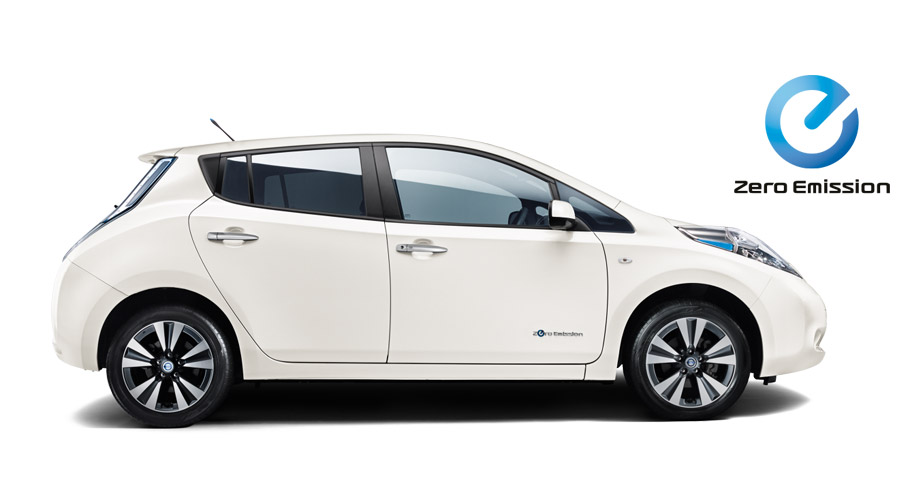
    First, the cost is one major crux. Let’s have an example to make things clearer and easier to grasp. Nissan Leaf, being the first battery electric vehicle that was mass-produced, costs two times more than a Nissan Versa, and both are being positioned in the same car range. If we exclude the eco-benefits of the first one, it seems that the Leaf doesn’t make any sense.

    For one, Leaf has only one fourth of the power of the Versa. But, you may now say there are still benefits, when taking into consideration that the electric energy is cheaper than the gasoline. Then you could compromise on power (but could you really). Here’s the big catch. Sometimes electric cars need to be charged in large amounts in order to function properly. In addition, the long term benefit in investment like this is rather suspicious. If we have to make the appropriate calculations, it ends up that to get one’s money back with an interest, it should take more than nine years of driving the Leaf everyday. These estimations are based on the fact that the EV is capable of traveling up to 60 miles on a single charge and to recover the purchase cost one should drive at least around 165,000 miles.

    SEE ALSO: Autonomous cars – when will they take over? [w/video] 

    And how about the time? I mean the time it takes to travel with an electric car… Just imagine how busy people living in busy cities have to deal with deadlines, meetings, etc., within the traveling speed of an EV. Just hilarious! And it gets even funnier if you imagine that it runs out of energy during such nervous and erroneous time.

    Have this mental picture: you are running late for an important meeting, driving your super fast EV, and eventually it seems to be out of charge. It is hot outside, but to extract an extra mile out of it you have to turn off the AC, the headlights and all technical stuff inside that require more energy. You end up sweating and perspiring, and late for your important meeting, thanking that you have left the EV behind (and completely dead) and got a cab, which was ironically driven by a combustion engine.

    Nissan Leaf EV side view

    Regarding the time, there’s another disadvantage. If you are driving a gasoline car, then when you run out of fuel, you just go to the gas station and refuel it (and go for additional 300 miles). Well, this isn’t the case with the EVs. One of the biggest drawbacks here is that the recharging time varies from one hour for a fast recharge (but who could count on that) up to 20 hours for a full one (on a house current). And you would still go for 60 miles. It is extremely convenient, isn’t it? To make things look a little bit better, companies have developed charging stations for an extra cost (of course), which reduce the charging times to 4 or 8 hours. But here’s the catch. If use them too often, then you might end up buying new batteries for your EV, because it seems that the chargers (which you have bought for an additional amount of money) shorten their life. But if you have chosen to drive an electric car in a long term plan, you will still end up changing the batteries. In this case you should prepare around $5,000… or more.

    Looking beyond the benefit of no-gas-fuelling and zero-CO2 emissions, the electric cars seem to NOT be the best choice for transportation means in a long term plan. But you could still wishfully want to save the environment. To keep you thinking, the CO2 emissions produced by the U.S. electric power sector are about 37% of the total U.S. energy-related CO2 emissions, while 31% are associated with combustion of fossil fuels used by gasoline and diesel cars.

  • Autonomous cars – when will they take over? [w/video]

    Autonomous cars front cover imageThere are various forecasts which predict when autonomous driving cars will take over. In general, the expectations are set around the year 2020, which isn’t far from now. And the aforementioned year signifies the market release of these vehicles. Would they take the market by storm or fail to do so is a matter of clairvoyance, but we will still try to see the options ahead.

    Volkswagen’s experts say that driverless cars will hit the market by 2019, while GM and Ford predict this to happen around 2020 (“or sooner”). Mercedes is being more safe in their predictions, saying autonomous vehicles would appear no sooner than 2025. By the way, Daimler-Benz has more than 30 years of research into autonomous driving, starting with the Eureka-Prometheus technology, developed in 1985. Anyway… there are even predictions that truly autonomous cars will populate roads by 2028-2032, and that by 2040 they would be 75 per cent of all vehicles out there.

    SEE ALSO: Nissan joins the already elating autonomous-driving technology world 

    While everyone else is still “predicting”, not producing, companies like BMW are about to launch their first autonomous models. We are speaking about the iNext that is set to appear in 2021. In addition, Toyota’s first self-driving car is to hit the market in 2020.

    Elon Musk, who seems to be the major force (and the strongest one) behind this idea, expects an entirely autonomous Tesla to appear two years from now (June, 2016). Well, note that for Tesla’s model to be “road-legal”, governmental approval is required and it is possible it might take up to three years, so we are generally speaking about the same year of market appearance.

    Cars, which can move without human intervention, and in contrast to Google’s cars that need detailed 3D maps for local navigation, are currently in the making by Nissan’s professionals. They are also expected to appear in 2020.

    What do drivers say?

    Autonomous cars - the future

    “How about NO” say more than 60 per cent of the drivers out there, when it come to autonomous driving. Although there are many benefits to self-driving vehicles (safer roads, efficient driving, etc), there are also various disadvantages at hand and they mainly about the safety, technology and trust of the “drivers”. Surveys show that six in ten people worry about the safety matters of this type of vehicles. Another problem associated with autonomous cars is the technology mistrust.

    So, there are two major factors which will influence the “taking-over” of autonomous vehicles: the first is the manufacturers side, with vehicles to start “flooding” the market in 2020. On the other hand are customers and passionate drivers, who would mainly distrust the innovative technology and want the control in their hands. And here we must put the attention on the passion that enthusiasts experience when driving a car. A major factor, that is excluded in the surveys.

    Well, it is about time to witness how everything will eventually unfold… but I wouldn’t keep my hands off the steering wheel for sure!

    To cheer you up, the self-steering car in the video below provokes many laughs during a demonstration (jump to 1:15). Traveling at 40km/h the brakes seem to… not work the way that was expected. Note that no real kangaroos were harmed in this autonomous driving fail.

    httpv://youtu.be/G6gz344tt6U

    Video Source: YouTube 

    Images Source: Continental Tyres

  • What is SOFC or e-Bio Fuel-Cell and why this is future alternative fuel technology that can save our planet?

    SOFC  e-Bio Fuel-Cell technology and how it worksSOFC is a fuel cell using the reaction of multiple fuels. For instance it works with ethanol and natural gas, with oxygen in order to produce electricity with high efficiency. If you didn’t get it at first, we must distract you for a moment and reveal that this is Nissan’s new alternative fuel technology.

    In fact, the Japanese brand is making a big leap forward with it. Nissan is currently researching and developing the Solid Oxide Fuel-Cell-powered system (this is what SOFC stands for). It runs on bio-ethanol electric power, and in other words it is absolutely new and it is being applied for the first time for automotive use. It basically features an e-Bio Fuel-Cell with SOFC power generator. But let’s get into the details.

    What actually an e-Bio Fuel-Cell is?

    It is one of the main features in the SOFC, which generates electricity through system’s power generator using bio-ethanol that has been stored in the vehicle. The e-Bio Fuel-Cell uses hydrogen, which has been transformed from fuel with the help of the oxygen we breathe (from the atmosphere in other words). Then a subsequent electrochemical reaction happens, which produces electricity that in turn powers the machine.

    SEE ALSO: New World Record for the Nissan GT-R NISMO? [w/video] 

    The e-Bio Fuel-Cell actually uses the SOFC as its power source. This allows for greater power efficiency that is estimated of more than 600km. What is more, the distinct electric-drive features (silent drive, linear start-up and brisk acceleration) contribute for experiencing the vehicle as if it were an EV.

    The Benefit

    You might ask what is the advantage of all this? Well, it is basically and most importantly ecological. The fuel-cell systems utilize chemicals that react with oxygen, so that they can generate power without the release of hazardous byproducts.

    CO2 is usually emitted, when power is generated in a fuel-cell system. However, with the bio-ethanol system, the CO2emissions are neutralized from the growing process of bio-source making up the bio-fuel. This allows for “Carbon-Neutral Cycle” with nearly no CO2 increase whatsoever.

    What is more, the e-Bio Fuel-Cell, can not only offer eco-friendly transportation, but also create opportunities in regional energy production, while supporting the infrastructure.

    What are the Bio-ethanol Fuel Sources?

    Bio-ethanol fuels can be sourced from sugarcane and corn. As we know, these plants are widely available in countries in North and South America, and Asia; so the accessibility isn’t a problem; and through a future development of this system it could also support the local infrastructure.

    Does e-Bio Fuel-Cell have future?

    Although it is in developing stages, in the upcoming years, the e-Bio Fuel-Cell will become even more user-friendly. By the way, the running costs will be remarkably low, which will ultimately benefit the public as well as businesses.

    The e-Bio Fuel-Cell is part of “Nissan Intelligent Power” concept strategy. It aims at providing value to its customers by including systems that enable the extraction of electric power from various fuels, and at the same time it addresses the infrastructure issues tied to energy supply in every region of the world.

    If you find this article important, please share it with others!

    Nissan's first vehicle powered by SOFC e-Bio Fuel-Cell

    Source: Nissan

  • Which are top 6 of Europe’s greatest driving roads? Ford answers in exclusive video series [part one]

    Europe’s greatest driving roads - RomaniaTraveling across Europe with a car can be very exciting and a proof for that is the special video series recently released by Ford and BP/Castrol. Dubbed under the name “Europe’s Greatest Driving Roads”, the footages explore six of the most exclusive pathways that could be found on the Old Continent.

    How were the routes chosen? With a ranking by the thrill factor they offer, the road surface, the accessibility and hospitality, of course – the scenery, and not forgetting the food and drink after the drive. Those who were lucky to take this task have actually covered nearly 10,000 miles in 12 months to identify the most breath-taking drives! A dream job, isn’t it?

    SEE ALSO: First ever Shelby GT-H prototype 50th anniversary edition goes to Barrett-Jackson 

    There are five countries featured in the series, namely: Romania, France, Germany, Spain (with two routes) and the United Kingdom. And the performance cars included in the videos are delivered by Ford, including the Mustang GT, Focus RS and Fiesta ST. Behind the wheel is the renowned car journalist Steve Sutcliffe.

    Since there are only four videos of the series released so far, we are going to feature the other two in additional articles. Here are the first four featured.

    North Yorkshire, Blakey Ridge

    httpv://youtu.be/uPIXRv0pgi0

    Driving a Ford Focus RS, Sutcliffe follows the route of an old railway line to the now quiet iron ore mines of the moors. The challenging Blakey Ridge is only 15 miles long and it’s not the longest road in the series, but the way “it winds itself across the moors, throwing blind crests and fast but ever tightening corners is completely fascinating”.

    ROMANIA, Transfăgărășan Highway

    httpv://youtu.be/5mIqlB3QOSk

    This one is built by former Romanian dictator and it is actually one of the most famous routs in Europe. It even passes the castle of Dracula, Vlad the Impaler. Here the chosen car is Ford Mustang Fastback 5.0 V8. In it Steve shows that if one is a true driving enthusiast, the Transfăgărășan is genuinely a “bucket list kind of place to visit”.

    SPAIN, Catolonia, C462

    httpv://youtu.be/stxoXE0-4zQ 

    Behind the wheel of a Ford Fiesta ST, Sutcliffe drove just over 100 km. The road winds its way north through Catalonia and ending over 100km later at La Seu D’Urgell, just south of Andorra. The very top of the C462 finds itself over 2000m and it is that point where you can stare over some of the most amazing view of the Pyrenees, visible in their entirety.

    FRANCE, the Alps, D526 & D926

    httpv://youtu.be/_YjIeyK_bSw

    This is one of the hardest stages of the Tour de France, and equally challenging in a car, says Sutcliffe who drives the Ford Mustang Convertible 2.3. Although it is one of the most grueling places, the route is also one of the most picturesque ones.

    So, if you are going to travel across Europe, then you should also know the best road opportunities that some countries can offers. These roads are for people who love cars and love driving, but also want to make an amazing road trip. The next two videos will include routes in Germany and Mallorca. Stay tuned!

    Videos Source: YouTube

    Source: Ford 

  • X-Men: Apocalypse is here and so are the cars of your favorite characters! Check them out!

    Wolverine Driving 1988 Toyota Hilux The “X-Men: Apocalypse” is probably one of the most awaited superhero movies this year and we are all hoping it is not a huge disappointment like “Batman vs. Superman”. The premiere of blockbuster-to-be movie is happening now and the hype is extremely huge. This was probably the reason for the appearance of these interesting renderings, which show what car models would the superheroes of X-Men drive. We would love to know your opinion about them, so make sure you leave a comment below. Is there anything unexpected you see or would you offer a better car for any of the characters?

    Wolverine Driving the Nasty Toyota Hilux from 1988

    If you have thought that the Wolverine would go for anything smaller, you would be wrong. The 1988 Toyota Hilux seems the perfect car for him with its rugged appearance and go-anywhere capabilities. In fact, in this rendering it almost looks indestructible… just like the protagonist played by Hugh Jackman.

    SEE ALSO: Honda Jazz Type R, Ford Ka ST, Volkswagen up! GTi and the BMW M i3 are the craziest vehicles you’ll see this weekend!

    As you can see, this Hilux isn’t ordinary, but it has a few extra features to help Wolverine in his duties. These include huge and custom-made wheels and retractable blades, which give him the strength and ferocity to destroy the enemies.

    Magneto Driving a BMW M6 Coupe

    Magneto Driving a BMW M6 Coupe

    Any questions? Who would say anything else if this is the choice of the mighty Magneto. The character played by Michael Fassbender has chosen the beautiful maroon BMW M6 Coupe, which looks almost as stylish and sexy as he does. The slick high-speed car jumps to 100 km/h (62 mph) from rest in mere 3.9 seconds, so he will have no trouble escaping any hard situation.

    In this render, the body of the car is made from the same material as the helmet he wears, thus increasing his resistance to any incoming telepathy. In addition, he will sit behind a bulled prove glass (not that he needs it) and will ride his BMW on superior wheels.

    Mystique’s Blue Skinned BMW i8

    Mystique Driving BMW i8

    Jennifer Lawrence is playing Mystique, and her character has chosen the electric BMW i8. Made of carbon-fiber, she’s even faster, more agile and ready to make her enemies regret that they are alive. With blue scaly skin and flashing yellow headlights her i8 is almost as beautiful as she is.

    Charles Xavier Has Chosen the Tesla Model X

    Charles Xavier Driving Tesla Model X

    There is no other car than Tesla’s Model X that is perfect for Charles Xavier. James McAvoy’s character is science genius, who can not drive anything less than a vehicle made by a genius (like Elon Musk). He will also have no trouble accessing his spacious car, because of its double rear door entry. Sitting behind bullet proof windows he will manage the important duties and control the actions of the X-Men team.

    Apocalypse’s Mercedes-AMG 63 6×6

    Apocalypse Driving Mercedes-AMG 63 6x6

    Apocalypse is the longest survivor of all the X-Men and this is why the vehicle chosen for this character is the six-wheeled Mercedes-AMG 63 6×6. Each Armour panel of this machine is intricately designed in art from another age. With these exaggerated wheels, the X-Men are set to destroy or finally save the world!

    Cyclops Has Chosen the Shelby Mustang GT350R

    Cyclops Driving Shelby Mustang GT350R

    It is not a surprise that the Cyclops has chosen the Shelby Mustang GT350R because he has always been a fan of the Shelby American. This particular render envisions the GT350R with super speed and lightweight carbon fibre wheels, visor windscreen and automatic headlamps which double up as red optic blasts.

    Jean Grey’s Cute Volvo XC90

    Jean Grey Driving Volvo XC90

    Jean Grey is played by one of the Game of Thrones’ cast, Sophie Turner (playing Sansa Stark). We are sure that she will make a fantastic role in these series, too. Her Jean Grey character is envisioned in the renderings driving a cute Volvo XC90, which also has unexpected capabilities. Because of the traumatizing memory of her sister’s death caused by a car accident, she has chosen the safest of brands. In addition, her XC90 also sports bullet proof windows and an inbuilt cerebro in the windshield.

    So, what do you think?

    Source: NeoMam Studios & WhoCanFixMyCar

  • Kahn’s Vengeance Launched in Geneva! Mixes Classic Design with Modern Engineering

    Kahn Vengeance Exterior Kahn Vengeance is one of the custom built cars that Kahn Design is debuting this year at the Geneva Motor Show. In fact, the Vengeance has been officially launched there, since we have seen slices of it through the previous months. The coach built two-door coupe, which is based on the Aston Martin DB9 chassis, is a synthesis of modern engineering and classic design.

    As a matter of fact, design this car was Afzal Kahn’s lifelong pursuit and inspiration. The Vengeance is actually the car he has always wanted to drive.

    SEE ALSO: Kahn is Going to Geneva and This is Why You Should Be Excited About It

    Built entirely by hand, the car has unique design inside and out. The front has been entirely remodeled and features new front bumper and wide spaced grille with aggressive appearance. Both elements are framed by widened front wings which merge into the doors.

    Kahn Vengeance Interior

    The central bulge of the bonnet continues to the roof, which flow outwards to the widened C-pillars and rear wings. The chrome roof halo curves around the large rear window and goes to the redesigned rear. The latter includes new bumper that houses in-house made crosshair exhaust system and rear lighting.

    The wheels that Vengeance runs on are lightweight and have one-off retro styling with multi-spoke design and two tome retro finish. The number of spokes increases from sixteen at the front to eighteen at the rear, lending extra visual weight to the rear wings. These unique wheels were fitted with 225-wide tires at the front, and 335-wide ones at the rear.

    Kahn Vengeance can be seen at the Geneva Motor Show at company’s stand Nr. 6338.

    Source: Kahn Design 

  • Meet the New Co-Host of Top Gear: Matt LeBlanc [w/videos]

    Matt LeBlanc Joins Top Gear The star from the popular sitcom “Friends” Matt LeBlanc is officially announced the new co-host of the 23rd season of the British “Top Gear” show, which is scheduled for airing in May this year. LeBlanc is the first non-Briton, who is to lead the car show in its 39-year old history.

    The actor, who became popular with his role as Joey Tribbiani, has participated in two episodes in the BBC show. He appeared twice in the “Star in a reasonably priced car” rubric, and is also a proud achiever of the fastest lap in race with a Kia c’eed.

    SEE ALSO: Top Gear Continues without Jeremy Clarkson, BBC Confirms [VIDEO]

    The other official new host of “Top Gear”, Chris Evans said that he is thrilled that LeBlanc is joining him in this experience. Since both are “petrolheads”, acting out their “craziest car notions on screen” was a dream job. Evans also disclosed that he can’t wait to share what he and Matt LeBlanc have been up to.

    Matt LeBlanc Joins Chris Evans as a Co-Host of Top Gear

    LeBlanc expressed his excitement on social media with the following words: “Hey everyone, I’m really honored and looking forward to working on Top Gear with Chris Evans, damn he’s tall.” He later added: “I love the show. Should be fun.”

    This will definitely take the show in new and unexpected direction after Jeremy Clarkson was dropped from it. The reason was a huge scandal that the star created, involving a “fracas” with Oisin Tymon, the producer of the show. James May and Richard Hammond also left “Top Gear” in support of their co-host. The famous trio however, will be returning with their own show on Amazon Prime.

    Will “Top Gear” stay the most watched TV program in the world? What’s your opinion?

    Here is couple of Matt’s appearances in “Top Gear”. Enjoy!

    httpv://youtu.be/3buyynp6hU4

    httpv://youtu.be/0LknDgL2Nmg

    Second Picture Source: Matt LeBlanc Official Twitter

    Video Source: YouTube

    News Source: TopGear