Category: Polestar

  • Polestar 4

    Polestar has revealed the Polestar 4, an electric performance SUV coupé, which is the second SUV in the company’s lineup. The vehicle merges the aerodynamics of a coupé with the space of an SUV, creating a new category of SUV coupé. The design features, which were first introduced in Polestar’s concept cars, have now been included in the fastest production car to date. The Polestar 4 will sit between Polestar 2 and Polestar 3 in terms of size and price. Polestar CEO, Thomas Ingenlath, said that the company took a new approach to SUV coupé design, prioritizing rear occupant comfort and experience, rather than merely modifying an existing SUV.

    Design

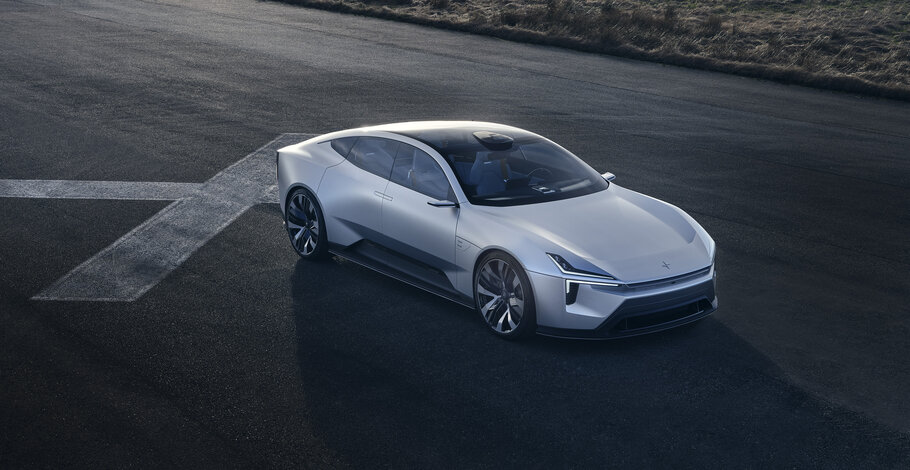
    Polestar 4 is a design-focused brand, and its design follows the Polestar Precept concept car, which includes removing the rear window to provide an immersive rear occupant experience. The front lights have a unique Polestar light signature, complemented by the Polestar emblem with millimetre-precision lighting from below. The low nose, retractable door handles, flush glazing with frameless windows, rear aero blades, and air flow optimization around the rear light bar enhance aerodynamic efficiency.

    The car is built on the premium Sustainable Experience Architecture (SEA) developed by Geely Holding. It’s a D-segment SUV coupe with a large body, long 2,999 mm wheelbase, 4,839 mm overall length, 2,139 mm width, and 1,544 mm height. The spacious interior, especially the rear seats, has reclining seats and adjustable ambient lighting inspired by the solar system, providing a personalized driving environment.

    The full-length glass roof is standard, and it’s available with optional electrochromic functionality that allows for opaque or transparent execution, depending on the mood. The glass roof extends beyond the rear occupants’ heads due to the lack of a rear window, creating a unique interior ambiance. A secondary media and climate control screen is placed between the front seats to enable rear occupant control. The rear-view mirror is replaced by a high-definition screen showing a real-time feed from a roof-mounted rear camera, providing a wider field of view than most modern cars.

    Maximilian Missoni, Head of Design at Polestar, says that the Polestar Precept removed the rear window and pushed the rear header further back, providing an immersive rear occupant experience in their SUV coupe.

    The materials and color choices for Polestar 4 are inspired by the fashion and sportswear industries, and the theme of “soft tech” is used throughout. It offers new executions for Polestar, such as the new exterior colors Storm and Electron, and a unique new interior color, Mist.

    Sustainability

    Polestar 4 uses circular and low-carbon materials instead of traditional solutions. The company is also increasing supply chain transparency by using blockchain traceability for risk materials in the batteries. In 2024, a full lifecycle assessment (LCA) that shows the car’s real carbon footprint will be published with the Polestar 4 Product Sustainability Declaration.

    A mono-material approach is used in the interior materials. All layers of certain components are produced from the same base material, making them easier to recycle without the need to separate incompatible materials. The new interior materials include a tailored knit textile made from 100% recycled PET, bio-attributed MicroTech vinyl, and animal welfare-secured Nappa leather.

    The tailored knit upholstery is a new technique created by Polestar designers and the Swedish School of Textiles, made to fit without producing any offcuts or waste. Inlay carpets are made from recycled PET, while floor carpets use ECONYL that includes reclaimed fishing nets. Door trim panels are made from natural fibre polypropylene, resulting in up to 50% less virgin plastic and a weight saving of up to 40%. MicroTech is a bio-attributed vinyl that replaces crude oil with pine oil in its construction and has a recycled textile backing.

    Performance

    Polestar 4 is the brand’s fastest production car ever made. It can reach 0-62 mph in just 3.8 seconds and has a maximum power output of 400 kW (544 hp). The motors are designed as permanent magnets, synchronous. The driving dynamics provide a thrilling experience with sharp steering and handling responses. Both single and dual motor versions will be available, with the single-motor version featuring rear-wheel drive.

    The car features a 102 kWh battery with a preliminary range target of up to 350 miles WLTP. All versions have up to 200 kW DC and 22 kW AC charging, and the charge lid is motorised. The Long range Dual motor version has a disconnect clutch which maximizes efficiency by disengaging the front electric motor when not needed. The car also includes a heat pump for cabin and battery preconditioning.

    The Long range Dual motor version has a new drive optimisation function that allows the driver to select between range or performance driving modes. Performance mode engages both motors for full power delivery, while range mode prioritises efficiency and uses only the rear motor. The Long range Single motor version has a preliminary range target of up to 372 miles WLTP.

    The car has a semi-active suspension in the dual-motor version, with wheels ranging from 20 to 22 inches and tyres supplied by Pirelli and Michelin. The car has bi-directional charging with a vehicle-to-load (V2L) capability at launch, allowing external devices to draw power from Polestar 4. The car ensures control and confidence at all times, producing a responsible and everyday-enjoyable EV experience.

    Technology

    Polestar is constantly advancing technology in their cars to make them more fun, connected, and autonomous. The infotainment system in the Polestar 4 uses a 15.4-inch screen and is powered by Android Automotive OS and the Snapdragon Cockpit Platform. Google Assistant, Google Maps, and Google Play are built-in for a seamless connected experience, and Polestar works closely with Google to push the system’s capabilities further.

    For those who love high-quality audio, a Harman Kardon audio system with 12 speakers and a 1,400-Watt channel-hybrid amplifier is available as an option. The Nappa Pack offers an additional two headrest speakers for each front seat, making a total of 16 speakers. Of course, Apple CarPlay is also included.

    Just like all other Polestar cars, the Polestar 4 receives regular over-the-air (OTA) updates that provide new features and improvements remotely to all vehicles. This means that there is no need to visit a workshop to get the latest software.

    Safety

    Polestar 4 prioritizes safety, which is ingrained in its DNA through its association with Volvo Cars. The car is equipped with advanced safety technology that meets the rigorous standards of other Polestar models. It includes up to nine airbags and intelligent safety features from Mobileye, such as the SuperVision Advanced Driver Assistance System.

    The car is equipped with a driver monitoring camera that tracks the driver’s head and eye movements to detect signs of fatigue or incapacitation. This, along with hands-on detection in the steering wheel, ensures that the driver stays alert while driving.

    The car’s dashboard has a 10.2-inch display that shows speed, battery, and range information. A virtual display can also show other road users, current driving assistance functions, and navigation information. To reduce distraction, the car has a head-up display (HUD) that projects important information onto the windshield.

    The car’s optional Pilot Pack includes enhanced Pilot Assist with lane change assistance, which is initiated by the driver tapping the indicator stalk in the desired direction.

    Equipment packs

    Polestar’s standard car specifications are impressive, and there are additional packages available to tailor specific options for an enhanced driving experience. The Plus Pack provides comfort and technology upgrades, while the Plus Pro Pack offers a color-matched body design, electrochromic glass roof, and additional interior lighting. The Nappa Pack can be added to the Plus Pack and includes animal-friendly Nappa leather seats with ventilation, massage, and extra headrest speakers for the front seats.

    The Pilot Pack comes with Pilot Assist and extended features. For those seeking a sportier driving experience, the Performance Pack increases performance and features a Long Range Dual Motor version with 22-inch wheels, 4-piston Brembo brakes, Polestar Engineered performance chassis tuning, and Swedish gold details for the brakes, seat belts, and valve caps.

    Production, availability and pricing

    Polestar 4 will debut in China first and production will begin in November 2023 at Geely’s eco-friendly production facility in Hangzhou Bay, China. A worldwide launch, including in Europe, North America, and Asia Pacific, is scheduled for early 2024, with sales and production increasing throughout the year. Pricing for the launch is estimated at EUR 60,000/USD 60,000/GBP55,000, but more details on each market will be provided in 2024.

  • Polestar 2 BST edition 230

    Polestar has launched another limited-edition variant of Polestar 2 in its Polestar Engineered range – the BST edition 230. The new model builds on the outstanding chassis improvements made for the original BST edition to enhance its performance design features.

    “With the BST edition 230, we can experiment with colours, graphics and materials in more creative and faster ways,” says Thomas Ingenlath, Polestar CEO.

    The 350 kW and 680 Nm Polestar 2 BST edition 230 has exclusive design elements such as green Nebula paintwork and MicroSuede textile for the seats and steering wheel inserts – made from partly recycled Nubuck textile. The car can also be painted in Space (black), with an optional full-length body stripe for either colour option.

    The car also has all the chassis enhancements that were first introduced on the original Polestar 2 BST edition 270, such as the lowered ride height (-25 mm), specially designed and unique Öhlins 2-way adjustable dampers, front strut bar, 20% stiffer springs and unique black 21-inch alloy wheels that are inspired by those of Polestar 1, fitted with 245/35R21 Pirelli P Zero tyres that were specially made for BST edition cars.

    Only 230 cars will be made for Europe and North America. They can be ordered online from Polestar.com starting from 21 March 2023. The cars are expected to be delivered from the third quarter of 2023.

    Polestar 2 BST edition 230
    Powertrain Long range Dual motor
    Plus Pack Included
    Pilot Pack Included
    Performance Pack Included
    Power 350 kW (476 hp)
    Torque 680 Nm (502 lb-ft)
    0-100 km/h 4.4 seconds
    Top speed 205 km/h
    Brakes Brembo 4-piston, 400 mm drilled & ventilated discs (front)Standard single-piston, 390 mm ventilated discs (rear)
    BST edition 230 upgrades MicroSuede upholstery and steering wheel inserts
      21-inch forged wheels, staggered
    Bespoke Öhlins dampers2-way adjustable DFV front, adjustable DFV rear
    Bespoke Pirelli P-Zero tyres 245/35 R21
    Lowered ride height (-25 mm)
    Front strut bar
    Painted sills, cladding
    Mirrors in high gloss black
    Space or Nebula paintwork
    Matte black stripe (optional)
  • Polestar 2

    Polestar is giving the 5-door electric performance fastback, Polestar 2, a major update. For the 2024 model year, the premium compact EV features a new high-tech front end that reflects the design language premiered by Polestar 3, substantial performance increases with all-new electric motors, even more powerful batteries, sustainability improvements and, for the first time in a Polestar, rear-wheel drive.

    “Typically in the car industry, a facelift introduces superficial visual changes that often destroy the original intention of the car’s design theme. With the new model year Polestar 2, we rather went below the surface and upgraded substantial tech and mechanical components of the electric drivetrain. This is the best Polestar 2 yet, and with the updated front design with the new SmartZone, the best looking one, too,” says Polestar CEO, Thomas Ingenlath.

    Polestar 2 first entered the highly competitive premium EV market in 2019, blending Scandinavian design and excellent usability with fun driving characteristics and a dedication to sustainability. It was the first car in the world to feature an infotainment system powered by Android Automotive OS with Google built-in, an experience that continues to evolve and lead the industry. This unique mix of qualities quickly made Polestar 2 a customer favourite, available in 27 markets globally and having surpassed the 100,000 unit production mark in late 2022.

    High-tech design tweaks

    The SmartZone makes its debut on Polestar 2, signifying the shift from breathing to seeing and reflecting the high-tech nature of Polestar vehicles. Like on Polestar 3, the SmartZone hosts some of the vehicle’s most important active safety features, including the front facing camera and mid-range radar.

    The 20-inch forged alloy wheels in the Performance Pack have been updated to align Polestar 2 in its sportiest expression with that of Polestar 3.

    New motors, refined ride and rear-wheel drive

    Next-generation electric motors and inverters are fitted to all Polestar 2 variants, offering substantial increases in both efficiency and performance. Single-motor variants are now rear-wheel driven, powered by a newly developed permanent magnet motor and silicon carbide inverter. The new motor has a power output of up to 220 kW (increased from 170 kW) and is optimised for maximum efficiency and high torque (490 Nm, up from 330 Nm) to further increase the dynamic performance of the car. The 0-100 km/h sprint time has been reduced by as much as 1.2 seconds, down to 6.2 seconds.

    The dual-motor version now has a rear-drive bias that increases driving pleasure and performance thanks to a completely re-balanced drivetrain setup and torque-ratio. The new rear motor is the primary drive source, supported on the front axle by a new asynchronous motor. This enables higher total system output of 310 kW and 740 Nm (increased from the original 300 kW and 660 Nm), vastly improved traction, greater overall efficiency and higher performance – 0-100 km/h is achieved in 4.5 seconds. Supporting efficiency gains, the front motor can now be disengaged completely when not needed. When the driver wants more power, the front motor re-engages instantly and seamlessly.

    Up to 350 kW are available with the optional Performance Pack, and a 0-100 km/h sprint time as low as just 4.2 seconds. The increase in power, performance and driving enjoyment is also available to purchase as a downloadable over-the-air performance software upgrade for any eligible Long range Dual motor cars.

    “Changing from front- to rear-wheel drive in the single-motor variants, and re-calibrating the torque ratio in the dual-motor variant for an increased rear-wheel drive feel, elevates the Polestar 2 driving experience to a whole new level,” says Joakim Rydholm, Head of Chassis Development at Polestar. “The updated Polestar 2 is an even more playful and agile car, retaining its compactness and complete sense of control, while at the same time becoming more mature with added comfort.”

    Better range and quicker charging

    All Polestar 2 versions, in most markets, feature upgraded lithium-ion batteries, with a positive impact on efficiency and capacity as well as charging times. Long-range versions now feature 82 kWh batteries from CATL with 27 modules . The battery for standard-range versions retains a capacity of 69 kWh with 24 modules, and is now supplied by LG Chem.

    The updated batteries benefit from a redesigned battery disconnect unit, upgraded busbars and improved cell chemistry – enabling faster charging rates of up to 205 kW DC for long-range batteries and 135 kW for the standard-range battery.

    Range improvements are in effect for all versions due to the larger and improved batteries, and the optimisation of power delivery from the more powerful motors. The front motor disconnect function on the Long range Dual motor variant is particularly effective at maximising range, which is now up to 592 km WLTP, a significant increase of 105 km.

    The Standard range Single motor version is now capable of up to 518 km WLTP, an increase of 40 km, and the Long range Single motor variant can now achieve up to 635 km WLTP, an increase of 84 km.

    More performance with lower impact
    Despite the larger batteries, more powerful motors, longer range and more exciting performance, carbon emissions for versions with the new 82 kWh battery have come down by 1.1 tonnes to 5.9 tonnes per car (previously 7 tonnes per car), thanks to improved cell chemistry. A full life cycle assessment (LCA) is planned later in 2023.

    Revised standard equipment increases value
    Standard equipment in Polestar 2 has been revised to increase overall value as well as convenience. Driver Awareness features are now standard, including Blind Spot Information System (BLIS) with steering support, Cross Traffic Alert with brake support, and Rear Collision Warning and Mitigation, along with the 360-degree surround view camera and automatic dimming exterior mirrors. The wireless phone charger is now also standard on all versions.

    The model year 2024 Polestar 2 is available to order now at Polestar.com in European markets, with more markets to follow. First deliveries are expected in the third quarter of 2023. Pricing starts from EUR 50,190.

    Variant Drivetrain Battery capacity Max charging speed, DC Preliminary range, WLTP Power Torque 0-100 km/h Price
    Long range Dual motor with Performance Pack AWD 82 kWh 205 kW Up to 592 km 350 kW
    476 hp
    740 Nm
    546 lb-ft
    4.2s EUR 64,690
    Long range Dual motor AWD 82 kWh 205 kW Up to 592 km 310 kW
    421 hp
    740 Nm
    546 lb-ft
    4.5s EUR 58,190
    Long range Single motor RWD 82 kWh 205 kW Up to 635 km 220 kW
    299 hp
    490 Nm
    361 lb-ft
    6.2s EUR 53,890
    Standard range Single motor RWD 69 kWh 135 kW Up to 518 km 200 kW
    272 hp
    490 Nm
    361 lb-ft
    6.4s EUR 50,190
  • Polestar 3

    Polestar officially reveals the Polestar 3 electric performance SUV. Scandinavian minimalism and purity work together with the key ingredients of a sport utility vehicle, defining the SUV for the electric age. Polestar 3 makes the SUV not only more relevant and responsible, but also highly desirable.

    “Polestar 3 is a powerful electric SUV that appeals to the senses with a distinct, Scandinavian design and excellent driving dynamics,” says Thomas Ingenlath, Polestar CEO. “It takes our manufacturing footprint to the next level, bringing Polestar production to the United States. We are proud and excited to expand our portfolio as we continue our rapid growth.”

    Polestar 3 premieres a new aerodynamic profile where strong focus has been placed on retaining the hallmarks of an SUV, including a powerful and wide stance. This has been led by subtle yet effective aerodynamic optimisation – including a front aero wing integrated into the bonnet, an aero wing integrated into the rear spoiler, and rear aero blades.

    “This car has been designed as a Polestar from the start and features new defining characteristics for us – like the dual blade headlights, SmartZone and front aero wing,” continues Thomas Ingenlath.

    Materials used inside Polestar 3 have been selected for their sustainability credentials, while raising premium aesthetics and luxury tactility. These include bio-attributed MicroTech, animal welfare-certified leather and fully traceable wool upholsteries.

    In line with Polestar’s commitment to transparency on its manufacturing, emissions and material impact, a complete life-cycle assessment (LCA) will be completed on Polestar 3 when production begins. Subsequent assessments will follow throughout its life cycle and work will continue to constantly find ways of reducing its carbon footprint.

    Polestar 3 is the first car from Polestar to feature centralised computing with the NVIDIA DRIVE core computer, running software from Volvo Cars. Serving as the AI brain, NVIDIA’s high-performance automotive platform processes data from the car’s multiple sensors and cameras to enable advanced driver-assistance safety features and driver monitoring.

    The infotainment system is powered by a next-generation Snapdragon Cockpit Platform from Qualcomm Technologies, Inc.  As a central component of the Snapdragon Digital Chassis – a comprehensive set of open and scalable cloud-connected automotive platforms – the Snapdragon Cockpit Platform will be utilised to provide immersive in-vehicle experiences with its high-performance capabilities to deliver high-definition displays, premium quality surround sound and seamless connectivity throughout the vehicle.

    With Volvo Cars embarking on a new era of safety, Polestar 3 carries next-generation advanced active and passive safety technology from Volvo Cars as part of its DNA. This includes the latest innovation – interior radar sensors that can detect sub-millimetre movements in the interior of the car, to help protect against accidentally leaving children or pets inside. The system is also linked to the climate control system to avoid heat stroke or hypothermia.

    Further collaborations with industry-leading safety technology partners like Zenseact, Luminar and Smart Eye, provide Polestar 3 with cutting-edge ADAS (Advanced Driver Assistance System) technology that integrates seamlessly thanks to the centralised computing power.

    As standard, Polestar 3 features a total of five radar modules, five external cameras and twelve external ultrasonic sensors to support numerous advanced safety features. The SmartZone below the front aero wing collects several of the forward-facing sensors, a heated radar module and camera, and now becomes a signature of Polestar design. Inside, two closed-loop driver monitoring cameras bring leading eye tracking technology from Smart Eye to a Polestar for the first time, geared towards safer driving. The cameras monitor the driver’s eyes and can trigger warning messages, sounds and even an emergency stop function when detecting a distracted, drowsy or disconnected driver.

    Android Automotive OS is the in-car operating system, co-developed with Google and fronted by a 14.5-inch centre display. It is an evolution of the technology first launched in Polestar 2 – the first car in the world with Google built-in – and a revolution of functionality and design for the large SUV segment. Over-the-air (OTA) updates are included to allow for continuous software improvement and the introduction of new features without the need to visit a service point.

    Polestar 3 launches with a dual-motor configuration and a power bias towards the rear. The standard car produces a total of 360 kW (489 hp) and 840 Nm of torque. With the optional Performance Pack, total output is 380 kW (517 hp) and 910 Nm. Adjustable one-pedal drive is included, as well as an electric Torque Vectoring Dual Clutch function on the rear axle – an evolution of what was first developed for Polestar 1. A decoupling function is also available for the rear electric motor, allowing the car to run only on the front electric motor to save energy under certain circumstances.

    Advanced chassis control is provided by dual-chamber air suspension as standard, allowing Polestar 3 to adapt between comfort and dynamic suspension characteristics, and the car can adjust its active damper velocity electronically once every two milliseconds (500 Hz).

    “Our goal was to offer the performance and precision that define all Polestar cars, without compromising the comfort of the daily drive,” says Joakim Rydholm, Polestar’s chief chassis engineer. “To do this, we used new components like the adaptive air suspension to engineer the ‘Polestar feeling’ for this type of car.”

    A 111 kWh battery pack provides Polestar 3 with generous driving range of up to 379 miles WLTP[1] (preliminary) . The lithium-ion battery features a prismatic cell design housed in a protective aluminium case with boron steel reinforcement and liquid cooling. A heat pump is included as standard, helping Polestar 3 utilise ambient heat for climate and battery pre-conditioning. Polestar 3 is also equipped for bidirectional charging, enabling future potential for vehicle-to-grid and plug-and-charge capabilities.

    As with Polestar 2, the list of standard equipment in Polestar 3 is extensive, with few options for easy configuration and simplified production logistics. All versions include air suspension, a full-length panoramic glass roof, all-LED lighting inside and out, retractable door handles with proximity sensing, and 21-inch alloy wheels. The Plus Pack and Pilot Pack are fitted as standard for the first model year and include a raft of premium, luxury and convenience features like a 25-speaker audio system from Bowers & Wilkins with 3D surround sound and Dolby Atmos capability, soft-closing doors, a head-up display and Pilot Assist.

    Available to order from the second quarter of 2023, the optional Pilot Pack with LiDAR from Luminar will add an additional control unit from NVIDIA, three cameras, four ultrasonic sensors and cleaning for the front- and rear-view cameras, providing accurate real-time data about the car’s surroundings especially in the long-range field. This enables enhanced 3D scanning of the car’s surroundings in greater detail and helps prepare the car for autonomous driving.

    The optional Performance Pack sharpens driving dynamics even further and includes the maximum power and torque output (380 kW, 517hp and 910 Nm), along with performance optimisation for the air suspension, unique 22-inch forged alloy wheels and additional signature ‘Swedish gold’ details.

    Polestar 3 is the first car on a new all-electric technology base developed by and shared with Volvo Cars. Production for initial launch markets[3] is planned to begin in Volvo Cars’ facility in Chengdu, China, in an incremental ramp-up phase[2] from mid-2023, with first deliveries expected in the fourth quarter of 2023.

    Additional manufacturing at Volvo Cars’ Ridgeville, South Carolina facility in the United States, is expected to follow towards the middle of 2024 – from which point supply to North American and other markets is planned to switch from China to the US. Initial deliveries from this factory are expected around the middle of 2024.

    Polestar 3 Long range Dual motor
    Indicative launch price £79,900
    Plus Pack Included
    Pilot Pack Included
    Pilot Pack with LiDAR Optional, expected to be available to order from Q2 2023
    Performance Pack £5,600
    Power 360 kW / 489 hp (380 kW / 517 hp with Performance Pack)
    Torque 840 Nm (910 Nm with Performance Pack)
    0-62mph (target) 5 seconds (4.7 with Performance Pack)
    Top speed 130mph
    Battery capacity (nominal) 111 kWh
    Battery type 400V lithium-ion
    Battery construction 204 prismatic cells, 17 modules, aluminium battery case
    Range (preliminary, target) [1] Up to 379 miles (WLTP)
    Electric motor type Permanent magnet synchronous motors
    Electric motor configuration Dual, front and rear
    Torque vectoring Dual clutch (rear motor only)
    Transmission Single speed
    Drag coefficient 0.29 Cd
    Drag force 0.78 CdA
    Charging capacity (DC) Up to 250 kW
    Charging capacity (AC) Up to 11 kW
    Wheelbase 2,985 mm
    Length 4,900 mm
    Height 1,614 in Europe
    Width incl. mirrors 2,120 mm
    Ground clearance 201 mm in Europe
    Kerb weight 2,584-2,670 kg
    Weight distribution 50:50
    Towing capacity (braked) 2,200 kg
    Chassis type Steel unibody
    Body type Steel
    Wheels and tyres Staggered, 21-22 inches
    Brakes Brembo 4-piston, 400 mm drilled and ventilated discs (front)
    Standard single-piston, 390 mm ventilated discs (rear)
    Turning circle (kerb to kerb) 11.8 m
    Suspension Double wishbone (front)
    Integral link (rear)
    Damping Adaptive, self-levelling dual-chamber air suspension with ZF active dampers
    Front storage compartment 32 litres
    Rear luggage capacity (seats up) 484 litres (incl. 90 under floor)
    Rear cargo capacity (seats folded) 1,411 litres (incl. 90 under floor)
    Roof carrying capacity 100 kg
  • Polestar O2 concept envisions new age for electric roadsters

    Polestar O2 concept - front angle

    Polestar, the pure play electric performance car brand, has revealed a new concept car that redefines sports roadsters for the electric age. Named Polestar O2, the hard-top convertible is Polestar’s vision of open-top performance and a thrilling driving experience – with all the benefits of electric mobility.

    “Polestar O2 is the hero car for our brand,” comments Thomas Ingenlath, Polestar CEO. “It opens the door to our secret chamber of future potential. This is a taste of what we can design and engineer with the talent and technology we have in-house. It looks incredible, and being able to lower the roof and not hear an engine promises a superb sensation.”

    Dynamics

    Maximilian Missoni, Polestar’s Head of Design, says: “Polestar O2 is our vision of a new era for sports cars. By mixing the joy of open top driving with the purity of electric mobility, it unlocks a new mix of emotions in a car. But as with all our cars, we are about more than just straight line sprints. It’s when you turn the steering wheel that the true fun begins.”

    The driving experience in the Polestar O2 is designed to be lively, light and full of confidence. Predictability and playfulness are core to exciting, spirited driving. Tight body control, high rigidity and intuitive dynamics are inherent benefits of the bespoke bonded aluminium platform which is adapted from the Polestar 5, developed in-house by Polestar’s R&D team in the UK.

    The high quality and rigidity of the bonded aluminium platform are geared towards heightened dynamic response. Handling dynamics are taut thanks also to small roll angles and high roll damping, and the agile, direct steering feel is linear, with great steering torque build-up.

    Design

    Clearly related to the Polestar Precept concept car but with its own distinct character, the look of Polestar O2 shows how Polestar’s evolving design language can be adapted to different body styles with a strong family resemblance. The low and wide body with an assertive stance, compact 2+2 cabin design, minimal overhangs and a long wheelbase, embody classic sports car proportions but with a clearly modern, electric feel.

    “This car is a meeting point between technology and art, between precision and sculpture, with a determined but not aggressive stance,” continues Maximilian Missoni.

    Aerodynamics are manipulated to maximise range thanks to disguised design features like integrated ducts that improve laminar air flow over the wheels and body sides, and the rear lights that function as air blades to reduce turbulence behind the car.

    Sustainability and technology

    Polestar O2 also showcases advances in sustainability and technology. A new thermoplastic mono-material features extensively in the interior. The term “mono-material” describes the use of a single base material to manufacture different components.

    In Polestar O2, recycled polyester is the sole material used for all the soft components of the interior: foam, adhesive, 3D knit fibres and non-woven lamination. This simplifies recycling and is a significant step towards greater circularity, while also reducing weight and waste.

    Polestar sustainability teams believe that materials should be recycled, not downcycled. In Polestar O2, they have integrated a new method of controlling recycled content and improving circularity of metal components. Different grades of aluminium are used throughout the chassis to help deliver a thrilling driving experience.

    These different grades are labelled, allowing them to be recycled more effectively and for their properties to be retained. High grade aluminium remains high grade, while other grades maintain their varied characteristics, allowing for greater material efficiency and a lower requirement for virgin aluminium.

    Innovation

    In a world increasingly driven by social media, the Polestar O2 features an autonomous cinematic drone integrated behind the rear seats. Developed in collaboration with Aerofugia’s consumer electronics brand Hoco Flow, the concept drone can be deployed while the car is moving, to record the perfect driving sequence.

    Polestar engineers have developed a specialised aerofoil that raises behind the rear seats to create a calm area of negative pressure that allows the drone to take off when the car is on the move. The drone operates autonomously, automatically following the car at speeds up to 90 km/h, and the driver can choose between an atmospheric sequence – great for a coastline cruise – or a more action-filled sequence with a sportier expression. After filming, the drone can autonomously return to the car. Video clips can be edited and shared directly from the 15-inch centre display when the car is parked.

    “We wanted to emphasise the experience you can have with a car like the Polestar O2 in new and unusual ways,” continues Maximilian Missoni. “Integrating an autonomous cinematic drone was something that allowed us to push the boundaries on the innovation front. Not needing to stop and off-load the drone before filming, but rather deploying it at speed, is a key benefit to this innovative design.”

    Polestar O2 continues the strong foundations laid by Polestar Precept as a vision of the company’s future design, technology and sustainability ambitions. Polestar plans to launch three new cars over the coming three years, starting in 2022, each of which has potential to gradually realise some of the ideas presented by these concept cars.

    Polestar also intends to list on the Nasdaq in a proposed business combination with Gores Guggenheim, Inc. (Nasdaq: GGPI, GGPIW, and GGPIU), which is expected to close in the first half of 2022.

  • Polestar announces details for upcoming vehicles and business approaches

    2022 Polestar 3Polestar, the premium manufacturer announced details for its first all-electric SUV.

    The forthcoming Polestar 3 will come with an aerodynamic and beautiful body design, advanced technological features and will be manufactured alongside new Volvo vehicles at the Volvo Cars production plant in Ridgeville, South Carolina.

    Polestar was launched back in 2017 by Volvo Cars and Geely Holding. The Ridgeville plant was opened in 2018 by Volvo Cars and Polestar’s recent expansion marks the success of Volvo Cars’ significant industrial synergies with other businesses and manufacturers.

    As it comes to the vehicle itself, Polestar 3 will debut a new generation of electric vehicles and technical approaches, all designed from scratch for this particular model. Along with these, Polestar 3 will also feature some industry-leading connectivity features based on Google’s native systems, as well as a high-end safety suite.

    The announcement of Polestar’s manufacturing expansion was followed by large investments, all done by the brand’s long-term partners. Also, the company has confirmed that it will continue exploring future partnership opportunities.

  • Polestar launches new digital key and updates for Polestar 2

    2021-Polestar-Digital-Key-910Thanks to the Over-the-Air update, Polestar 2 now comes with new digital key technology, which allows owners to use their smartphones as a supplement of the traditional key fob. Also, the latest OTA update includes the activation of integrated vehicle functionality within the Polestar app.

    There are a total of 18 Bluetooth sensors in and around Polestar 2 that communicate with the paired device and ensure a secure authentication and ease of use. All these sensors detect the approach of the paired device and pinpoint the position of the device, allowing the doors, tailgate or charging lock button to be opened or activated with accuracy and security in mind.

    We focused on high accuracy and ease of use,” continues Thomas Ingenlath. “It’s really as easy and integrated as a traditional key fob, with no need to tap the phone against any sensors or open the app before use.

    The digital key is encrypted within the Polestar app and is protected from relay attacks as it doesn’t operate on radio frequency, but rather on a Bluetooth signal, which is entirely reliant on the paired device being within physical range of the sensors.

    In addition, to the Polestar Digital Key, the latest OTA update for Polestar 2 includes new battery pre-heating measure to improve range with more linear algorithm, and adaptation to the wireless phone charger for newer phones with additional magnetic elements.

    Source: Polestar 

  • Polestar 2 comes with a wide choice of equipment options

    2021 Polestar 2Polestar 2 range is expanding in three new variants. The lineup offers two engines, two battery packs, and curated optional equipment services. Having launched the model in 2020, the Polestar team has received high praise from customers and critics and has managed to win a large number of awards and recognitions.

    In terms of design, the vehicle demonstrates refinement and minimalism. The standard equipment includes 19-inch wheels, signature LED light design, signature frameless mirrors, and a new kind of vegan upholstery for all trim levels. Other notable features are the high-performance audio system and the rear parking sensors with a rear-view camera.

    Furthermore, the vehicle comes with Polestar 2 hallmarks, an Android Automotive OS-powered infotainment, and an infotainment system with a large central display.

    2021 Polestar 2

    As it comes to the drivetrain system, the three mentioned engine choices are the 408hp dual motor with a large 78kWh battery pack, a front-mounted single motor with a long-range battery, and a 170kW motor, and the smaller standard-range battery with 64kWh and 165kW motor.

    Buyers can specify their vehicle with an optional Performance Pack that remains available for the Long Range Dual motor and includes adjustable Öhlins dampers, Brembo brakes, forged 20-inch alloy wheels, and signature ‘Swedish gold’ details inside and out.

    2021 Polestar 2

    Furthermore, the options include Plus and Pilot packs. The first one, the Plus Pack comes with high-level premium equipment like the full-length panoramic glass roof, premium Harman Kardon audio system with 13 speakers, heated steering wheel, heated rear seats and wipers, WeaveTech upholstery, Black Ash deco panels, fully-electric heated front seats with memory, and a new heat pump.

    SEE ALSO: Bentley presents new GT Speed Convertible. Check it out!

    The Pilot Pack includes enhanced safety and driver assistance features, such as the Pixel LED headlights with LED front fog lights, Driver Assistance with Adaptive Cruise Control and Pilot Assist, a 360-degree surround-view camera, all-round parking sensors, and Driver Awareness including Blind Spot Information System (BLIS) with steering support, Cross-Traffic Alert with brake support, and Rear Collision Warning.

    Other optional upgrade options include ventilated Nappa leather upholstery (requires Plus Pack), metallic paint, 20-inch alloy wheels, and a semi-electric folding tow bar.

    2021 Polestar 2

     Source: Polestar


  • Polestar team takes home a prestigious award

    2021 Polestar 2Polestar 2 has been awarded “Best of the Best” by Red Dot in the internationally renowned contest Product Design category. The recognition is given to “ground-breaking design” and the top prize in the highly contested category.
    Entries are judged by a panel of 50 experts who test, view, and evaluate each submission individually. Winners are judged in nine criteria, including the degree of innovation, functionality, durability, and ergonomics.

    In the vast history of Red Dot’s design event, this year saw a record number of submissions from corporate and design studios. Finally, the Swedish electric performance brand took the prestigious award home, managing to outshine contestants from 60 countries.

    As it comes to the vehicle itself, Polestar 2 was launched in 2020 as a high-end five-door all-electric fastback. It embodies the brand’s design philosophy of refinement and elegance. Some of the most notable features are vegan interior with progressive textiles, with adaptive brightness from 288 LEDs, unique Polestar symbol reflected into the glass roof above the front occupants, and more.

    SEE ALSO: Ford Ranger Wolftrak: a quick overview

    In the last year’s edition of the event, Polestar won Brand of the Year, Best of the Best, and a Red Dot for the Polestar 2 design.

  • Polestar vehicles

    2021 Polestar vehicles1

    Polestar, the electric performance car brand, has collaborated with luxury fashion house Balenciaga to help showcase its latest fall collection.

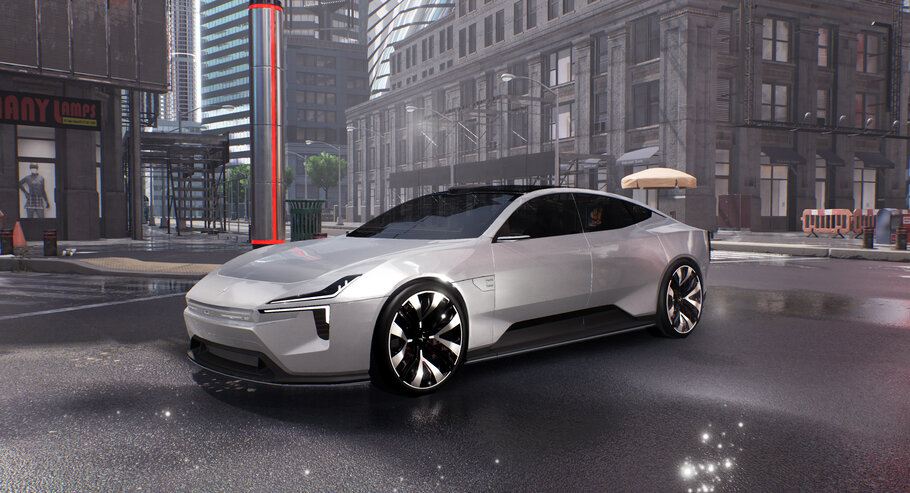
    The new fashion collection will debut in “Afterworld: The Age of Tomorrow”, afuturistic video game set in the year 2031. The team at Balenciaga approached Polestar to help add depth to the virtual environment by placing Polestar cars on the streets in the game.

    Inspired by the Polestar Design Contest, the gamified city will feature futuristic vehicles designed by the Polestar Community, as well as Polestar’s own Precept. Vehicles from designers including Konrad Cholewka, Arthur Martins, Charlie Nghiem, Rash Tagirov, Mattias Waltz and John McInnis were all chosen.

    Balenciaga comments: “Balenciaga’s first video game, Afterworld: The Age of Tomorrow, is set in a near and hopeful future. To make the setting more realistic and exciting, Balenciaga chose to work with other forward-thinking companies, populating the game with their newest designs. The innovative electric vehicles, including the 3x Moto, the MMXL, the 0, the Pickup, and the Polestar Precept, compliment Balenciaga’s ideas on luxury and sustainability, and so made a great addition to the project.”

    Polestar believes that open collaborations lead to innovation, and the brand is building a reputation for identifying and working with so-called kindred spirits. On this occasion though, it was the other way round and Balenciaga’s Demna Gvasalia was so intrigued he reached out to see if Polestar wanted to be part of the project.

    “At Polestar, our aim is to be a leader in the shift to sustainable mobility, as we design towards zero. When Balenciaga reached out and explained the Afterworld project, inspired by the slow return to a healthier balance of nature and industry, we felt it was a perfect match for us,”says Maximilian Missoni, Head of Design at Polestar.

  • Polestar design contest winners announced

    2020 Polestar Design Contest1

    The winners of Polestar’s first annual Design Contest have been chosen. Their designs will soon embark on a global exhibition, being displayed virtually and in Polestar Spaces around the world.

    The Polestar Design Contest invited both professional and student designers to create a vision of future mobility with the theme of “purity”. They were asked to present a new Polestar that exhibits the purest of designs; a vision of Polestar’s evolution in the year 2040 that follows the Polestar design philosophy. Specifically, the vision did not need to be a car.

    Winner of the professional category is Konrad Cholewka from Poland with his “Polestar MMXL” design – an inclusive, autonomous pod with a flexible interior design, pure in its combination of two geometric shapes.

    The student category has been won by Siddhesh Bhogale from India with his “Polestar 40” design – an airship that looks ahead 20 years by combining Polestar design with a 21st century aviation approach.

    An honourable mention goes to Arthur Martins from Brazil for his “Spänning” electric yacht, the design of which shows the potential for an electric cruiser that offers a true alternative to conventional craft, just as Polestar cars do in the automotive world.

    “We received an overwhelming amount of enthusiastic attention from inspired designers all over the world,” says Juan-Pablo Bernal, Senior Design Manager for Polestar, curator of the @polestardesigncommunity Instagram account and the founder of the contest. “The designers produced very high-quality material, and we saw a very consistent expression of the Polestar design language.”

    Hundreds of entries were received, from a truly international mix of designers – including submissions from India, South Korea, Japan, Germany, the United States, Sweden, Brazil, Poland, and China. Designs included everything from hypercars and Arctic exploration vehicles, to personal mobility solutions and watercraft.

    Entrants first submitted sketches, which were assessed by Polestar’s design department. The 13 finalists were then invited to remote coaching and guidance from Juan Pablo Bernal and Maximilian Missoni, Polestar’s Head of Design, where they were given expert advice and insight into the world of automotive design.

    The final phase involved the shortlisted finalists creating fully realised digital models of their concepts which were then judged by the designer panel.

    “It was both inspirational and humbling to interact with so much emerging and experienced talent. The designs we saw evolve from creative sketches to 3D models show that the design world is a melting pot of exceptional individuals. We look forward to seeing these designers moving on to great things during their promising careers,” comments Maximilian Missoni.

    The winning designs will now be brought to life as 1:5 scale models and first shown in a virtual exhibition before beginning a global tour in Polestar’s launch markets. They will appear at Polestar Spaces in China, Europe and North America, according to local regulations.

  • Volvo Polestar Precept

    2021 Polestar Precept1

    Polestar has confirmed it will put the Precept into production. Revealed earlier this year, the Polestar Precept started life as a manifesto to illustrate the brand’s future vision and was described as a commitment car, not a concept car.

    Showcasing the Swedish electric performance brand’s future design direction, Precept also highlights Polestar’s path for digital technology and the use of innovative sustainable materials, inside and out.

    “‘Stunning. Spectacular. Cutting-edge. We’d like to see it on the road!’ – this is what the press wrote about Precept and the public said, ‘We want it’, so we decided to build it,” comments Thomas Ingenlath, Polestar CEO.

    “Consumers want to see a change from this industry – not just dreams. Now, Precept becomes an even stronger statement. We are committed to reducing the environmental impact of our cars and our business. The aim has to be climate neutrality, even though I recognize that is a long-term goal.”

    The interior of Polestar Precept features a mix of sustainable materials including recycled PET bottles, reclaimed fishing nets, and recycled cork vinyl. A flax-based composite developed by external partner Bcomp Ltd has featured in many interior and some exterior parts. Polestar’s ambition is to bring much of this sustainability into production.

    With product development underway, Polestar confirms it will produce Precept in China, where a new production facility will be established. The aim is to ensure the facility will be carbon neutral and one of the most intelligent and connected automotive production facilities in the world.

    This climate-positive narrative was started by Polestar’s original manufacturing facility in Chengdu where the Polestar 1 is produced. Inaugurated in 2019, the Polestar Production Centre became the first LEED Gold-rated automotive production facility in China and runs on 100% renewable energy.

    “China is a home market for Polestar and we recognize the increasingly important drive for greater sustainability here,” continues Thomas Ingenlath, speaking at the Beijing International Automotive Exhibition 2020. “With this new factory, we will again raise the bar, aiming to produce the most advanced and premium electric car in China with the lowest carbon footprint.”