Category: Car Makes

Car Makes

  • BAC MONO

    A strange car from a strange company. This is the BAC MONO, which will bring unique performance to its customers.

    The vehicle is created by Briggs Automotive Company (BAC) with founders two brothers – Neill and Ian Briggs of Cheshire, United Kingdom.

    The single-seater is powered by brutal 2.3 liter naturally aspirated Cosworth engine with 285PS, which is longitudinally mounted, coupled to a 6-speed sequential gearbox from Hewland with a LSD.

    BAC MONO features adjustable dampers from Sachs Racing and brakes by AP Racing. It stands on HRT alloy wheels from OZ Racing fitted with Kumho tires. Finally, the electronics are provided by GEMS.

    As you may suggest, the performance is brutal – 2.8 seconds to 60 mph and only 6.7 seconds to 100 mph. The top speed is 273 km/h (170 mph). All this numbers are thanks to the staggering power to weight ratio – 520BHP per ton.

    The vehicle is planned to go in production and there will be between 50 and 100 units per year. The price is decent – €91 998.

    “MONO is the culmination of a 12-year dream for us – the car we wanted to own but nobody else made,” commented Neill Briggs.

    We agree with him!

    Source: Briggs Automotive Company Ltd

  • Porsche 911 Turbo S “Edition 918 Spyder”

    Porsche 911 Turbo S “Edition 918 Spyder” is practically a bonus to the customers of 918 Spyder.

    The special edition Turbo S will start deliveries in June in Europe and prices start at €173 241 for the Coupe and at €184 546 for the Cabriolet version. The US models are much cheaper – $160 700 and $172 100, respectively.

    911 Turbo S is powered by a 3.8 liter twin-turbo flat-six with 530PS (389 kW) at 6750 RPM and 700Nm (516 lv0ft) between 2100 and 4250RPM.

    The engine is mated to a 7-speed automatic gearbox. The curb weight of the car is 1660kg. 0 to 100 km/h in 3.3 seconds and top speed of 315km/h (195 mph).

    There is an optional Sports Chrono overboost package, which increases torque for short periods (maximum 10 seconds) but over a narrower rev range.

    Source: Porsche

  • Porsche 918 Spyder

    Porsche will actually put in production the 918 Spyder plug-in hybrid. It will be produced in a limited run starting in 2013, but the company has already started to take orders for the car.

    The vehicle will be produced in September 2013 on a limited series at Stuttgart-Zuffenhausen plant in Germany.

    Porsche 918 Spyder is powered by a unique type of plug-in hybrid system. It includes a high-revving 4.0 liter V8 engine and 500HP.

    The price is astonishing – €645 000 and $845 000 for the US. However, the company expects to sell all units, because the car will be more valuable for a collection, instead of special driving experience and abilities.

    There is a bonus for the customers of 918 Spyder. Only they will be able to order the limited series 911 Turbo S, either coupe or cabriolet depending on taste.

    source: Porsche

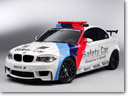
  • BMW 1 Series M Coupe Safety Car

    BMW has announced a specially created 1 Series M Safety Car for MotoGP. The auto-maker is also offering other high-performance vehicles to be used by the Dorna Sports management team and IRTA officials.

    On 19th March, BMW 1 Series M Coupe will for the first time be deployed as the official Safety Car for the MotoGP events.

    BMW 1 Series M Coupe is powered by a twin-turbo 3.0 liter inline six-cylinder with 340PS (250 kW) and 500Nm (369 lb-ft) of torque. It is connected to a 6-speed manual transmission.

    The BMW Safety Car features carbon fibre-reinforced bonnet featuring additional large air vents, as well as polycarbonate side and rear windows. There are also a lightweight titanium race exhaust system, an adjustable rear wing, new front apron and an additional splitter integrated on the underside of the apron.

    The interior includes a rollcage, absence of rear seats, two racing bucket seats with 6-point safety belts, an M steering wheel in alcantara and a fire extinguisher.

    The suspension is also improved – an adjustable race track set-up that includes a sports-tuned chassis in which the dampers are independently adjustable for bump and rebound.

    The car stands on 19” wheels with tires in dimensions 255/35 at the front and 285/30 at the rear. The braking system of the BMW 1 Series M Coupe, already designed for extremely high demands, is replaced in the Safety Car with a 6-piston fixed-calliper racing brake system.

    source: BMW

  • Koenigsegg Agera R specs

    Koenigsegg has recently unveiled the brutal Agera R at the Geneva Show.

    The hyper car is powered by a 5.0 liter twin-turbo V8 with blistering 1115PS (820 kW) at 6900RPM and the red line is a bit after that – 7250RPM. The maximum torque is 1200Nm (885 lb-ft) at 4100RPM, but over 1000Nm is available from 2700 to 6170RPM. 0 to 100 km/h in 2.9 seconds, to 200 km/h in 7.5 seconds.

    A really hard discipline 0 to 200 and back to stand still is done in just 12.7 seconds. The brakes are so hard, that when you press them to the metal, you will have the feeling that your face will be taken off. The breaking distance from 100 km/h to stand still is 30.5m.

    One of the most interesting about the car is the weight-to-power ratio: 1.19 kg/hp. The car has a curb weight of 1435 kg and with over a thousand horsepower, it is a real adventure to drive it.

    Agera R has special Vortex Generating Rim (VGR) wheels wrapped in Michelin tires, which are specially developed for the hyper car and can hold a speeds up to 419 km/h (260 mph).

    Koenigsegg Agera R Technical specifications:

    Performance

    • Power output: 1115 hp at 6900 rpm – redline @ 7250 rpm
    • Torque: over 1000 Nm from 2700 to 6170 rpm
    • Max torque: 1200 Nm at 4100 rpm
    • Acceleration: 0-100 km/h (0-62 mph) 2.9 seconds
    • 0-200 km/h 7,5 sec, 0-200-0 km/h 12.7 sec
    • Braking distance: 30.5m (100-0 km/h)
    • Lateral g-force: 1.6 g
    • Fuel consumption: Highway travel: 12,5 l/100km, Combined: 14,7/100km
    • Weight-to-power ratio: 1.19 kg/hp (dry weight)
    • Weight distribution: 45% front, 55% rear
    • Emission levels: Euro V and lev 2

    Aerodynamics

    • Cd. 0,33 to 0,37 with adaptable rear wings.
    • Frontal Area: 1.873 m2
    • Total Downforce at 250 km/h: 300 kg
    • Flat underside of chassis. Venturi tunnels at rear of chassis/body.

    Dimensions

    • Total length: 4293 mm (169″)
    • Total width: 1996 mm (78.6″)
    • Total height: 1120 mm (44.1″)
    • Ground clearance: Rear: 100 mm (3.94″) Front: 100 mm (3.94″)
    • Wheelbase: 2662 mm.
    • Front track: 1700 mm. Rear track: 1650 mm.
    • Front overhang: 885mm Rear overhang: 752mm
    • Fuel capacity: 80 liters
    • Luggage compartment: 120 liters (31.7 US gallons)
    • Dry weight: 1330 kg
    • Curb weight 1435 kg (all fluids plus 50% fuel)
    • Maximum laden weight: 1650 kg (full tank, two passengers, full luggage)

    Chassis

    • Carbon fiber with aluminum honeycomb and integrated fuel tanks for optimal weight distribution and safety.
    • Monocoque torsional rigidity: 65,000 Nm/degree.
    • Weight including tanks: 70 kg.
    • Front and rear suspension: Double wishbones, two-way adjustable VPS gas-hydraulic shock absorbers, pushrod operated.
    • Triplex damper in the rear.
    • Electronically adjustable ride height. Front: Cro-Mo subframe, with integrated crash members.
    • Rear: Semi-stressed engine and gearbox with support struts, for needle bearings and o-ringed wishbone bushings optimal rigidity and no engine inertia movements.
    • Fully machined aircraft aluminium uprights, with SKF LeMans specification 150mm angle contact ball bearings.
    • GKN hollow/gun-drilled driveshafts.
    • Koenigsegg Z-style progressive and lightweight anti-roll bars front and rear.

    Engine

    • Koenigsegg aluminum 5,0L V8, 4 valves per cylinder, double overheadcamshafts
    • Compression: 9.0:1
    • Bore: 91.7 mm Stroke: 95.25 mm
    • Sequential, multipoint fuel injection.
    • Twin turbo superchargers
    • 1.4 bar boost pressure.
    • Dry sump lubrication.
    • Carbon fibre intake manifold with optimised intake tracts.
    • Tig-welded ceramic coated inconel exhaust system manifold with merge collector.
    • Weight: 197 kg

    Transmission

    • Specially developed 7-speed dual clutch, 1 input shaft transmission with paddle-shift.
    • Electronic differential

    Steering

    • Rack and pinion power assisted steering. 2.7 turns lock-to-lock.
    • Turning circle: 11 metres. TRW electro-hydraulic power-assisted.

    Brakes

    • Front brakes: Ventilated ceramic discs Ø 397 mm, 40 mm wide.
    • 6-piston calipers. Power-assisted.
    • Rear brakes: Ventilated ceramic discs Ø 380 mm, 34 mm wide.
    • 4-piston callipers. Power-assisted.

    Traction Control

    • F1-style for optimal performance with 5 different handling modes.

    Wheels

    • Koenigsegg forged Vortex generating aluminium wheels with centre locking
    • Front: 19″ x 9.5″
    • Rear: 20″ x 12.5″

    Tyres

    • Dedicated Michelin Supersport
    • Unidirectional with asymmetric thread pattern
    • Front: 265/35 – 19″ (Y)
    • Rear: 345/30 – 20″ (Y)
    • Speed rating: 420+ km/h

    Body

    • Two-door, two seater with removable hardtop stowable under the front hood lid. Body made from pre-impregnated carbon fibre/kevlar and lightweight sandwich reinforcements. Carbon vents over wheels.

    Electrical System

    • Solid state digital semiconductors – no fuses or relays. Can bus operated and fully programmable functionality.

    Equipment

    • Dual airbags, detachable storable hardtop with glass roof, power windows, adaptive rear wing, adjustable pedals and steering column, Agera stitching, adjustable seats in rake and length, carbon ceramic brakes with Sport ABS, hydraulic lifting system, power steering, power brakes, extra 4 point seatbelts for track use. satnav, Intelligent LifePo4 battery, MP3 player, USB connection, climate control, digital warning and info system, G sensor, alarm, tyre monitoring system, silver key, leather carpets, roof storage bag, car cover.

    Extra Equipment

    • Fitted luggage, special leather and colour requests, full visible carbon body, Inconel exhaust system, Front winglets, rear view camera, heated seats, ski box roof, skis, winter wheel package, 4 point racing harnesses.

    source: Koenigsegg

  • Audi A9 – details

    Audi A9 flagship 4-door coupe is based on the current A8, so that means that it will be over 5 meters long and the interior will deliver extraordinary good comfort. A9 is expected to hit the market in 2014 and there will be two variant – cabriolet and coupe. The price will be around €80 000, which is a bit expensive for a GT car.

    Audi A9 will compete directly against Mercedes CLS and Porsche Panamera.

    The body-style features an aluminum space-frame and source its main components from the MLB architecture. A9 will also have the air-sprung chassis architecture and the assembly line at Audi’s Neckarsulm plant.

    Another innovation is the newly developed engine – a 4.0 liter V8. The engine range will also include some V6s and V8s of the A8 range.

    The most powerful 6.3 liter W12 will also be available as an option.

    There is no further data for Audi A9, but one thing is for sure – It looks amazing!


  • 2011 Honda Brio

    Honda has announced the new 2011 Brio model, which is specially created for India, Thailand and China. The production car is practically the same as the last year’s prototype. It also resembles Honda Fit and measures 3 610mm in length, 1 680mm in width and 1 475mm in height.

    The interior offers a lot of space and good quality materials, although it is pretty basic and there aren’t many extras. However, the price matches to the car perfectly – $12 862 (390 000 baht). The vehicle is scheduled to hit the market in the end of May and the company expects to sell more than 40 000 units annually in the Thai market.

    Brio is powered by a 1.2 liter four-cylinder i-VTEC engine with 90PS (66 kW) and achieves an average fuel consumption of approximately 5.0 L/100km (47 mpg).


    source: Honda

  • Smart ForTwo Disco Ball

    An interesting idea is to turn a car into a disco ball and not just any type of vehicle, but a Smart ForTwo electric drive.

    The show car is completely covered in reflective glass tiles from the roof to the tires. It is used in the film titled Pixel City, which will be shown as part of an art installation at the Neue Nationalgalerie in Berlin on March 26 and 27.

    The whole idea came from the experimental band Apparatjik. The group members include well-known pop musicians Magne Furuholmen of a-ha, Guy Berryman of Coldplay, Jonas Bjerre of Mew and music producer Martin Terefe.

    The art installation “Apparatjik Light Space Modular” features an interactive display which collects data to be turned into a song.

    Sounds interesting!

    source: smart

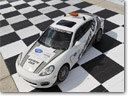
  • Porsche Panamera Turbo Safety Car

    Porsche has introduced Panamera Turbo safety car, which will be used specially for the 2011 American Le Mans Series (ALMS).

    The car is based on Porsche Panamera Turbo and features a 4.8 liter twin-turbocharged V8 with 500PS (368 kW) and 700Nm (516 lb-ft) between 2 250 and 4500RPM. All that power is needed to keep pace on the track. Panamera Turbo does 0 to 60 mph in 3.3 seconds and to 100mph in just 8.2 seconds. Quarter mile is covered in 11.7 seconds with 192 km/h (119 mph). The top speed is 303 km/h (188 mph), which is quite good for big four-door coupe.

    Porsche are also unveiled two Cayenne ALMS Emergency Response Vehicles which will be on stand-by in case there’s any trouble at any of this season’s races.

    There are no further details about the special vehicles, but the company will release more data, soon.

    source: Porsche

  • Kicherer Mercedes GL42 Sport Black

    Kicherer has just unveiled its latest, robust yet sporty conversion named under the badge Kicherer Mercedes GL42 Sport Black. (more…)
  • TechArt Porsche Cayenne II

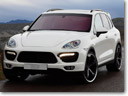
    TechArt Porsche Cayenne II  Turbo is the latest, exciting creation released by the German-based aftermarket specialist, which made its grand debut at the last week’s finished Geneva Motor Fair 2011. (more…)

  • Sportec SP580 Porsche Cayenne II Turbo

    Sportec has introduced a tuning program for the new Porsche Cayenne II Turbo. The project name is SP580 and as you may suggest, this is the number of the horsepower.

    Sportec SP580 is powered by a 4.8 liter twin-turbo V8 with 580PS (427 kW) and 700Nm (516 lb-ft). It is an increase of 80PS and 100Nm over the factory power. 0 to 100 km/h takes 4.4 seconds, an improvent of 0.3 seconds and a top speed of 285 km/h (177 mph), instead of productions 278 km/h (172 mph).

    Cayenne II Turbo by Sportec also features a stainless-steel rear muffler and 90 mm tailpipes. The brake system includes 6-piston calipers at the front axle and 4-piston calipers at the rear.

    The SAV stands on 22” Mono/7 forged wheels in dimensions 10.5J x 22” fitted with 295/30 ZR22 Michelin tires.

    The whole vehicle is lowered by 30mm thanks to an electronic suspension control module.

    source: Sportec