Category: Car Makes

Car Makes

  • Nissan INVITATION Concept

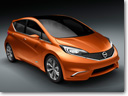
    The Invitation Concept is one of the latest projects of Nissan. The dynamic concept will be unveiled at this year’s Geneva International Motor Show. It shows some of the innovation and excitement promised for the new model, which is due to be launched in the UK from 2013.

    The INVITATION has interesting and energetic design with nice fresh style. The clean fluidity of the silhouette hints at its dynamic potential and showcases class-leading aerodynamics for enhanced efficiency. The interior combines practicality and modernity with impressive levels of quality and purposeful technology features.

    Nissan is aiming for an ultra-low CO2 emission target of under 100g/km for the most frugal model and with all versions eligible to wear Nissan’s Pure Drive badge.

    At the same time, responsive agile handling will ensure that when it comes to driving dynamics, INVITATION will compete with the top performers in the segment.

    But INVITATION is more than just a great looking car that’s fun and frugal to drive. The concept packs some of the most advanced technology ever seen in the B-segment, all of which is designed to ensure the car is as safe as possible.

    Among the features is Nissan’s advanced Around View Monitor (AVM) safety technology – seen for the first time on a B-segment car – which makes reversing and parallel parking as stress-free as possible. In addition, INVITATION also incorporates the Nissan Safety Shield Technologies, which interacts with the driving environment keeping the driver aware of what is happening around the car.

    INVITATION’s combination of exterior, interior, advanced safety features and class-leading emissions, fuel economy and dynamic performance demonstrates Nissan’s commitment to offering innovation and excitement to all car buyers, no matter what type of car they are looking to buy.

    Nissan INVITATION Concept
    Nissan INVITATION Concept

    Source: Nissan

  • “It’s Halftime in America” Chrysler Commercial [VIDEO]

    ItsHalftimeInAmerica ThumbChrysler Group has just launched a television commercial named “It’s Halftime in America” and it aired during the 2012 NFL Championship game.

    In the video is staring the famous super star Clint Eastwood. The ad lasts almost 2 minutes and 10 seconds. More importantly he speaks a monologue that is encouraging and inspiring, especially for people who have lost everything due to the economical crisis, or people who have gone under devastating tragedies. Although there are al lot of downfalls in everybody’s life, Eastwood’s calling is to look ahead towards a brighter future. He gives as an example the people of Detroit city, who have gone through a lot! This is an inspirational commercial which aims towards the brighter future, and at the same time recalling the great past of the Chrysler vehicles.

    It''s Halftime In America Chrysler Commercial
    It''s Halftime In America Chrysler Commercial
    It''s Halftime In America Chrysler Commercial
    It''s Halftime In America Chrysler Commercial

    httpv://youtu.be/_PE5V4Uzobc

    Video Source: YouTube

    Source: Chrysler

  • Kahn Design Imperial Blue Cosworth Range Rover

    Kahn Imperial Blue Cosworth Range Rover ThumbAs you see this iconic Range Rover received and upgraded appeal from Kahn Design. This was made through the feature of the Cosworth‘s engineering with quintessential British. This Imperial blue Cosworth Range Rover Edition now has even more style, comfort and luxury. It is now boosted with wide vented front and rear wheel arches with integrated LED running lights in the front air dams, brake calipers finished in liquid gold, RS front grille with 3D mesh, exhaust side vents, Cosworth branding, matt pearl grey or matt black paint detailing (door handles), side vents, grille surround and Cosworth machined and vented aluminum foot pedals.

    Next to the powerful Cosworth engine enhancement, there is also featured a combination of alterations to the supercharger and ECU programmingq, which are taking effect as an even more rapid Range Rover. In addition the Kahn stainless steel quad exhaust system is centered on a radical design, which reflects an attraction to a pluto-matic lifestyle. The vehicle is completed with a cross hair exhaust feature.

    The Cosworth interior package is excellent and done with a lot of attention on the details: great finishes and top end design make it even classier.  Cosworth included also in the interior a front and rear seats in diamond quilted perforated black leather with a carbon trim, carbon fibre interior trim, Cosworth speedo in blue, yellow rev counter, diamond gear selector, Churchill time clock with Swarovski diamond bezel and Cosworth door entry sill plates.
    Next to be mentioned are those great wheels on which the Rover sits – namely 22″ Kahn RS wheels. The RS wheels are synonymous with elegance and innovation due to their simple clean lines, soft organic surfaces on the edge of the spoke and a purposeful mechanical centre.

    Kahn Imperial Blue Cosworth Range Rover
    Kahn Imperial Blue Cosworth Range Rover

    Source: Kahn Design

  • SR Project Kiluminati Ferrari 458 Pure Five

    SR Ferrari 458 Pure Five ThumbSR Project Kiluminati – The Contempo Renaissance – is the name of this incredible and astonishing tuning of the Ferrari 458 Italia model. It also called SR Project Kiluminati Ferrari 458 Pure Five, because it was the work of collaboration between SR Auto Group and PUR Wheels.

    The result is this unconventional bold and distinct vehicle, for which every Ferrari fan will fall. Undeniably every Ferrari it wears this amazing attitude of style and class, however it is now even more enhanced by this exciting tuning.

    The company “PUR Wheels” has contacted SR Auto Group in order to make this result happen. They had an idea for a wheel design which will pay homage to the past in a modern fashion. The idea in general consisted of using a three spoke wheel, which nowadays is considered to be old fashion. Nonetheless, we don’t see the end-result as old fashioned, do we? And they took this chance! This is how the named “design 5ive”, Project Kiluminati was born.

    SR Project Kiluminati Ferrari 458 Pure Five
    SR Project Kiluminati Ferrari 458 Pure Five
    SR Project Kiluminati Ferrari 458 Pure Five
    SR Project Kiluminati Ferrari 458 Pure Five

    Source: SR Auto Group

  • Kia Track’ster Concept [first image]

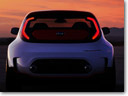
    Kia Trackster ConceptKia has released first image (teaser) of the new Track’ster Concept car, which will make its official debut at the 2012 Chicago Auto Show. The vehicle is created by California Design Studio.

    The concept car boasts LED taillights and aggressive dual exhaust system.

    There are no further details about the car or its engine, but probably it will share the Veloster’s 1.6 liter turbocharged petrol with 211PS (155 kW) and 265Nm (196 lb-ft).

    Full details and additional photography will be released on Wednesday 8th February. A design sketch was released on Thursday 2nd February.

    Source: Kia

  • Ariel Atom – Primitive Pure Fun

    Having fun on four wheels these days is easy, right? Indeed, there is a lot of power out there to play with. However, “with great power comes great responsibility”… is what many car manufacturers have in mind now. That is why today we have speed limiters, brake assist, lane departure warnings, ABS, ESC, TCS, xDrive, and many, many more abbreviations that keep us safe and sound and on the road. Everything is automatized and we as drivers start to feel isolated and neglected. All is rather convenient and indeed safe, but there’s something amiss. Our primal instinct to be in a constant search for the ultimate thrill is starting to boil and cars today are having a hard time satisfying it.

    Happily however there are exceptions – a familiar, yet small company called Ariel still offers that what many other do not any more – an unbridled fun generator called the Atom. Founded in 2001, Ariel is a 7 employee, Somerset (England) based firm that produces performance vehicles. It’s production portfolio consists of four projects – The Ariel Atom 1, 2 and 3 and the Ariel Atom 500 – all rather limited in numbers and there’s a reason for that. To begin with, if it’s a car it doesn’t look like one, if it’s a bike, it has four wheels and a steering wheel. It doesn’t come with a windshield nor a roof and not even a boot for that matter. The chassis is also a body and a frame and all the various car mechanics are slightly or completely exposed to the human eye. So, in terms of practicality it is a disaster. But now we are going somewhere – it’s exciting just to look at.

    Ariel Atom 3 Works

    The Atom certainly wasn’t made to pull up next to that fancy restaurant you were thinking of visiting. I mean, because of the disheveled person sitting next to you who used to be your elegant partner and because of the bugs in your hair and between your teeth you are likely to be rejected a table that evening. And why would you and your passenger look like that upon arrival? Well, when you operate an Atom you always feel the temptation to give it the beans, partly because it’s so light (612 kg) and partly because it has a magnificent supercharged 2.0 L, 300 bhp Honda Civic Type R engine ready for exploiting. And that is if you don’t go with the 500 which has an even more hardcore 3.0 liter John Hartley V8 engine that develops 500 bhp (in a car weighing less than a ton!). So in essence, when you put your foot down your body is getting destroyed by immense G forces and skin pulling wind resistance (no windshield, remember?).

    Ariel Atom 500 V8

    That gives us an idea how much the Ariel Atom does not care about safety and driver aids. While thundering down the road, stomp on the brakes and you’ll end up skidding off in a vast cloud of tire smoke for there are no anti-locking systems to interfere. Dare a mistake at a high-speed bend and you’ll miss the electronic stability control that puts you back in line. Yet, the thing about the Atom is the improbability of something going wrong and that has something to do with it’s nimbleness and ease of control. It doesn’t need all the computerized gizmos which only add weight in excess. Instead, steering is light and sharp (you can actually see, while driving, the front wheels clipping apexes and working their magic), the gearbox is a charm and 0 to 60 takes less than 3 seconds – what more does an adrenaline junkie need?

    So it’s no wonder that the Atom gained such praise from automotive reviewers and critics over the last several years. It’s a technological landmark that is fun and extraordinary to drive – just a little bit of road legal lunacy in our everyday sensible lives.

    Picture Source: Ariel

  • BMW – Dynamic Stability Control

    The DSC (Dynamic Stability Control) is BMW’s electronic stability control system. It controls the suspension with the help of three other single programs – ABS (Anti-lock Brake System), ASC + T (Automatic Stability Control + Traction) and CBC (Cornering Break Control).

    The system was firstly introduced back in 1997 offered on BMW 740i/L and 750i/L. Nowadays, all BMWs come with DSC III as standard including DTC (Dynamic Traction Control). The DTC allows more wheel slip meaning a more dynamic driving style with higher wheel traction including DSC controlling stability. In other words, the DTC will allow you to drive more aggressively without suiciding yourself.

    The DSC system is very complex and interesting. It constantly checks vehicle speed, steering angle, wheel rotation, lateral and transverse acceleration, brake pressure and yaw to register imminent instability when cornering, especially on slippery conditions like snow and rain. When instability moment is registered, the DSC intervenes via the engine management system. It reduces drive torque and activates each wheel brake individually to keep the car stable. Everything this happens within milliseconds, so do not think you don’t need this system.

    So, the DSC uses ASC+T to cut the engine power and, if this is insufficient to maintain traction, it also uses ABS to apply braking power wherever it is needed.

    httpv://www.youtube.com/watch?v=ncE-Vk7egRo

    The DSC uses a lot of sensors to work properly. First, it monitors the steering angle sensor to detect the driver’s chosen path. After that it uses lateral- acceleration to define the forces, which must be transmitted to the road by the tires. The rate-of-turn sensor defines the car’s degree of rotary movement and the brake-pressure sensor define the longitudinal forces acting between tires and road surface under braking.

    If something went wrong while driving and the car begin to oversteer or to understeer, the DSC can counter the situation by applying brakes. All electronic and hydraulic systems are very rapid and precise, so the driver can hardly feel them.

    • While ASC + T analyzes the longitudinal forces occurring in straight-ahead operation, DSC additionally registers and analyses lateral dynamic forces.
    • When cornering at high speeds, DSC counters unstable vehicle states such as oversteering or understeering
    • The DSC feature can provide maximum stability when cornering.
    • With DSC there is a significant reduction in the risk of skidding.

    The DTC (Dynamic Traction Control) is a sub-function of the DSC system. Besides offering sports-style driving, it provides a small amount of wheel spin improving traction, especially on deep snow, slush or loose terrain. In some occasions more slip generates better better traction and more thrust.

    The DTC alloys sports-style driving and even permits controlled drifts. Still, the driver retains complete control over the vehicle in every situation and the Dynamic Stability Control’s stabilising measures remain active even when the DTC is activated.

    When you start the car and you are in normal driving mode, the DSC is active. One short push on the DSC button: the DTC is enabled and DSC restricted. One long push on the DSC button: DSC and DTC off.

    So, we strongly do not recommend turning the Dynamic Traction Control off, because it is very dangerous.

    BMW DSC button E46
    BMW DSC button E46
  • Skoda Green E Line Development

    Skoda-Green-E-Line-thumbAt Skoda these days are busy developing their not yet ready for production “Green E Line” vehicles – a segment of electric cars based on the Octavia Estate. Right now, a fleet of ten E Lines is undergoing a phase where day to day conditions are recreated so see how the cars behave. The whole green thing is a part of Skoda’s plan to excel in the field of fuel efficiency. Other projects concerned with that often work to optimize the TDI and TSI drivetrains and also various transmissions.


    The gathered data will be of extreme value for fine-tuning to get the most out of the cars. Issues that concern potential customers can also be addressed – being extremely silent in traffic might be a disadvantage for example.

    The whole testing procedure comprises of three phases: the first and the second are ongoing now and deal with in-house (on the Prague airport to be more exact) trials and research of the car’s various systems. The third phase, set to begin in March this year, will put the fleet to the real test as the cars will go to different institutions other than Skoda Auto (government, educational institutions etc.) for further research and testing in real life conditions.

    Skoda Green E Line (Octavia based)
    Skoda Green E Line (Octavia based)

    Because of being based on the Octavia Estate, the Green E Line is ideal for harboring electric car components such as batteries, motors and electronic controllers. Power output stands at 85 kW and generous figure of 270 Nm. (because of being electric, torque tends to be always high and instantly available throughout the whole rev range). A zero to sixty time is said to be around 12 seconds and top speed is as high as 135 kph. On a single charge it is estimated that the E Line will go for 150 km which is more than enough to satisfy various European communities.

    Source: Skoda

  • 2013 Volkswagen Beetle TDI US

    2013 Volkswagen Beetle TDI will be revealed at this year’s Chicago Auto Show.

    The new diesel powered Beetle does not have any exterior modifications except “TDI” badge, some more chrome and 17” alloys. Inside, there is a new instrument cluster with a stopwatch, oil temperature and turbo boost gauges.

    The model line-up includes three trim levels: TDI, TDI with Sunroof and TDI with Sunroof, Sound, and Navigation. Standard equipment includes power windows, cruise control, V-Tex Leatherette seating, the kaeferfach secondary glovebox, Bluetooth®, a leather-wrapped multifunction steering wheel with audio controls, three auxiliary gauges, Keyless entry with push-button start, and a Media Device Interface with iPod® cable.

    The base TDI has 17” alloy wheels, and an interior and exterior chrome package. The standard RCD310 audio system has an AM/FM radio, CD player, Bluetooth®, and eight speakers.

    TDI with Sunroof adds a panoramic tilt/slide sunroof that is fully 80 percent larger than the one fitted to the New Beetle. The model’s Premium VIII audio system has a full-color touchscreen display, a six-disc CD changer, and an SD card reader.

    TDI with Sunroof, Sound and Navigation is the top-of-range model. It has the RNS 315 NAV system with a 5” touchscreen display. The Fender® Premium audio system that offers concert quality sound is also standard. This has an additional subwoofer, proprietary Panasonic® speaker technology that covers the cabin with directional sound, and 400 watts of output power.

    2013 Beetle TDI is powered by a turbocharged 2.0-liter diesel engine with 140 PS (103 kW) and 320Nm (236 lb-ft). It is available with a choice of 6-speed manual or dual-clutch DSG transmissions.

    The 2013 Beetle TDI will hit the US market this summer.

    2013 Volkswagen Beetle TDI US
    2013 Volkswagen Beetle TDI US

    Source: Volkswagen

  • edo Competition Porsche Panamera Turbo S

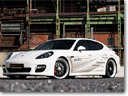
    Edo Competition has announced their tuning package for the most powerful Panamera – the Turbo S model. The brutal GT car accelerates to 100 km/h in the blink of an eye – 3.5 seconds.

    The performance package boosts the mighty 4.8 twin-turbocharged V8 to whopping 700PS and 880Nm of torque. This is an increase of 150PS and 130Nm. The top speed of edo Turbo S is 340 km/h (211 mph), but still if is way far behind G-Power Hurricane RS. The package includes high flow air filters and catalytic converters, a pair of new turbochargers and exhaust manifolds. There is also a stainless steel high performance exhaust system featuring butterfly valves. Of course, everything is perfectly tuned on dyno.

    The stance of the vehicle is improved by installing edo body lowering module and a set of new 22” sport wheels with 265/30 ZR22 (front) and 305/25 ZR22 (rear) tires. The wheels can be custom-painted even in carbon fiber look.

    Finally, the interior is also touched with the finest leather, paired with other high-quality materials replacing the factory trim.

    edo Competition Porsche Panamera Turbo S
    edo Competition Porsche Panamera Turbo S

    Specifications:

    Engine
    Twin-turbo V8
    Capacity 700 hp / (515 kW) at 6,500 rpm
    Max. torque 880 Nm at 2,500-5,200 rpm

    Specifications
    Top speed ca. 340 km/h (electrically restricted)
    0 – 100 km/h (0 – 62 mph) in 3,5 s

    Power
    Power increase to different variations including:
    ECU recalibration, high flow air filters and catalytic converters, new turbochargers and exhaust manifolds, as well as a stainless steel high performance exhaust system featuring butterfly valves. All modifications are tested and tuned on a dynamometer.
    700 PS/865 NM – duration: 4 weeks, only at edo competition

    Increased Performance

    • Power increase to 700 PS/865 NM
    • ECU recalibration
    • high flow air filters and catalytic converters
    • new turbochargers and exhaust manifolds
    • as well as a stainless steel high performance exhaust system featuring butterfly valves
    • All modifications are tested and tuned on a dynamometer.

    Exhaust System

    • A stainless steel high performance exhaust system featuring butterfly valves
    • The sound level of the high performance exhaust can be adjusted via remote control
    • Two settings (Super Sound and Stock) are available at the push of a button

    Wheel-/ Tirecombination

    • 22” sport wheels
    • Three-piece with forged center, hand-polished stainless steel outer rim, 39 stainless steel bolts
    • Tire dimensions: 265/ 30 ZR 22 (front), 305/ 25 ZR 22 (rear), Continental tires
    • Wheels can be custom-painted on request. For example: Carbon fiber look.

    Chassis

    • edo body lowering module, height adjustable

    Source: edo Competition

  • KW Variant 3+ & Clubsport for 2011 Audi RS3 Sportback

    KW has introduced Variant 3+ and Clubsport kit for the hottest hatchback on the market – 2012 Audi RS3.

    The Variant 3+ coilover kit is specially created to improve the handling without sacrificing the ride quality. The kit has 16 levels of damping adjustment as well as height adjustment between 5-35mm at the front and 0-25mm at the rear.

    The Clubsport kit is available in both 2-way and 3-way adjustment. It is specially prepared for using on the tracks using racing springs and high-performance dampers. What is more, KW’s Clubsport coilovers are fine tuned on the Nurburgring for maximum performance. Each damper system features a separate expansion tank to allow independent adjustment of compression in both high-speed (14 levels) and low-speed (6 levels) driving. The KW Clubsport 2-way and 3-way is also height adjustable by 5-35mm at the front and 0-25mm at the rear.

    Additionally, the KW 3-way Clubsport Suspension comes supplied with preassembled aluminium uniball strut mounts which are also adjustable and which allow optimum fine-tuning for various sports tires and tracks.

    Despite its immense circuit ability, KW’s Clubsport coilover remains TÜV approved allowing the RS3 to be driven to and from circuits with ease.

    KW 2011 Audi RS3 Sportback
    KW 2011 Audi RS3 Sportback


    Source: KW

  • 2012 F1 Season – Ferrari F2012

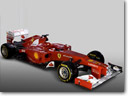
    After McLaren and their MP4-27 F1 car, Ferrari have also unveiled theirs called F2012 – very “original”.

    As always at Ferrari, a great deal of time has been devoted to the performance and optimisation of the materials used, right from the design stage of each of around six thousand components that make up the car. In part, this is done to ensure that all operations carried out at the race track are as efficient and effective as possible. Obviously, quality control remains a crucial aspect, as does the goal of reaching maximum levels of performance and reliability, while maintaining the highest possible safety standards.

    With a reduction in the number of days available for track testing before the start of the Championship, which has dropped from fifteen to twelve, preparatory work on the test beds prior to the car’s track debut, has taken on even more importance. The three test sessions – at Jerez de la Frontera and Barcelona – will serve to get a picture of the handling of the F2012 and to adapt it to the Pirelli tyres. Indeed, getting the most out of the tyres has been an area that has seen a lot of work both at the design stage and in how the activities at the track are to be managed. The car is due to undergo a very intensive development programme over the first part of the season, especially on the aerodynamic front.

    Check out the specs below!

    2012 F1 Season Ferrari F2012
    2012 F1 Season Ferrari F2012

    Technical Specs

    Chassis

    • Carbon-fibre and honeycomb composite structure
    • Gearbox: Ferrari longitudinal gearbox
    • Differential: Limited-slip differential
    • Command: Semiautomatic sequential electronically controlled gearbox – quick shift
    • Number of gears: 7 +Reverse
    • Brakes: Brembo ventilated carbon-fibre disc brakes
    • Suspension: Independent suspension, pull-rod activated torsion springs front and rear
    • Weight with water, lubricant and driver: 640 kg
    • OZ Wheels (front and rear): 13″

    Engine

    • Type: 056
    • Number of cylinders: 8
    • Cylinder block in sand cast aluminium: V 90°
    • Number of valves: 32
    • Pneumatic distribution
    • Total displacement: 2398 cm3
    • Piston bore: 98 mm
    • Weight: >95 kg
    • Electronic injection and ignition
    • Fuel: Shell V-Power
    • Lubricant: Shell Helix Ultra

    Source: Ferrari