Category: Car Makes

Car Makes

  • 2012 Subaru XV TD Premium

    Subaru has recently announced the new XV, which is priced from €34 995. The vehicle is also the safest model in its class with certified 5 star Euro Ncap award for child occupant safety. It combines city style with urban and offroad ability.

    2012 XV comes with Symmetrical All-Wheel-Drive and unique Boxer Diesel engine ensuring the satisfaction of all driver’s needs. Whether for business or pleasure, the Subaru XV is well capable whatever the weather.

    All models marketed by Subaru Ireland come with the reassurance of a three year or 160,000 kilometres warranty, plus twelve year anti-corrosion cover and three year paintwork warranty.  This is in addition to three year’s membership of Subaru Assist – a comprehensive home and roadside repair and recovery package throughout Ireland and Europe administered by Mapfre Asistencia.

    Check out the full specs, below!

    2012 Subaru XV TD Premium
    2012 Subaru XV TD Premium
    Standard Specification 2.0TD XV
    Premium
    Exterior
    Auto on/off headlamps + DRL S
    HID lights S
    Pop-up type headlamp washers S
    Front fog lamps S
    Rear fog lamp S
    Power-folding door mirrors with built-in LED turn signals S
    UV protection glass; Windshield, front and rear side windows S
    Variable intermittent windshield wipers (Designed blade) S
    Privacy Glass S
    Intermittent rear window wiper S
    17″ aluminium alloy wheels S
    Side claddings S
    Power sliding, tilt-adjustable glass sunroof Optional Extra
    Carrier installation brackets S
    Roof spoiler S
    Roof antenna S
    Seating / Trims
    Leather wrapped steering wheel and gearshift knob S
    Leather seats Optional Extra
    6-way manual adjustable driver’s seat S
    Front seat heaters S
    60/40 split folding rear seats S
    Seat back pocket (front passenger side only) S
    Comfort / Convenience
    Electric windows (front & rear) S
    Remote control key system S
    Map lamps S
    Luggage space lamp S
    Vanity mirrors with lids (for driver and front passenger) S
    Centre tray S
    Centre console box S
    2 front cup holders (in the centre console) S
    Door pockets with bottle holders (on all side doors) S
    Interior fuel lid lock release S
    Two 12-volt power outlets (in the instrument panel and centre console box) S
    Cargo hooks S
    Luggage hooks S
    Retractable cargo cover S
    Box sub-trunk (under cargo storage) S
    Tyre repair kit S
    Climate control
    Dual-zone automatic air-conditioning system with anti-dust filter S
    Heater ducts for rear passengers S
    Windshield wiper de-icer S
    Automatic rain-sensing windshield wipers S
    Heated door mirrors S
    Front and side defrosters S
    Electric rear window defogger with timer S
    In-car Entertainment
    2-Din audio system with Bluetooth® system: 1-CD and 6 speakers S
    Steering wheel mounted audio remote control switches S
    Bluetooth® compatible hands-free system S
    USB and auxiliary audio input jack (in the centre console box) S
    Rear Vision Camera System S
    Control / Instruments
    High-Grade type Multi-Function Display S
    Shift up indicator S
    Tilt-adjustable / telescopic steering wheel S
    Cruise control S
    Drivability
    Vehicle Dynamics Control System S
    Hill Start Assist S
    Safety
    Front SRS airbags S
    Front side SRS airbags (for driver and front passenger) S
    Curtain SRS airbags (front, rear and both sides) S
    Knee SRS airbag S
    Side-door reinforcement beams (front and rear, both sides) S
    Steering column support beam S
    Whiplash reducing front seats S
    Rear seat headrests for 3 seating positions S
    Seatbelt indicator (for driver and all passengers) S
    Front seatbelts with pretensioners and load limiters S
    Height adjustable seatbelt anchors (for driver and front passenger) S
    Rear 3-point seatbelts for 3 seating positions S
    Safety pedal system S
    4-sensor/4-channel ABS with Electronic Brake-force Distribution S
    Brake assist system S
    Brake Override S
    ISO-FIX adapted child seat anchors (with tether anchors) S
    Child-proof rear door locking (both sides) S
    Anti-theft security system with engine immobiliser S
    Item SUBARU XV
    Symmetrical AWD (All-Wheel-Drive)
    2.0TD-S Premium
    6MT
    ENGINE
    Type Horizontally-opposed, 4-cylinder, 4-stroke, turbocharged, diesel engine
    DOHC 16-valve
    Bore/Stroke mm 86/86
    Capacity cc 1,998
    Compression ratio 16
    Fuel system Common rail
    Fuel tank capacity lit. 60
    PERFORMANCE
    Max. output (DIN) kW (PS)/rpm 108 (147)/3,600
    Max. torque (DIN) Nm (kgfm)/rpm 350 (35.7)1/1,600 – 2,400
    Max. speed km/h 198
    Acceleration (0-100 km/h) sec. 9.3
    Fuel consumption Urban lit./100 km 6.8
    Extra-urban lit./100 km 5
    Combined lit./100 km 5.6
    CO2 emissions Urban g/km 179
    Extra-urban g/km 131
    Combined g/km 146
    DRIVETRAIN
    AWD type Centre differential gear coupled with viscous LSD
    DIMENSIONS & WEIGHT
    Overall length mm 4,450
    Overall width mm 1,780
    Overall height mm 1,570
    Wheelbase mm 2,635
    Track Front mm 1,525
    Rear mm 1,525
    Minimum road clearance (at kerb weight) mm 220
    Seating capacity persons 5
    Kerb weight kg 1,440
    Towing capacity kg 1,600
    TRANS-AXLE
    Gear ratio 1st 3.454
    2nd 1.750
    3rd 1.062
    4th 0.785
    5th 0.634
    6th 0.557
    Reverse 3.636
    Final drive axle ratio 4.111
    CHASSIS
    Steering Pinion-assist type electric power steering system
    Suspension Front MacPherson strut type
    (4-wheel independent) Rear Double wishbone type
    Minimum turning circle at tyre (radius) m 5.3
    Brakes Front Ventilated disc brakes
    Rear Disc brakes
    Tyre/wheel size 225/55R17, 17 x 7″ J

    Source: Subaru

  • Mazda Takeri concept car

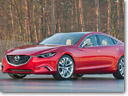
    Mazda will exhibit its Takeri concept car for the first time in Europe at the Geneva International Motor Show, next month.  This is Mazda’s next-generation mid-sized saloon featuring unique i-ELOOP regenerative braking technology. It will also be joined by CX-5 compact crossover SUV and MX-5 Special Edition Spring 2012.

    The Takeri Concept Car boasts Mazda’s KODO – Soul of Motion’ design theme, bringing a new level of strength and allure to saloon styling. It is truly remarkable even in stand-still position. The engine is also a new SKYACTIV-D diesel engine with a fuel-saving i-stop system and 6-speed SKYACTIV-Drive automatic gearbox.

    Furthermore, the Takeri is the first Mazda car to be equipped with i-ELOOP – short for “Intelligent Energy Loop”. It is advanced technology using regenerative braking system to convert kinetic energy to electricity during deceleration and stores it in an electric double-layer capacitor. The power is used to run the vehicle’s electric components, thereby reducing the load on the engine and increasing fuel economy by up to 10%. This contributes to the Mazda Takeri’s outstanding fuel economy, which is achieved at no sacrifice to performance or comfort.

    Mazda’s display at the 82nd Geneva International Motor Show will also showcase the company’s brand-new SKYACTIV technology as well as the full range of current models.  Press days are 6-7 March, and the show is open to the public from 8-18 March.

    Mazda Takeri Concept Car
    Mazda Takeri Concept Car

    Mazda’s exhibits at the 2011 Geneva International Motor Show

    Reference exhibits Mazda Takeri (European premiere)
    Mazda CX-5
    Mazda MX-5 Special Edition Spring 2012 (Premiere)
    Technology exhibits SKYACTIV-D clean diesel engine
    SKYACTIV-G direct-injection petrol engine
    SKYACTIV-Drive automatic transmission
    SKYACTIV-MT manual transmission
    i-ELOOP regenerative braking system
    CX-5 ‘X-ray’ display
    Vehicles currently on sale Mazda2, Mazda3, Mazda5, Mazda6, Mazda MX-5

    Source: Mazda

  • BMW M6 Coupe and Convertible

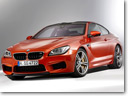
    2013-BMW-M6-thumbThe latest from the M division comes in the form of an M6 – Coupe and Convertible. It has retained its characteristic body line and still is the ultimate in gran touring thanks to its V8 M TwinPower Turbo engine and clever design. BMW‘s EfficientDynamics on the other hand keep it frugal and refined.

    The profile is familiar but there are bodily innovations – a new front apron has been introduced with massive, honeycombed air-intake patches. No matter how massive however, they are unable to steal away the headlamp department which features the characteristic BMW Corona rings that make use of the latest Adaptive LED headlight technology. A 30 mm increase of the front track has resulted in a noticeable swelling of the wheel arches which are as ever complemented by the indicator and M badge housing gills behind them. At the back we have quad tail pipes separated into two pairs, flanking the clever diffuser. The M6 sits on 19-inch alloy wheels in a star-spoke (seven double spokes) design that come in two finishes. Alternatively, as an option one can go with the 20-inch ones that have five double spokes for the sake of lighness. As always, lightness for the Coupe is also guaranteed by the carbon-fibre reinforced plastic roof panel which lowers the center of gravity significantly with improved agility and handling as an end result. In the mean time, the Convertible M6 gets the standard 6 Series Convertible retractable roof with its independent retractable rear window. The party piece is the fact that you can operate it while in motion of up to 25 mph.

    BMW M6 Coupe (2013)
    BMW M6 Coupe (2013)

    Inside, the M6 is a blend of luxury and sportiness – Merino leather everywhere while an instrument fascia featuring a Black Panel technology, dials with red needles and white backgrounds adorn the dashboard. The windscreen is also affected as a HUD display provides speed readout and speed limit identification, gear and rev counter and shift lights to the driver. It’s not all flash and glam though. The new M6 has more space inside and a luggage capacity of 460 litres (300-350 litres for the M6 Convertible). The M Sport seats are more complicated than a smartphone with their electric pneumatic adjustments and the manually adjustable under thigh support.

    The power plant for the new M’s is the same one found in the M5 – a mighty 560 hp V8 M TwinPower Turbo 4.4 petrol unit. That’s 53 more hp than the V10 predecessor. Put your foot down behind one of these V8‘s and you’ll be greeted by a maximum torque of 680Nm as early as 1500 rpm and will be escorted by it up until 5,750rpm. That is a lot of power at your disposal ready to thrust you back into your seat when pressed. Deep down in the confounds of the engine one would find the reason for all of that grunt – twin turbochargers built in to the twin scroll principle and direct fuel injection plus a Valvetronic variable valve timing and Double VANOS continuously variable camshaft control – that translates into 0-62mph sprint of just 4.2 seconds for the M6 Coupé, with the M6 Convertible following at 4.3 seconds. The top speed limiter starts screaming at the 155 mph mark. It’s not all muscle and grease though. Thanks to BMW’s EfficientDynamics technology, the M6 has a Stop/Start function, Brake Energy Regeneration and Active Aerodynamics – all of which help reduce consumption up to 30% in comparison to previous models: The M6 Coupé has a combined fuel consumption of 28.5mpg (Convertible 27.4mpg) with CO2 emissions of 232g/km (Convertible 239g/km).

    As standard, all that power coming from the engine is digested trough a seven-speed Double Clutch Transmission (M DCT) with DRIVELOGIC. It is a uniquely complex and high-tech gearbox that has three modes of shifting (thanks to the logic thing) so that the driver has the freedom to chose a style from sportiness to comfort. It also allows manual shifting trough the paddles behind the wheel or the gearstick.

    BMW M6 Convertible (2013)
    BMW M6 Convertible (2013)

    Surely, with that kind of power, one needs some stability feedback from the chassis. That is why M engineers have fiddled in that area as well – The rear axle subframe has been bolted directly to the body while the front axle kinematics have been redesigned with M-specific settings, and a number of 6 Series suspension components replaced with forged aluminum items. The shock absorbers are electro-hydraulically operated trough the car’s Variable Damper Control (VDC) again with three settings. Driver aids come in many abbreviations such as DSC, ABS, CBC and DBC but thankfully all can be overridden with the very important M Dynamic Mode (MDM) which allows you to do what one must do with an M car – wheel spinning, oversteer and other tire-destructive activities. For the braking power, the M6 comes as standard with 400mm front discs and 396mm rear discs clamped by six-piston calipers (at the front at least). Novice or trackday drivers can opt for the Ceramic Brakes which are more heat resistant and counter fading after much abuse.

    It all sounds really wonderful but will it be a better value from the M5? There is no answer to that question as both cars have target groups: The M6 is for the hardcore performance bachelors while the M5 is for the hardcore performance family men.

    Source: BMW

  • Smart City Brake Support for Mazda CX-5

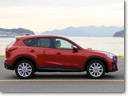
    Mazda-CX-5-thumbMazda have e vision of a world where road accidents are a thing of the past. That is why exactly they are intensifying their safety program. Today, the company announced that a Smart City Brake Support (SCBS) system will be available in all 2013 CX-5 crossovers. This will be the first phase of a plan to widespread Mazda’s safety features to eventually all models within its lineup.

    Basically what SCBS does is help oblivious drivers prevent frontal collision with whatever objects in an urban environment. At speeds of up to 30 km/h a laser sensor on the windscreen is in constant vigilance for obstacles ahead. Should something appear in its range, the sensor sends signals trough the SCBS system to the brakes. They are not immediately applied. Instead they get “prepared” for braking by reducing brake rotor travel and await the driver to interfere. That way a more efficient stopping power takes place upon braking. However, if for some reason, the driver does apply the brakes, the SCBS system has another trick up its sleeve – When the speed difference between the driver’s car and the vehicle in front is less than 30km/h the system squeezes the disk brakes fully and reduces the engine output automatically in an effort to avoid a collision.

    SCBS working principle
    SCBS working principle

    Another feature of the SCBS sensor is the inhibition of acceleration when an object is in front of the vehicle. That system is called the ‘Acceleration Control for Automatic Transmission‘ – if, again for some reason, the driver stomps on the accelerator pedal while in a halt in the presence something in front of the car, light and sound alerts start beeping and the car isn’t allowed to output the applied acceleration. Sadly this latter feature will only be available for Japan but the whole safety technology trend lets us know Mazda cares about us as customers and is determined to confidently excel in that field.

    Mazda CX-5 (2013)
    Mazda CX-5 (2013)

    Source: Mazda

  • Toyota lineup at Geneva – Hybrids and Fun

    Toyota-2012-Geneva-thumbThe 2012 Geneva Motor Show is as close as ever and to build up the hype, manufacturers are revealing and teasing what to expect during those few days of motoring nirvana (from 8 to 18 March). Toyota has offered a quick summary of what their booth will look like with some clever machines and European firsts – four concepts, a production hybrid and a grand tourer – the Toyota GT 86. It is an almost identical car to the Subaru BRZ which also will be making its own premiere in Europe. It would be interesting to see which one gets more favor. News news from one of the world’s largest vehicle conventions – the Geneva Motor Show which starts early in March and will last for more than 10 days.

    To start off we have a nice little Yaris Hybrid which will be a completely new addition to the European public. Here we go:

    Yaris Hybrid

    Toyota Yaris Hybrid (2013)

    The Yaris Hybrid will make an appearance as a production car ahead of its production schedule. Sales in Europe are expected to start in June and at that time the Yaris would be the first full hybrid supermini in Europe. That means that Toyota are aiming to create a whole new customer group that might be interested in absolute efficiency in small, practical and nimble packages.

    Toyota GT 86

    Toyota GT 86 (2012)
    Toyota GT 86 (2012)

    The critically acclaimed Toyota GT 86 sports coupe will be ready for sale this summer. With its RWD, flat-engined layout, this grand tourer is sure to induce much excitement, adrenaline and smiles upon its arrival. And it’s pretty cheap too.

    Toyota FT-Bh

    Toyota FT-Bh Concept
    Toyota FT-Bh Concept sketch

    The FT-Bh will be a concept of an ultralight full hybrid city car designed to be efficient in every way. Toyota has gone for the inexpensive way of making it by using commonplace methods of production instead of some grand new materials that are costly to research and develop.

    NS4 and FCV-R concepts

    Toyota NS4 Concept
    Toyota NS4 Concept
    Toyota FCV-R Concept
    Toyota FCV-R Concept

    Those two concepts will be also shown for the first time in Europe. The NS4 is a value-perfect, plug-in hybrid focused on driving experience without compromises. The FCV-R concept will be the big one though. It will pave the way for Toyota towards mass production hydrogen cell powered vehicles. A saloon-type car might be on the way for 2015.

    Toyota diji

    Toyota diji Concept
    Toyota diji Concept

    The diji concept is a weird looking thing. Imagine those digital frames on which you can upload photos from your computer and then it does slide shows for you. That’s what the diji is – an inside and outside environment made up of a screen. It can change it’s color and can be virtually infinitely personalized with all kinds of interfaces and applications. An interactive future of motoring or a visionary and ambitious idea?

    Source: Toyota

  • Bentley Continental GT V8 in Munich [VIDEO]

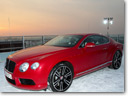
    Bentley-Continental-GT-V8-thumbMany car debuts occur in closed-door halls with a curtain over the model in question and lots of smoke and techno music for setting up the mood. The whole reveling process has become a sort of a cliché and Bentley are well aware of that. That is why for the Continental GT V8 premiere in Munich, the company went the extra mile…upwards.

    Here is a video of a Bentley Continental GT V8 soaring trough the skies over Munich, with its indicators on, hooked to a helicopter. That could mean only two things: Either Munich’s no parking zone is strictly regulated… by the air force or Klaus Becker, General Manager of Bentley Munich organised a dramatic turn up for the new V8 at a special venue on a glazed bridge between two skyscrapers and in front of 300 VIP guests.

    Here’s how Klaus Becker defended the stunt: “A dramatic car got the debut we felt it deserved and we took a little bit of our inspiration from Bentley’s iconic ‘Winged B’ emblem. On a practical level the helicopter was the fastest way to get to the rooftop podium.”

    Either way it all looks very exciting. The V8 deserves that grand and loud première for it just might be the best Bentley ever produced.

    httpv://www.youtube.com/watch?v=cBeUFre22d4&feature=youtu.be

    Bentley Continental GT V8 (2012)
    Bentley Continental GT V8 (2012)

    Source: Bentley Motors

  • SsangYong XIV-2 Concept

    SsangYong will present the new XIV-2 Convertible concept car at the 82nd Geneva Motor Show, next month. It is a successor to the XIV-1 concept presented at IAA International Motor Show, Frankfurt 2011.

    The XIV-2 is short from eXciting User Interface Vehicle 2. It is interesting and a strategic model for the global market. It boasts nice performance characteristics combined with dynamic style of an open top sports coupe. It also features a one-touch automatic opening soft-top roof.

    The dimensions are 4 166mm – length, 1 820mm – width, 1 566mm – height and with a 2 600mm wheelbase. It will be powered by a superb eco-friendly, fuel efficient 1.6 litre diesel and petrol engines meeting Euro VI emission regulations.

    Stay tuned for more information about this CUV Concept from SsangYong.

    SsangYong XIV-2 Concept
    SsangYong XIV-2 Concept

    Source: SsangYong

  • “Let your body drive” – the call of the 2012 Peugeot 208

    2012 Peugeot 208 ThumbThe new 2012 Peugeot 208 has been designed with the aim to be one with the driver. According to the designers and the engineers, only in this way the driver will experience more intuitiveness, more sensations and more pleasure. Firmly grounded in its era, it now awakens all of the senses. However, it now triggers more new emotions too! For example, such feeling is the immediate desire to grab the wheel. This is due to the energy it gives to the body of the person driving the vehicle. In particular, it energizes the body and offers an unmatched driving experience. Hence, the Brand Peugeot has chosen to present the new 2012 Peugeot 208 as the car which allows your body to fully express itself! And in addition next to it, it has launched the slogan “Let your body drive”.

    The “Let Your Body Drive” signature was developed as of the initial communication phases in the run-up to the world debut of the 2012 Peugeot 208 at the Geneva Motor Show, which will take place next month. In the presentation of the car is featured, a discovery of the new 208 via an interactive game. Moreover, the 208 communication campaign is now being boosted by a new and original interactive experience, which is the launch of a film. The film generates high emotion by presenting a series of situations in which the body and its sensations are placed at the very heart of the action. The aim is to deliver the message of a Peugeot 208 which is aimed at thrill-seekers. This interactive film will go on line on 16 February 2012, so we recommend you to stay tuned and experience the promising and yourself.

    2012 Peugeot 208
    2012 Peugeot 208

    Source: Peugeot

  • Lexus CT 200h is the safest small car according to Forbes

    Lexus CT 200h ThumbLexus CT 200h, which is a luxury hybrid hatch, has just received very prominent award given by the respected American business magazine “Forbes”. It is crowned by it as “The Safest Small Cars guide for 2012”. The luxury vehicle is featured in the Forbes guide and had previously achieved the status “Top Safety Pick” by the US-based Insurance Institute for Highway Safety (IIHS), which is a non-profit organization backed by the insurance industry. To achieve this success the car must have the highest rating of “good” in the IIHS’ side, rollover, and rear impact evaluations, and in addition it must be equipped with electronic stability control.

    Furthermore the Lexus CT 200h also won high praise from “Forbes” judges for the active and passive safety systems it includes. They help protect occupants and prevent collisions. These awards will definitely influence in a positive manner the customers, because they will now have in mind that they have the highest possible safety, while enjoying the ride in the vehicle. In addition, we have to make the reminder, that the last years CT 200h has also achieved the highest rating of five stars for all-round safety performance. This time the award was given by the Australia’s respected ANCAP crash testing.

    Lexus CT 200h
    Lexus CT 200h

    The safest small car – Lexus CT 200h, features standard fitment of eight airbags including driver and front-passenger knee airbags, and whiplash-injury lessening (WIL) front seats. Moreover, it also has an electronically controlled brake system with ABS, Vehicle Stability Control (VSC), Traction Control (TRC), emergency LED brake lights and daytime running lamps as standard. In the models from the Sports Luxury segment, is also  featured Active Cruise Control and Pre-Collision Safety technology (PCS), which detects an imminent collision and primes the front seatbelts and emergency braking to reduce the risk of injury and damage.

    Source: Lexus

  • Classic Mercedes-Benz 300SL – A Walkthrough

    Mercedes-300SL-road-thumbI want to talk about classics. These days we have so much technology at our front step that we have lost the ability to appreciate it. A thrust back in time might just be the thing that will kick-start the part of us which admires pure and brave automotive innovation. I am talking about the Mercedes-Benz 300SL – a car which, for a time, was the fastest one around, a car that was and still is in a class of its own.

    In the 50’s, Germany was still experiencing the aftermath of war. The country was split and times of reform and renovation were still due to come. But not all was grime and despair – that same decade a car was about to change the automotive world. At that time Daimler-Benz AG were almost out of money but not out of ideas. In 1952, a strictly-for-race 300SL (W194) set out to win numerous races around the world, reaffirming the racing pedigree of the company. The thing is that the 300SL racing car wasn’t the most powerful car out there. In fact the W194 bore a really mildly impressive, production-based 3.0L. straight six engine equipped with an overhead camshaft and valves and three carburetors. The car’s innovative spirit however, manifested itself trough structure, aerodynamics and lightness (SL stands for “Super Light”). The body had a low drag coefficient and thanks to an image defining tubular frame, the W194 was rigid and lightweight.

    Mrecedes-Benz 300SL (W194)
    Mrecedes-Benz 300SL (W194)

    Some of that racing formula transferred directly to the road going 300SL (W198) which rolled out of the factory two years later in 1954. Roughly 3,258 were built in both Coupe and Roadster versions. And even by today’s standards, it was a thing of beauty. The engine was the same 3.0L found in the racing car but instead of carburetors, it had a first-ever in a 4-stroke engine, fuel injection system by BOSCH. And that was the charm that radiated from the SL – it was a first in many, many things. Because of the fuel-injection system, power was almost double to the one found in the original carbureted version (215 PS). That made the SL, the fastest production car of its time capable of speeds up to 260 km/h (161 mph). The engine was awkwardly askew so that the hood would remain as low as possible and the fenders had horizontal “eyebrows” over the wheel openings to reduce drag. Because of the same tubular frame which resembled a plane fuselage, the 300SL engineers had to figure out a way to incorporate doors. Solution came with the, now emblematic, “gullwing” doors that gave the car a unique character.

    Mercedes-Benz 300SL (W198 - the road version)
    Mercedes-Benz 300SL (W198 – the road version)
    Mercedes Benz 300SL Roadster
    Mercedes Benz 300SL Roadster

    As with every ambitious and innovative project, the 300SL came with its own issues – the fuel injectors had the tendency to flood the oil pan and cylinders which proved problematic (changing the oil every thousand miles was recommended). But the sheer size of the oil tank was big enough to send an oil company into bankruptcy – ten…10…X…liters! Because of that lubricant volume the engine would never reach optimal temperature thus worsening the general effects of wear and tear. All wheels used drum brakes and at high speeds the swing axle at the back tended to act up in a terrifying manner. Regardless of the presence of doors on the “Gullwing”, one still had to be a fairly agile person to get in or out because of the remarkably high sills. The steering wheel also had to be tilt-away before even thinking about sitting at the driver’s seat. The trunk space was non-existent and the amount of fuel in the tank, to a certain extent, determined the handling of the car. And for all of that, there was the price which exceeded that of a really luxurious household.

    But did all of this really matter in a bigger context? Of course it did… everything added up to form the first-ever supercar – ludicrous, impractical, dangerous, unstable and very, very exciting.

    Picture source: Mercedes-Benz

  • Tesla Model X reveal [VIDEO]

    Tesla-Model-X-thumbHere’s a longish video of Tesla co-founder and CEO Elon Musk unveiling the Model X – an electric SUV with the practicality of a minivan and the efficiency of a … well… electric SUV.

    It features a unique design that makes use of gullwing doors, although Tesla would prefer the term “Falcon Wing” but the principle remains the same. Third-row access is easy. Even with child seats installed, the second-row seats slide all the way forward. Open Falcon Wings will allow you to stand upright whether getting in or out. Kids will no longer leap and tumble over the second row, and adults will find the third-row seats as accessible as the passenger seat.

    In terms of performance, as expected from an EV, torque is instantly available and the center of gravity is very low. Drivetrain composition comes in three different types – Model X with RWD, Model X with AWD (a second motor is added to the front axle). Last but certainly not least is the AWD setup with a performance package. With it the X is good for a time of under 5 seconds in the 0 to 60mph sprint. Strikingly fast. Presumably one would be able to do many sprints from 0 to 60 thanks to the voluminous battery pack which comes with capacity of either 60 kWh or 85 kWh.

    Sales are expected to kick off in 2014, production 2013 while reservations are open now. Because the X is actually based on the S it will be around the same price as well.

    Tesla Model X (2014)
    Tesla Model X (2014)

    httpv://vimeo.com/36534892

    Source: Tesla Motors

  • Afzal Kahn Aston Martin Cygnet

    Aston-Martin-Kahn-Design-thumbThe British designer, Afzal Kahn has undertaken an ambitious task – to overhaul the Aston Martin Cygnet by inspiring refinement, vigor and passion in it. The Aston Cygnet recieved mixed reactions among critics upon its arrival and today it is a ‘hate it or love it’ kind of thing. Afzal Kahn has decided not to leave the people an option and eliminate anything in the Cygnet that might be disliked.

    To start off we have a nice finish of metallic imperial blue on the body, heat resistant blue on the brake calipers and blue patterns on the hood louvers. The Cygnet however, doesn’t feel blue at all thanks to the low suspension achieved trough an Afzal Kahn lowering module. Other than that, there is a Kahn stainless steel quad exhaust system complete with a cross hair feature for refinement. Brilliantly designed and manufactured, 17-inch and 18-inch RS wheels sit perfect on the car’s front and rear axle respectively. The color patterns on them is left to the customer to decide.

    For the inside, Afzal Kahn offers the absolute freedom to chose what is what and which is which. The surrounding trimmings might very well be the color of your own jeans while the seats match your T-shirt.

    As always, a Kahn designed vehicle is for people with passion for character, individualism and rebelion. The Cygnet package is not just a greasy piece of machinery. It’s art on wheels. Does it work for you?

    Afzal Kahn Aston Cygnet
    Kahn Design Aston Cygnet

    Source: Kahn Design