Category: Car Makes

Car Makes

  • The Exclusive “Nissan CMF” Next-Generation Vehicle Engineering “4+1 Big Module Concept”

    Nissan-INVITATION-Concept-THUMBNissan has just announced the introduction of its next-generation vehicle engineering concept. It carries the name Nissan Common Module Family (CMF) and it is going to be featured in vehicles in 2013. The innovative CMF technology combines modular engineering with Nissan’s own engineering technologies, in areas such as simulation and variation engineering  and simplicity. With the development of CMF, Nissan expects to raise the popularity of its products and thereby significantly expand sales volume. Since a long time already has Nissan been promoting vehicle platform communization. It started with several vehicle variations derived from a single platform. As a result, this has become critical to achieving the rapid improvements in products, which is necessary for a company to survive in the competitive market. Nissan is aware that each new vehicle that is developed must include distinctive characteristics, improved fuel economy, passenger safety and IT features, and the rapid application of the latest technologies into the development process. It is important now that volume efficiencies must be achieved with the help and use of common vehicle structures, components and parts. Up to now, it was difficult to balance such contrasting elements. However, Nissan is fully embracing these challenges and implementing its next-generation “Nissan CMF” vehicle engineering strategy.

    “Nissan CMF” Next-Generation Vehicle Engineering “4+1 Big Module Concept”
    “Nissan CMF” Next-Generation Vehicle Engineering “4+1 Big Module Concept”

    In details, the application of Nissan CMF determines the use of four modules – engine compartment, cockpit, front underbody and rear underbody – as well as the architecture for electronic components, with each module having appropriate variations. What is important here is that vehicles are designed by combining these modules in different ways. Hence, all this results in variety of vehicles, depending on the module configuration: from compacts, large-sized vehicles through to tall SUVs. All of them can be efficiently designed.

    Nissan brand made a committement to introducing 90 new technologies by 2016 and Nissan CMF is one of them. It will enable commonization that transcends vehicle segments, efficiency, and make the application of attractive new technologies across several models.

    Source: Nissan

  • 2012 Ford B-MAX features the new SYNC technology

    Ford_B-MAX ThumbThe so strongly awaited and anticipated new 2012 Ford B-MAX will feature class-leading technology, which will make this small family car a powerful one. Ford B-MAX makes its first public appearance at a key technology event: the Mobile World Congress in Barcelona.

    The reason for this is featured in the vehicle new SYNC technology: a voice-activated in-car connectivity system that takes the integration of mobile devices, voice control and convenience to a new level with extensive device compatibility and voice command in diverse languages. Moreover, the new SYNC technology can seamlessly connect to mobile devices various means: it not only includes Bluetooth, an iPod and flash drive compatible USB connection but also brings a potentially lifesaving feature in Emergency Assistance. This is the only feature of its sort which is designed to respond to a crash by using the customer’s connected mobile phone to call the emergency services directly. Ford also expects to have over 3.5 million SYNC-enabled vehicles on the roads of Europe by 2015.

    The new version of the B-MAX features the Ford Easy Access Door System which is unique for the car and integrates central body pillars into the hinged front doors and sliding rear doors to create large, unobstructed openings on either side of the car. Moreover, the B-MAX engine range delivers 15 per cent more economical motoring with class-leading fuel economy and CO2 emissions available on both the 1.0-litre EcoBoost petrol engine and 1.6-litre TDCi diesel engine.

    The firs one can develop 120PS (88 kW) and offering 114g/km CO2 emissions and fuel economy of 4.9l/100km (57.6mpg. Furthermore, Torque Vectoring Control, will improve driving dynamics and cornering control. On the other hand, the Active City Stop will help drivers avoid low-speed collisions using a forward-facing infra-red camera to detect objects in front of the car and automatically apply the brakes in case the driver fails to respond. The 2012 Ford B-MAX will make its world debut at the 2012 Geneva Motor Show in early March and later this year will go on sale in Europe.

    2012 Ford B-MAX Compact Multi-Activity Vehicle
    2012 Ford B-MAX Compact Multi-Activity Vehicle

    Source: Ford

  • Ford Evos Concept includes future technology experience

    Ford-Evos-Concept THUMBThe exciting Ford Evos Concept was firstly unveiled to the public at the 2011 Frankfurt Motor Show. It shows how technology can significantly improve the driving experience for each customer. It is based on connectivity between the vehicle and the driver’s “personal cloud” of information. Furthermore it includes technology vision for enriched customer experience with the means of personalization, adaptation and creativity. In addition Evos Concept is designed around a technology experience which embraces a new generation of driver interaction and awareness which is currently under development in the Ford Research and Innovation laboratories. With information from the drivers’ personal cloud, the vehicle can provide the same connected lifestyle the driver experiences at home or office. The car knows the driver, and automatically adapts handling, steering and engine controls to deliver an exceptionally dynamic driving experience. Moreover, Ford researchers are focusing in this area in order to deliver on four key customer benefits: personalization, seamless enhancement of the driving experience, looking after the driver’s well-being and delivering smart electrified powertrain optimization. The technology used in the cehicle draws from a detailed understanding of the driver’s preferences and driving habits. Hence, the Ford Evos Concept can easily combine this personal information with additional data from the cloud, such as the driver’s work schedule and local traffic or weather conditions. This information provides a personalized and seamless experience as the driver transitions in and out of the car. In addition, it could automatically play the same music or news program that was just streaming at home, or heat or cool the interior to an ideal temperature before the driver gets in without having to be requested by predicting departure time based on his calendar.

    Ford Evos Concept
    Ford Evos Concept

    What about the efforts put to enhance the driving experience? The current technology requires vehicle chassis settings to be defined based upon the abilities and tastes of a cross-section of drivers and the topography of typical roads. The concept predicts tuning handling and performance to the road that is ahead and the specific individual behind the wheel. More importantly it has the ability to learn driver’s habits and capabilities and overlay map and weather data sourced from the cloud to adjust powertrain, steering, suspension and braking systems for optimum enjoyment, comfort and safety. Undeniably, all this takes driving experience to a new level. In addition, Ford researchers have already developed technologies focused on driver wellness. What I mean here is that they have developed for example, technologies which can monitor the heart-rate of the driver. With a seamless connection to the cloud, the Ford Evos Concept monitors the physical state and workload of the driver and adjusts the driving experience accordingly. The Ford Evos Concept also includes advanced air quality sensors and filtration systems to help allergy sufferers. It is location aware: it can access air quality data from the cloud and suggest a healthier route to the destination.

    Completing the vision for the Ford Evos Concept is a state-of-the-art lithium-ion plug-in hybrid (PHEV) powertrain. Ford ‘powersplit’ hybrid architecture allows the electric motor and petrol engine to work together or separately to maximize efficiency. Of course, the “cloud” connectivity would offer choices to improve the performance and efficiency by selecting the optimum combination of powertrain modes for any given journey. Being a “cloud”-optimized powertrain, it will know when is the best time to save energy and when is the best time to switch modes. For this purpose it uses the information it has about the travel route, the emission zone restrictions and current weather conditions.

    Another important fact about the Ford Evos Concept is that it was especially developed to introduce the new Ford design direction. It includes key design elements which will be applied to forthcoming Ford vehicles. In particular, the Ford Evos Concept was conceived as a dramatic fastback concept. It combines striking new profile with innovative proportions. A lot of attention has been put on the lines of the body, which conceal a unique new format, with a four-door, four-seat layout. This results in dynamic appearance with surprising practicality. Reflecting the exterior, the interior of the Ford Evos Concept is built around the driver, and is innovative and brings more style to the cockpit. In this way the driving pleasure will be with a stylish and 100% secured.

    Source: Ford

  • Where it All Started – BMW M1

    BMW-M1-thumbThroughout the years, besides being utterly magnificent, M BMW cars have always been a statement. “I am the kind of person which has a an impressive annual income, a family, clout and an insatiable thirst for sideway buffoonery”. Whichever M car one might choose, the perks are always going to be the same – practicality and sensibility get you trough the mazes of society while sheer power and playfulness make for a great time at the countryside. Small wonder then, that today many well dressed men consider the M batch of BMW’s as a really, really good investment. But few people ask themselves, how and when did it all begin? Let’s just say, that the whole practical performance, 5-door saloonishness was definitely not the case at the beginning of the M odyssey. Enter the 1978 M1 – BMW’s first and only mid-engined road car.

    BMW M1 (1978-1981)
    BMW M1 (1978-1981)

    Its birth hadn’t been easy. The company had to act quickly as, at the time, the Porsche 911 was becoming increasingly dominant in the field of motor sports. Believe it or not, BMW needed help. And that help came from Lamborghini. Sort of. The Italian company was assigned to do the design, engineering and production work. Without a doubt, that sounds like a recipe for success – BMW overseering the company that brought to the world the Lamborghini Miura and the Countasch. Probably one of the most talented designers ever, Giorgetto Giugiaro, sketched the lines of the M1 with a particular signature that can be seen in other works of his, such as the Lotus Esprit. Sadly, the times were tough, an oil crisis swept the world and Lamborghini went bust. That meant that BMW had to turn to someone else to finish the job. It was a painstaking process that consumed both time and money. The end result was an overpriced, plastic car of a thing that spawned only 455 times. On top of that, by the time everything was sorted out, most of the motor sport regulations moved on and the Bavarian was left trailing behind.

    Lotus Esprit S2 (1978-1981)
    Lotus Esprit S2 (1978-1981)

    The real tragedy however, is that, for its time, the M1 was a really decent car. It had the looks, it had the quintessential supercar setup (2 seats, mid-engined, rear-wheel drive), it weighed like a super car (1400 kg) and it had a wonderful 3.5 liter straight six engine that developed 273 bhp. And it wasn’t some sort of an experiment power plant, but a proper one with a Kugelfischer mechanical fuel injection system and DOHC operating 24 valves in total. Later on the M635Csi and the first-generation M5 would get pretty much the same engine.

    And that’s the thing about the M1. It died off quickly for a novel cause. Mercifully, the M badge stuck on, but now the BMW people were caught thinking – “Why don’t we shove such an engine in one of our own pefectly good saloons, beef up the brakes and suspensions and see what happens?” Today the results are evident. Almost every BMW car in the conteporary line up has an M counterpart which is hugely successful on the market and almost always highly valued by critics and automotive  journalists.

    BMW M1 (1978-1981)
    BMW M1 (1978-1981)
  • Some facts about Electric Vehicles

    Behind the history of the electric vehicle are more than hundred years. Yes, I was surprised to find out this too. In particular, their history began in the middle years of the 19th century. However, at this time it was really costly to afford such automobile. Moreover, compared to internal combustion vehicles, the electric ones had much lower speed. Gradually this led to their extinction worldwide. Nowadays what we experience is quite the opposite. As we can see ourselves on the market are gradually being launched vehicles, which are powered by alternative fuel or are electric ones. This of course has to do with environmental issues.

    The hydrocarbon fueled vehicles seem to cause great damage to the environment, because of the gases they emit. Or in other words, the automotive industry is now trying to take some precautions for the evil done, develop and promote environmental friendly vehicles and raise the global awareness in this particular area. We all want to live in less contaminated and better world, don’t we?
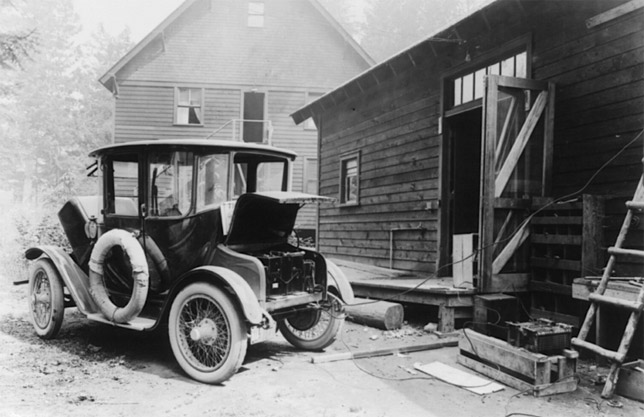
    Electric car from early 20th century charging

    In fact, for the first time in history, electric cars became popular after the mid-nineteenth century. Then the electricity was actually a strongly preferred method for automobile propulsion. Back in 1987 the electric cars found their first commercial use in the United States. For instance, the taxies in New York City were electric. They were manufactured by the Philadelphian Electric Carriage and Wagon Company. During the twentieth century the main manufacturers of electric vehicles in the U.S. were Anthony Electric, Baker, Columbia, Anderson, Edison, Riker, Milburn and many more.

    Although that at this time the electric cars produced relatively slow speed, they had some advantages over their rivals. What I have in mind here is that they produced less noise, vibration and smell, which were a characteristic of gasoline powered vehicles. In addition, they did not require gear changes. And hence the electric car became famous among people living in the city, who could use their optimum potential. Furthermore, the electric powered vehicles didn’t require manual start as oppose to gasoline ones and were easier to drive, which lead their popularity growth among women.

    And even back in the beginning of the twentieth century the electric car was considered the cleaner, quieter and of course the more fuel-efficient car, in comparison to the gasoline vehicle. However, by the 1930s the latter one became the “bigger star” and more importantly – what made it more popular was its lower price. They also developed far greater speed to their equivalent electrics. And adding to all this – the invention of the electric starter by Charles Kattering (in 1912) – gasoline cars became easier to operate. Then came the use of the muffler, which reduced significantly the noise they produced.

    The total eradication of the electric automobile from the world was also possible due to the mass production of the gasoline Henry Ford vehicles, which even were at an extraordinary price – more than six time cheaper than the electric ones. After this expansion, no one really remembered the electric cars …

    Until the late 1970’s and early 1980’s when the world experienced the first big energy crises. This led to the renewed attention on alternative fuel and electric vehicles. As a result, in the beginning of the 1990’s, the California Air Resources Board (CARB) set the requirements for the development of more fuel-efficient and lower-emissions vehicles.

    The highest aim here was the production of zero-emissions vehicles. The electric ones were what they were looking for. Then the automotive world came to see some great electric models, such as Chrysler TEVan, Ford Ranger EV pickup truck, Honda EV Plus hatchback, or Toyota RAV4 EV.

    However, the market wasn’t fully prepared to embrace this new ecologically orientated step, so the models were taken off production in the end. Another recession followed in the 2000’s, which lead to the increased need for smaller cars, hybrid cars and of course electric ones. One of the most famous nowadays electric cars manufacturer Tesla Motors, in 2004 began the development of the Tesla Roadster, which was firstly launched on the market four years later. Nowadays we have many examples of electric cars, developed and produced by famous carmakers. Such are: Mitsubishi i MiEV, Nissan Leaf, Mercedes-Benz Vito E-Cell, Smart ED and many more.
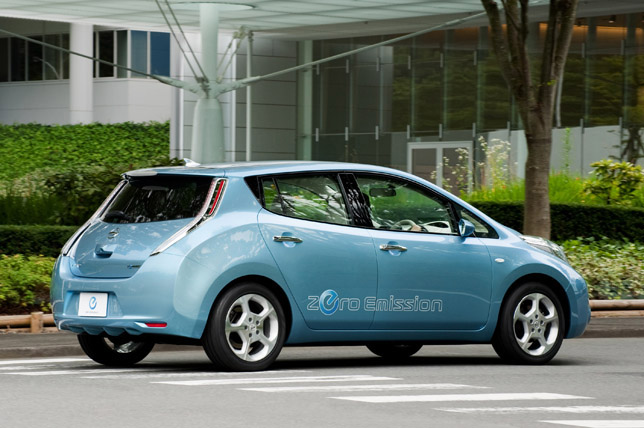
    Nissan LEAF

    To sum up, when the electric vehicles were invented, they seemed to be the best choice of and for the future. Moreover, the electric car produces no pollution to the environment and can be the greatest choice for the city dwellers, who are concerned about the world around them and want to make a positive change.

    People won’t loose from comfort, road handling, safety, performance or durability, because the electric vehicles are similar to the gasoline powered ones. Another big advantage is also their low cost to operate and more importantly they have the potential to be more reliable because they include fewer parts and mature technology.

  • 1985 Audi Sport Quattro S1 E2

    Audi Sport Quattro S1 E2 is a legendary car. It was introduced back in 1985 as a better and more powerful version of the Sport Quattro model. The brutal car is still known as the most powerful rally car ever competed in an international competition. With Walter Röhrl behind the steering wheel, the S1 E2 won the Pikes Peak in 1987. The monster rally car produced the unbelievable 600PS (441 kW).

    However, the officially stated power of the inline 2.1 liter five-cylinder turbocharged engine was 480PS (350 kW). A recirculating air system helping the turbocharger spinning at high RPM, when the driver does not apply the throttle allowed the engine to resume full power immediately after the resumption of full throttle. This was extremely good move, because it reduced the turbo lag a lot and boosted the engine to 507PS (373 kW) at 8000RPM.

    Furthermore, the overall weight of the rally car was just 1 090kg (2403 lbs) meaning a stunning power-to-weight ratio of 2.15 kilograms per horsepower. The performance is incredible even nowadays. 0 -100 km/h in 3.1 seconds and the top speed depended on the selection of gears. Some of the car had a special power-shift gearbox, which resembles the double-clutch technology.

    With such power, the S1 E2 needed an aggressive aerodynamic kit including huge front and rear bumpers, wheel arch extensions and a massive rear wing to keep the car on the ground. The down force and the grip were sensational.

    With such figures and technology back in 1980’s, the success was imminent. The race-drive Walter Röhrl and Christian Geistdörfer won the 1985 San Remo Rally. The car was also driven by the famous driver Michèle Mouton. The S1 E2 was the final Group B car produced by Audi, because the team left the Championship in 1986.

    Even nowadays, all motorsport fans remember Audi Sport Quattro S1 and talk about the fearless race drivers in Group B back in 1980’s. Because of the accidents, these rallyes no longer exist.

    1985 Audi Sport Quattro S1 E2
    1985 Audi Sport Quattro S1 E2
  • Vorsteiner Carrera and Carrera S

    Vorsteiner-V-GT-991-thumbVorsteiner would rather have us excited about something before actually revealing it. That is why today we have a teaser of one of their latest project that involves the Porsche 991 Carrera and Carrera S. It is actually called the V-GT program.

    While the pic is a teaser, we do have a list of features that will adorn the Carrera cars:

    • Front Add-On Spoiler with integrated brake duct collectors Carbon Fiber Pre-Preg Autoclave
    • Front GT Replaceable Center Splitter for additional downforce in Optical Carbon Fiber Pre-Preg Autoclave
    • Side Skirt Panels with Integrated Carbon Fiber Blade Extension Element
    • Lightweight re-sculpted front bonnet in Carbon Fiber Pre-Preg Autoclave
    • Rear Add-On Diffuser with Integrated Aero Fins Carbon Fiber Pre-Preg Autoclave
    • Rear Add-On Ducktail Wing Spoiler Element Carbon Fiber Pre-Preg Autoclave
    • Lightweight Replacement Carbon Fiber Roof Panel
    • 20 inch | 21 inch Forged Aluminum Wheel Options
    • Stainless & Titanium Sport Exhaust Systems (Valve Control).

    From Vorsteiner promise a more elaborate view (hind views included) soon.

    Vorsteiner V-GT Porsche 991 Carrera
    Vorsteiner V-GT Porsche 991 Carrera

    Source: Vorsteiner

  • Toyota Yaris 80 mpg, soon in UK

    Toyota-Yaris-Hybrid-thumbThe new Toyota Yaris is out to prove that it is one of the most efficient vehicles on markets today. Pre-ordering in the UK is now available while the deliveries are expected to kick off on the 1st of July. One of the most exceptional things about it is the price – under £15,000 ($23,721). In other words, the most affordable Hybrid on the island for now.

    There are other admirable feats that the Yaris makes. The economy for example – 80.7 mpg from a 99 bhp engine. Keep in mind that that kind of power is more than enough when we are talking about a supermini like the Yaris. This is also not at the expense of everyday luxuries. The car still has air-conditioning and an automatic gearbox as standard.

    The key to that stunning economy is minimising the time on any given journey when the

    petrol engine is running. These “zero-emission” periods can be as much as one third of a typical urban journey.

    That means less CO2 emissions as well. 79 g/km is what comes out from behind. That means great financial relief for customers in the UK – no road tax nor a London congestion charge.

    All in all, the Yaris has been a great supermini for years now, and today it still sounds great and even further, the bargain of the year.

    Toyota Yaris Hybrid
    Toyota Yaris Hybrid

    Source: Toyota

  • European Honda CR-V Prototype

    Honda-CR-V-Prototype-thumbImages have been released of the European CR-V Prototype which is due to make its debut on the 6th of March. Its purpose is to show the future Honda way of design and style. This one will be the fourh generation of a successful CV-R family, that will go on sale this Autumn.

    Differences with the previous model manifest themselves mainly at the front – a more “aggressive stance” thanks to a new fascia. The lower front bumper wraps smartly upward to show off the CR-V‘s SUVishness. It is also said that now it integrates more smoothly into the fascia thus improving aerodynamics. We, frankly, don’t remember the bumper of the last CR-V being dragged around, hanging by a thread. No word on engine bits or interior.

    The Honda Press Conference will take place at 09.15 CET on Tuesday 6 March. Hopefully more information will be released there. For the time being we have a gallery in which you can look around.

    Honda CR-V Prototype (European version)
    Honda CR-V Prototype (European version)

    Source: Honda

  • 2012 Mazda3 Upgraded – UK Price £13 495

    Mazda UK has announced the price list for the new upgraded Mazda3, which starts at just £13 495 OTR meaning a £2 300 saving for the 1.6 TS model.

    The 2012 Mazda3 Upgraded features a new face, new rear bumper and new twist-spoke alloy wheels. The interior boasts new materials and colours, improved ease-of-use for the driver, new equipment and a quieter cabin.

    “We anticipate that the upgraded Mazda3 will enable us to increase sales of our C-segment contender during 2012. Mazda3 was already a great car and the changes to the upgraded model are subtle but every one makes a difference to either fuel economy or driving feel.” said Peter Allibon, Sales Director, Mazda UK.

    “The outgoing Mazda3 was the second-best selling Mazda model in the UK and took us into different segments of the retail and fleet markets.  The 1.6 diesel has been hugely popular and the 2.2 diesel with 185ps is still the highest power C-segment diesel model of any brand available in the UK market place. The introduction of the more sporty exterior, more premium interior and two new Sport models with the 1.6 diesel powertrain for 2012, plus worthwhile fuel consumption and CO2emissions reductions, means we are confident that the upgraded Mazda3 will attract a growing number of consumers to our brand”, he added. .

    The new Upgraded model also features fine-tuned suspension and steering to deliver better handling and comfort. The super-efficient Mazda 1.6-litre diesel, available in six versions of Mazda3, is a lightweight, compact and extremely efficient unit.

    The standard equipment includes manual AC and electric front windows (entry-level S model), TS adds dual-zone climate control, TS2 specification features a heated windscreen and integrated Bluetooth hands-free system, Sport models are fitted with 17” alloy wheels and a Bose audio system with 10 speakers, and Sport Nav models have a fully integrated, SAT NAV system.

    The Launch Edition Mazda3 Tamura is also available from £15 955 OTR. It exceptional value with a sports styling pack, front fog lights and unique 17” black gloss diamond cut alloy wheels. Available in a choice of four colours including: Aluminium Silver Metallic, Autumn Bronze Mica, Black Mica and Crystal White Pearlescent.

    Check out the full specs here!

    2012 Mazda3 Upgraded
    2012 Mazda3 Upgraded

    Source: Mazda

  • BMW Concept M135i

    BMW will exhibit the Concept M135i at the Geneva Motor Show, next month.

    The new BMW performance car features a twin-turbocharged straight six-cylinder petrol engine. It will produce more than 300PS (220 kW), which will be sent to the rear wheels. This makes the M135i a unique vehicle in its class ensuring unsurpassed driving pleasure so typical of a BMW.

    But the M135i will also benefit from a new sports suspension technology that includes an M sports braking system and is perfectly adapted to match the supreme road performance. A set of 18” M light alloys with a double spoke design are fitted with low profile performance tires.

    The exterior features new front apron, large air intakes, new rear apron and double tailpipe sports exhaust system in dark chrome.

    Thanks to a distinctively sports-oriented appearance, the BMW Concept M135i offers attractive prospects for the further development of the BMW 1 Series model range. At the same time, a clear signal has been given for the expansion of the new product category of BMW M Performance automobiles. The BMW M Performance automobiles being presented at the Geneva Motor Show and shortly to be launched are powered by the world’s most high-performing six-cylinder diesel engine available for series production vehicles. The petrol-fuelled models in this product category will also assume a similar unique position.

    The pre-series concept car BMW Concept M135i offers a fascinating outlook on a corresponding offer in the premium compact segment.

    BMW Concept M135i
    BMW Concept M135i

    Source: BMW

  • 2013 Acura RDX Crossover SUV – Pricing

    2013 Acura RDX ThumbThe all-new 2013 Acura RDX Crossover SUV will be launched for sale in dealerships in th beginning of the Spring with a starting price (MSRP) at $34 320. The new 2013 RDX adds enhanced comfort, utility and power, along with class-leading fuel economy. As usual, the modifications made on it as on every vehicle wearing the name Acura, are based on changing consumer preference. The 2013 RDX got a significant new looks, increased comfort and featured innovative technologies. In addition the RDX features a new 3.5L V-6 engine mated to a new 6-speed automatic transmission and a new all-wheel-drive system, which is available as an option. The RDX exterior incorporates aerodynamically efficient body and chassis updates, which lead to the increased length of the wheelbase featuring longer track, all-new Amplitude Reactive Dampers and a new motion adaptive electronic power steering system. The interior of the SUV is made with the help of high-quality interior materials and generous use of noise insulation. The standard features on RDX include leather seating surfaces, heated power front seats, a power moonroof and a 360watt audio system. In addition, as a standard come new technologies such as Pandora® internet radio interface, an SMS text messaging function, a Keyless Access System with pushbutton start, an Active Noise Control system and a rear view camera system with three unique viewing angles. As an option comes the Technology Package, which includes items such as the AcuraLink® Satellite Communication System, Acura Navigation System with Voice Recognition™, a hard disk drive (HDD) with 60 gigabytes of storage capacity, AcuraLink Real-Time Traffic with Traffic Rerouting™, AcuraLink Real-Time Weather™, a GPS-linked solar-sensing, dual-zone automatic climate control system, Acura/ELS Surround® Premium Sound System, a power actuated rear tailgate, projector beam headlights with Bi-Xenon High Intensity Discharge (HID) bulbs and front fog lights.

    2013 Acura RDX
    2013 Acura RDX
    RDX $34 320
    RDX with Technology Package $38 020
    RDX with AWD $35 720
    RDX with AWD and Technology Package $39 420

    Source: Acura