Morgan company is a frequent participant at the Geneva Motor Show. They see it as an important venue for debuts of production cars or flamboyant concepts. For this year, the 2012 Geneva Show is the company’s first major event. They have a wide arrangement of classic looking, boldly designed modern machines on display. Some of the newcomers include the Aero Coupe, Plus 8, the new 3.7l Roadster and the fully electric Plus E.
Two, well known, production Morgan 3 Wheelers and a 75th anniversary 4/4 edition are also present. As a whole Morgan have three main platforms on which they can work on: There’s the Classic Morgan, the 3 Wheeler and the Aero range. All of them encapsulate a radiance of pure motoring history.
Which car on the colorful stand causes most stir is debatable. Some feel overly excited about the 3 Wheelers being on display while others find the aluminum-chassied, V8 Plus 8, most awe inspiring. The dramatic Aero Coupe is also a looker while the all-electric Plus E concept seems to be getting much media attention.
The show continues until the 18th march with a team of Morgan designers, directors, engineers and salespeople present at all times to answer any questions visitors may have.
Avoiding minor city incidents and bumps one Ford B-Max at a time. It’s a collision prevention system first in a compact Ford vehicle. Whether you are trailing behind someone in traffic while being rather absent minded or you are about to have an unavoidable crash, the company’s Active City Stop will be there for you to help out.
Each year more than half-a-million people are injured in car crashes in cities in the UK, France, Germany, Italy and Spain alone. Supposedly, the Active City Stop can be useful in one out of eight of these incidents thus reducing the number significantly.
“Low speed front to rear end collisions are one of the most common accidents in urban traffic,” said Roland Schaefer, safety analyst, Ford of Europe. “They can happen at traffic lights, intersections, roundabouts and other stop-start driving situations. You don’t have to be travelling fast to get injured. Even at speeds of just 15 km/h you can suffer soft tissue neck injury.”
We saw the system first last year in the Ford Focus. It constantly scans the road ahead for obstacles and decides whether or not to apply the breaks when needed. The B-Max can go from 15 km/h to a full stop on its own. At the same time, collisions happening within the 30 km/h range will be greatly relieved.
The subcompact MPV is also equipped with Ford’s Hill Launch Assist that prevents you from rolling back upon departure up a slope. A rear view camera and an overall compact structure with a great turning circle make it easy for parking as well. So, car for novice drivers or is that the future? According to Joerg Beyer, Ford Vehicle Line Director, this is the 21 century way.
“Features such as Active City Stop are new to this sector. These technologies, coupled with “B-Max‘s compact chassis, and tight turning circle supported by carefully tuned electronic power-assisted steering, enable B-Max to be far greater prepared for the demands of even the most congested city.” he comments.
Here’s a Pagani Huayra. Beautiful isn’t it? However, when it goes on sale in 2013, prices will start from $1,150,000. I think “Huayra” is the sound one makes upon signing a deal. This is roughly the price of four Lamborghini Aventadors. What are Pagani‘s arguments on that? Yes, it has an AMG V12, 6.0-liter engine that develops above 700 hp and 1000Nm of torque, it’s clever enough to operate, by itself, a set of flaps that can either reduce drag or increase downforce and it will most probably do 230 mph when pressed. But, because it is such an engineering perfection, it will be horrible to live with – Imagine this: You get in it, start the ignition and an oil well in Sahara evaporates. Whenever you see a speed hump, you’ll have to spend precious time in looking for an alternative route and how are you going to take the children to school in it? A BMW M5 suddenly seems much more “sensible” and fit for the job.
So in an attempt to justify the Huayra‘s cosmic price, Pagani have released a documentary about the process of building one. It’s rather good and it accents on the fact that the people making it are painfully striving towards attention to detail perfection. The rear emblem starts as a block of aluminum which is due to undergo a 24h carving procedure. The design process of the whole car took 5 years of research and inspiration (partly drawn from Leonardo da Vinci, obviously).
Set aside 15 minutes to watch the clip and afterward, you’ll close the browser with a sense of awe. You still might not get convinced to sell your house, sell your other house and the yacht in order to order one, but you’ll leave home knowing something about a great car, from a great car manufacturer. And that is always useful in the pub.
Here is a Porsche Cayenne II. It has been around for 2 years now and has proven to be a very decent SUV. It’s 180 kg lighter than the first one, the front of it goes easy on the grilles and the headlights plus the interior design have some Panamera in them. So why are we even talking about it? Well, if you have an eye for that kind of things, the wheels are kind of custom and the ride is lowered.
Bad Segeberg based Schmidt Revolution house have fitted on this Cayenne four 10×22-inch one-piece five spoke summer rims. Its a set from their CC-Line. At the front, the tires size up to 295/30R22 while at the back they measure 335/25R22. They can be finished in silver, black (glossy or matte) and in exquisite black chrome. The last variant has a cover, made from a stainless steel, which doesn’t allow any dirt sticking on it. Also, because of an H&R-suspension lowering module, the Cayenne now sits lower than usual. As a result, the center of gravity is lower and drag is now a bit lower.
Otherwise, things remain pretty standard – with a base model, under the hood you should find a 3.6 L V6 engine that produces 300 PS. The power goes trough a 6-speed manual to all four wheels. Just think of it as a second generationVW Touareg and you”ll get the picture.
Chevrolet has introduced the new Cruze Station Wagon at the 82nd International Geneva Motor Show. It was exhibited alongside two youth concept cars – the Code 130R and Tru 140S. The manufacturer also displayed their latest on-board infotainment – Chevrolet MyLink.
The new Cruze Station Wagon will be offered with a five power units – a 1.6 liter and a 1.8 liter petrol engines and a new 1.4 liter turbocharged petrol. The diesel range includes an improved 2.0 liter, which is currently available for the saloon version and a new 1.7 liter VCDi featuring start-stop technology – 132PS (97 kW) and CO2 emission of 119 g/km.
The exterior features new front fascia, modified headlights and some new sets of alloy wheels. The interior boasts different center console and a better choice of seat fabrics and colors.
The vehicle has another great advantage – an incredible load space of almost 1500 liters with rear seats fold down.
Option list include keyless entry and start, a rearview camera and Chevrolet MyLink infotainment system.
SR and PUR Wheels have collaborated again and the result of their work is this exceptional Lamborghini Gallardo. In general this particular vehicle is extraordinary enough! However, with received new refreshed and revitalized look, thank to the 1NE design from PUR Wheels. And to make it even more astonishing and irresistible, the Lamborghini received full Hamann aero kit tuning. And this is how one can make a Lamborghini extremely more adorable and desirable. Now, this Gallardo is a styling icon from head to toe just in time for the forthcoming months of the so long awaited summer. All in all, with the top down, and a new set of “shoes” that it just received, this SR Auto Lamborghini Gallardo Pure 1ne is ready to shine in the sun throughout the streets of any city.
The Mercedes SL. “Open top” immediately springs to mind. We tend to think of cabriolets as slow, wobbly and impracticable – a direct contradiction to what SL stands for. “Super Leicht“ or “Super Light” is the exact way where Mercedes are going with the new SL in town. Its more powerful, more economical, lighter and smarter.
The body is almost entirely made up of aluminum. The A pillars have some heavy duty steel in them but that’s understandable. The cover behind the fuel tank is from magnesium which is even lighter than aluminum. Compared to it’s predecessor, the new, longer and wider SL 350 weighs 140 kg less. That means more agility, better handling, better delivery of power and better economy. Most importantly, that diet does not compromise on rigidity, safety and comfort.
The all-new suspension set, which also has some bits and pieces in aluminum, is supposed to be comfortable yet up for occasional thrashing around the bends. Semi-adjusting damping control comes as standard but those who want even more flexibility can opt for the active suspension system ABC (Active Body Control). Either way, you are going to get some great feedback from the steering wheel as it uses an electromechanical Direct-Steer system which adjusts the firmness of the power steer in accordance with the current speed.
Mercedes-Benz SL (2013)
For power, the SL 500 uses a 4663 cc V8 that is 0.8 liters smaller than the one in the fifth generation SL. Despite that, it develops 435 hp – 12 percent more power. It’s more economical as well. 22 percent more economical to be exact. In the mean time torque now, is not 530Nm but the staggering 700Nm. The engine in the SL 350 is still a 3499 cc V6 but it too is more powerful than before. 306 hp and 370Nm of torque drink up only 6.8 litres of fuel per 100km – 30 percent less than before. All those percentages seem overblown but when we inspect the tech under the bonnet, all seems plausible. The engines are from a line called BlueDIRECT and as we all know, blue is the new green. ECO start/stop systems come strictly with both engines. The 7G-TRONIC PLUS automatic transmission that crunches all that power is fully optimized with comfort and frugality in mind. That however, does not mean, in any way, power compromising: The SL 350 accelerates from 0 to 100 km/h in 5.9 seconds, making it three tenths of a second faster than its predecessor. The SL 500 takes just 4.6 seconds – eight tenths less than the previous SL 500.
The options list is admirably lengthy. Among the many extras, there’s this Magic Vision Control and Magic Sky Control. One makes your wipers sprinkle water and the other is basically a panoramic vario-roof that can go from opaque to transparent with the push of a button. Pretty neat stuff but people wont be piling up to see you in the car. They’ll want to see the car itself because its too damn pretty.
Thank to all the new and wide range of Fiat Panda accessories now the customers have the unique to customize their car and personalize it even further. The new range of accessories was introduced for the first time at 2012 Geneva Motor Show. To go further into details, over 70 products were presented there, and they are being collected in three main clusters: Customization, Utility and Comfort.
Of course, every single item was designed with the initial aim to increase comfort, increase enjoyment of leisure activities and improve the quality of life on board for all customers. These exclusive accessories perfectly suit the new car and fully respect its technical, style and mechanical features. Moreover, the Customisation area includes many original products for the new Panda.
For example: three series of body stickers, 15” diamond-shape alloy rims, lengthwise roof bars, door mirror covers and alloy hub caps in four different colours (silver, beige, red and purple), steel tyre valve caps sporting the Fiat logo and carpet, velvet or rubber mats with three different graphic designs.
The safety ad security of the passengers are guaranteed by a full range of child seats, anti-theft systems, cargo nets and passenger compartment separation grilles for carrying animals, parking sensors and anti-theft wheel bolts. At last, the Comfort package is designed to satisfy the needs of people who want to customise their cars.
For example, the catalogue includes features for enhancing one’s leisure time, like roof-fitted cargo boxes (360 or 490 litres) and handy protective boot liner. There are bars for carrying bicycles or snowboards/skis (3 or 4 pairs), kayaks and windsurfing boards in total safety, with a touch of extra style and originality.
Carrying systems: Roof bars, Ski carrier (3 sets of skis), Ski carrier (2 sets of skis), Windsurf carrier, Kayak carrier, Standard steel bike carrier, Top aluminum bike carrier;
Techno Pack: Blue & Me TomTom 2 Live, Blue & Me, My port, Steering controls;
SRT Motorsports has just showed the 2013 NASCAR Sprint Cup Dodge Charger that will compete in the NASCAR Sprint Cup Series next season at Las Vegas Motor Speedway (LVMS). What the designers basically did is to expertly incorporate the Dodge Charger Features into the racing version. From the beginning they have worked in collaboration with NASCAR. From NASCAR they got all the basic specifications. However, the manufacturers also wanted a new look of to venture beyond the look of the current race car. The design and engineering group of Dodge transformed the Dodge Charger street version into the race car. In fact, the Dodge Charger street car is the only rear-wheel-drive model in Sprint Cup competition that is available with a V-8 engine. In addition, NASCAR eased rules on where manufacturers could put glass and solid body pieces. That freed designers and engineers to make the “greenhouse,” the area above the doors, hood and truck lid, more closely resemble production cars. Rules were also made lighter for the front and rear, and especially the sides, allowing the character lines that come directly from the street car. The 2013 Dodge Charger race car design is a great example of what the public is looking forward to seeing on the race track. In conclusion, 2013 NASCAR Sprint Cup Dodge Charger is a product which will be easily identifiable on the track without compromise in the area of competition.
The new 2012 Toyota Camry Hybrid Trifecta got its unique name because it has such an exclusive motoring trifecta: combining Power, Economy and Value in one car! The new model has to offer even more equipment and enhanced styling, aerodynamics, interior space, safety, ride comfort, handling and luggage space. And can you believe that although the vehicle has so many significant advances, the starting price for the entry-level Camry H has been lowered to $34,990.
Value has also been improved for high-grade Camry HL at $41,490.
Furthermore, Camry Hybrid debuts a highly revised version of Toyota’s Hybrid Synergy Drive powertrain. In other words this means that it includes 2.5-litre four-cylinder petrol engine and a high-torque electric motor. Furthermore, the system’s combined output has been lifted to 151kW (from 140kW) with power varied between the petrol engine and electric motor, or combined as needed. In addition, the new 2.5-litre engine uses the Atkinson cycle to achieve optimum efficiency while producing more power and torque than the previous engine. All this results in city fuel consumption of jus 5.7 litres/100km. On the other hand, while driving on the highway, the fuel consumption drops to 4.9 litres/100km. All in all, the combined fuel economy is 5.2 litres/100km. Another important fact is that the carbon-dioxide emissions have been cut to 121 grams/km from 142 grams/km. No second thought that the 2012 Camry Hybrid has better fuel economy and lower emissions than many small cars. Moreover, the vehicle uses one-third less fuel on the combined cycle than the already efficient petrol Camry.
In addition, the new model has improvements in the exterior and the interior: exclusive exterior and interior designs and badges differentiate the Camry Hybrid from other Camry models, for instance. Additionally, an exclusive radiator grille with a chrome upper section and a “hybrid blue” Toyota badge is flanked by headlights with blue-accented extensions. Wheen looked at the back, the rear design expresses a solid stance including the hybrid blue Toyota badge and, for the HL grade, a bootlid spoiler and chrome garnish. What about the interior? Inside of the coupe, there can be seem refined touches such as soft-touch padding, quality stitching and a three-dial Optitron instrument panel with chrome-accented outer rings and metallic-blue meter gradations. Not to mention, the hybrid-exclusive brushed silver inserts, which ornament the upper console panels, door-switch bases and gear selector.
2012 Toyota Camry Hybrid Trifecta
In the car s also featured, a comprehensive safety package, which includes stability and traction control, anti-lock brakes with brake assist and a reversing camera with the image displayed on a 6.1-inch touch-screen. In addition, there are also included seven airbags with the addition of a driver’s knee airbag plus seatbelt indicators for all five occupants. What is more, Camry Hybrid can offer quieter engine. Next, the proven nickel-metal hydride battery, located in the boot behind the rear seats, now has improved air cooling.
2012 Camry Hybrid is unique as well, because of the technology which improve the fuel consumption it features. It incorporates several measures to improve fuel economy and lower emissions, in particular the new EV (electric vehicle) drive mode. This mode may allow the driver to operate the car on the electric motor alone for up to 2km at lower speeds. Furthermore, the electric water pump, a roller-rocker type valvetrain and a variable-output oil pump boost economy by helping to reduce internal friction. Next, comes the water-cooled exhaust gas recirculation system, which helps to ensure low emissions at all vehicle speeds and helps improve fuel efficiency. The optimized aerodynamics and the lighter body contribute to the better performance and fuel economy while lower rolling resistance tyres also boost fuel efficiency. Another important feature concerning fuel consumption and CO2 emissions is the ECO drive mode which optimizes throttle response and air-conditioning output to prioritize maximum fuel economy. In addition, there is featured as well a hybrid-exclusive instrument cluster, which has features that help the driver to operate the car as economically as possible. For example, the instantaneous fuel economy is shown with LEDs (light-emitting diodes) around the outside of the average fuel-economy gauge. Applying the brake converts the motor to a generator that captures the kinetic energy from the wheels, storing it in the hybrid battery pack. At last, the new hill-start assist control helps prevent the vehicle from rolling backwards when starting off on an incline when the brake pedal is released.
2012 Toyota Camry Hybrid Trifecta is offered in two variants: Camry H and Camry HL.
Nissan has revealed an interesting concept vehicle. It is called DeltaWing and it will showcase the pioneering technology that will show one potential direction for the future of motorsport and will feed into the research and development of future technologies, that filter down to Nissan’s road car product range.
It is powered by a race-prepared 1.6-litre four-cylinder direct injected turbocharged petrol engine. It is badged DIG-T (Direct Injection Gasoline – Turbocharged) and is expected to produce around 300HP, sufficient to give Nissan DeltaWing lap times between LMP1 and LMP2 machines at Le Mans, despite having only half the power of those conventional prototypes.
“As motor racing rulebooks have become tighter over time, racing cars look more and more similar and the technology used has had less and less relevance to road car development. Nissan DeltaWing aims to change that and we were an obvious choice to become part of the project,” said Andy Palmer, Executive Vice President, Nissan Motor Co., Ltd.
“But this is just the start of our involvement. Nissan DeltaWing embodies a vast number of highly-innovative ideas that we can learn from. At the same time, our engineering resources and commitment to fuel efficiency leadership via our PureDrive strategy will help develop DeltaWing into a testbed of innovation for Nissan. This announcement gives Nissan the opportunity to become part of a ground-breaking motorsport project and one which could shape the future of the sport,” he added.
Nissan DeltaWing is extremely different than everything else on track. The driver sits well back in the car, almost over the rear axle and looks ahead down a long, narrow fuselage to narrow twin front tyres, specially created for the car by tyre partner Michelin.
The engine is rear-mounted and the car has a strong rearward weight bias, which makes it highly manoeuvrable, while its light weight and slippery shape make it far more efficient.
Renault has announced their special edition Clio RS Red Bull Racing RB7. Actually, the model capitalises on the basic model’s acclaimed strengths, something which is sure not to escape sporting car and motorsport enthusiasts.
“Clio R.S. Red Bull Racing RB7 is a hot hatch combining stunning looks with the very latest features to have been developed by the wizards at Renault Sport Technologies,” commented Jean-Maxime Boulanger, Clio Renault Sport Product Manager.
“Clio R.S. Red Bull Racing RB7 is a dynamic car which will definitely turn heads. It is a tribute to the very close ties that exist between Renault Sport Technologies and Renault Sport F1!”, he added.
The Clio RS RB7 boasts a nice Profond Black exterior with some yellow accents, checkered decal and of course Red Bull badges. The exterior is completed by a set of nice 18” alloy wheels fitted with performance tires – Bridgestone RE050A.
It is powered by a 2.0 liter four-cylinder petrol engine with 203PS (149 kW) and 215Nm (159 lb-ft). 0-100 km/h in 6.9 seconds and a top speed of 225 km/h (140 mph).
The price for this toy is not low – €27 900. It will be available in France, Spain, Switzerland, Belgium and Austria.
Clio R.S. Red Bull Racing RB7 badge is the first limited edition in a series which go on to include Twingo R.S. and Megane R.S.
 Morgan company is a frequent participant at the Geneva Motor Show. They see it as an important venue for debuts of production cars or flamboyant concepts. For this year, the 2012 Geneva Show is the company’s first major event. They have a wide arrangement of classic looking, boldly designed modern machines on display. Some of the newcomers include the Aero Coupe, Plus 8, the new 3.7l Roadster and the fully electric Plus E.


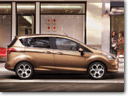 Avoiding minor city incidents and bumps one Ford B-Max at a time. It’s a collision prevention system first in a


 Here’s a Pagani


 Here is a Porsche Cayenne II. It has been around for 2 years now and has proven to be a very decent SUV. It’s 180 kg lighter than the first one, the front of it goes easy on the grilles and the headlights plus the interior design have some Panamera in them. So why are we even talking about it? Well, if you have an eye for that kind of things, the wheels are kind of custom and the ride is lowered.


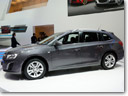 Chevrolet has introduced the new Cruze Station Wagon at the 82nd International Geneva Motor Show. It was exhibited alongside two youth concept cars – the Code 130R and Tru 140S. The manufacturer also displayed their latest on-board infotainment – Chevrolet MyLink.


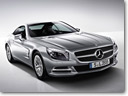 The Mercedes SL. “Open top” immediately springs to mind. We tend to think of cabriolets as slow, wobbly and impracticable – a direct contradiction to what SL stands for. “


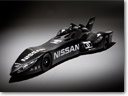 Nissan has revealed an interesting concept vehicle. It is called DeltaWing and it will showcase the pioneering technology that will show one potential direction for the future of motorsport and will feed into the research and development of future technologies, that filter down to Nissan’s road car product range.


 Renault has announced their special edition Clio RS Red Bull Racing RB7. Actually, the model capitalises on the basic model’s acclaimed strengths, something which is sure not to escape sporting car and motorsport enthusiasts.


