
 Land Rover Defender replacement was delayed due to styling concerns and a new report is indicating the “basic” model has been scrapped altogether.Autocar has released an information that the Defender successor will not be produced in India and plans for an Indian engine factory have been put on ice. Other rumor says that the replacement will be delayed until after 2015, so there is a big problem because the current model is slated to retire in 2015.Land Rover’s aluminium body shop can currently handle 95 thousand units per year on three shifts, but there is already existing room for expansion to 180 thousand units. The manufacturer has started work on a further extension of the body shop, suggesting it expects to roll out more than four models based on the PLA platform.
Category: Car Makes
Car Makes
-
Land Rover DC100 Defender Concept
-
Ferrari F12 Berlinetta [video]

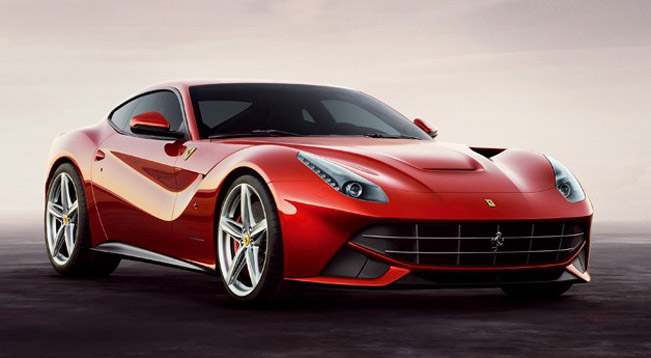
Autocar has released a video showing Steve Sutcliffe testing the awesome Ferrari F12 Berlinetta.
The F12 Berlinetta is a sensational sports car. It has a 6.3 liter 65° V12 engine with 740HP (544 kW) and 690Nm (509 lb-ft). 0-100 km/h – 3.1 seconds and 0-200 km/h in 8.5 seconds. The top speed is over 340 km/h (211 mph).
The curb weight is just 1,525 kg, so it is not only extremely fast on straight line, but in corners, too.A new suspension and gearbox layout helps reduce the car’s rear volume. The result is fantastic with a weight distribution 46:54 (front-rear axle).
The F12 Berlinetta is fitted with Michelin Pilot Super Sport tyres – 255/35 ZR20 at the front and 315/35 ZR20 at the rear.
The F12 Berlinetta was introduced at the 2012 Geneva Motor Show and named “The Supercar of the Year 2012″ by Top Gear (magazine).
The price for this “toy” is 239,317.


httpv://www.youtube.com/watch?v=QzzlsDhptoc
Source: Autocar.co.uk via Youtube
-
2014 Porsche 911 GT3 – 475HP and 438Nm [video]


Porsche has published a new promotional video of the new epic 911 GT3. The clip shows further detailing the car’s technical specification. The 2014 911 GT3 was showcased at the 2013 Geneva Motor Show.
The sports car represents Porsche’s first ever model to have an active rear wheel steering system which at low speeds steers the rear wheels in the opposite direction of the front ones, while at high speeds the rear wheels are steered in the same direction. This gives better handling and traction.
2014 Porsche 911 GT3 is powered by the well-known 3.8 liter flat-six, but with updated power – 475HP (349 kW) and 438Nm (324 lb-ft) of torque. The engine is connected to a dual-clutch 7-speed gearbox. 0-100 km/h in 3.5 seconds and a top speed of 315 km/h (195 mph). A lap around Nurburgring takes 7 minutes and 30 seconds.
The price is €137,303.
httpv://www.youtube.com/watch?v=dkZSqjc4Vu0


Source: Porsche
-
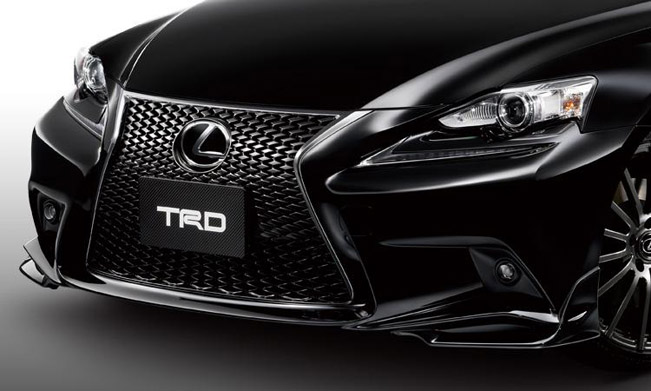
Toyota Racing Development 2014 Lexus IS


Toyota Racing Development (TRD) has introduced a new range of accessories for the 2014 Lexus IS.
The exterior boasts a complete aerodynamics package including a new front spoiler, a pair of revised side skirts, a new rear diffuser and a trunk-mounted lip spoiler. There is also a four-tailpipe sports exhaust system and a set of 19” forged aluminum wheels fitted with low-profile tires.
Other upgrades are underbody braces, which stiffen the cars structure resulting in better handling. There is also a sport-tuned suspension with new shocks and springs. Despite the improved handling, the comfort doesn’t suffer.



Source: TRD
-
2014 BMW M5 and M6 with optional Competition Package


BMW will offer an optional Competition Package for the new 2014 M5 and M6 (Coupe, Convertible and Gran Coupe) facelift models. Besides the additional equipment, the package will also boost the engine. The Competition Package open up a new dimension of dynamics in customary BMW M style.
The 4.4 liter twin-turbocharged V8 is going to produce 575HP (423 kW), instead of 560HP (412 kW). Although the power increase is insignificant, surely it will provide better acceleration. The engine is connected to a 7-speed M dual clutch gearbox and an Active M Differential at the rear axle.
Other performance components are M carbon ceramic brakes, updated suspension and damping systems, tuned stabilizer bars, 10 mm lowered ride height and new hydraulic rack-and-pinion steering with M-specific Servotronic function. There is also a set of new 20” M alloys and a sport exhaust system with custom M black chrome twin tailpipes.
The contents of the Competition Package make for optimised performance characteristics in all models, as demonstrated for example by 0.1 seconds being shaved off the standstill to 100 km/h (62 mph) sprint time and 0.2 seconds when accelerating from zero to 200 km/h (124 mph).
Cornering dynamics and elasticity are also enhanced – something that is noticeable in everyday driving but most powerfully experienced on the race track. In particular in conjunction with the optional M carbon ceramic brakes, all the driving dynamics attributes associated with BMW M automobiles are experienced at the highest level.


Source: BMW
-
BMW 5 Series Sedan And Gran Turismo – Specifications And Pricing Announced

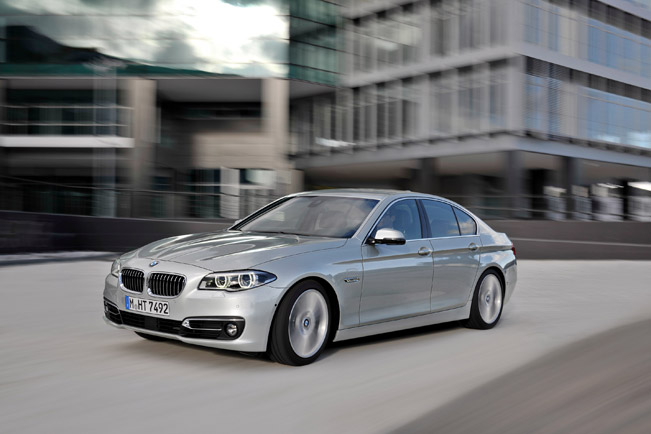 BMW 5 Series is one of the best selling models around the world and now its 2014 facelift version is absolutely ready for a launch. Precise modifications to the design, the addition of a new inline-6 BMW Advanced Diesel engine for the Sedan, and a wide range of exceptional equipment raise the appeal of the BMW 5 Series family even further.
In terms of design, a new BMW kidney grille and redesigned lower air intakes reinforce the sporty stance of the 2014 BMW 5 Series Sedan. In addition, the width of the rear end is underscored by an extra crease in the apron and sharply contoured rear lights.
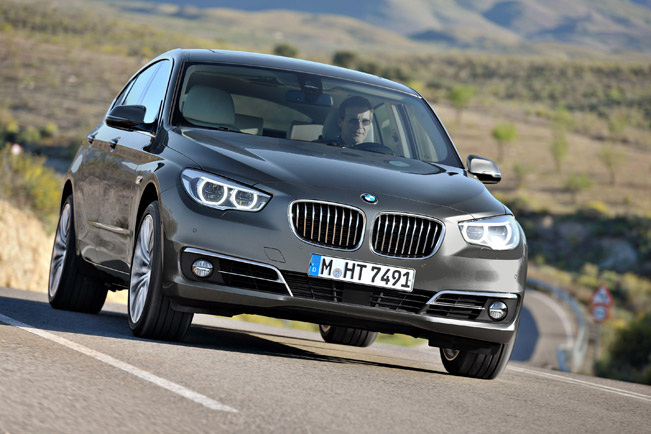
On the other hand, the 2014 BMW 5 Series Gran Turismo has modified front apron and redesigned rear end that contributes to a longer and lower look. What is more, the depth to the dynamic character of the model is further reinforced by three-dimensional surface design for the area around the license plate holder and a chrome strip in the rear apron.
Xenon Adaptive headlights are standard on the models, while there are also optional Adaptive LED Headlights. Additional exterior paint colors, as well as light-alloy wheels, upholstery colors and interior trim elements for all BMW 5 Series serve as an enhancement element to the individualization of the cars. 2014 BMW 5 Series customers are now offered new additions to the range Calisto Grey metallic, Jatoba metallic, Mineral White metallic and Glacier Silver metallic.
Moreover, exclusively composed BMW Lines are now available for the first time as an alternative to standard specification. We are speaking here about the Luxury Line , Modern Line, and M Sport. All of them feature as an option to upgrade to luxurious Nappa Leather upholstery at no additional charge.
To be more precise, the Luxury Line includes high-class features for the exterior and interior. For instance, the chrome finish of the trim bars in the outer sections of the lower air intake, the fronts of the black kidney grille slats, the window recess finishers, the trim strip in the rear apron and the exhaust tips are something that has to be mentioned. The interior of the model includes leather upholstery with exclusive stitching, a black sports leather steering wheel and interior trim strips in exquisite Fine-line anthracite wood.
Next, the Modern Line comes to offer even more dynamism with its exceptionl air intake bars, kidney grille slats, rear trim strip and exhaust tips in matt chrome, and instrument panel and sports leather steering wheel ins Oyster light color shade.
The M Sport Package now includes M steering wheel, LED fog lights, and no-charge Nappa Leather upholstery.
The interior of the 5 Series adds new layers of functionality. The Central Display of the standard iDrive operating system for instance is now bordered in the Sedan by chrome trim. The storage compartments and cup holders in the center console of these models now have enhanced capacity.
More space is present, as well the use of exquisite materials and high-quality craftsmanship. The iDrive controller is now fitted as a standard Navigation system and includes a touchpad surface that allows character recognition.
The engine range of the 5 Series family have been further expanded by including the BMW 535d as the latest diesel variant in North America. In addition, BMW’s inline-6 BMW Advanced Diesel engine with BMW TwinPower Turbo technology makes 255 horsepower (188 kW) at 4,000 rpm and 560 Nm (413 lb-ft) of torque from 1,500 – 3,000 rpm.
The top unit includes an updated V-8 with BMW TwinPower Turbo technology and BMW’s Valvetronic throttle-less intake technology. It generates monstrous 445 horsepower (327 kW) and 650 Nm (480 lb-ft) of torque. It can be found under the hood of the BMW 550i Sedan and BMW 550i Gran Turismo, allowing the firs to accelerate from 0 to 100 km/h in just 4.5 seconds.
Furthermore, the 2014 5 Series chassis technology now features double-wishbone front axle, integral rear axle and Servotronic variable power steering function. Specifically for Gran Turismo there is a standard air suspension with automatic self-leveling rear suspension, while the Driving Dynamics Control switch on the center console is standard on all models.
On the other hand, customers can chose as an option the Adaptive Drive and Integral Active Steering systems. Also standard are the Brake Energy Regeneration, the Auto Start-Stop functionality, and ECO PRO mode, BMW EfficientDynamics technologies that further enhance the fuel efficiency.
Other innovative technologies included as an option are the BMW ConnectedDrive and iDrive4.2 that now comes with touchpad, which add more to the exclusiveness of the 2014 5 Series. The newly updated 2014 BMW 5 Series Sedan and Gran Turismo will be presen in North American dealerships in August 2013.
MSRP for the 5 Series Sedan and 5 Series Gran Turismo:
528i Sedan $50,425 550i xDrive Sedan $67,125 528i xDrive Sedan $52,725 ActiveHybrid 5 $62,325 535i Sedan $56,025 535i Gran Turismo $60,925 535i xDrive Sedan $58,325 535i xDrive Gran Turismo $63,225 535d Sedan $57,525 550i Gran Turismo $68,825 535d xDrive Sedan $59,825 550i xDrive Gran Turismo $71,125 550i Sedan $64,825 


Source: BMW
-
Aston Martin CC100 Speedster Concept Unveiled [VIDEO]

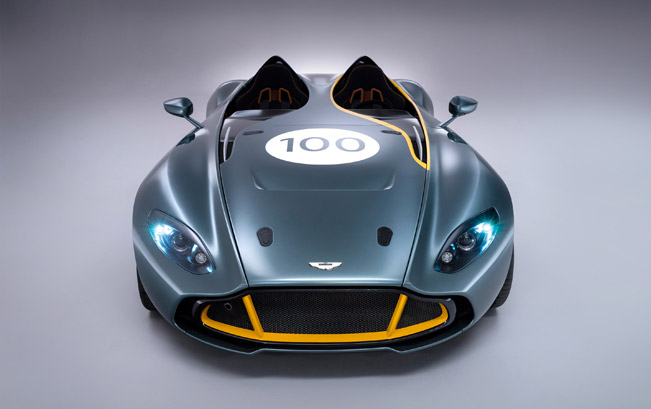 In order to celebrate its centenary Aston Martin is unveiling the exceptional Aston Martin CC100 Speedster Concept. The model looks both to the past and the future. Back in the days the DBR1 was brand’s greatest sporting triumph on the track. Of course, the future is “teased” by the glimpses of potential future design direction.
The concept is powered by a 6.0-litre V12 engine. It competed yesterday at the famous Zurich 24 Hours of Nürburgring race, driven by Aston Martin CEO Dr Ulrich Bez. In fact the speedster represents company’s fantastic sporting heritage, exceptional design capability, superb engineering know-how and adventurous spirit.
But this car is even more – it shows that the soul of Aston Martin, ad this is what differentiates Aston Martin from all the other car makers in the world. CC100 Speedster Concept was designed and constructed in fewer than six months. The aim was to create something that reflects the 100 years of brand’s heritage and to signal the future of the British company.
To be more precise, the car measures almost four and a half metres nose to tail, and more than two metres wide. This makes the Speedster Concept body a classic example of the almost infinitely flexible nature of Aston Martin’s trademark Vertical Horizontal engineering philosophy.
Of course, new materials were utilized throughout the construction of the body and the interior – carbon fibre can be seen prominently. In addition, the CC100 uses the latest generation AM11 naturally aspirated V12 gasoline engine that is matched with a six-speed hydraulically actuated automated sequential manual transmission.
It is controlled via steering column-mounted paddle shifts thus delivering the needed sporting changes. This makes it possible for the concept to accelerate from 0 to 100 km/h in little more than four seconds on its way to a top speed of 180 mph.
httpv://youtu.be/pBzTgHK9A3E


Video Source: YouTube
Source: Aston Martin
-
The Nissan Resonance Concept Car
Nissan showed off their exciting new Resonance concept car at the 2013 Detroit Auto Show, Featuring what the company calls “V-Motion” styling, it features a grill that sweeps upwards and a windshield and A-pillars that are steeply raked rearward. The impression is a car in motion. Nissan says its designers were inspired “hypersonic space travel.” Team Nissan in New Hampshire explained to us that the Resonance is similar to the current Nissan Murano with proportions that imitate the mid-size crossover’s, with an oblong profile and short hood. High concept details of the Resonance concept include a panoramic glass roof, a tinted translucent acrylic grille, giant 22-inch wheels and boomerang-shaped lights.

Under the Resonance’s hood is a 2.5-liter four-cylinder engine driving a hybrid-electric drive system. It employs a single motor and dual clutches driving an all-wheel drivetrain. The transmission is Nissan’s next-generation Xtronic continuously variable automatic transmission (CVT). The electric motor is powered by a large lithium-ion battery pack which is recharged not only by the engine and but by the vehicle braking kinetic energy.
Inside the Resonance the “V-Motion” styling ethic continues. Even though this is a concept car, the futuristic interior aesthetic seems to appear production-feasible, not just for the show. The cockpit displays feature neat “layered” display panel graphics that reproduce a holographic setup without actual holographic technology. The gauges directly in front of the steering wheel are similar in color and look to the information and control center so the combination has an all-encompassing panoramic feel to it. Light-colored leather covers the seats and nearly every surface that isn’t already covered in metal or polished wood.

The Resonance may be a proxy for the styling of the 2015 Murano. Why not a separate Model? Well, the Murano has been one of Nissan’s more popular SUVs but not really one of its more practical cars. With the new seven-passenger Pathfinder now filling the role of people and gear hauler, it could very well be that the Resonance hints at Nissan’s planning for the future Murano, not a separate model. That may not a bad thing because in either a Resonance or Murano model, it should be a big hit in the showroom.
Pictures Courtesy: www.autoevolution.com, www.caranddriver.com
-
The History of Kia Motors
Kia was founded in 1944 as a producer of steel tubing and bicycle parts. The name Kia has roots in the Chinese language and means to “to rise and come out of Asia”. According to native Koreans, the name evokes a parable that may be roughly equivalent to the Greek mythological tale involving the Phoenix bird arising from the ashes of its predecessor.
By the early 1950s the company had expanded into the production of completed bicycles, the first Korean manufacturer to do so. By the late 1950s the company began to produce motorized scooters with the rollout of the model C100 (1958).

The 1960s saw a rapid expansion in Kia with a lineup that included motorcycles and three-wheeled cargo vehicles. The Kia brand was a frequent site on the streets of Korea and in many other parts of Asia. The next logical step after this was to enter the automotive market and the company started moving in this direction in the early 1970s. A key factor in this process was the construction of Kia’s Sohari manufacturing plant in 1973. According to Team Kia in New Hampshire this plant was Korea’s first fully integrated automotive production facility and it was where Korea’s first internal-combustion motor was tooled and built. A year later, Kia unveiled its first car – the Brisa.
After several years of manufacturing automobiles for other brands, Kia began manufacturing its own brand for US consumption in the early 1990s. The first US-destined car was the compact Sephia. It was rolled out to only to several Western states in order to test demand. It wasn’t until KIA started shipping its very popular Sportage SUV that Kia became a nationwide brand.

The next phase in Kia’s history was due to financial difficulties. After considerable discussion, Hyundai, South Korea’s other major automaker, acquired the company. Kia has been on a major upswing since its purchase by Hyundai, with improvements in build-quality, performance and overall refinement. Reliability, previously a weak point, has also improved greatly and consumer confidence followed along.
Today Kia is offers a broad lineup of well-built coupes, sedans and crossovers that stand out for their value, performance and sporty styling.
Images courtesy of www.automaistv.com.br , www.engineact.com
-
Yes, There were Turbine Cars!
There used to be a time when the coolest things were built in America and one of these things was the turbine-powered automobile. Unfortunately the turbine car never went into actual production but it was close. The company that tried was Chrysler.
We learned that the Chrysler turbine was the brainchild of chief engineer George Huebner from Sheboygan Chrysler. Huebner began studying the feasibility of turbine-powered vehicles at Chrysler in the mid-1940s. The turbine engine’s smoothness and durability seemed to be a viable, perhaps superior, alternative to the standard piston engine because it had few moving parts compared to a piston engine -just fan blades on a spinning shaft.

Huebner built a few ordinary-looking prototypes in the ’50s, but the pilot-program cars would be driven, and seen, by the public so Elwood P. Engel, a former Ford designer, crafted an all-new,futuristic body. The bodies were hand-built by Carrozzeria Ghia in Turin, Italy, and shipped to Detroit for final assembly.
The Chrysler Turbine was not a one-off concept car. Between 1963 and 1964, Chrysler built 55 turbine cars and 50 of these were made available for testing by 203 families nationwide. Each family kept the car for three months and, as part of the deal, the drivers recorded impressions and mileage in logbooks.
However, the turbine automobile never went into production. The high cost was one reason. Back then you could buy a fully optioned V8-powered car for some $5000 or this “turbine car” that would have cost around $16,000. The two had about the same performance; the turbine car was rated at 130 hp and 425 lb-ft of torque, about the same as the standard V8 Model.

Despite no actual production models being made, between 1949 and 1981 Chrysler built seven different generations of turbine test vehicles. Unfortunately, the company’s shaky finances, the challenge of reducing the engine’s Nitrous Oxide emissions, the oil embargo of 1974 and the need to downsize cars for front-wheel drive, all hurt the Turbine’s chances.
Today, the Chrysler turbine is just a footnote in automotive history and just 3 cars survive. Needless to say they are very valuable collector cars.
Photos Courtesy of: www.dudeudeworld.com.au, www.popularmechanics.com and www.hemmings.com
-
Ford Sustainability Plan Making a Difference
In recent years, many companies have begun to show concern for the environment and sustainability by rolling out green initiatives. The Ford Motor Company has sponsored several such initiatives over the years. In 1999, Ford released its first annual Sustainability Report. Since then, the company has worked diligently in an attempt to be more sustainable and environmentally friendly.

In 2008, the company released a list of its strategies for sustainability, including such diverse approaches as using 100% recycled fabric for seating in the Ford Escape, adding 6-speed transmissions that are fuel-efficient, and introducing the 2008 Super Duty, which is the first clean diesel heavy-duty pickup truck. These initiatives also displayed concern for the environment, adding almost 200 acres of sustainable landscaping to its properties in Michigan. Ford also became the first two-time winner of the EPA’s Energy Star award, winning for 2006 and 2007 consecutively.
Ford’s Sustainability Reports have included projections and goals for reducing energy expenditures and carbon dioxide emissions. In its 10th annual Sustainability Report, Ford anticipates reaching its goal of reducing carbon dioxide emissions by 30%, compared to 2006, by the year 2020. In its 13th annual Sustainability Report, Ford relayed its intentions to reduce energy used for manufacturing its vehicles by another 25%, per vehicle, by 2016.
Ford has already seen some success from these policies. From 2006-2011, electricity usage for per-vehicle production went down by around 800 kilowatt-hours—the upper end of electricity usage by average households in California and New York. The company also added a 500-kilowatt solar panel system to its Michigan Assembly Plant.
Additionally, Ford also has the goal of continuing to reduce landfill waste. From 2010 to 2011, Ford reduced this waste by 11.3%, with intentions to continue to reduce waste by 10% per vehicle. If Ford continues on its path to green innovation, everyone benefits: Ford, its loyal customers, and the environment. If you are looking to drive a vehicle from a company that believes in the importance in being ‘Green’, then just contact your local Ford showroom, such as the Ken Garff Ford Dealership of UT. They will be happy to set up a test drive, go over financing, and answer any questions you may have.
-
Calling George Jetson!
There used to be a time when the coolest things were built in America and one of these things was the Chrysler turbine-powered automobile. Built in 1963, it is probably not entirely coincidental that Hanna-Barbera’s animated TV show The Jetsons aired from 1962 to 1963.
From the viewpoint of engineers, however, the turbine engine’s smoothness and durability seemed to be a viable, perhaps better, alternative to the standard piston engine. It had few moving parts compared to a piston engine, just a bunch of fan blades on a spinning shaft with one spark plug and no cooling system.

Chrysler built a few ordinary-looking prototype turbine cars in the ’50s, but the pilot-program cars for the 1960s would be driven and seen, by the public so an all-new, futuristic body was developed. The bodies were hand-built by Carrozzeria Ghia in Turin, Italy, and shipped to Detroit for installation of the turbine engine.
Chrysler built 55 turbine cars between 1963 and 1964 and 50 of these were made available for testing by 203 families nationwide. Each family kept the car for three months and, as part of the deal, the drivers recorded impressions and mileage in logbooks. The folks in the service department at (serving DC) told us that Chrysler actually had a special team of mechanics on call who would fly out and fix the cars right away if anything went wrong.
Unfortunately, the turbine never went into production. The high cost was one reason. Back then you could buy a V8-powered Chrysler for some $5000 or this “jet-engine” car that would have cost around $16,000. Big difference in price. They also had about the same performance; the turbine car was rated at 130 hp about the same as a Chrysler’s 318-cubic-inch V8. Gas mileage was the same on the highway too, both would get some 19mpg.


