Category: Car Makes

Car Makes

  • 2017 Aston Martin Vanquish Zagato Coupe: fine style and unneeded changes

    2017 Aston Martin Vanquish Zagato Aston Martin announces a limited lineup of the Vanquish Zagato Coupe. As the name suggests, the premium automobile brand keeps in touch with its Italian design-house Zagato and together they bring something special. Or, at least, they try to make it special.

    We know that Aston Martin delivers only high-end vehicles, but we also know that everything should have a limit: even the trial to make something look even better than it should be. But let’s check out the vehicle first, shall we?

    Vanquish Zagato Concept was first revealed at the prestigious Concorso d’Eleganza Villa d’Este at Lake Como, Italy back in May, 2016. And since this glorious moment, the customer interest has greatly risen up and Aston Martin team decided to deliver more of these. To be precise, there will be 99 Zagato Coupes built at the production facility in Gaydon, England.

    As you might know, this is the fifth model to emerge from the collaboration: Aston Martin Zagato Coupe will join the 1960 DB GT Zagato Racing, 1886 V8 Vantage Zagato, 2002 DB7 Vantage Zagato and the 2011 V12 Vantage Zagato. Cool.

    So, what does the Zagato Coupe offer?

    2017 Aston Martin Vanquish Zagato

    Vanquish Zagato comes with Aston Martin’s powerful 6.0-liter V12 unit that has undergone some slight refinements and now offers a total of 600hp (447kW) or, in other words, this beauty accelerates from 0 to 100km/h in mere 3.5 seconds.

    Also, in terms of drivetrain system, the special vehicle comes with exclusively fine-tuned suspension that delivers a sort of GT driving experience. Not bad. But the question remains: is this titanic power needed, as we are talking about a street-legal machine?!

    Design

    2017 Aston Martin Vanquish Zagato

    Let’s be honest here: the vehicle is beautiful. Overall. I don’t like the styling at the back, but generally the Vanquish Zagato gives off a sense of power, passion and precision.

    SEE ALSO: Aston Martin meets summer with some fresh offerings. Check them out!

    Detail highlights include numerous carbon-fiber components, redesigned rear lights with the same bladed LED technology, used for the Vulcan. Furthermore, Zagato’s rear somehow resembles DB11’s, but is uglier. The whole rear design contributes to better aerodynamics, but I find it ugly. Also, the sporty-looking rear is completed with a retractable spoiler and a rear hatch for easy access to the luggage compartment. But it remains ugly.

    Interior design

    2017 Aston Martin Vanquish Zagato

    Vanquish Zagato welcomes all the drivers to a neatly created interior ambience. The well-known Aston Martin quality is present, along with some changes done by Zagato designers. The carbon-fiber elements are paired with sweet bronze details and along with the fine leather create a rather cozy and comfortable atmosphere. Of course, there is neat Zagato Z stitch pattern on the door section and on the seat that further enhances the feel of exclusivity.

    2017 Aston Martin Vanquish Zagato

    So far, so good. Remaining true to its Aston Martin roots, the new Vanquish Zagato also benefits from the fine Italian style and brings high doses of pleasure and excitement. Definitely a worthy family member, the new Vanquish Zagato vehicle stands comfortably along the whole Aston Martin Zagato lineup.

    Source: Aston Martin

  • Exclusive ride with the new Jaguar F-TYPE SVR on Nürburgring? Yes, please!

    2017 Jaguar F-TYPE SVRJaguar launches the “Jaguar Co-Pilot Nordschleife” program in order to allow customers to try brand’s latest supercar on one of world’s most popular race circuits, indeed the Nürburgring Nordschleife.

    Jaguar’s most aggressive sports car, the F-TYPE SVR delivers 575hp (429kW) and 700Nm of torque via the titanic 5.0-liter V8 power unit and accelerates from 0 to 100km/h (62mph). Sporty enough, this is considered as brand’s most capable of tackling down the “Green Hell” challenge.

    In fact, the customers who booked a ride with the car will be also the first to experience its power and driving character throughout the 20-kilometer long track.

    2017 Jaguar F-TYPE SVR

    Of course, before each passenger’s ride begins, all the Co-Pilots will be taught to use a HANS (Head and Neck Support System) in order to ensure maximum safety and maximum pleasure of driving. Also, fun thing is that there will be special cameras installed into the vehicle to catch lucky driver’s emotional experience throughout the course.

    SEE ALSO: Jaguar Reveals Stunning F-TYPE SVR Ahead of Geneva Debut [w/video]

    Jaguar Land Rover Special Vehicle Operations team has also prepared this F-TYPE SVR with a special roll cage, Recaro Racing seats, race harness for occupant safety, and this distinctive Orange metallic paint.

    2017 Jaguar F-TYPE SVR

    Passenger laps are already available for booking for 16 consecutive weekends from now until end of October. Prices start from $330 USD per person for a 30-minute ride.

    2017 Jaguar F-TYPE SVR

    Source: Jaguar Land Rover Special Vehicle Operations 

  • Vans VS SUVs: a battle for convenience and comfort. On which side are you?

    2015 Toyota Sienna Becoming more and more popular, SUVs are known for their sporty elegance, cutting edge technologies and versatile spirit. On the other hand, the good ol’ minivans remain favorite for all these who seek vast amount of space in exchange for some needless features. So, who should go for a minivan and who should go for a SUV? Let’s check out!

    Recently, we have witnessed the unveiling of some neat minivans, such as Toyota’s Sienna and Honda’s Odyssey, both of which show contemporary styling and neat technologies. But let’s be honest here: minivans are still used for delivering large groups of people or large amount of cargo in exchange for some performance rates. Yes, you can store your groceries, ski equipment, your boy’s classmates, several spare tires, the new 50-inch TV, more groceries and your German Shepherd and there will be still plenty of interior space for like three other people, but you will lack this neat power boost and flexibility that a contemporary SUV offers.

    On the other hand, we do see some titanic increases in the SUV segment sales. And there is a good reason for that: a fine SUV brings incredible utility, flexibility and features, for a reasonable amount of money. Of course, we have seen a lot of issues over the past ten years: poor fuel efficiency, some models have poor ride comfort and many of them are really hard to park.

    SEE ALSO: What Makes 2016 Honda Pilot So Safe?

    Knowing that choosing between a SUV and a minivan is a difficult decision for a lot of people, we decided to give our “two cents” about both segments and help them choose wisely. The difficulties come from the fact that both types of vehicles undergo daily changes and can often offer quite neat and more preferable additions that what they offered two years ago.

    2015 Honda Pilot

    Although cargo capacity is a sort of leading feature, in present days this belief is abandoned. Although there are some large SUV models and some exceptions that are especially created to offer superior amounts of interior space, a conventional sports utility vehicle cannot match a conventional minivan.

    SEE ALSO: 2015 Toyota Sienna Goes On Sale

    In terms of safety, the majority of minivans and SUVs are geared with feasible safety features as tons of airbags, antilock brake systems, passive and active safety features and more. Technology has done well in both segments, but we should mention that a SUV still has a bigger rollover chance than a minivan.

    Convenience features

    When it comes to driving with children, many experts say that the minivan is the right choice. Becoming a sort of a playhouse on wheels, the vehicle offers enough space for the small ones to play, eat, stand and sleep. Needless to say that this is especially convenient in long road driving sessions.

    2015 Kia Sedona

    Other good thing is that most recently the competition between brands and minivans heats up a bit, so if you are on the market for a new minivan, you will be pleased to know that there are countless choices and combinations that can fit your style pretty neatly.

    SEE ALSO: 2016 Mitsubishi Outlander Has Finally Revealed More Details

    But what about the SUVs? More compact and badass-looking, the utility vehicles also bring one more big advantage. Especially if you have to deal with teenagers, or you are in your twenties and searching for your first sporty machine – style. You know we are not talking just for the exterior look. Plenty of the contemporary SUVs have that incredible appearance and unmatched spirit that definitely enhances driver’s confidence.

    Also, many SUV drivers say that they feel safer, thanks to vehicle’s higher ride height and the comfortable seating. However, feeling safe or not, parking remains a pain in the butt. Especially with a supersize SUV in weekdays.

    Conclusion

    So, what should you get? Well, if you are dealing with kids, plenty of grocery bags and two or three dogs, the van is definitely for you. Fitting the family the family needs and everything you need in a single vehicle, the van is also preferred by people who had enough of wild parties, road trips and “fun”.

    2015 Ford Explorer Platinum

    SUV is the right choice for people who travel through mud and snow, and for these who still desire a bit of sportiness. Or for people want to impress their friends and neighbors, but want to remain agile and versatile with a single vehicle.

    Source: BGO Media Team 


  • Long term use of Electric Vehicles?

    EV vs Combustion cars

    Or why it might be a strikingly bad idea

    In ten years one million electric cars are expected to be rolling on the roads of America. There is a lot of money going on here, and billions have been invested in subsidizing the production of the EVs and all of the components they use. And we are all familiar with the benefits electric cars offer, but what we aren’t exposed to is the disadvantages of owing an electric car.To be more specific, what the long term problems might be.

    First, the cost is one major crux. Let’s have an example to make things clearer and easier to grasp. Nissan Leaf, being the first battery electric vehicle that was mass-produced, costs two times more than a Nissan Versa, and both are being positioned in the same car range. If we exclude the eco-benefits of the first one, it seems that the Leaf doesn’t make any sense.

    For one, Leaf has only one fourth of the power of the Versa. But, you may now say there are still benefits, when taking into consideration that the electric energy is cheaper than the gasoline. Then you could compromise on power (but could you really). Here’s the big catch. Sometimes electric cars need to be charged in large amounts in order to function properly. In addition, the long term benefit in investment like this is rather suspicious. If we have to make the appropriate calculations, it ends up that to get one’s money back with an interest, it should take more than nine years of driving the Leaf everyday. These estimations are based on the fact that the EV is capable of traveling up to 60 miles on a single charge and to recover the purchase cost one should drive at least around 165,000 miles.

    SEE ALSO: Autonomous cars – when will they take over? [w/video] 

    And how about the time? I mean the time it takes to travel with an electric car… Just imagine how busy people living in busy cities have to deal with deadlines, meetings, etc., within the traveling speed of an EV. Just hilarious! And it gets even funnier if you imagine that it runs out of energy during such nervous and erroneous time.

    Have this mental picture: you are running late for an important meeting, driving your super fast EV, and eventually it seems to be out of charge. It is hot outside, but to extract an extra mile out of it you have to turn off the AC, the headlights and all technical stuff inside that require more energy. You end up sweating and perspiring, and late for your important meeting, thanking that you have left the EV behind (and completely dead) and got a cab, which was ironically driven by a combustion engine.

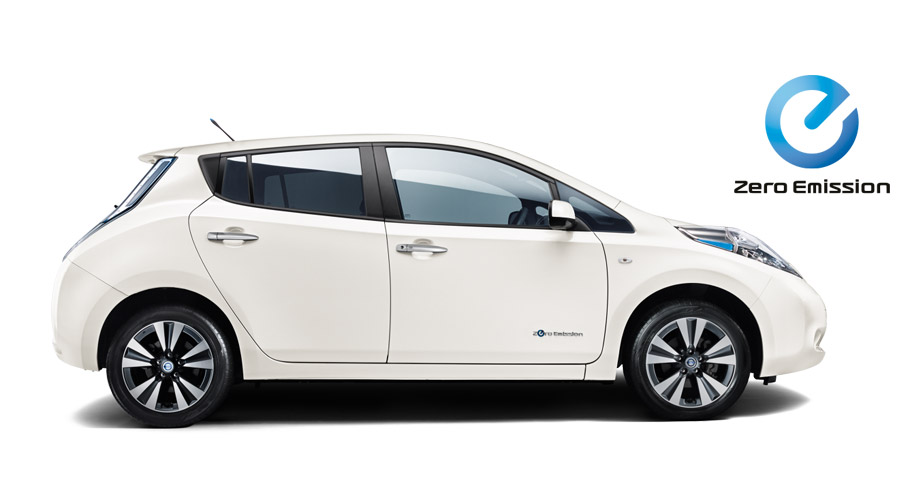
    Nissan Leaf EV side view

    Regarding the time, there’s another disadvantage. If you are driving a gasoline car, then when you run out of fuel, you just go to the gas station and refuel it (and go for additional 300 miles). Well, this isn’t the case with the EVs. One of the biggest drawbacks here is that the recharging time varies from one hour for a fast recharge (but who could count on that) up to 20 hours for a full one (on a house current). And you would still go for 60 miles. It is extremely convenient, isn’t it? To make things look a little bit better, companies have developed charging stations for an extra cost (of course), which reduce the charging times to 4 or 8 hours. But here’s the catch. If use them too often, then you might end up buying new batteries for your EV, because it seems that the chargers (which you have bought for an additional amount of money) shorten their life. But if you have chosen to drive an electric car in a long term plan, you will still end up changing the batteries. In this case you should prepare around $5,000… or more.

    Looking beyond the benefit of no-gas-fuelling and zero-CO2 emissions, the electric cars seem to NOT be the best choice for transportation means in a long term plan. But you could still wishfully want to save the environment. To keep you thinking, the CO2 emissions produced by the U.S. electric power sector are about 37% of the total U.S. energy-related CO2 emissions, while 31% are associated with combustion of fossil fuels used by gasoline and diesel cars.

  • Nasty Acura NSX EV Concept is about to conquer Pikes Peak with winner Tetsuya Yamano behind the wheel

    Acura NSX EV Concept side view The supercar is driven by world’s first all-electric four-motor SH-AWD drivetrain

    Tetsuya Yamano will again be featured in Acura’s team for Pikes Peak, but this year he will be sitting behind the steering wheel of an NSX EV Concept (he is currently making extensive tests). He is going to be competing in the Electric Modified Class, raising the bars high. Last year he was first in the Challenge Exhibition class with a time of 10:23.829 in an all-electric Honda CR-Z prototype. The Japanese brand is also running two NSX hybrids in the hill challenge.

    But what’s the difference between the CR-Z and the NSX EV? Well, both are driven by the same powertrain, which won last year’s Pikes Peak Challenge Exhibition class. However, Acura’s EV Concept features a further evolution of the experimental all-electric unit. In other words, the supercar will be driven by world’s first 4-motor Super Handling All-Wheel Drive drivetrain, or how Acura named it – the SH-AWD.

    SEE ALSO: Honda reveals details about “the new NSX” [w/video]

    In short, the benefit is that the electric SH-AWD powertrain enables four-wheel independent torque allocation, thus producing three times the total system output of last year’s electric prototype. All of this is put inside NSX’ body to look more dramatic and menacing. And it is most certainly the best looking EV we have seen for a while. Unfortunately, only in a concept variant.

    Acura NSX EV Concept rear view

    “So, what’s the deal with the SH-AWD hype,” you might ask.The secret hides in the application of separate Twin Motor Units (TMUs) on each axle. This is how Acura actually achieved independent torque distribution to all four corners. In addition, the new technology uses highly responsive acceleration characteristics. Combined with the regeneration capability of electric motors, this further advances the torque vectoring systems that are currently applied to NSX. The experience and knowledge gained will be utilized in Acura’s RLX and the upcoming MDX.

    Acura NSX EV Concept with its high-output electric motors and 4-motor torque vectoring will compete in the 156 complex corners up Pikes Peak on June 26th.

    Source: Acura 

  • If this Mercedes-AMG GT S could only happen…

    Piecha Mercedes-AMG GT S Renderings front viewPiecha Design reveals first couple of renderings of the customized AMG GT S

    Remember when we showed you the first sketch of Piecha Design’s Mercedes-Benz AMG GT S? Well, it is now time for the project to be fully revealed! Behold, for it is something entirely unexpected…

    Leaving jokes aside, this car actually looks pretty good, given the fact that Marcus Piecha and his team told us initially that we should not expect an entirely new design. Their aim was to highlight the beautiful character of the Mercedes. And they have definitely achieved that.

    Another advantage is that the basic shape of the car is attractive, hence it is way easier to make something look better when it is so good from the start. Anyway, this dream sports car is now taking shape and although still in a rendering form we can see some of its unique qualities.

    SEE ALSO: This is how the Mercedes-AMG GT S could look, if …

    In short – it is all about carbon-fiber here, exposed and unexposed. The best part of this project is probably the extra-wide rear that was designed by the owner. He actually told us that affixing it gave him some sleepless nights, because he wanted to keep the original brake wings fully operational.

    Piecha Mercedes-AMG GT S Renderings rear view

    Another attraction here is the slim lower “back-end” with its four-pipe exhaust with 90mm outlets. And to give you a hint of what’s next – there is new suspension on the way, which will contribute for more dramatic stance and better driving characteristics. Furthermore, we have more extra carbon-fiber goodies, including side blades and front-cup wings as well as air splitters in the front apron.

    What can’t be seen in the renderings is the performance optimization that we were promised. So we should expect significant gain over the production numbers that the Mercedes-Benz AMG GT S has. Namely, 510 hp (375 kW) and 650 Nm (480 lb-ft) of torque.

    “But that’s not all,” says Marcus Piecha who is most probably going to surprise us with the full release of the project very soon. Stay tuned!

    Source: Piecha Design 

  • PEUGEOT 2008: what should we expect? Or, more correctly, what should we NOT expect

    2016 PEUGEOT 2008 GT PEUGEOT 2008 Compact SUV hits showrooms next week! Audience will have the chance to see what is going on with PEUGEOT’s plans for the future and see brand’s latest offerings. We have already told you about the 3008 GT SUV – it is not bad, but still there are some tweaks to be done. So, what are we to expect from its smaller brother?

    PEUGEOT 2008 has been updated and tweaked a bit. The exterior design is a familiar one: apparently the design team decided to keep to these well-known lines and expression. And yes, this means that the ugly headlamps and the stupid front grille smile are still present. Even the new Ultimate Red color finish cannot hide the annoyingly popular face expression.

    2016 PEUGEOT 2008 GT

    Coming in three trim levels, Access, Active and Allure, 2008 also keeps the same interior styling, or the so-called PEUGEOT i-Cockpit. To be honest, the interior does not look that bad: premium feel and exclusivity are not present, neither are some elegant and smooth lines, but it looks comfortable and functional. The compact steering wheel looks just fine and the 7-inch multifunctional touch screen should do the job.

    What we also know so far is that 2008 will be offered with Grip Control function, standard feature for all trim levels, along with a set of special all-season tires. Cool! Buyers will also be granted with MirrorScreen, rear-view camera, Active City Brake system and Park Assist function.

    2016 PEUGEOT 2008 GT

    And the drivetrain? Well, as you may have already guessed: nothing special, but it still can deal with many road situations. Good thing is that the power unit is a Euro6 certified one and is paired to a 6-speed manual gearbox. It is a 1.2-liter PureTech unit with a total output of 130hp: if you are using the vehicle on daily basis and don’t expect sporty wonders, you should remain happy with it.

    SEE ALSO: PEUGEOT 3008 GT: was this an actual required addition to the lineup?

    So, what do we have so far? Ugly headlamps: check. Stupid smile: check. Strange styling lines at the back: check. Cozy-looking interior: also check. Descent drivetrain unit: check. By far it looks like a regular PEUGEOT model, but who knows what the manufacturer hides under its sleeves? We will find out next week!

    2016 PEUGEOT 2008 GT

    Stick with us for more information!

    Source: PEUGEOT 

  • Corolla celebrates its 50th anniversary with a rather special race! How cool is that?

    1970 Toyota Corolla at the Great RaceRace events become more and more interesting. And here comes one more interesting event: the Great Race. This is a long-distance endurance competition for vintage vehicles. It will start in Northern California and end in Moline. And there is one more interesting thing: Toyota’s participation is part of the Corolla’s 50th anniversary celebration! Needless to say, the racing team will be using a Corolla model. A rather special one.

    This iconic first-generation 1970 Corolla sedan will join more than 130 vintage cars in the battle of the classics. The driver is Jamie Bestwick, a 13-time X Games gold medal winner in BMX Vert and a SCORE Baja 1000 veteran. And in order to pay tribute to the 1970’s, the whole team will be geared with special uniforms, while the car itself will remain true to its original specifications: what we see here is a trial by Toyota to show some oldschool quality and durability.

    1970 Toyota Corolla at the Great Race

    The event itself, the Great Race, features classic vehicles dating back to 1916 and starts in San Rafael, California and is expected to end in Moline on Sunday, June 26. The racers will follow the historic Lincoln Highway through Nevada, Udah, Wyoming, South Dakota and Iowa. And what about the winner? Well, the most “endurable” team will get a sweet trophy and a check for $50,000 USD.

    SEE ALSO: 2016 Toyota Camry RZ Special Edition: Capable, but it is still cheap-looking

    Of course, each team will receive a set of course instructions that will lead them through key checkpoints. Also, racers will be joined by numerous guest navigators along the race, including the off-road racing champion BJ Baldwin, world-class snowboarders Amy Purdy, Elena Hight and Louie Vito, BMX rider Drew Bezanson, musician Mike Eldred, motorcross racer Andy Bell and many more. Sounds good, right?

    So, let’s wish them luck, and sit back and watch the spectacle!

    Source: Toyota

  • So, what’s so special about the camless engine systems? [w/video]

    Koenigsegg Camless EngineWe all know how it started: back in 19th century Nikolaus Otto patented a rather interesting system. It contained four key elements that eventually led to a global domination, as it comes to automobile industry. Indeed, suck, squeeze, bang and blow are the actions that help millions of people worldwide to move faster through land.

    What is also special about this engine system is that the action of the intake valves which allow the system to breathe and the exhaust valves that let it expel gases were defined by shaft of eccentric lobes rotating exactly half the speed of power unit’s crankshaft.

    Then modern systems hit the market and people’s minds. Electric vehicles and green energy are sort of the main topics in news, press releases and everyday small chats. And more people should be talking about this thing called a camless engine.

    So, what is this modern technology?

    Long story short, the camless technology offers more power and better fuel efficiency. Short story long, the “cams” still spin half as fast as the crank, but changes the relative opening and closing of the valves in relation to the crank position.

    In most engine systems the camshaft’s rotating lobes push rockers that further open the valves and allow springs to shut them. But the main downside is that there are these stages in which the valves are partially opened or partially closed, which greatly reduces the efficiency and overall system productivity.

    Koenigsegg Camless Engine

    What the new system is doing is to allow more control over engine’s intake and exhaust valves, thanks to the recently developed electro-hydraulic-pneumatic actuators.

    In theory, the camless engine can run on any combination of cylinders with the conventional or the more efficient Atkinson and Miller cycles. Also in theory, a 1.5-liter naturally aspirated four-cylinder power unit with a total of 250 horsepower can deliver some 40-plus mpg on two cylinders. Sweet… but we would like to see that happening in the real world.

    SEE ALSO: Rolls-Royce VISION NEXT 100 is for the oligarchs of the future [w/360° video]

    This engine technology has been created in conjunction with FreeValve AB, one of Koenigsegg’s sister brands and it offers reduced fuel consumption of up to 17 per cent. It is also far more compact. But it can’t be perfect, right?

    There are definitely some downsides. For example, there is a draw from the engine to run the pneumatic and oil actuators. But these losses are not as nearly as bad as those stemming from the friction associated with driving cams, chains and spring-loaded valves. Last, let’s not forget that the noise “camless” engines produce, still does not pass the public requirements.

    https://vimeo.com/145498720

    Source: Koenigsegg

  • Autonomous cars – when will they take over? [w/video]

    Autonomous cars front cover imageThere are various forecasts which predict when autonomous driving cars will take over. In general, the expectations are set around the year 2020, which isn’t far from now. And the aforementioned year signifies the market release of these vehicles. Would they take the market by storm or fail to do so is a matter of clairvoyance, but we will still try to see the options ahead.

    Volkswagen’s experts say that driverless cars will hit the market by 2019, while GM and Ford predict this to happen around 2020 (“or sooner”). Mercedes is being more safe in their predictions, saying autonomous vehicles would appear no sooner than 2025. By the way, Daimler-Benz has more than 30 years of research into autonomous driving, starting with the Eureka-Prometheus technology, developed in 1985. Anyway… there are even predictions that truly autonomous cars will populate roads by 2028-2032, and that by 2040 they would be 75 per cent of all vehicles out there.

    SEE ALSO: Nissan joins the already elating autonomous-driving technology world 

    While everyone else is still “predicting”, not producing, companies like BMW are about to launch their first autonomous models. We are speaking about the iNext that is set to appear in 2021. In addition, Toyota’s first self-driving car is to hit the market in 2020.

    Elon Musk, who seems to be the major force (and the strongest one) behind this idea, expects an entirely autonomous Tesla to appear two years from now (June, 2016). Well, note that for Tesla’s model to be “road-legal”, governmental approval is required and it is possible it might take up to three years, so we are generally speaking about the same year of market appearance.

    Cars, which can move without human intervention, and in contrast to Google’s cars that need detailed 3D maps for local navigation, are currently in the making by Nissan’s professionals. They are also expected to appear in 2020.

    What do drivers say?

    Autonomous cars - the future

    “How about NO” say more than 60 per cent of the drivers out there, when it come to autonomous driving. Although there are many benefits to self-driving vehicles (safer roads, efficient driving, etc), there are also various disadvantages at hand and they mainly about the safety, technology and trust of the “drivers”. Surveys show that six in ten people worry about the safety matters of this type of vehicles. Another problem associated with autonomous cars is the technology mistrust.

    So, there are two major factors which will influence the “taking-over” of autonomous vehicles: the first is the manufacturers side, with vehicles to start “flooding” the market in 2020. On the other hand are customers and passionate drivers, who would mainly distrust the innovative technology and want the control in their hands. And here we must put the attention on the passion that enthusiasts experience when driving a car. A major factor, that is excluded in the surveys.

    Well, it is about time to witness how everything will eventually unfold… but I wouldn’t keep my hands off the steering wheel for sure!

    To cheer you up, the self-steering car in the video below provokes many laughs during a demonstration (jump to 1:15). Traveling at 40km/h the brakes seem to… not work the way that was expected. Note that no real kangaroos were harmed in this autonomous driving fail.

    httpv://youtu.be/G6gz344tt6U

    Video Source: YouTube 

    Images Source: Continental Tyres

  • Watch the restyled Tesla Model S roll on the streets of Miami [w/video]

    Larte Design Tesla Model S front viewLarte Design Elizabeta tuning kit makes Tesla’s Model S even more brilliant!

    Tesla Model S is Elon Musk’s calling card, and is one of those creations of technology which will continue to be praised for a long time. The P90D has been recently “facelifted” adding more charms and goodies to what was initially brilliant. This fact however, does not stop any tuner who wants to bring out more from a particular model. An example is Larte Design, a Russian tuning company, which has lately become very popular with its luxury custom packs.

    The experts are obviously praised in the USA (Miami in particular) and this video proves it. It shows how a beautiful white example of the Model S rolls on the streets of city with its unique styling cues and charming presence.

    SEE ALSO: Tesla Model S Elizabeta is the Next Great Thing in LARTE Design’s Garage

    More importantly, what makes the tuning kit different are the materials. The high-end-body-kit is made with basalt fiber with the help of vacuum injection technology. The benefits: it is stronger and lighter than the conventional carbon-fiber. For those who like the traditional carbon, Larte Design is also offering parts made from that material.

    Larte Design Tesla Model S blue variant

    What changes to the exterior do we see looking at the video below and the images in the gallery? The front and rear bumpers are undoubtedly new, and there are additional trim details. The latter include add-ons for the fender flares and side sills, a trunk lid pad and a lightning-like inlay in the radiator grille. There is also a front lip spoiler and inserts for the rear bumper’s diffuser.

    Lastly, we should mention that the basalt fiber version of the Elizabeta tuning kit weighs just 13kg and this is for the front and rear bumpers altogether. Enjoy the video! It also brings summer vibes, doesn’t it?

    httpv://youtu.be/HPTxgbIsmpY

    Video Source: YouTube 

    Source: Larte Design 

  • When one 600HP BMW is not enough, you make two of them!

    G-Power BMW M3 F80 and M4 F82 front viewG-Power BMW M3 (F80) and M4 (F82) deliver 1,200 hp combined output!

    G-Power is one of the main companies out there which specialize in BMW tuning. There is no doubt that by doing so they make the enthusiasts happier than before. Adding to the excitement is the fact that the experts usually work with the M-Series… Just like in their latest project, which is an interpretation of the latest BMW M3 F80 saloon and the brand new M4 F82 Coupe.

    Basically, both cars deliver a combined output of 1,200 hp, which means that the exact force of each BMW is 600 hp. To asses this achievement at its worth, we should mention that the cars are powered by the twin-turbo 3.0-litre unit, which produces as a standard 431 hp (317 kW) and 550 Nm (406 lb-ft).

    SEE ALSO: Do not fear the Typhoon! Praise it! Meet G-Power’s BMW X6 M

    You are now asking (probably), how the +169HP and the +190Nm were achieved. And to keep you off from the boring details, you should only know that the G-Power specialists have used their bespoke Bi-Tronik 2 V3 module. Also helping to increase the force are the larger diameter exhaust downpipes, which come without catalytic converters. The addition of the ultra-lightweight titanium exhaust system with carbon-fibre tailpipe ends also reduce the back-pressure.

    G-Power BMW M3 F80 and M4 F82 engine

    How does this dramatic increase of power affect the performances of the M3 and M4? In terms of acceleration, the benchmark 0-100 km/h sprint is slashed to just 3.7 seconds. In other words, this is 0.5 seconds faster than stock. The top speed was unleashed via recalibration and now reaches over 320 km/h.

    Chassis balance was also on the “to do list”, hence the fully adjustable GM4-RS coil-over suspension was added. The aero components couldn’t be avoided too, so here we see RS front spoiler, CS front splitter, rear diffuser and boot mounted spoiler. The latter only comes for the M4 Coupe.

    Last but not least, a set of G-Power HURRICANE RR lightweight forged alloys, sized 21-inches and shod with high performance tires, fill out the big arches and complete the menacing new appearance of both BMWs.

    G-Power BMW M3 F80 and M4 F82 graphics

    Source: G-Power