 The new Vauxhall Insignia Sports Tourer raises the bar for premium design in the mid-size estate sector, combining the elegance of its hatch and saloon siblings with an even higher degree of practicality and versatility. (more…)
Category: Car Makes
Car Makes
-
Estate practicality wrapped in elegant style
-
Ford unveils all-new ‘custom’ Ka at Paris motor show
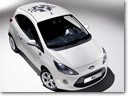 Ka-crazy customers who want to make their new ‘pride and joy’ stand out from the crowd will be able to choose from a tempting array of option packs when the new model hits the road in January 2009. (more…)
-
Renault Z.E. concept, an all-electric concept car which provides a glimpse of mobility in the future
 Alongside its new TCe and dCi engine ranges, Renault is furthering its strategy aimed at reducing CO2 emissions with the development of electric vehicles. Since the beginning of 2008, the Renault-Nissan Alliance has signed agreements with several states and regions ( Israel , Denmark , Portugal , Japan ‘s Kanagawa prefecture, the state of Tennessee in the USA ), which will lead to the mass marketing of this form of vehicle from 2011. (more…)
-
New Mégane Trophy: on track for the 2009
 Having starred in the World Series by Renault – the premier saloon car championship created in 2005 – Megane Trophy has undergone a raft of radical modifications in readiness for the 2009 season. The most visible change concerns its new body design which takes its inspiration from the lines of New Megane Coupe. (more…)
-
Mazda Kiyora Concept Car
 Mazda Kiyora gives an indication where Mazda could go with a small, eco-friendly city car in the near future. It is highly fuel efficient, with a very small CO 2 footprint, delivering Zoom-Zoom driving fun and high levels of safety. (more…)
-
Economy without Compromise: Opel Insignia ecoFLEX
 The new Insignia ecoFLEX, debuting at the Paris Motor Show (October 4 – 19), offers environmentally friendly driving without making any compromises. In contrast to many other competitors, it is not a low-end model, but rather combines powerful propulsion and driving fun with highest efficiency. Opel’s newest ecoFLEX model features a powerful single turbo diesel with 2.0-liter displacement and output of 118 kW/160 hp. (more…)
-
Chevrolet Volt Production Version: A New Breed of Electric Vehicle
 Making its European debut at Paris, the much-anticipated production version of the Chevrolet Volt delivers up to 60 kilometers of gasoline and emissions-free electric driving, with the extended-range capability of hundreds of additional kilometers. (more…)
-
Maybach at the Paris Motor Show 2008
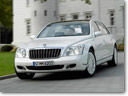 The tradition-laden Maybach luxury brand is adding a fifth model to its line-up in the shape of the Maybach Landaulet. The Maybach Landaulet resurrects the legend of the classic luxury landaulets, a feature of which is that only the chauffeur’s area is closed. An extra-large folding roof opens up over the pampered rear-seat passengers when required, leaving no obstructions between them and the blue sky above. (more…)
-
World debut for Lexus IS 250C at Paris motor show
The new Lexus IS 250C makes its world debut today at the Paris motor show, ahead of going on sale across Europe during the summer of 2009. The new model combines the award-winning design of the IS sports saloon with outstanding open-top engineering ingenuity. (more…)
-
smart Fortwo Mhd
At the Paris Motor Show 2008 smart is presenting the latest generation smart fortwo with electric drive to an international audience for the first time. In future, the advantages of the smart fortwo electric drive, which produces no local emissions, will be demonstrated in everyday service in the project “e-mobility Berlin” which Daimler AG presented together with the energy provider RWE at the beginning of September 2008. This project underlines the pioneering role of the young car brand in developing environmentally friendly and sustainable concepts for the individual mobility of the future. The current models already boast low fuel consumption and minimum carbon dioxide emissions. The smart model range includes the CO2 world champion, the smart fortwo cdi, with CO2 emissions of just 88 g/km – the lowest figure of any production car worldwide. Moreover, since October 2008 the two petrol smart fortwo models with 52 kW/71 bhp and 45 kW/61 bhp engines have been equipped with an intelligent and user-friendly start/stop system which further reduces their fuel consumption.
The two-seater car is celebrating its tenth anniversary this year and its unique concept has now become firmly established. Thanks to new ideas and a design that combines functionality with joie de vivre, the smart fortwo has become a cult car. Since the launch of the first model in 1998, more than a million models of the two-seater car have been produced. Today it is on sale in 37 countries around the world – including the USA since January 2008. From mid 2009 the smart fortwo will also be available in China. The smart fortwo therefore already has an impressive track record on its way to a green future.
Since 1998 economical cars from smart have offered innovative solutions to the great challenge of our time: how can individual mobility be made environ-mentally sound and sustainable in future? The latest generation smart fortwo electric drive provides a new possible answer to this question as electric drive is quiet, highly efficient and produces no local emissions.


100 electric smarts in everyday service in London since 2007
At the end of 2007 smart leased 100 electric smarts of the old seriesto be used in a pilot project in Londonin order to gain real-world experience with electric drive. Customers gave very encouraging feedback on the zero emission cars that were still equipped with conventional batteries. And the authorities in the English capital reward this commitment to electricity by exempting drivers of electric smarts from the expensive Londoncongestion charge.
“e-mobility Berlin” – smart fortwo ed to be equipped with a lithium-ion battery in future
smart is consistently working on the further development of electrically driven vehicles. With the support of the German government and the state of Berlin, at the beginning of September 2008 Daimler AG and the energy provider RWE presented the project “e-mobility Berlin”. This is the largest initiative in this field to date, and the two companies aim to jointly create the conditions for zero emission motoring with battery electric drives. RWE is providing 500 electricity charging stations and Daimler is contributing 100 electric cars. The aim is to create an intelligent overall system.
Dr. Dieter Zetsche, President and CEO of Daimler AG says “As the capital and Germany’s largest city, Berlinis the right place for this project. The future will see an ever-increasing proportion of traffic on the roads in urban centres around the world. Zero-emission electric cars could shape the image of environmentally aware cities because zero local emission motoring is no longer science fiction – and also when seen as a whole emissions will be further reduced as the proportion of “green” electricity increases. The future of mobility is green. We invented the car – and we will do it again!”
Daimler AG, the parent company of the cult smart brand, has been working hard to develop solutions for the important challenges presented by battery electric driven cars for years. These are the range and charging times, but also the charging station infrastructure, the additional energy requirement and, of course, the costs.
smart is presenting important solutions in Berlin. The latest smart fortwo ed series will be equipped with state-of-the-art lithium-ion batteries. Lithium-ion technology has decisive advantages over other types of batteries, including extremely compact dimensions, much higher performance, shorter charging times, a long life and high reliability.
Moreover, an “on-board unit” is being developed for the project “e-mobility Berlin” which communicates with the charging station. Among other things, this will contribute to ensuring that the battery is automatically charged with low-priced electricity when the network is not used to full capacity, forexample at off-peak times. Or when more electricity is available from alternative energy sources than is needed at this point in time. This benefits the environment and offers customers real savings.
The development and tuning of the components needed are already well underway. At the beginning of next year the system will initially undergo internal testing and optimisation. Small series production of the electric two-seater will start at the end of 2009 and smart will then deliver the first vehicles to selected customers.
Success story – ten years of the smart fortwo
As early as the early 1970s developers at Mercedes-Benz started working on the “car of the future” and considering new revolutionary approaches that eventually led to the concept of an ultra-compact car two and a half metres long. Several years passed until the pioneering safety concept was developed that allowed the high level of safety typical of Mercedes to be realised in an extremely short car.
In 1989 Nicolas G. Hayek, the inventor of the Swatch watch, announced plans to launch a small city car on the market. To realise this idea Nicolas Hayek turned to Mercedes-Benz as an experienced partner. Together, both partners founded Micro Compact Car AG with headquarters in Biel, Switzerland. Finally, in 1997 the smart city coupé celebrated its world premiere at the Frankfurt International Motor Show. Production and sales started in 1998. In the same year, smart became a wholly-owned subsidiary of Daimler-Benz AG (now Daimler AG).
Ten years ago a car started to change our focus and our way of thinking and feeling: the smart. The name is a reference to the car’s intelligence and attractiveness and the smart city coupé, later renamed smart fortwo, lived up to its name. It was new and excitingly different to conventional cars. This is because it was available solely as a two-seater – an extremely compact car barely longer than two and a half metres that could also fit in a parking space perpendicular to the flow of traffic if necessary. In addition, the smart was characterised by a new, sophisticated design language and showed that even a small car can be attractive, safe and grown-up.
Even then the two-seater smart provided a unique answer to many questions concerning individual urban mobility. For not only does it take up very little road and parking space, it also boasts impressively low fuel consumption and minimum carbon dioxide emissions. Nevertheless, it transports two people and their luggage to their destination very comfortably and with maximum safety.
smart – a passionately discussed idea
When sales of one of the world’s most unusual production cars started in October 1998, the newcomer that was at variance with many prevalent ideas of how a car should be, immediately became a subject of passionate, and often controversial, discussion. Now, ten years later, the smart idea has long since taken hold. The intelligent two-seater has become a cult car. The weekly journal” Die Zeit” called the vehicle concept an “urban icon”. The smart consistently implements technical innovations for the mobility of the future and also uses constructional details as design features.
smart stands for innovation, functionality and joie de vivre
As one of the youngest car makes, smart stands for innovation, functionality and joie de vivre. smart especially appeals to customers who seek new, intelligent and trend-setting solutions in the automotive sector. smart fortwo drivers can be categorized in terms of their attitude rather than their age, profession or gender. They are open-minded individuals who question the status quo and live life consciously. They opt for a smart fortwo because it is something special and because it sets them apart from the masses. And also because it is quite simply fun to drive.
Further models and series
In the following years the smart brand launched the sports cars smart roadster and smart roadster-coupé (2003) and the four-seater smart forfour (2004) on the market.
The innovative car brand has demonstrated its creative energy time and again with special vehicle models. These include the smart crossblade in 2002 that had neither doors, a roof nor a windscreen, and the smart crosstown show car in 2005 which was equipped with forward-looking hybrid drive.Concentration on the smart fortwo
Following the decision to stop production of the smart roadster at the end of 2005 and of the smart forfour mid 2006, everything concentrated on the smart fortwo. Ten years after the first pilot production vehicles rolled off the production line, in 2007 the new smart fortwo was launched on the market. This model builds on the strengths of the visionary classic and further develops its virtues. Since 2007 smart has been fully integrated in the organisation of the Daimler business division Mercedes-Benz Cars, which also comprises the Mercedes-Benz, Maybach and AMG brands in addition to smart.
Already a classic
It is undisputed that the smart fortwo’s unique character already makes it an automotive classic, despite its young years. As early as 2002 a smart fortwo was the only vehicle to be included in the permanent collection of the world-famous Museumof Modern Artin New Yorkwhilst still in series production as a “contemporary design classic of the last decade of the last century”.
More than one million vehicles produced – the international cult car has become firmly established
After ten years on the market the smart fortwo can be proud of its achievements. Since the first model was launched in 1998, more than a million two-seater smarts have been produced. Whereas the smart fortwo was initially only offered for sale in Germanyand eight further European countries, today it is available in 37 countries worldwide – since January 2008 also in the USA. From mid 2009 the smart fortwo will also go on sale in Chinaas the car is practically tailor-made for the growing number of lifestyle-oriented small car customers in a country with numerous megacities . In China, too, fashion-conscious young people want an agile, trendy vehicle for their flexible urban lifestyles in order to set themselves apart from others.
The second generation continues the success story
The second generation of the smart fortwo has been on the market since the spring of 2007. It clearly continues the tradition of its predecessor and the fascinating smart story. The car continues to focus on the core brand values of innovation, functionality and joie de vivre – a kind of declaration of automotive independence for many smart drivers . Anders Sundt Jensen, responsible for the smart brand says “The new fortwo is even more comfortable, agile, safe and environmentally friendly than its successful predecessor was. The new fortwo does not only appeal to smart fans as a lifestyle-oriented vehicle, but also on account of its unparalleled economy.”
A trend-setting appearance with new ideas
The smart fortwo embodies a completely new, intelligent concept for automotive individuality and this is also reflected in its appearance with a fresh, young, modern yet sophisticated design language. Unusual ideas gave the two-seater its trend-setting appearance and enabled it to establish its own class. In the past ten years the smart has become an automotive icon and it combines extremely varied demands on function, aesthetics and safety technology to create something completely new. The result is a bold design that confidently makes structural elements such as the tridion safety cell a significant part of the car’s styling. There could hardly be a more eloquent expression of that most basic principle of design, that form must follow function. A further feature is the mix of materials consistently realised in a production vehicle for the first time with a hard core (tridion) and a flexible and functional shell with thermoplastic bodypanels. In this way smart sets new trends and its shape alone gives it a likeable appearance whilst still being taken seriously.
Safety – a hard shell for the passengers
The smart fortwo is seen as a real trendsetter in terms of safety equipment in small cars. The tridion safety cell protects its occupants like the hard shell around a nut. In this way the smart fortwo meets the extremely strict standards of Mercedes-Benz Cars. Furthermore, it complies with the requirements of Euro-NCAP and US crash regulations.
The basic equipment of the smart fortwo includes full-size airbags for driver and passenger, belt tensioners and belt-force limiters. Head/thorax side airbags are available as an option. esp® also comes as standard; in many other small cars this is not even available for an additional charge. The esp® includes hill-start assist and the anti-lock braking system abs. A hydraulic brake assist function is also included in the standard spec.
The diesel version of the smart is the current CO2 champion
State-of-the-art compact three-cylinder petrol engines with a capacity of 999 cc are installed at the rear of the smart fortwo. In Western Europecustomers can currently choose from two naturally aspirated engine versions with mhd (micro hybrid drive technology) delivering 45 or 52 kW (61/71 bhp) respectively, and a supercharged turbo engine rated at 62 kW (84 bhp). A 72 kW (98 bhp) three-cylinder turbo engine is also at the heart of the smart fortwo BRABUS.
In addition, a diesel variant is available – the smart fortwo cdi – which is the world champion in low CO2 emissions. The 33 kW/45 bhp two-seater car consumes just 3.3 litres of fuel (NEDC) per 100 kilometres on average, which means that it can travel approximately 1000 kilometres without refuelling. This has been confirmed by the Italian car magazine ” Quattroruote” which conducted a fuel consumption test over 1000 km between Romeand Salzburg. At just 88 grams per kilometre the smart fortwo cdi has the lowest CO2 emissions of a production car worldwide!
To further reduce the CO2 emissions of the petrol-driven models, both the 45 kW/61 bhp and the 52 kW/71 bhp smart fortwo variant come with mhd (micro hybrid drive) as standard in Europe. This intelligent and user-friendly start/stop system automatically shuts down the engine as soon as the car’s speed falls below 8 km/h and the brake pedal is pressed. The engine starts again as soon as the driver releases the brake pedal. This further reduces the standard consumption and the average CO2 emissions.
Award-winning climate friendliness and economy
Protection of the environment is an integral part of all the fields of activity of the smart brand. This does not only apply to the vehicle’s operational period, but also to its development, production and later recycling. The internationally renowned “Öko-Trend” environmental institute has acknowledged the smart fortwo’s top position in matters relating to environmental friendliness and awarded it the coveted environmental certificate for cars. Moreover, the smart fortwo has been awarded the “ÖkoGlobe” by one of Germany’s largest insurance companies.
What’s more, several renowned trade journals have certified the innovative two-seater’s unparalleled economy and environmental friendliness. They came to the unanimous conclusion independently of one another: no other car is as cheap to run!
-
Renault reveals new Laguna Coupe at Paris motor show 2008
Following its reveal at the glamorous Cannes Film Festival earlier this year, the public will get its first chance to inspect Renault Laguna Coupé at close quarters at the 2008 Paris Motor Show. As the spearhead of the Laguna range, it has been designed to offer sheer driving pleasure and plays a key role in Renault’s growth plans for the upper-range market.
Like the Fluence concept car which provided a stylish preview of the real thing, the production car irresistibly suggests sheer motoring enjoyment. The flowing lines of the newcomer’s elegant, uncluttered design express timeless beauty, while its performance provides unprecedented pleasure behind the wheel thanks to the same 4Control chassis with four-wheel steering that has been widely acclaimed by European media on the GT version of Renault Laguna. In addition to the existing 2.0-litre petrol and diesel versions, the launch of this image-forging model sees the introduction of two new V6 powerplants. The brand new V6 dCi, which promises to become a benchmark in terms of performance and driving pleasure, delivering peak power of 235hp, while the new petrol-fuelled 3.5 V6 gives out 240hp. The cabin places the emphasis on quality and refinement. Incorporating the Bose® Sound System formed part of Renault Laguna Coupé’s design process to provide an incomparable listening experience. Like all upper-range Renault models, Laguna Coupé comes with a three-year/150,000km warranty.

Renault Laguna Coupé’s design has a great deal in common with the dynamic, racy concept car revealed at the Frankfurt Motor Show in September 2007, including elegant styling and proportions which boast all the hallmarks of a truly exceptional coupé. Renault President, Carlos Ghosn, gave Renault Laguna Coupé its first public airing at last May’s Festival International du Film in Cannes. The same weekend saw Renault Laguna Coupé make a guest appearance around the legendary circuit of the Monaco Grand Prix in the hands of ING Renault F1 Team’s test drivers to provide a dynamic demonstration of its sporting credentials. Its racy front points to the availability under the bonnet of the Alliance’s star powerplants which have been designed and developed to ensure driving enjoyment. Indeed, combined with the optional 4Control chassis with four-wheel steering, they deliver true driving pleasure.
Head-turning, racy styling
The flowing, uncluttered lines of Laguna Coupé’s elegant design express timeless beauty and sheer motoring enjoyment. There is no mistaking either the legacy it has inherited from the Fluence concept car unveiled in 2004, or its kinship with the Renault Laguna range which it is destined to top. With a length of 4.64m and a width of 1.83m, its proportions are nicely balanced, while the character line which stems from the grille rises forcefully across its flanks, gracefully picking out the form of its front wings before extending rearwards to highlight the car’s muscular haunches.
The glazed area of the windows is shown off to best advantage by a pure, flowing arc. Sitting on its specific 17- or 18-inch aluminium alloy wheels, Laguna Coupé’s stance exudes a sense of dynamism and power that is reinforced by its wheelbase of 2.69m and height of 1.40m.
This feeling is echoed by the pronounced crease-lines of its long bonnet and slim headlamps. The dark finish of the lenses gives a determined gaze that is further emphasised by the sidelights, which in turn contribute to the dynamic lines of the bonnet. Meanwhile, the rear end features a very short overhang and broad, well-formed shoulders that play a big part in suggesting forward movement. The Renault Laguna Coupé’s dynamism is also apparent through the aerodynamic diffuser and square-section chrome-trimmed tailpipes that come with the top-end engines. The slender rear lights give Laguna Coupé a bright, distinctive lighting signature which conveys a blend of refinement and power, especially at night when the indicators form a halo that picks out the contours of the slim red LEDs.
Attention to detail inside
In order to offer the same high level of comfort and quality as the saloon version, Laguna Coupé’s cabin features similarly plush appointments. The finish, aspect and quality of the materials that have been selected ensure a sensation of harmony and well-being. The same ‘suspended’ dashboard as Laguna saloon sweeps from door to door with no visual evidence of a link with the console. The car’s upper-range status is underlined by the specific brushed-aluminium trim which carries over from the doors to the dashboard to encompass the radio and navigation displays. The doors themselves are finished in the same material as the upholstery, providing further evidence of Laguna Coupé’s exclusive pedigree.
The driver is pampered by the relaxing driving environment, and all the controls and displays have been carefully designed and positioned to be as effortless to use or take in as possible.
Rear passengers will also appreciate Renault Laguna Coupé’s interior. The specific characteristics of the exterior design (wider rear track for an enhanced, more dynamic stance) have led to a specific approach to the rear of the cabin. With no middle seat, the two back seats have been brought closer together, yet without detracting from their remarkable rear elbowroom which stands at 1,436mm.
Meanwhile, the black, soft-touch trim that picks out the top of the door panels runs around the entire cabin, enveloping the occupants. This ‘lounge’ effect exudes an unmistakable sense of reassurance and protection.
Four-wheel steering for an exceptional ride
Developed jointly by Renault engineering and specialists from Renault Sport Technologies, Laguna Coupé’s technologically-advanced chassis delivers the ultimate in dynamic sporting performance, as well as astonishing manoeuvrability at low speed. Its outstanding agility and stability set fresh standards in safety and surefooted handling, while the new car corners with unrivalled directional precision as if it were on rails. Following its introduction on the GT version of Renault Laguna last spring, this carefully-honed chassis has naturally been carried over as an option for Laguna Coupé and is particularly suited to being associated with either of the new car’s V6 engines.
At low speeds, the 4Control chassis with four-wheel steering takes the strain out of manoeuvring, and it takes drivers no time at all to familiarise themselves with its use. In town, as well as on twisty roads, the car is exceptionally easy to drive and offers crisp handling precision. Choosing the optimal cornering line becomes intuitive to further enhance the pleasure experienced behind Renault Laguna Coupé’s wheel. Based on specific settings, the control of body-roll gives occupants a car that corners flat, a sensation reinforced by the absence of transient dynamic phenomena through turns, as well as by its directional precision at low steeringwheel angles. On the active safety front, the 4Control chassis with four-wheel steering excels not only under braking in difficult conditions (asymmetric grip, deployment of ESP), but also – and above all – when taking avoiding action (the so-called ‘elk test’). Meanwhile, the high level of travelling comfort ensures peace of mind for all occupants who can sense Laguna Coupé’s unrivalled active safety in all situations.
Powertrains with pedigree
Under the bonnet of Renault Laguna Coupé, the new three-litre V6 dCi (2,993cc), which promises to become a benchmark in terms of performance and driving pleasure, develops 235hp and peak torque of 450Nm. It powers the new Laguna flagship from standstill to 62 mph in a mere 7.3 seconds, yet its combined cycle fuel consumption is an impressive 39.2 mpg (192g of CO2/km). Meanwhile, the torque of the petrol 3.5 V6 powerplant, which is mated for the first time with the six-speed automatic transmission it shares with the diesel V6, is 330Nm, while maximum power is 240hp. The V6 petrol-engined version covers the 1,000-metre standing start in 27.6 seconds. Renault Laguna Coupé naturally benefits from the Laguna line-up’s finest powertrains, and in particular the top performing versions of the range’s 2-litre powerplants, which all drive through a six-speed gearbox. The petrol 2.0 Turbo is available with automatic transmission and boasts peak power of 170hp, plus maximum torque of 270Nm. The 205hp, 300Nm version can be ordered with a manual gearbox. The diesel range is built around the 150hp, 175hp and 180hp versions of the 2.0 dCi with torque of 340Nm, 380Nm and 400Nm respectively. These Euro5-ready powerplants are available with a manual gearbox and particulate filter. The dCi 150hp version is available with automatic transmission.
Exquisite sound thanks to Renault’s new Audio range
New Laguna Coupé is the first vehicle of the Renault range to benefit from the new generation Audio range which sets out to profit from the latest acoustic and audio processing technologies to provide optimum sound quality and user-friendly connectivity.
To this end, Renault has developed a partnership with the digital audio processing specialist, Arkamys®. This association has given rise to the unique 3D Sound by Arkamys® experience which is poised to become Renault’s new benchmark sound. The 3D Sound by Arkamys® system, which is standard equipment on Renault Laguna Coupé, uses tailor-developed Arkamys® software to deliver high quality and unprecedented listening comfort thanks to three-dimensional sound spacialisation tuned specifically to the materials and forms of the interior.
For its premium audio system, Renault has chosen the unique know-how of Bose® which provides a high standard of acoustic performance exclusive to Renault Laguna Coupé. The conception and development of the Bose® Sound System began during the vehicle’s design phase in association with Renault’s engineering department. The set-up comprises 10 loudspeakers (including a woofer built into the rear parcel shelf), all equipped with neodymium magnets and an amplifier incorporating a Bose® digital signal processing system and a six-channel personalised equaliser. This tailor-developed audio system reproduces clear, balanced, distortion-free sound, even at high volumes. The Bose® Sound System, which is already available for Renault Koleos, stands out as the perfectly natural choice for such an exceptional car as Laguna Coupé.
In terms of connectivity, Renault Laguna Coupé is comprehensively equipped thanks to the standard auxiliary socket and MP3 compatibility. Bluetooth® telephony and audio streaming are available as options.
Renault Laguna Coupé stands out as the embodiment of this aspect of the brand’s savoir-faire which forms part of its very genetic make-up, as can be seen through its quality and finish which meet the most exacting standards.
Like the rest of the Laguna range, with which its shares robust design and demanding production processes, Renault Laguna Coupé comes with a three-year/100,000 mile warranty, whichever comes first. It launches in the UK in January 2009.
Dimensions
Length (mm) 4,643
Width (mm) 1,812
Height (mm) 1,398
Wheelbase(mm) 2,694
Front overhang (mm) 1,022
Rear overhang (mm) 927
Engines
Engine 2.0 T
2.0 T
3.5 V6
2.0 dCi
3.0 V6 dCi
Power 125kW (170hp)
150kW (205hp)
175kW (240hp)
110kW (150hp)
125kW (175hp)
131kW (180hp)
173kW (235hp)
Maximum torque (Nm) 270
300
330
340
380
400
450
Transmission 6-speed automatic
6-speed manual
6-speed automatic
6-speed manual and 6-speed automatic
6-speed manual
6-speed manual
6-speed automatic
Audio system partners
Arkamys® www.3DSoundbyArkamys.com
Bose® www.Bose.com
-
Honda Insight Concept Hybrid Vehicle Revealed at Paris Motor Show
 Honda today revealed a concept version of its new small hybrid vehicle, named Insight, at the 2008 Paris Motor Show. The new Insight Concept shares styling cues with the Honda FCX Clarity fuel cell vehicle and provides an early look at the highly anticipated five-passenger hybrid vehicle. (more…)


