 Taking place from 5 to 15 March, 2009, the Geneva Motor Show is the backdrop chosen by SEAT to showcase the new 2009 León and Altea models for the first time. With these models, the Spanish brand’s intermediate range has undergone a considerable evolution, with their identity traits visible on the front and rear of all the body styles, and a completely updated engine range including common rail Diesel variants. All these novelties combine with an outstanding level of equipment, with special emphasis on comfort and safety elements. (more…)
Category: Car Makes
Car Makes
-
SEAT is presenting the new 2009 León and Altea models
-
Ford F-150 SVT Raptor R to Run “Best in the Desert” Series in 2009, Proving Durability and Reliability
 Ford Racing and Ford’s Special Vehicle Team (SVT) announced today that the F-150 SVT Raptor R, the same truck that finished third in class at the 41st SCORE Tecate Baja 1000, will run in the 2009 “Best In The Desert” race series. (more…)
-
Citroen DS Inside Concept
CITROËN launching a new line of products to broaden its current range. The new line will consist of three new cars, positioned in the small, medium and large car segments, launched successively from 2010.
The first illustration of this new product line is the CITROËN DS INSIDE concept car. The concept car and vehicle line are characterised by forthright choices on styling, onroad performance and use. These are accessible objects of desire, cars that stand apart by their creativity, intelligent design and build quality, embodying the very best of CITROËN. The new product line will perfectly illustrate CITROËN’s new spirit of “Créative Technologie”.
The new line will also have a new naming system. Like the main range vehicles, which carry the letter C and a number, and, like the MPVs, which sport the Picasso signature, the new models will feature a special name: the DS line.
DS stood and continues to stand for a new approach to automobiles and the future. CITROËN is taking inspiration from its design DNA to strengthen the positioning of its new product line. The range instills the different spirit, that the name DS inspires. Hence the distinctive model line up will be called DS3, DS4 and DS5. DS: Different Spirit.


-
The most beautiful car of all time
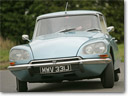 What’s the most beautiful car of all time? A multi-million pound Ferrari or the curvy Jaguar E-type perhaps? No, it is now officially Citroën’s humble DS, the car most famous for saving President De Gaulle from assassination. (more…)
-
2009 Toyota Yaris: Less Is So Much More
Too often motorists are expected to make sacrifices in performance or comfort for the sake of environmental considerations. Toyota doesn’t believe that needs to be the case and with the launch of its 2009 Yaris demonstrates that lower emissions and fuel consumption can be delivered without compromise.
No model in the new 2009 Toyota Yaris range emits more than 120g/km of carbon dioxide, thanks to the successful adoption of Toyota Optimal Drive across the entire range. At the same time, Yaris is every bit as well-specified, comfortable, reliable and safe as before.
Money-conscious motorists will be encouraged by Yaris’s value compared to its key competitors. Adjusting on-the-road prices in line with equipment specifications, Yaris offers a significant saving. Taking the 1.33 SR five-door model as an example, it represents a price advantage in real terms of up to more than ?1,000, against its market rivals, as the table below shows.
TOYOTA YARIS
1.33 SRFORD FIESTA 1.4 ZETEC
VAUXHALL CORSA
1.4 SXi A/CPEUGEOT
1.4 VTI
SPORTDoors 5
5
5
5
OTR price ?10,915
?11,255
?11,6704
?11,793
Stop & Start Alloy wheels Air conditioning Rear privacy glass 6sp transmission Curtain airbags Side airbags Knee airbag Full specification adjusted price –
?11,470
?11,734
?11,928
Yaris added value –
+?555
+?819
+?1,103
Figures from JATO, correct January 2009


Toyota Optimal Drive
Toyota Optimal Drive, introduced at last year’s Paris motor show, covers a range of technologies that promote greater powertrain efficiency. In line with Toyota’s guiding principle of kaizen – continuous improvement – engineers have improved combustion efficiency, reduced engine and transmission weight and reduced friction to produce engines that deliver more power and are fun to drive, yet at the same time are more efficient and economical.The 2009 Yaris features a range of new and revised engines that benefit fully from the technical advances delivered by Toyota Optimal Drive. The line-up comprises a new 1.33-litre Dual VVT-i petrol unit with a Stop & Start system and improved versions of the award-winning 1.0-litre VVT-i three-cylinder petrol unit and the 1.4-litre D-4D diesel. A new six-speed manual transmission also debuts in Yaris. Matched to the 1.33 VVT-i and 1.4 D-4D engines, it is smaller, lighter and more efficient than the five-speed gearbox it replaces.
New 1.33 Dual VVT-i Engine
- CO2 emissions from 119g/km
- 55.4mpg combined cycle fuel consumption
- Dual VVT-i valve timing
- Stop & Start system standard with manual transmission
Toyota’s 1.33-litre petrol engine is new to the Yaris range, having made its debut in Auris and new iQ at the end of last year. It features state-of-the-art Dual VVT-i (variable valve timing – intelligent), produces 100bhp (101 DIN hp) and has the highest compression ratio of any petrol engine on the market at 11.5:1.
The in-line four-cylinder unit produces 132Nm of torque at 3,800rpm and returns 55.4mpg in combined cycle driving, with both six-speed manual and MultiMode transmissions.
Applying Toyota Optimal Drive technologies gives the engine superior emissions and fuel consumption performance compared to the previous 1.3-litre unit, reducing CO2 output by 22g/km and improving combined cycle mpg from 47.1 to 55.4 (both figures for manual transmission with Stop & Start). The engine is also smaller and lighter, but produces greater torque.
Advanced engineering was applied through the development of the new engine, with streamlining of the intake channel, and smoothing of surfaces and rounding off of all angles and edges inside the block to improve airflow and reduce turbulence.
Using a resin cylinder head and intake manifold has yielded substantial weight savings and a new, highly rigid aluminium crank case is connected to the transaxle case, which improves the rigidity of the joint in the powertrain and reduces friction and noise levels.
Further changes that benefit all-round performance include a new camshaft profile, reduced friction and weight in the valve gear, and a maintenance-free hydraulic lash adjuster.
Stop & Start Technology
A new Stop & Start system is featured as standard on the 1.33 Dual VVT-i engine with six-speed manual transmission. This automatically stops the engine when the gear shift is moved to neutral and the clutch pedal is released; the engine restarts as soon as the clutch is depressed again.Immediate restarting is made possible by a permanently engaged gear mechanism and there is no hesitation in a rapid stop and start sequence – the engine does not have to stop fully before firing into life again. The system reduces fuel consumption and CO2 emissions, and operates smoothly and silently.
Leading B-segment on economy, performance and cost of ownership
The introduction of the 1.3 Dual VVT-i engine with Stop & Start gives Yaris a strong competitive edge in the B-segment, delivering performance and emissions that its key competitors simply cannot match. This advantage extends into on-going ownership cost benefits.While the new engine’s emissions and fuel consumption are better than rival 1.2-litre units, power and torque are also superior to other 1.4-litre power plants.
In performance terms, the Yaris 1.33 delivers 35 per cent more power than the Renault Clio 1.2 and about 25 per cent more than the 1.2 engines in Ford’s new Fiesta and the Vauxhall Corsa and the 1.4 unit in the Volkswagen Polo. At the same time, official combined cycle fuel consumption is 12 per cent lower than the next-best rival, the new Fiesta 1.25.
Within the B-segment the Yaris 1.33 Dual VVT-i is also the only model in its class to fall within band B for Vehicle Excise Duty, giving an annual road fund licence bill for 2008/9 of just ?35.
In the longer term the cost benefits quickly accrue. Working on the basis of 12,000 miles drive a year, with fuel at an average 99.9p per litre, owners can save around ?600 to ?960 over a three-year period in fuel and road tax costs compared to leading competitor models, as the table illustrates.
TOYOTA YARIS 1.33 Dual VVT-I TR
FORD FIESTA 1.25 STYLE+
VAUXHALL CORSA 1.2 ACTIVE
RENAULT CLIO 1.2 EXPRESSION
VOLKSWAGEN POLO 1.4 MATCH
Max. power (bhp) 100
80
79
75
79
Max. torque (Nm) 132
114
110
105
132
CO2 emissions (g/km) 119
133
139
139
150
Combined cycle fuel consumption (mpg) 55.4
49.6
48.7
47.9
44.8
VED 2008/9 ?35
?120
?120
?120
?120
VED 3 years vs Yaris –
+?250
+?250
+?250
+?270
Fuel cost 3 years vs Yaris –
+?351
+?405
+?461
+?697
VED + fuel cost 3 years vs Yaris –
+?601
+?655
+?711
+?967
Fuel costs calculated at 99.9p per litre over 12,000 miles driven per annum; VED costs based on current charges for 2008/09, 2009/10 and 2010/11. Competitor data sourced from official manufacturer web sites. All data correct at January 2009.
Award-winning 1.0 VVT-i petrol engine
- CO2 emissions 118g/km
- Fuel consumption 56.5mpg (combined)
Toyota’s three-cylinder VVT-i petrol engine has twice been a category winner in the sub-1.0-litre category of the International Engine of the Year Awards and enters 2009 with even better fuel consumption and emissions performance. Toyota engineers have worked on the unit to deliver the following improvements: –
- A new cut-off system to save fuel during gear changes
- Improvements to the Electronic Fuel Injection (EFI) management
- Use of low viscosity oil for less engine resistance
- Adoption of an exhaust gas recirculation system and cylinder block water jacket spacer to increase efficiency
One of the lightest engines on the market today, it delivers class-leading specific power and torque, with 68bhp (69 DIN hp) at 6,000rpm and 93Nm at 3,600rpm.
TR versions of the 2009 Yaris ride on low rolling resistance tyres, further contributing to lower fuel consumption and CO2 figures. Together the measures achieve a reduction in CO2 of close to 10 per cent compared to the previous model.
Upgraded 1.4 D-4D Diesel Engine
- CO2 emissions 109g/km (manual)
- Combined cycle fuel consumption 68.9mpg (manual)
The 1.4 D-4D diesel engine features latest-generation common rail technology and an intercooled turbocharger. Power has been increased slightly to 89bhp (90 DIN hp) and maximum torque is greater by 15Nm at 205Nm, produced between 1,800 and 2,800rpm, giving more pulling power at lower engine speeds.
Official combined cycle fuel consumption is substantially improved, cut from 62.8 to 68.9mpg with manual transmission, 67.3 with the MultiMode (M/M) gearbox. Likewise emissions have been reduced, falling from 119 to a class-leading 109g/km (110g/km with M/M).
New Six-speed Manual and MultiMode Transmissions
As part of the Toyota Optimal Drive technology applied to the new 2009 Yaris. A six-speed transmission has been developed for the 1.33 Dual VVT-i and 1.4 D-4D 90 engines. This new unit delivers world-class efficiency and improved fuel economy, thanks to a wider ratio for sixth gear. Driving performance is also enhanced. And shift feel is better, with a new shift structure that is quiet and gives a smooth feel to clutch operation.A six-speed version of MultiMode, Toyota’s electrically operated (robotised) manual transmission has also been developed and introduced in Yaris. It uses two electric motors and an electronically operated clutch to provide either automatic or sequential gear changes, using three operating modes: M for sequential shifts; E for automatic shifts; and Es for quicker automatic gear changes.
The system has been tuned to give sportier performance than before, with a reduced clutch activation time and the addition of paddle shifts on the steering wheel. With less of an interruption in the driveline during gear shifts, the shift-shock effect has also been reduced.
Evolutionary Yaris Design
Styling changes for the 2009 Yaris are evolutionary, designed to strengthen the car’s dynamic and sophisticated qualities.Exterior
The bonnet and bumper are more closely integrated, and protection mouldings have been incorporated. Changing the bumper design has increased the car’s overall length by 35mm.The radiator grille has a new rippled mesh design that radiates out from the central Toyota badge. The larger front spoiler, spats and changes to the underfloor design contribute to the car’s all-round smooth aerodynamics.
The front headlamps have been re-sculpted for a more hi-tech appearance, while at the rear the bumper and integrated LED combination lamps have been refreshed.
Interior
Changes to the interior include a new black finish for the centre console, with titanium silver finish around the centre console, gearshift and steering wheel trim. The steering wheel cover gains silver stitching, and TR, SR and T Spirit models feature a chrome finish for the side vent bezels and parking brake release knob.Grade Structure
The Yaris grade structure has been revised with two new focus grades, TR and SR, plus the established T2 and T Spirit trim levels.T2
The entry point to the range, the T2 grade typifies Yaris’s high specifications, with standard features including a leather trimmed steering wheel with tilt and telescopic adjustment and audio controls, electric front windows, remote central locking, rear seats with slide and recline function and 60:40 split-fold, Toyota Easy Flat one-touch rear seat folding system, audio system with Aux-in connection and MP3/WMA file playing capability, driver and passenger front and side airbags and ABS with Electronic Brakeforce Distribution (EBD) and Brake Assist (BA).TR
TR grade models are expected to account for around 68 per cent of all new Yaris sales, offering a strong combination of equipment features with a competitive price. Among the key features are air conditioning, electric door mirrors, a special TR interior trim design with chrome detailing, six-speaker audio system, driver’s knee airbag and curtain airbags, and body-coloured door mirrors and handles.SR
SR trim adds a sporty styling dimension to Yaris, introducing 15-inch alloy wheels, front fog lamps, rear privacy glass, dark-tinted headlight covers, sports front grille design, amber-lit analogue speedometer and tachometer, leather trimmed sports steering wheel and special interior trim design.T Spirit
T Spirit is at the pinnacle of the Yaris range, equipped with 15-inch alloys, front fog lights, automatic air conditioning, Bluetooth, Smart Entry and Start system and an exclusive interior trim design.Key Equipment Features
T2 TR
SR
T SPIRIT
4-speaker audio with CD player, Aux-in and MP3/WMA file playing from disc
Body coloured, electrically adjustable heated door mirrors
15-inch sport alloy wheels
15-inch alloy wheels
Electric front windows
6-speaker audio
Front fog lamps
Bluetooth
Driver’s seat height adjustment
Chrome interior trim details
Rear privacy glass
Automatic air conditioning
Leather steering wheel trim and gear shift knob
Curtain airbags
Smoked headlamp glass
Smart Entry and Start
Steering wheel audio controls
Driver’s knee airbag
Interior sports trim
Exclusive interior trim design
Steering wheel reach adjustment
Manual air conditioning
Analogue meters
Body coloured bumpers with corner protection mouldings
Leather sports steering wheel and gear shift knob
Sports front grille
European Production
Yaris continues to be built at Toyota’s Valenciennes factory in France. The plant began operations in 2001 and now exports cars to 25 countries across Europe. Production capacity was recently increased to a maximum 270,000 units a year.
Valenciennes built its one millionth Yaris in December 2006 and to date has attracted investment of around €897 million. Approximately 3,850 people work at the factory.
Valenciennes was the first Toyota plant outside Japan to adopt the Global Body Line, a configuration of robots that can be programmed to build a number of different vehicle styles, without the entire factory having to be modified.
Although only a single model is built there, it is produced in four derivatives: left and right-hand drive, with petrol or diesel engines. Each version requires different parts and production steps. The flexibility of the Global Body Line can also be harnessed to build completely different models on the same assembly line at the same time.
Environmental Management
Toyota Motor Manufacturing France (TMMF) has achieved a three-year plan target to recover and recycle 100 per cent of the waste products from industrial and housekeeping processes. Having achieved zero waste to landfill since the site opened in 2001, and a 50 per cent reduction in the amount of waste generated, the company has now gone even further by sending no waste for incineration.Manufacturing a Yaris produces 9.5kg of waste, more than 4kg of which is directly recyclable (cardboard, metal, oil solvents, etc). The remaining 5.5kg are used as substitute fuel, for example in place of oil, in industrial processes.
2009 Yaris prices, VED and insurance
GRADE POWERTRAIN BODY OTR PRICE
VED BAND
INSURANCE
GROUPT2 Toyota Optimal Drive 1.0 VVT-i 5MT 3-door ?8,585
B
1E
T2 Toyota Optimal Drive 1.0 VVT-i 5MT 5-door ?9,075
B
2E
TR Toyota Optimal Drive 1.0 VVT-i 5MT 3-door ?9,540
B
2E
TR Toyota Optimal Drive 1.33 VVT-i 6MT 3-door ?10,275
B
3E
TR Toyota Optimal Drive 1.33 VVT-i 6M/M 3-door ?10,745
B
3E
TR Toyota Optimal Drive 1.4 D-4D 6MT 3-door ?11,125
B
4E
TR Toyota Optimal Drive 1.4 D-4D 6M/M 3-door ?11,715
B
4E
TR Toyota Optimal Drive 1.0 VVT-i 5MT 5-door ?10,030
B
2E
TR Toyota Optimal Drive 1.33 VVT-i 6MT 5-door ?10,765
B
3E
TR Toyota Optimal Drive 1.33 VVT-i 6M/M 5-door ?11,235
B
3E
TR Toyota Optimal Drive 1.4 D-4D 6MT 5-door ?11,615
B
4E
TR Toyota Optimal Drive 1.4 D-4D 6M/M 5-door ?12,205
B
4E
SR Toyota Optimal Drive 1.33 VVT-i 6MT 3-door ?10,915
B
4E
SR Toyota Optimal Drive 1.33 VVT-i 6M/M 3-door ?11,385
B
4E
SR Toyota Optimal Drive 1.4 D-4D 6MT 3-door ?11,765
B
4E
SR Toyota Optimal Drive 1.4 D-4D 6M/M 3-door ?12,355
B
4E
SR Toyota Optimal Drive 1.33 VVT-i 6MT 5-door ?11,405
B
4E
SR Toyota Optimal Drive 1.33 VVT-i 6M/M 5-door ?11,875
B
4E
SR Toyota Optimal Drive 1.4 D-4D 6MT 5-door ?12,255
B
4E
SR Toyota Optimal Drive 1.4 D-4D 6M/M 5-door ?12,845
B
4E
T Spirit Toyota Optimal Drive 1.33 VVT-i 6MT 5-door ?12,005
B
4E
T Spirit Toyota Optimal Drive 1.33 VVT-i 6M/M 5-door ?12,475
B
4E
T Spirit Toyota Optimal Drive 1.4 D-4D 6MT 5-door ?12,855
B
4E
T Spirit Toyota Optimal Drive 1.4 D-4D 6M/M 5-door ?13,455
B
4E
2009 Yaris options
OPTION GRADES
PRICE
VSC, traction control & rear disc brakes All
?345
Metallic paint All
?370
Protection Pack (rear parking sensors, mudflaps, side mouldings, boot protection plate) TR, SR, T Spirit
?440
Tech Pack (Bluetooth, iPod/iPhone/USB integration kit) TR, SR
?410
2009 TOYOTA YARIS TECHNICAL SPECIFICATIONS
Toyota Optimal Drive 1.0-litre VVT-I petrol Code 1KR-FE
Type In line transverse 3-cylinder
Valve mechanism DOHC 12 valve VVT-i
Bore x stroke (mm) 71.0 x 84.0
Displacement (cc) 998
Compression ratio 10.5:1
Max power (bhp/DIN hp @ rpm) 68/69 @ 6,000
Max torque (Nm @ rpm) 93 @ 3,600
Toyota Optimal Drive 1.33-litre Dual VVT-i petrol Code 1NR-FE
Type In line transverse 4-cylinder
Valve mechanism DOHC 16 valve Dual VVT-i
Bore x stroke (mm) 72.5 x 80.5
Displacement (cc) 1,329
Compression ratio 11.5:1
Max power (bhp/DIN hp @ rpm) 100/101 @ 6,000
Max torque (Nm @ rpm) 132 @ 3,800
Toyota Optimal Drive 1.4-litre D-4D 90 diesel Code 1ND-TV
Type In line transverse 4-cylinder
Valve mechanism SOHC 8-valve
Bore x stroke (mm) 73.0 x 81.5
Displacement (cc) 1,364
Compression ratio 16.:1
Max power (bhp/DIN hp @ rpm) 89/90 @ 3,800
Max torque (Nm @ rpm) 205 @ 1,800-2,800
PERFORMANCE
1.0 VVT-i
5 M/T1.33 Dual
VVT-i
6 M/T1.33 Dual VVT-i
6 M/M1.4 D-4D
6 M/T1.4 D-4D
6 M/M0-62mph (sec) 15.7
11.7
11.7
10.7
10.7
Maximum speed (mph) 96
96
109
109
109
FUEL CONSUMPTION, EMISSIONS & VED Combined (mpg) 56.5
55.4
55.4
68.9
67.3
Urban (mpg) 47.1
45.6
45.6
55.4
55.4
Extra Urban (mpg) 62.8
64.3
64.2
78.5
78.5
CO2 emissions (g/km) 118
120
119
109
110
VED band B
B
B
B
B
DIMENSIONS
Overall length (mm) 3,785
Overall width (mm) 1,695
Overall height (mm) 1,530
Wheelbase (mm) 2,460
Track width – front (mm) 1,470
Track width – rear (mm) 1,460
Overhang – front (mm) 755
Overhang – rear (mm) 570
Interior length (mm) 1,865
Interior width (mm) 1,390
Interior height (mm) 1,270
Head room – front (mm) 1,000
Head room – rear (mm) 963
DIMENSIONS (Cont)
Shoulder room – front (mm) 1,300
Shoulder room – rear (mm) 1,269
Leg room – front (mm) 1,048
Leg room – rear (mm) 865
Couple distance (mm) 880
VDA luggage capacity – rear seat up (l) 272 – 363
Boot length – rear seat down (mm) 477
Max. boot width (mm) 510
Boot height (mm) 767
Coefficient of drag (Cd) 0.30
Fuel tank (l) 42
SUSPENSION
Front MacPherson struts with anti-roll bar
Rear Torsion beam
BRAKES
Front o258 mm ventilated discs
SR 1.8: o275mm ventilated discsRear o203mm drums
SR 1.8: o259mm solid discsAdditional features ABS with Electronic Brakeforce Distribution and Brake Assist
Additional features SR 1.8 Vehicle Stability Control and Traction Control
STEERING
Type Rack and pinion, electric motor power assisted
Ratio 14.2:1
Turns – lock to lock 3.0
Min turning radius – tyre (m) 4.7
TRANSMISSION 1.0 VVT-i
5 M/T1.33 Dual VVT-i
6 M/T & 6 M/M1.4 D-4D
6 M/T & 6 M/MGear ratios First 3.545
3.538
3.538
Second 1.913
1.913
1.913
Third 1.310
1.310
1.310
Fourth 1.027
1.029
0.971
Fifth 0.850
0.875
0.714
Sixth –
0.700
0.619
Reverse 3.214
3.333
3.333
Final drive ratio 4.411
4.053
3.550
TYRES & WHEELS
Wheel sizes 15in steel or alloy
Tyre sizes 185/60R15
Spare tyre Space saver
-
Honda at the Geneva Motor Show
 A higher-powered, sportier Accord Type S will be unveiled at the 2009 Geneva Motor Show in March. (more…)
-
Renault Unveils New Clio
 New design reinforcing Clio’s family ties with New Mégane
New Clio sits squarely on the road and boasts revised styling, with the lines of the new headlamps now extending down to the lateral upturns of the front air intake. The broad grille in the lower part of the new front bumper sets off the dynamic styling with the presence of gloss black protective mouldings. The revised design of the rear lights extends the waist line across the hatch, while the uncluttered approach to the design of the central part of the rear bumper further emphasises New Clio’s dynamic stance. The reversing lights and foglamps are positioned low down and to the extreme corners of the rear bumper. (more…) -
Chevrolet Volt
 General Motors today outlined a comprehensive plan of action to help communities get ready for plug-in electric vehicles such as the upcoming Chevrolet Volt. GM announced details of the plan at the Washington Auto Show. (more…)
-
ADAC’s Yellow Angel takes a green trip with a Opel HydroGen4
 On the “Day of the Yellow Angel,” an annual meeting of the German automobile club (ADAC), GM/Opel has presented the group with a HydroGen4 car they will use for roadside assistance service in the Berlin-Brandenburg region. (more…)
-
SEAT receives the “ECOBEST 2008” award in Istanbul
 As it is about to go on sale in the Spanish market, the new SEAT Ibiza ECOMOTIVE received the “ECOBEST 2008” award in the historic city of Istanbul from the Autobest organisation, which distinguishes it as the most ecological car of the year by countries with emerging markets. (more…)
-
ARPRO can save 16 million tonnes CO2
 ARPRO® has achieved excellent environmental results in an independent life cycle assessment. The assessment calculates a comparative CO2 (global warming potential) figure for the production of an ARPRO seat core, and results show that ARPRO delivers an environmental benefit twelve times that of its impact. (more…)
-
Aston Martin V12 Vantage

Aston Martin will present the most potent production sports car in the marque’s 95-year history at the Geneva motor show on 3rd March. Based on the hugely successful V8 Vantage, the V12 Vantage will feature a 6.0-litre V12 engine producing 510 bhp (380 kW / 517 PS), and 570 Nm (420 lb ft) of torque with a top speed of 190 mph (305 km/h) and 0-62 mph (0-100 km/h) time of 4.2 seconds.The latest incarnation of the Vantage family has been designed to provide a unique character, appealing to different driver tastes and complementing the other models in the Aston Martin line-up.
The original V12 Vantage concept was unveiled to guests at the opening of the Aston Martin Design Studio in December 2007. Continuing the marque’s impressive record of bringing concepts to market in their original form, Aston Martin engineers have brought the V12 Vantage to market in an incredible 12 months.
Aston Martin Chief Executive Officer, Dr Ulrich Bez said: “This is the ultimate performance interpretation of the Vantage range, combining our most agile model with our most powerful engine. It represents the definitive driving package; providing spectacular performance to ensure a dynamically thrilling and everyday useable driving experience.
“The V12 Vantage has a unique character, unlike our other cars. This will appeal to different people with different tastes, allowing more people to enjoy the Aston Martin experience.
“This also illustrates one of Aston Martin’s key strengths – the ability to act quickly and turn concepts and ideas into reality.”
Designed for the focused driver, every component of the V12 Vantage has been honed with pure driving enjoyment in mind. Benefitting from race-developed materials and components, and featuring lightweight carbon fibre; performance and agility have been tuned to perfection.
Visually enticing, the V12 Vantage expresses its performance potential through its purposeful stance created by enhanced aerodynamic and cooling aids optically widening the car. Equally inviting, the cosseting interior permits the driver to extract maximum performance ability from the car while also enjoying customary levels of Aston Martin comfort on longer journeys. High levels of power and torque are available at all engine speeds making the V12 Vantage responsive and tractable in any driving situation.
The V12 Vantage will be built at Aston Martin’s global headquarters in Gaydon, Warwickshire joining the DBS, DB9 and V8 Vantage model lines which are built in the state-of-the-art production facility combining hi-tech manufacturing processes with traditional hand-craftsmanship. Production will be limited to between just 300-500 examples per year, making the V12 Vantage a truly exclusive driver’s car.
Deliveries of the V12 Vantage are expected to commence during quarter three 2009 with prices to be confirmed at the Geneva motor show.
Aston Martin V12 Vantage: Specification
Body:
- Two door, two seat coupe body
- Bonded aluminium structure
- Aluminium, magnesium alloy, composite and steel body
- Extruded aluminium door side impact beams
- High Intensity Discharge Headlamps (dipped beam)
- Halogen projector headlamps (main beam)
- LED rear lamps
Engine:
- All alloy quad overhead cam 48 valve 5935cc V12
- Compression ratio 10.9:1
- Front mid-mounted engine, rear wheel drive
- Fully catalysed stainless steel exhaust system with active bypass valves
Maximum Power
- 510 bhp (380 kW / 517 PS) at 6500 rpm
Maximum Torque
- 570 Nm (420 lb.ft) at 5750 rpm
Acceleration
- 0-62 mph (100 km/h) in 4.2 seconds
- 0-60 mph in 4.1 seconds
Maximum Speed
- 190 mph (305 km/h)
Fuel Economy
- Urban 11.64 mpg 24.26 l/100km
- Extra Urban 24.05 mpg 11.74 l/100km
- Combined 17.28 mpg 16.35 l/100km
CO2 388 g/km
Transmission:
- Rear mid-mounted six speed manual gearbox. Alloy torque tube with carbon fibre propeller shaft
- Limited slip differential
- Final Drive Ratio 3.71:1
Steering:
- Rack and pinion
- Column tilt and reach adjustment
Suspension:
- Front: Independent double wishbone incorporating anti-dive geometry, coil springs, anti-roll bar and monotube dampers
- Rear: Independent double wishbones with anti-squat and anti-lift geometry, dual-rate coil springs, anti-roll bar and monotube dampers
Wheels
- Front: 9” x 19”
- Rear: 11” x 19”
Tyres:
- Front: Pirelli P Zero Corsa 255/35 ZR19
- Rear: Pirelli P Zero Corsa 295/30 ZR19
Brakes:
- Front: Ventilated Carbon Ceramic discs 398 mm diameter with six piston callipers
- Rear: Ventilated Carbon Ceramic discs 360 mm diameter with four piston callipers
- Dynamic Stability Control (DSC) with Track mode
- Anti-lock braking system (ABS)
- Electronic Brakeforce Distribution (EBD)
- Emergency Brake Assist (EBA)
- Traction Control
Length:
- 4380 mm (172.5”)
Width:
- 1865 mm (73.5”) (excluding door mirrors)
- 2025 mm (80”) (including door mirrors)
Height:
- 1241 mm (49“)
Wheelbase:
- 2600 mm (107.9”)
Fuel tank capacity:
- 80 litres (17.6 Imp. Gal. / 21.1 US Gal)
Weight:
- 1680 kgs (3704 lb)
Interior:
- Carbon fibre door pulls
- Memory seats and exterior mirrors (3 positions)
- Sports seats with 10 way electric adjustment, including height, tilt and lumbar
- adjustment
- Dual stage driver and passenger front airbags
- Side airbags (Sports seats only)
- Heated rear screen
- Automatic temperature control
- Organic Electroluminescent (OEL) displays
- Trip computer
- Cruise control
- Hard Disk Drive (HDD) satellite navigation system*
- Bluetooth telephone preparation*
- Powerfold exterior mirrors
- Rear parking sensors
- Auto dimming interior rear view mirror
- Tyre pressure monitoring*
- Alarm and immobiliser
- Remote-control central door locking and boot release
- Battery disconnect switch
- Tracking device (UK only)
In Car Entertainment
- 160W Aston Martin Audio System
- MP3 player connectivity
Options
- Lightweight seats with 6 way adjustment, including front and rear height adjust. (Does not include side airbags or Passenger Airbag Cut-Off Switch)
- 700W Aston Martin Premium Audio System with Dolby® Pro Logic II®
- Piano Black facia trim
- Graphite Alloy facia trim
- Personalised sill plaques
- Garage door opener (Europe only)
- Tracking device**
- First aid kit
- Ashtray and cigar lighter
- Boot mounted umbrella
- Front parking sensors
- Heated seats (Sports seats only)
- ISOFIX and fixed-height passenger seat (Sports seat only)
- Battery conditioner
*Not available in all markets
**Complies with UK Thatcham Category 5 requirements. Excludes subscription. Standard in UK
Aston Martin V12 Vantage: Performance
Agility and outright performance formed the basis of design for the V12 Vantage to produce the most exciting incarnation of the Vantage model line-up to date. Aston Martin’s most powerful engine is fused with its most agile model to produce a truly exhilarating sports car.
The V12 power plant has been intelligently packaged into the Vantage’s compact form preserving its perfect proportions. While the external dimensions of the V8 Vantage remain unchanged, the internal front structure has been extensively revised forward of the suspension towers to house the larger engine, brake cooling system, and twin air intake system.
The engine was designed at Aston Martin’s headquarters in Gaydon, Warwickshire, and is hand-built at the company’s dedicated engine facility in Cologne, Germany. To achieve the power output, the engine features a number of enhancements over the standard 6.0-litre V12 found in the DB9. These include a ‘by-pass’ engine air intake port that opens up at 5500 rpm, a revised induction system and re-profiled air inlet ports that further improve airflow into the combustion chamber to improve performance.
The naturally aspirated 6.0-litre V12 hand-built engine produces 510 bhp (380 kW / 517 PS) at 6500 rpm and 570 Nm (420 lb ft) of torque giving the driver access to high levels of power and torque at all engine speeds. Unique to the V12 Vantage is a ‘Sport’ button which allows the driver to choose between two powertrain modes.
The default ‘normal’ provides a more progressive, throttle response, suited to more everyday situations, such as driving in urban areas, heavy traffic, or in challenging weather conditions. Selecting ‘Sport’ mode delivers a sharper throttle response together with a sportier exhaust note. This mode is designed for use in more dynamic driving situations where sharper responses are required, extracting the maximum performance from the car.
The V12 Vantage benefits from Aston Martin’s class leading all-alloy VH (Vertical Horizontal) architecture: a lightweight bonded platform that provides outstanding strength, rigidity and weight benefits.
Although the V12 engine weighs 100 kg more than the standard car’s engine, intelligent use of lightweight materials and components including carbon ceramic brakes, lighter forged aluminium wheels, lightweight inner rear quarter panels and optional lightweight seats have resulted in the overall kerb weight being only 50 kg heavier than its V8 sibling. The ensuing weight distribution provides for balance that is near perfect (51:49).
Exclusively available with a six-speed manual transmission, the gearbox uses a transaxle configuration to aid weight distribution. The V12 Vantage’s final drive ratio has also been modified from 3.909:1 to 3.71:1. This allows the Vantage to take full benefit of the high torque levels delivered by the engine to provide both flexibility at lower engine speeds as well as a high top speed of 190 mph.
For a car possessing such racing pedigree, the V12 Vantage surprises with its day to day usability. Featuring a luggage capacity of 300 litres and a traditional tailgate, coupled with ample stowage space to the rear of the seats, touring and trips away are made easy. Gear changes are light and precise requiring minimum effort from the driver and a longer final drive ratio extracts the most from the power and torque available to improve driveability. The communicative chassis provides comfort on long journeys and thrilling feedback with energetic driving.
Aston Martin V12 Vantage: Control
Aston Martin is the only sports car manufacturer to offer a race car for every GT category. The DBR9 has enjoyed year-on-year success all over the world in the GT1 category including class wins at Le Mans two consecutive years running. Customer teams are consistently achieving podium finishes with the DBRS9 in GT3 while 2008 was a test and development year for the newly-launched Vantage GT2. The Vantage N24 achieved GT4 class wins all over Europe since its launch in 2006. Common to both road and race cars is the VH architecture platform upon which the V12 Vantage is based. Consisting of extruded, pressed and cast aluminium alloy, bonded together with aerospace-grade adhesive, the backbone of the car works collaboratively with the powertrain and suspension to create an exceptionally responsive driving experience.
Near-perfect weight distribution is achieved with a transaxle-mounted gearbox which sees 85% of the car’s weight lying between the front and rear axles. Aston Martin engineers have positioned the engine as far back and as low as possible in the car to contribute to the 51:49 weight distribution. Containing the weight within the V12 Vantage’s wheelbase results in a low polar moment of inertia, creating a car which has a natural agility.
Superb handling characteristics are at the heart of the V12 Vantage; the rear suspension has been modified, with a more compact dual-rate spring design, in order to accommodate a wider wheel and tyre combination, improving grip and traction. The ride height of the V12 Vantage has also been lowered by 15 mm, while the spring rates have been stiffened by 45% and the anti-roll bars are 15% (front) and 75% (rear) stiffer than the standard car. These measures serve to lower the car’s centre of gravity and reduce the amount of roll experienced during cornering, further increasing the V12 Vantage’s dynamic capabilities.
V12 Vantage’s diamond-turned 19” alloy wheels are manufactured using a forging process, saving a total of 5 kg, which reduces the overall weight of the car, as well as enhancing both ride and handling characteristics.
The new 10 spoke wheels are clad with wider Pirelli P Zero Corsa tyres which have been specifically designed for the V12 Vantage enabling it to generate the highest cornering forces of any Aston Martin; up to a peak of 1.3g is possible.
The V12 Vantage comes as standard with Carbon Ceramic Matrix (CCM) brakes, providing immense stopping power. Benefitting from carbon fibre’s inherent properties, CCM brakes are not only tougher than conventional cast iron discs but also dissipate heat more rapidly resulting in less fade during sustained dynamic driving.
Air ducts positioned within the lower front grille feed air directly onto the discs to aid cooling and optimise braking performance.
The V12 Vantage’s CCM discs are 398 mm in diameter at the front and 360 mm at the rear while the brake callipers feature six pistons at the front, four at the rear and have a larger brake pad area compared to the V8 Vantage. The CCM brakes are some 12.5 kg lighter than conventional brakes reducing not only the overall weight of the car but also the unsprung mass specifically. This benefits ride and handling and lower rotational mass helps improve acceleration.
In line with the character of the V12 Vantage, a revised Dynamic Stability Control (DSC) system permits the driver, through three modes of operation, to manage how the system intervenes during more challenging driving situations.
In default operation, the DSC is automatically switched on. Depressing the DSC button for two seconds selects ‘track mode’ which raises the manner and threshold at which the system intervenes allowing the driver to explore the limits of the car’s considerable handling capabilities. Depressing the button for four seconds will switch off DSC completely.
Aston Martin V12 Vantage: Design
Based on the stunning V8 Vantage originally launched in 2005, the V12 Vantage subtly hints at its sporting intent with its controlled aggression and lower, purposeful stance. It is manufactured at Aston Martin’s global headquarters in Gaydon, Warwickshire where all Aston Martins benefit from class leading levels of craftsmanship fused with cutting-edge technology.
Avoiding purely cosmetic changes, each modified panel on the V12 Vantage has been altered to enhance the vehicle’s dynamics. Knowledge gained from the N24 race car programme has led to body revisions designed to improve downforce while not increasing the drag coefficient of the car. Each form follows its functional requirements, while also contributing to stunning design – a revised front splitter channels cooling air to the brakes and to the radiator while also producing increased down force. Bonnet louvres remove heat from the engine bay and help increase front-end down force by limiting the built up air pressure under the bonnet. New side sills derived from the N24 race car channel air towards the rear of the car rather than under it, reducing rear-end lift. A more pronounced boot ‘flip’ and the new rear carbon fibre diffuser work in harmony with a redesigned rear under floor to channel air through the new high-capacity oil cooler and maintain an area of low pressure under the rear of the car producing increased down force and aiding grip.
Complementing the taught exterior, the V12 Vantage’s interior hints at the car’s dynamic capabilities. The optional carbon fibre and Kevlar® composite seats cosset the driver providing support during spirited driving while remaining comfortable on long journeys. Saving 17 kg per car, the seats which are manufactured by a supplier to the motorsport and aviation industries are hand-trimmed by craftsmen at the Gaydon production facility.
The interior of the V12 Vantage provides the ideal environment for the focused driver to extract the very best from every element of the car. The extensive use of high quality materials with exceptional attention to detail placed throughout the cabin results in an unparalleled level of finish. The instrument cluster has been revised with even clearer dials to allow the driver to completely focus on the information being relayed from the car. The door pulls are made from beautifully-prepared carbon fibre where even the carbon weave has been meticulously aligned – a sign of exceptional craftsmanship. Additional light weight materials in the form of Alcantara are used to save valuable weight throughout the cabin. The unique ambience of the V12 Vantage interior beautifully marries the functional requirements of a driver-focussed sports car with the comfort of an everyday practical car.


