 The latest creation of Arden is the Arden AJ 21, which was developed on Jaguar XF basis. This wildcat will thrill you, with a stronger engine, extensive aerodynamic modifications and elegant interior. It will offer a genuinely Jaguar pleasure with an individual Arden mark. (more…)
Category: Car Makes
Car Makes
-
Arden Jaguar XF AJ21 Fast Cat
-
New Multiair Technology: More Power, Less Fuel, Lower Emissions
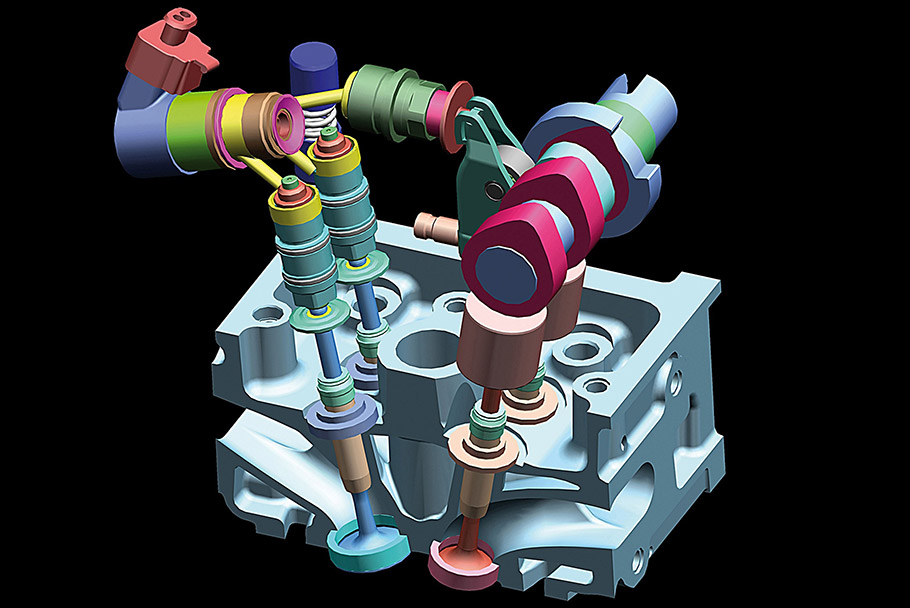
Already a world leader in advanced diesel engine technology, Fiat Group has just launched MultiAir, a fundamental breakthrough in petrol engine design that will dramatically cut fuel consumption, as well as significantly boosting power and torque, cutting carbon dioxide emissions by between 10 and 25 per cent, and up to a 60 per cent reduction in other engine pollutants.
With two generations of common rail direct injection diesel engine technology, UniJet and MultiJet, to its credit, Fiat has dramatically improved diesel engine performance, economy and emissions. Now, with MultiAir, Fiat has brought together the company’s enviable expertise and technology to make one of the single largest leaps forward for petrol engine design in recent times.
In short, an engine equipped with Fiat MultiAir technology is more powerful, more responsive across the entire engine speed range, uses considerably less fuel, and reduces all types of exhaust emissions by a substantial amount. It will also assist in enabling Fiat to maintain its lead in low emissions and low fuel consumption technology, which has seen Fiat crowned for the past two years as the number one car maker for the lowest range-wide CO2 emissions.
The first new engine to be equipped with MultiAir will be the 16-valve 1.4 litre family of naturally aspirated and turbocharged engines, and the first car to go on sale with MultiAir installed will be the Alfa MiTo at the end of 2009. Its second application will be as an integral part of a new two cylinder engine family.
Development of the Fiat MultiAir system
In the last decade, the development of Common Rail technology for diesel engines marked a breakthrough in the passenger car market. To be equally competitive in the field of petrol engines, Fiat Group decided to follow the same approach and focus on breakthrough technologies.
The aim was to provide customers with substantial benefits in terms of fuel economy and driving pleasure, while maintaining the engine’s intrinsic refinement, based on a smooth combustion process and on light structures and components.
The key parameter to control diesel engine combustion and therefore performance, emissions and fuel consumption, is the quantity and characteristics of the fuel injected into the cylinders. That is the reason why the Common Rail electronic diesel fuel injection system was such a fundamental breakthrough in direct injection diesel engine technology.


However, the key to controlling petrol engine combustion, and therefore performance, emissions and fuel consumption, is the quantity and characteristics of the fresh air charge in the cylinders. In conventional petrol engines the air mass trapped in the cylinders is controlled by keeping the intake valve opening constant and adjusting upstream pressure through a throttle valve. One of the drawbacks of this simple conventional mechanical control is that the engine wastes about 10 per cent of the input energy in pumping the air charge from a lower intake pressure to the atmospheric exhaust pressure.
A fundamental breakthrough in air mass control, and therefore in petrol engine technology, is based on direct air charge metering at the cylinder inlet ports by means of advanced electronic actuation and control of the intake valves, while maintaining a constant natural upstream pressure.
Research on this key technology started in the ’80s, when engine electronic control reached the stage of a mature technology.
At the outset, world-wide research efforts were focused on the electromagnetic actuation concept, by which valve opening and closing is obtained by alternatively energising upper and lower magnets with an armature connected to the valve. This actuating principle had the intrinsic appeal of maximum flexibility and dynamic response in valve control, but despite a decade of significant development efforts, the main drawbacks of the concept – it being intrinsically not fail-safe and its high energy absorption – could not be fully overcome.
At this point most automotive companies fell back on the development of the simpler, robust and well-known electromechanical concepts, based on valve lift variation through dedicated mechanisms, usually combined with camshaft phasers to allow control of both valve lift and phase.
The main limitation of these systems is low flexibility in valve opening schedules and a much lower dynamic response; for example, all the cylinders of an engine bank are actuated simultaneously, thereby excluding any cylinder selective actions. Many similar electromechanical valve control systems were subsequently introduced over the past decade.
In the mid ’90s, Fiat Group research efforts switched to electro-hydraulic actuation, leveraging on the know-how gained during its Common Rail development. The goal was to reach the desired flexibility of valve opening schedule air mass control on a cylinder-by-cylinder and stroke-by-stroke basis.
The electro-hydraulic variable valve actuation technology developed by Fiat was selected for its relative simplicity, low power requirements, intrinsic fail-safe nature and low cost potential.
Fiat MultiAir Technology: how it works
The operating principle of the system, applied to intake valves, is the following: a piston, moved by a mechanical intake camshaft, is connected to the intake valve through a hydraulic chamber, which is controlled by a normally open on/off solenoid valve.
When the solenoid valve is closed, the oil in the hydraulic chamber behaves like a solid body and transmits to the intake valves the lift schedule imposed by the mechanical intake camshaft.
When the solenoid valve is open, the hydraulic chamber and the intake valves are de-coupled; the intake valves do not follow the intake camshaft anymore and close under the valve spring action.
The final part of the valve closing stroke is controlled by a dedicated hydraulic brake, to ensure a soft and regular landing phase in any engine operating conditions.
Through solenoid valve opening and closing time control, a wide range of optimum intake valve opening schedules can be easily obtained.
For maximum power, the solenoid valve is always closed and full valve opening is achieved following completely the mechanical camshaft, which is specifically designed to maximise power at high engine speed (long opening time).
For low-rpm torque, the solenoid valve is opened near the end of the camshaft profile, leading to early intake valve closing. This eliminates unwanted backflow into the manifold and maximises the air mass trapped in the cylinders.
In engine part-load, the solenoid valve is opened earlier, causing partial valve openings to control the trapped air mass as a function of the required torque.
Alternatively the intake valves can be partially opened by closing the solenoid valve once the mechanical camshaft action has already started. In this case the air stream into the cylinder is faster and results in higher in-cylinder turbulence.
The last two actuation modes can be combined in the same intake stroke, generating a so-called Multilift mode that enhances turbulence and combustion rate at very low loads.
Further Potential of MultiAir Technology
All breakthrough technologies open a new world of further potential benefits, which are usually not fully exploited in the first generation.
Common Rail technology, a Fiat Group worldwide premiere in 1997, paved the way to more than a decade of further technological evolutions such as MultiJet for multiple injections, small diesel engines, and the recent Modular Injection technology, soon to be launched on the market.
Similarly, MultiAir technology, a Fiat worldwide premiere at this month’s Geneva Motor Show, (March 2009), will pave the way to further technological evolutions for petrol engines:
- Integration of the MultiAir Direct air mass control with Direct petrol Injection to further improve transient response and fuel economy.
- Introduction of more advanced multiple valve opening strategies to further reduce emissions.
- Innovative engine-turbocharger matching to control trapped air mass through a combination of optimum boost pressure and valve opening strategies.
While electronic petrol injection developed in the ’70s and Common Rail developed in the ’90s were fuel-specific breakthrough technologies, MultiAir Electronic Valve Control technology can be applied to all internal combustion engines whatever fuel they burn.
MultiAir, initially developed for spark ignition engines burning light fuel ranging from petrol to natural gas and hydrogen, also has wide potential for diesel engine emission reduction.
Intrinsic NOx reduction of up to 60 per cent can be obtained by internal exhaust gas recirculation (iEGR) realised with intake valves reopening during the exhaust stroke, while optimal valve control strategies during cold start and warm-up bring up to 40 per cent HC and CO reduction of emissions. Further substantial reductions come from the more efficient management and regeneration of the diesel particulate filter and NOx storage catalyst, thanks to the highly dynamic air mass flow control during transient engine operation.
Diesel engine performance improvement is similar to that of the petrol engine and is based on the same physical principles. Instead, fuel consumption benefits are limited to few percentage points because of the low pumping losses of diesel engines, one of the reasons for their superior fuel economy.
In the future, powertrain technical evolution might benefit from a progressive unification of petrol and diesel engine designs.
A MultiAir engine cylinder head can therefore be conceived and developed, where both combustion systems can be fully optimised without compromise. The MultiAir electro-hydraulic actuator is physically the same, with minor machining differences, while internal sub-components are all carried over from Fiat’s FIRE and SGE applications.
-
Tata Pr1ma designed by Pininfarina
 The Tata Motors Limited stand hosts the world première of the Tata Pr1ma (Italian for “First”), a styling model designed and built by Pininfarina for the Indian company, first official project – hence its name – of the Tata-Pininfarina cooperation in the fields of research, design and engineering. (more…)
-
Revolutionary: Carlsson light-alloy wheel 1/5 REVO
 Carlsson breaks new grounds. With the wheel 1/5 REVO the refinder for Mercedes-Benz cars self-confidently presents a revolutinary design. (more…)
-
Major role for UK’s Zytek in electric Smart project
 There hasn’t been much good news for the UK midlands motor industry of late – but UK-based electric car specialist Zytek has received a boost with the contract to build and fit the electric drivetrain for the second-generation Smart Fortwo ED at its facility in Fradley, Staffordshire.
Zytek has developed an integrated electric drivetrain to drive the rear wheels of the Smart Fortwo. The drivetrain integrates the electric motor, power and control electronics, into one assembly with only three connections: water, high voltage electrics (300V) and low voltage electrics (12v). This replaces the conventional petrol engine and rear axle, and removal of the fuel tank allows room for a battery pack below the floor.
The second-generation electric Smart will represent a major upgrade on the first version, which has been tested extensively in London since 2007. The new version is based on the second-generation Fortwo model, and the biggest technical change is a move to Lithium Ion batteries instead of sodium-nickel-chloride. This will increase the range life of the battery pack, while cutting recharge times. The batteries are to be supplied by US-based electric sports car maker Tesla.

The new Smart Fortwo ED will go into production toward the end of the year. It will be used mainly in organised EV test programmes in major European cities, including Berlin, Paris, Rome, Milan and Pisa, with further cities planned.
In Berlin, the local government and energy providers are installing 500 electricity charging stations, and Daimler is providing more than 100 electric Smart and Mercedes-Benz cars. Several similar programmes are also being considered in the US.
The plan is to refine the design as a result of feedback from these tests, and make a major ramp-up of production volumes in 2012. Two versions of the Smart ED were shown at Geneva – a standard version and a more exclusive Brabus version, with matt green paint, a cabriolet soft top, LED daytime driving lights, sports suspension and Brabus Monoblock VII alloy wheels.

-
Magna Steyr offers shortcut to EV production
 As car manufacturers start to feel the economic pinch, they are looking to outsource more and more of their product development work to suppliers. That’s the view of Austrian-based Magna Steyr, best-known for its contract manufacturing for the likes of Chrysler and Mercedes-Benz.
The company is keen to show off its design and development capabilities, especially when it comes to electric vehicles. Magna Steyr already has a contract to help Ford develop an electric version of the Focus – and at Geneva it showed an entirely self-designed electric prototype, the Mila EV.
Magna Steyr describes the Mila EV as a “fully integrated electric vehicle platform which can be used by every OEM to realise their own products, drive and design strategies in the shortest time.”
The platform is fully engineered and can be built as pure battery-electric car, a hybrid, a natural gas-powered car or even a hydrogen fuel cell vehicle. It’s designed to meet all crash testing standards, while the platform is flexible enough to be ‘right-sized’ to any customer OEM’s requirements.
Magna Steyr is hoping a manufacturer will buy the basic design “off the shelf” – which would allow it to get a fully engineered electric car into production far more quickly than if it were to start developing such a vehicle on its own.

The design is so flexible that Magna Steyr believes more than one manufacturer could build distinct cars on the same basic architecture, thus leveraging economies of scale which could be shared. And of course, Magna Steyr wants the contract to build the cars “With the proven Flex Plant concept, all versions can be made on one single production line,” said a spokesman.
The Geneva show car is a 4m-long five-door version, with a 67hp electric motor powered by Magna Steyr-developed lithium-ion batteries. It has an average charging time of 2.5 hours, and it has an ranges of up to 150km. Solar cells integrated in the glass roof provide additional energy generation, and the drag-inducing wing mirrors have been replaced by rear-view cameras.
-
2009 Scion tC Release Series 5.0: Gloss Black
 The tC Release Series 5.0 in gloss black is the only limited-run tC for 2009. The car’s theme is Toyota Racing Development (TRD), so performance will be at its heart. (more…)
-
Sportec SP550mc – mean and clean
 With a performance of more than 550hp, the SP 550mc goes out hunting in the territory of its fellow super cars. Thanks to Sportec’s sporty understatement, the 997 Turbo has become nothing less than a cheetah in a tailored suit – with significantly reduced CO2 emissions. In spite of the new CO2-reduced natural gas technology, the turbo performance could be considerably improved. (more…)
-
2009 Range Rover Sport Specifications and Features
 CONSTRUCTION
• Integrated Body-Frame with hydroformed members and advanced high-strength steels, including boron steel in the A- and B- pillars
• Outer-body panels are double-sided zinc-coated steel and aluminum alloy (more…) -
Concorso d’Eleganza Villa d’Este 2009
 The Concorso d’Eleganza Villa d’Este drew visitors to Lake Como for the first time 80 years ago. For ten years now, BMW has organised the Concorso jointly with the Grand Hotel Villa d’Este luxury hotel. (more…)
-
2010 Ford Escape Adds New Safety Technologies
 Ford’s 2010 Escape, the small SUV with the best crash test ratings of any vehicle in its class, is increasing its technology leadership with the addition of five new features that improve safety, reduce driver distractions and aid drivers by automatically parallel parking their vehicle. (more…)
-
VW Scirocco by CARACTERE
 We have pleasure in presenting your our latest body styling equipment for the VW SCIROCCO 2009 (more…)


