Rezvani today demonstrated the third variation to the Beast family. The new proud member is the performance-oriented Beast X: the most powerful and aggressive Beast produced so far. This sweetie will definitely dominate every track with its 700hp (514kW) of power output and the incorporated Borg Warner high-performance turbochargers, especially developed pistons and valves and the strengthened engine body. The performance is further enhanced by the lightweight carbon-fiber body and steel chassis, along with the rear-wheel drive system that keeps the vehicle focused and flexible.
In terms of design, the Beast X has a lot to demonstrate: the exterior design looks comprehensive and aggressive. But the engineer team knows how it’s done: they not only created an extremely beautiful vehicle, but also incorporated functionality in the design. The vehicle offers improved downforce, revised front and the rear fascia gives off that badass and menacing profile. Furthermore, the dual carbon fiber rear wings reduce the drag coefficient and enhance the handling and stability in corners. To be honest, the team achieved something that looks like a dream for many automobile developers: they have combined both performance and style in a single vehicle that comes with unparalleled statistics and appearance.
And with the introduction of the Beast X, Rezvani also announced the arrival of the fresh X division: brand’s most powerful, exclusive and performance-oriented tuning for the lineup.
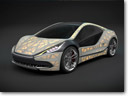
Geneva Motor Show will happen in the beginning of March next year, where we will see the birth of EDAG Light Cocoon Concept. The builders of the special car declare that it is not just a concept study of a compact, dynamic sports car. It is rather a projection of a lightweight construction. The reason for this is that it includes a bionically optimized vehicle structure combined with a weatherproof textile outer skin panel. In addition, backlight technology illuminates the organic-like structure of the car.
For the implementation of the bionic construction principles and natural strategies, there has been also put an additive manufacturing potential in this concept. The designers had in mind vision for sustainability, which is demonstrated by nature.
Furthermore, they did not treat the body like a closed surface. Every single material which wasn’t needed for the special load cases was removed. As an inspiration, the designers used the leaf, being the ultimate, lightweight outer skin. Just as with a leaf, the textile skin covers Light Cocoon.
Currently, there are also tests made with a stretch fabric that is also extremely weatherproof, to serve as the new outer body skin. As a matter of fact, this skin weighs no more than 19 g/m², which additionally supports the maximum lightweight design requirements with minimum weight.
In addition, this material, which is four times lighter than standard copier paper, is also extremely strong. When combined with the topologically optimized structure of the car, this offers enormous potential and stimulus for the ultimate lightweight construction of the future.
2012 EDAG Light Car – Sharing concept car is thefirst vehicle to have been specifically designed to meet the needs of the growing car sharing sector. It is designed to include the maximum possible space inside, and also the exterior has resilient surfaces. It is electrically driven and in resonance with Light Car philosophy. In particular, the light is used as a means of communication to indicate the leasing status of the vehicle.
For leasing purposes a car should be practical, robust and self-explanatory. Hence the exterior is of height of 1.90 meters, which makes it easy for the passengers to get in and out. In addition there is very convenient parking system, which is sensitive to spots around the bumper. As the name shows, the light plays crucial role and serves as a communication instrument. When the car is being charged or reserved, or available for hire, the LEDs integrated in the gel pads and “PLEXIGLAS ® LEDs” manufactured by Evonik Industries AG use three different colors to give a highly visible indication of the status. In addition, there is a laser, which when parking the car or opening the doors, projects a safety zone onto the asphalt, ensuring that passengers can get in and out in safety.
2012 EDAG Light Car – Sharing concept
Besides the two side doors with simple sliding windows, the “concept vehicle also has twin rear doors. The coupe features six folding seats arranged in two rows of three. A special emphasis has been put on an intuitive operating concept: aside from the accelerator, brake and steering wheel, the only other control is a lever to work the indicators. This means that there is just one display element, which only gives the important data (speed, charge, range, navigation).
Furthermore EDAG Group is also exhibiting a networked mobility concept for booking the future share car fleet. In particular, the operators of future car will use GPS to locate their vehicles and communicate their locations to potential customers. Hence, it will be possible to inform the customer which cars are available, and then guide him to the nearest one by means of the navigation system in his smartphone. Of course, the booking will be made via Internet, and the customer can then access the vehicle through electronic “Bluetooth key”.
In addition, the concept car features the so called “intelligent charger”: besides performing the actual charge process, the “intelligent charger” also sends vehicle information via the power supply system and decides itself when is the perfect time for charging. It does this by taking into account the availability of renewable energies and mobility behavior. More importantly, the operator receives all important information on the status of the vehicle online. The communication between car and user is even further enhanced with new services such as automated legitimation and the selection of individual tariffs or prices per minute. This interconnection brings about considerable added value for the entire mobility system. What it does in details, is that it gives the energy provider the chance to make use of energy storage and in this way reduce load fluctuations in the grid due to electric cars being connected. On the other hand it ensures that there is sufficient resource-saving energy to charge the share vehicles whenever necessary.
The engineering service provider EDAG is going to present a world debut of the outstanding Concept vehcile, called EDAG Light Car – Sharing at this years Geneva Auto Show. This is a concept car made especially to fit instantly to the booming leasing business. More importantly the car is electrically driven and has been constructed strictly for use as a leasing car. According to the manufacturers it answers all the needs of the customer: it is simple and easy to use as a local publuc transport. To be more precise, these requirenents, led to the non-featuring of storage surfaces nor fancy door trims in the new EDAG Light Car – Sharing Concept Car. And even more, to make it simpler, aside from the accelerator, brake and steering wheel, the only other control the customer will find is a lever to work the indicators. There is just one display element which gives basic information abut the speed, state of charge, range and navigation.
Moreover, the car created by the EDAG is designed with two side doors and twin rear doors. However it keeps room for 6 passengers. Thank to the car’s height of 1.90 m the passangers can get in and out easily. Additionally, there are also folding seats included. They provide maximum transport capacity. The materials used in the interior are are easy to clean, and as they are modular-based, so therefore also easy to exchange.
2012 EDAG Light Car – Sharing concept
There is also a unique technologies included in this leasing concept vehicle. For example, there shouldn’t be any worry about bumping the car when parking, bacause the sensitive spots are fitted with “Technogel” pads, and these can withstand minor collisions. Of course, light plays a prominent role as a communication instrument in this car: the LEDs integrated in the pads and “Plexiglass truLED” give a continual, visible indication of the status of the car. Furthermore, while parking the car or opening the doors, a laser integrated in the mirror starts projecting a safety zone onto the asphalt, ensuring that passengers can get in and out in safety. Another interesting and innovative feature is that the rear window can be marketed as advertising space by the fleet owner, but only when the car is not being driven. With this exceptional concept car – EDAG Light Car – Sharing, the EDAG Group shows extremely high competence and eagernessin finding new ideas and developing innovative vehicle concepts.
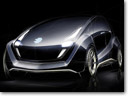
At this year’s Geneva Motor Show 2010, EDAG, the independent concepts development company will present the next step in the evolution of its extremely innovative concept car, the EDAG Light Car – Open Source. (more…)
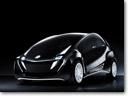
EDAG, worldwide provider of engineering services, will be presenting the world premiere of its vision of an environment-friendly, future-orientated vehicle for everyday and leisure use at this year’s International Motor Show in Geneva. (more…)
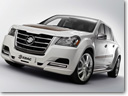
The new concept car from EDAG Engineering + Design AG will be making its first appearance on March 6, 2007, in Geneva – the “EDAG LUV“. The design concept of the “LUV” is based on an luxury-class SUV and incorporates a maritime look from bow to stern: oiled teakwood on the hood, as the flooring on the interior, and on the elegant cargo area conveys a maritime flair. But the “EDAG LUV” is a real eye-catcher in other respects as well: the cargo area, behind the two rows of seats with plenty of room for 5 passengers, has been outfitted with teakwood and distinctly resembles a quarterdeck – in keeping with the maritime look of the concept car.
The Module Concept of the “EDAG LUV” – An Economical Approach to Vehicle Derivatives
But the maritime design of the “EDAG LUV” is just the covering for a modular concept which makes it possible to turn vehicles into derivatives or niche vehicles at reasonable expenditures of time and money.
In coming up with their shell concept, the EDAG team of engineers, headed by project manager Andreas Funk, set themselves the goal of using the greatest possible number of carry-over parts.
Edag Luv
The group can certainly be proud of the results of the intelligent module concept: 90% of the parts required to perform the metamorphosis of a luxury-class SUV into the “EDAG LUV” come off the parts shelf of the basic vehicle. For example, the extension of the floor pan by 512 mm was realized using original parts. The wheelhouses were also used without any modifications, as were the parts for the rear-end finish, which includes integration of the standard power-lift system from the sedan.
“In addition to our efforts to use a maximum number of identical parts, we were especially careful to keep the existing production concept of the basic vehicle in mind during the development of the “EDAG LUV”,” explains Andreas Funk. “The self-supporting body can be completely welded using standard tongs. It goes without saying that we used simulation models during the development of the entire body concept to test crash behavior and rigidity so that we could guarantee the highest level of quality and safety.”
The advantages of the EDAG module concept are obvious. Thanks to the use of identical parts and taking into account the production concept, a vehicle concept which is visually completely new can be realized under economically interesting conditions.
“More and more end customers are asking for niche vehicles, and this type of design turns the production of such cars into a “business case” for the manufacturers,” points out Johannes Barckmann, Head of Design at EDAG, in describing the concept.
The “EDAG LUV” – A New Vehicle Segment
“LUV”, the name of the concept car, is not only a term used by sailors (it is German for “luff”, the windward side of a vessel), but also defines a new vehicle segment – the luxury utility vehicle.
“In taking the maritime world as a leitmotif for the design of the “EDAG LUV”, we deliberately selected a niche theme. We wanted to demonstrate in exemplary fashion that it is possible to create a distinctive vehicle class and not only to give a vehicle a new look. And to do that with as little technical effort as possible,” is how Johannes Barckmann explains the intentions behind the design concept. So the cargo area of the “EDAG LUV” is elegantly tied in with the passenger cell by the harmonious lines of the body design. The utility vehicle character so often evident in pick-up models is no longer discernible in the “EDAG LUV”. On the contrary, the “EDAG LUV” radiates elegance and autonomy and cannot be classified by any of the vehicle segments existing today.
Yet the luxury image which has been created is only one example for the idea of a versatile vehicle concept. Speaking of versatile: the pick-up module can be exchanged for a convertible or coupe module simply by releasing a catch mechanism integrated into the body of the “EDAG LUV”. A clever move by the EDAG developers so that additional derivative variants can be realized flexibly and at low cost.
Innovation in the Interior – The PC Takes Its Place in the Vehicle
The “EDAG LUV” has innovative solutions on the inside as well. The EDAG development team has integrated two UMPCs (UltraMobile PCs) into the headrests, bringing the PC world into the vehicle. The user can use a specially developed mechanism to insert the fully operational PCs easily into the headrests. Passengers in the rear seat can use their Office applications such as PowerPoint, Excel, and Word in the vehicle, plus WLAN and UMTS provide them with Internet access, enabling them to download and answer their e-mails during the trip. Furthermore, integrated Webcams even make it possible to hold Net meetings during the trip. Users can also access their music or DVD collection from the car. The trick: The UMPCs are connected to the vehicle”s audio system so that the MP3 files or videos stored on the computer can also be used in the vehicle. The integration of the computer keyboards into the interior of the “EDAG LUV” has also been handled elegantly: modern form-fitting foil keyboards have been embedded in the folding tables available for use by rear-seat passengers. Background lighting makes it possible to work even while traveling at night and is yet another futuristic design element in the interior.
“The integration of so-called consumer devices into the vehicle architecture is a highly interesting topic for the manufacturers. This can result in a genuine additional value for the end customers by making the functionality of the PC world usable in the vehicle as well,” notes Dr. Robert Hentschel, Director of EDAG Electrics/Electronics.
“Being a full-range developer of vehicles and an integrator in the field of electrics/electronics, we are determined to develop solutions in this area which are stylish, geometrically and functionally high-quality, and practical.”
EDAG is currently pursuing two solution approaches:
1. A second integration stage will tie the UMPCs into the vehicle architecture for luxury-class vehicles. The advantage: the driver can use operating elements – e.g., on the steering wheel – to access directly the functions or data of the UMPC.
2. The EDAG developers are planning the UMPC as an after-market product for compact and midsize cars. The aim here is to develop concepts for various models produced by car-makers so that the devices can be integrated ergonomically and geometrically into the interior without a jarring visual effect. What makes this especially enticing is the possibility of utilizing the UMPC as an on-board computer and high-quality display device by connecting it to the vehicle architecture, providing yet another service, as well as making the complete functionality of a PC available in the car.
With this as a goal, EDAG is working closely with the Intel Corporation on the development of solutions for the electrical and electronic connection as well as on the integration of “nomadic devices” in the vehicle interior. EDAG will rely on the latest in Intel technology, processors, and chip sets. Especially small dimensions for the chips and low energy consumption are only some of the criteria for their use in cars.
The Company is planning to present the “EDAG LUV” at the upcoming IAA in Frankfurt in the second integration stage, i.e., with access to the UMPCs via operating elements of the car.
Innovative Development Competence by EDAG
EDAG will be presenting the “EDAG LUV” in Geneva as proof of its competence, underscoring the capabilities of the world”s largest independent development partner to develop economically sound innovative vehicle concepts optimized for production. The project has been realized in only three months, from definition of the concept and design process to the development to the ready-to-roll prototypes, and is on the verge of being realized as a Premium Edition.
BRABUS is one of the partners in this project. The tuner from Bottrop contributed not only the 462 hp / 340 kW high-performance BRABUS 6.1 displacement engine for the EDAG LUV that allows this all-wheel-drive vehicle to accelerate to 100 km/h in a little more than six seconds for a speed of 250 km/h.
BRABUS also provides the classy 10Jx22 monoblock S wheels fitted with 295/35 ZR 22 YOKOHAMA tires, the air suspension module as well as the high-performance brake system from its product line-up. The 12-piston aluminum fixed calipers and ventilated, perforated 380 x 36 millimeter front brake disks and the 6-piston fixed calipers and 355 x 28 mm rear brake disks reach a braking performance typically achieved only by genuine sports cars.
Exclusive all-leather appointments and attractive interior accessories are an additional BRABUS specialty. The BRABUS saddlery combined the finest white leather with black seams and cords for a superior interior finish of the EDAG LUV that leaves nothing to be desired.
On 7th March, 2007, the cry of “Cast off!” will go up in Geneva for the “EDAG LUV”, the lat-est concept car of EDAG Engineering + Design AG. Conceived as a niche vehicle, the LUV presents a maritime appearance from its bows to its stern, and is targeted at customers who are not looking for just an ordinary car, and who appreciate something more distinctive.
Oiled teak on the bonnet, inside as the floor covering , and again on the elegant loading plat-form, gives a nautical flair. The dimensions of the “EDAG LUV” are also imposing. Taking as their basis a high end SUV, the EDAG Engineering + Design AG designers and engineers have constructed an LUV with an impressive overall length of 5.70 metres. Over 2 metres wide and 1.80 metres high, the “EDAG LUV” is a real eye-catcher. Behind the two rows of seats with ample space for 5 passengers, there is a teak-covered loading platform. This, in keeping with the maritime look of the concept car, has the distinct air of a quarter deck. Retractable clamps mounted in the teak flooring provide the owner of the “EDAG LUV” with the same kind of practical means of securing loads found on ships and boats.
“LUV”, the name of the concept car, is also a German nautical term, meaning “luff”: Apart from this, however, the term also defines a new vehicle segment, namely the Luxury Utility Vehicle.
The harmonious lines of the body’s design enable the loading platform and passenger cell to be joined together so elegantly that the utility vehicle character frequently manifest in pick-up models is no longer evident.
“LUV”: A new vehicle type which, with its originality, size and elegance, has clearly been de-veloped by EDAG as a niche vehicle for a target group who prefer vehicle concepts which diverge to one side or the other of the mainstream.
The entire project, from the concept defining stage, through the design process and devel-opment, culminating in the ready-to-drive prototype, took just three months to complete, and is ready for conversion into a premium edition. With the EDAG LUV, the world’s largest, in-dependent engineering partner has once again demonstrated its abilities as an all-round developer – from concept to production readiness. The “EDAG LUV” is an example of how, with an economically acceptable outlay, it is possible to transform a model for volume pro-duction into an independent niche vehicle.
EDAG is currently in close contact with prestigious vehicle customising companies, looking into the possibility of a potential “launch” of the “EDAG LUV”.
 Rezvani today demonstrated the third variation to the Beast family. The new proud member is the performance-oriented Beast X: the most powerful and aggressive Beast produced so far. This sweetie will definitely dominate every track with its 700hp (514kW) of power output and the incorporated Borg Warner high-performance turbochargers, especially developed pistons and valves and the strengthened engine body. The performance is further enhanced by the lightweight carbon-fiber body and steel chassis, along with the rear-wheel drive system that keeps the vehicle focused and flexible.




 At this year’s Geneva Motor Show 2010, EDAG, the independent concepts development company will present the next step in the evolution of its extremely innovative concept car, the EDAG Light Car – Open Source.
 EDAG, worldwide provider of engineering services, will be presenting the world premiere of its vision of an environment-friendly, future-orientated vehicle for everyday and leisure use at this year’s International Motor Show in Geneva.
 The new concept car from EDAG Engineering + Design AG will be making its first appearance on March 6, 2007, in


