Author: Tsvetan Varbanov

  • Spyshots: Possible Volvo XC90 Caught Winter Testing

    Volvo-XC90-Winter-Testing-medium-1No, this is not the automotive equivalent of a restrained Dr. Lecter. It’s a camouflaged Volvo XC90 doing some snowy tests according to Swedespeed. Spy shots courtesy to the guys at CarPix.

    Apparently, there are some similarities to be drawn with the Concept XC Coupe that took over Detroit last month. However, the extra cladding is so thorough that you would be forgiven to think that you are looking at BMW’s X5 series.

    The XC90 is set to make an official debut sometime this fall. Volvo are adamant that the original XC90 capabilities will be perfectly preserved (3-rows setups included). Still, the new one will be the first Volvo to use the company’s SPA platform along with the Drive-E (VEA) powertrain layout. Supposedly, XC90s intended for the US market will churn out at the very least 302 hp. Don’t be surprised if they throw in a couple of electric motors as well. Also, Aisin Warner 8-speed transmissions will be coming as standard.

    Volvo-XC90-Winter-Testing-medium-2

    Volvo-XC90-Winter-Testing-medium-3

    Volvo-XC90-Winter-Testing-medium-4

    Volvo-XC90-Winter-Testing-medium-5

  • Rolls-Royce Phantom Drophead Coupe Bespoke Waterspeed Collection Sketch

    Rolls-Royve-Phantom-Waterspeed-Collection-shadowRolls-Royve-Phantom-Waterspeed-Collection-mediumConsider this a teaser. It’s a sketch released by Rolls-Royce, previewing their soon-to-hit-the-market Bespoke Waterspeed Collection. That is, 35 Phantom Drophead Coupe’s celebrating a landmark in Rolls-Royce’s history.

    On the morning of 1 September 1937, Sir Malcom Campbell was preparing to take on Lake Maggiore (Swiss-Italian border). His goal: a new speed world record on water. He was to man the Bluebird K3 hydroplane, powered by a Rolls-Royce R-Type engine. An audacious speed of 126.32 mph was reached on the first run. The following day he went one better, piloting his craft to 129.5 mph, in doing so emphatically breaking the United States’ five-year stranglehold on the world waterspeed record.

    So today, Rolls-Royce are looking forward to commemorate that spirit of innovation and cutting-edge technology. What we know for sure so far is that the Warterspeed Collection will showcase the finest contemporary materials “never used before on a Rolls-Royce furnish”. The cars should be a visual triumphant combination of brushed steel, wood inlays and the color Maggiore Blue.

    Further details will be available in the coming months with more insight into the production process.

    Source: Rolls-Royce

  • BMW RS/M235i Green Hell by RS-Racingteam

    RS-Racingteam-BMW-M235i-Green-Hell-shadowRS-Racingteam-BMW-M235i-Green-Hell-mediumWe have a racing car spree on our hands here. This is a very green BMW 2 Series coupe. And it’s not the save-the-planet type of green but more toxic spill green. The guys who have come up with it are from the German-based RS-Racingteam joint (responsible also for this). They’ve called it the BMW RS/M235i Green Hell Edition.

    If we push aside the toxic wrapping, the first thing that catches your eye is the 18-inch ATS set of rims (different, BBS ones are also available). They come tailored with either Michelin semi-slicks or with a wet/street set of different tires measuring at 225 or 245 front and back respectively. The overall low stance is due not only to the low tire profile, but also due to the added KW Clubsport coilover kit. The stopping power too benefits from racing Ferodo pads, steel flex tubes and a special sports braking fluid. At the back, there should be two Supersprint tail pipes made of stainless steel

    In terns if aerodynamics, the RS/M235i packs a giant GFK rear wing and some bigger vents at the front (better brake ventilation).

    The interior has been almost entirely stripped out. Carbon fiber panels on the doors house nothing but hand straps and the power window controls (yes, you still get electric windows). There’s a racing bucket seat behind the three-spoked momo racing wheel. There’s a passenger bucket seats as well. Both house a 6-point belt system. There are no floor mats, a safety cage ensures structural rigidity, and a special in-the-cabin fire extinguisher system can be found in the passenger footwell. The engine and gearbox have had special brackets installed so that you can find them where you left them after a vigorous race.

    For that little extra something, you can add some oomph under the hood, but that you’ll have to discuss in person, apparently.

    Source: RS-Racingteam

  • Maserati’s Super Bowl XLVIII Spot For The Ghibli

    Maserati-Ghibli-Super-Bowl-Spot-mediumWell, the Maserati Ghibli is coming to the U.S. and so the appropriate hype needs to be stirred up. A Super Bowl spot might do the trick. But we are a bit skeptical on how the Italian company is trying to approach its targeted audience.

    See, the 1:30 second piece starts off by highlighting some of nature’s tools of destruction, which, by the way, have brought a ton of misery to millions of people in the U.S. and throughout the world. Yes, it does go on to say that we, as humans, have been able to endured all this time and have learned to cope with natural disasters (or giants) and that’s fine. But what does an Italian supercar has to do with any of that? Seriously, was this directed by Michael Bay or something?

    No, apparently, it was directed by American filmmaker David Gordon Green. A rationale of the commercial goes as follows:

    “[the spot] is relevant to Americans everywhere who have had struggles and obstacles to overcome. It is a reminder that with steadfast commitment to hard work and unwavering passion, we can deal with our own “giants” around us, we can overcome them and achieve what we set out to do.”

    We still don’t get it.

    Anyway, if we put all this silly marketing stuff aside, the Ghibli is still a tremendous piece of engineering. As Maserati’s first mid-sized four-door luxury sports sedan, it features a Ferrari built twin-turbo V6 engine capable of 400+ hp. It also has a sophisticated chassis complemented by Brembo brakes all around. A liberal use of aluminum ensure comfort and agility.

    Source: Maserati

    Video Source Maserati via YouTube

  • Auction: 1965 Ford Mustang 289 Springs Back To Life

    1965-Ford-Mustang-289-Racing-Car-mediumA fully restored/modernised, rather non-street legal 1965 Mustang 289 racing car in Ford France livery is looking for a new owner. An auction will be held on the 5th of February. The estimated price: anywhere from 75,000 to 95,000 Euros (circa $101,000 – $128,000)

    Before you walk away, consider this: the original car’s shell was taken to a highly esteemed coach works (Rae Davis Racing) to have most of its racing bits installed. Later, all was put together by the enthusiasts at CCK Historics in Kent. Now, standing before you, this gem of Americana has an independent front suspension with coilsprings, an anti-roll bar, and disc brakes at the front. It still has leaf springs and drums at the back, but hey, it’s a 1965 Ford. Besides, the main idea behind it, is out-of-the-box readiness for historic racing around the world.

    That’s right, it has a six-point roll cage by Caged Manufacturing Ltd., big alloy wheels with Dunlop Racing M-section tires on them, a Cobra Evolution pro seat with TRS belts, a Lifeline plumbed fire extinguisher system and ignition cut-off. Even the (dry) car battery is securely strapped inside the cockpit. The Stack racing rev counter and the shift light indicator are also a dead giveaway for this car’s intent. Pop the trunk open and you find little to no space due to the 120-liter boxed bag-style fuel tank nestled in. Twin Facet pumps and fuel and brake lines have also been installed inside the car.

    The 289 cubic inch V8 inside the engine bay has had its carburettor and air-filter replaced. There’s also a remote oil cooler, a Mallory distributor, and a new electric cooling fan. All of that should mean more power (maybe 240 hp and above). At the same time, the almost completely stripped interior and the Perspex side and rear windows keep the weight down.

    Deal of the month?

    1965-Ford-Mustang-289-Racing-Car-medium-2

    Source: rmauctions.com

  • Fourth Generation Jeep Cherokee Debuts At Geneva This Year

    Jeep-Cherokee-Limited-and-Trailhawk-shadowJeep-Cherokee-Limited-and-Trailhawk-mediumThe new Jeep Cherokee is upon us. Be on the look out for it if you happen to attend the 84th Geneva International Motor Show. The fourth generation of the mid-sized SUV is sophisticated, off-roadish, torquey and downright ugly/pretty (it’s a hate-it-or-love-it thing so we will refrain from judgement).Coming to Europe in three trim levels – Longtitude, Limited, and Traillhawk – the new Cherokee is supposed to boldly introduce a new face of the Jeep brand…. while remaining “true to the brand”. Every car manufacturer is quick to underline that no matter how outlandsih the final product turns out to be.

    Well, there is some truth to that. One of the available engines (only with the Limited and Trailhawk editions) bares the legacy-laden Pentastar V6 label. Although there is quite a lot of power to go around – 272 hp and 315 Nm – the volume has been downsized from 3.6- to 3.2-liters. It’s not only some 30 percent more economical than before but is also more refined with less noise and vibrations.

    But that’s all top-of-the-line talk. What about the people that can do without all the six cylnders and the foot-long gas bill? How about a 2.0-liter Multijet II turbo diesel engine mated to a 9-speed automatic gearbox? Yes, 9-speed. But we’ll get to that later. Fiat’s Multijet (common rail) tech can shoot up fuel into the cylinders with a pressure value of up to 1,600 bar thus ensuring smoothness and frugality throughout the cycle. All the while, a variable geometry turbocharger and a double overhead camshaft controlling 16 valves in total get the Cherokee’s power rated at 170 hp and 350 Nm (the latter peaking at just 1,500 rpm).

    Then there’s the transmission. Are they going for a world record here? Not only 9-speeds but also 40 individual automatic shift maps corresponding to different conditions. The involved software has to consider, among other things, variables such as the engine torque gradients, kick-down events, longitudinal and lateral acceleration and grade changes just so that you and I be always on the right gear.

    There is a 140 hp version of the same diesel engine available (mated to a six-speed manual) and another gasoline 2.4-liter engine with 177 hp and 229 Nm at its disposal. The latter of the two, however, will be only available in Russia and the Middle East.

    After choosing the right power plant for you, you’ll have to spend another month deciding which 4×4 system to go with. There’s the Jeep Active Drive I (Longitude and Limited models) – a single power transfer unit that is still fully automatic and works its magic in the background. It features a fully-variable wet clutch, housed in the rear drive module, which works in unison with the Cherokee’s ESC system for optimum traction on almost any surface. The Jeep Active Drive II is a more advanced version of the aforementioned (Limited only). It has a two-speed power transfer unit with torque management and a low-range mode (4-Low). It Locks the front and rear drive shafts for low speed power or towing. Essentially, the greater the gear reduction, the better the climbing capabilities of the vehicle. Finally there’s the standard on all Trailhawk Jeep Active Drive Lock package. It includes the Active Drive II system plus a locking differential. As such, the new Cherokee becomes as off-road capable as it will ever be.

    On a side note, all 4×4 options feature a standard user-operated Selec-Terrain traction control system that controls way too many of the Cherokee’s systems: drivetrain control module, electronic brake controller, ESC, transmission controller, powertrain controller and Selec-Speed Control (Hill-ascent and Hill-descent Control). Also, all are not necessarily 4×4 all the time. They use a rear-axle disconnect module that reduces energy loss when AWD is not required.

    Finally, it needs to be mentioned that the new Cherokee’s structure implements a high-resistance steel body (65%). Combine that rigid structure with 70+ safety features and you’ve got yourself a very safe environment for both everyday situations and extreme circumstances.

    Good job, Jeep!

    Source: Jeep

  • 2014 Dodge Journey Crossroad Debut In Chicago

    2014-Dodge-Journey-Crossroad-shadow2014-Dodge-Journey-Crossroad-mediumThe Chicago Auto Show this year will see the coming of a new Dodge Journey Crossroad MY2014. 2013 has been, apparently, the best sales year for the Journey, so Dodge would rather continue the profitable trend. Let’s see what they have in store for us with this one then. First up; the oily bits.

    As standard, the Journey comes with a 2.4-liter four-pot that produces 173 hp and 166 lb-ft of torque. The engine comes paired with a four-speed automatic transmission and delivers 26 mpg on the highway. It’s OK but uninspiring.

    The optional 3.6-liter Pentastar V6, on the other hand, sounds like the one to go for. It has 283 hp in store and 260 lb-ft of torque. The accompanying transmission is a six-speed automatic. Thus, returns almost exactly the same amount of mpg as the 2.4-liter: 25 on the highway.

    If you want the Journey to be all-wheel-driven, you’ll have to specify it on the options list. The system is pretty clever, engaging all the wheels only when grip starts running out. It also works on proper pavement between speeds of 25 and 65 mph – should help cornering. It’s all very cleverly engineered really: the AWD is managed by the electronic stability control (ESC) system which in turn also governs the electronically controlled coupling (ECC).

    On the outside, the Journey sports a new front and rear fascia, chrome patterns on them and chrome roof rails, gloss black grille, fog lamp surrounds and tail light bezels. The 19-inch aluminum wheels also come in a Hyper Black five-spoke design.

    Standard features to appeal to the occupants inside include a 8.4-inch Uconnect touchscreen, power front seat and a front passenger fold-flat seat with hidden storage bin under the seat cushion. There are also power heated and foldaway mirrors, seven air bags, illuminated cup holders, Keyless

    Enter ‘n Go with push-button start and steering-wheel-mounted audio and cruise controls. It’s pretty spacious too. Fold flat the second- and third-row seats and you create 67.6 cu. ft. of cargo space – best in class, apparently.

    Source: Dodge

  • Nissan Launch New Micra Limited Edition

    Nissan-New-Micra-Limited-Edition-mediumNissan is launching a new special edition of the New Micra. It’s called the…errhm… Limited Edition. How imaginative!

    Just a few things to point out. On the outside, the Limited Edition distinguishes itself with a contrasting roof color scheme that overextends to the mirror caps and side sills. A total of three color combinations will be available: Pacific Blue exterior with said contrasting elements in White; Shiraz Red with Black elements, and Alabaster White with a Red elements. Although you wouldn’t guess from the pictures, there’s also a chrome exhaust finisher.

    Inside, the Limited Edition the air vents echo the color of the roof (and by extension the color of the mirror caps and side sills). The lower part of the gearshift column and the floor mats also bare the same coloring.

    Because this special edition of the New Micra is based on the Acenta trim, you get 15-inch alloy wheels as standard, air-conditioning, cruise control, a roof spoiler and many more.

    Nissan-New-Micra-Limited-Edition-medium-2

    Nissan-New-Micra-Limited-Edition-medium-3

    Source: Nissan

  • Toyota FCHV Handling The Polar Vortex

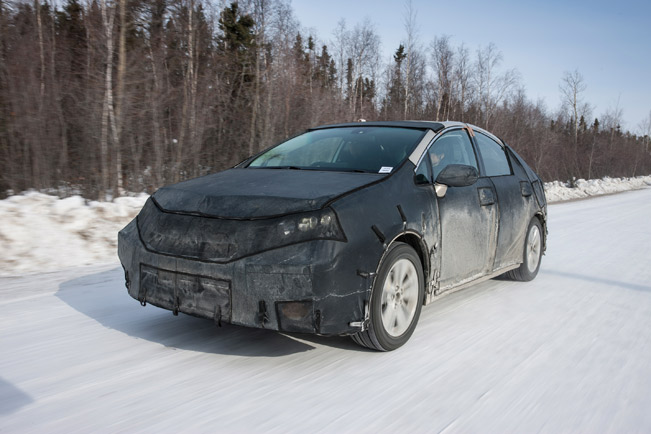
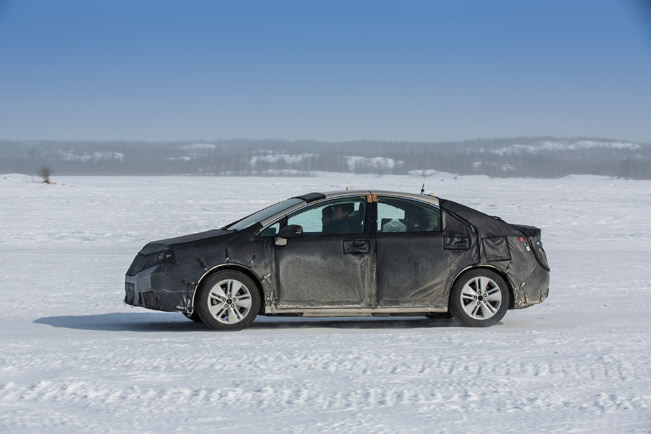
    2014-Toyota-FCHV-cold-testing-shadow2014-Toyota-FCHV-cold-testing-mediumThe Toyota FCV in the flesh. Well, not really. But it’s a report from the Toyota testing fleet on how things are going in everyday situations. Today, we get to see how the cars have handled the polar vortex: a weather phenomenon that has crippled most of the East Coast, but has also provided the ideal test ground for mechanical endurance.

    Proton Onsite – a firm which operates a total of ten Toyota FCHV-adv fuel cell vehicles – claims that even single digit temperatures don’t affect the efficiency of the drivetrains:

    “We had another snow storm Tuesday night and this morning the temperature was 3 degrees”, says Mark Schiller, Proton vice president of business development. “I went out to my Toyota FCHV-adv and brushed off a foot of snow before starting the car right up. No problem.”

    When compared to a purely electric vehicle, the fuel cell car has the upper ground in terms of real-life application: an almost zero effect over the performance even in the harshest environments. Schiller claims to still get around 300 miles on a single tank

    Apparently, over the last decade, the Toyota fuel cell fleet has logged millions of miles in some of the most extreme climates on the planet. From Yellowknife, Canada (temperatures as low as -30 degrees Celsius) to the Death Valley (severe heat), Toyota have tried them all.

    There’s still a lot of testing to do, but in 2015 when FCHVs hit the road, it will all be worth it.

    2014-Toyota-FCHV-cold-testing-medium-2

    Source: Toyota

  • Renault Tease Concept Car Ahead Of Delhi Auto Expo [VIDEO]

    Renault-Concept-Teaser-shadowRenault-Concept-Teaser-mediumLadies and gentlemen, this is how you tease a product without defacto showing it. No, this is not a CGI student’s course project, but it’s not the real thing either. It’s supposed to be, however, an up-and-coming Renault concept car.
    The New Delhi Motorshow kicks off in one week’s time and whatever this turns out to be is supposed to represent the “brand’s ambitions for new markets”. Are we being forced to assume that if this thing gets into production, it will rival the Tata Nano in such respects as affordability, simplicity and compactness?

    Well, the concept (or what we see of it) sure doesn’t look simple. And what’s with the nano quadrotor thing (the correct term for these demonic mecha-wasps)? It’s a concept, though, so we shouldn’t act so shocked that they want to wow us.

    What we did manage to pick up from the 22-second clip, is that those wheels have sort of borrowed the design of the wheels on the Renault Frendzy. These ones seem a lot smaller though. That’s why our money is on a funky city car.

    For the rest we’ll just have to wait and see.

    httpv://youtu.be/mPN3lPQxfyU

    Video Source: Renault via YouTube

  • A Glimpse At The Vauxhall Astra VXR Extreme

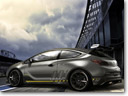
    Vauxhall-Astra-VXR-Extreme-Concept-shadowVauxhall-Astra-VXR-Extreme-Concept-mediumIt’s always exciting to talk about something that’s supposed to be the -iest of its kind. That’s why when we saw the “Radical Vauxhall Concept Heralds Fastest Production Astra” title, we flinched a bit. Still not resistant enough to sensationalist headings then

    But Vauxhall are indeed up to something. Here’s the first picture ever (sorry) of the Astra VXR Extreme…concept. It’s essentially a “sibling” to the current 280 PS and 400 Nm Astra VXR. We are not good at taking hints. Does that mean no more than that power or no less than that? We do know for a fact, however, that the Extreme will be on a strict carbon fiber diet. Even though its interior spots an integrated safety structure and racing seats and six-point safety belts, the Extreme will be completely road-legal. However, with the Astra Cup race car playing the role of a biological mother, it will feel most at home on closed grounds. Anyone up for making some history at the local track day circuit in the fastest production Astra ever?! (Darn it, we did it again, didn’t we?)

    The full reveal is expected at the 2014 Geneva expo. More to come in the coming month.

    Source: Vauxhall

  • Hennessey Stick An HPE500 On A Lexus LX 570 [VIDEO]

    Hennessey-Lexus-LX-570-HPE500-shadowHennessey-Lexus-LX-570-HPE500-medium-1Remember last week’s Corvette C7? Well, here is another Hennessey brainchild. An HPE500 upgrade once again but this time on a Lexus LX 570 SUV. Better hide the kids because this one’s a bit of a brute.

    Let’s cut to the chase: 500 hp and 530 lb-ft of torque. How have they done that? With a big TVS supercharger of course. Clear out the airways with a high-flow air filter, tweak the fuel injectors, calibrate the engine ECU and you’ve got yourself a first-class gas guzzler. The time it now takes to do a 0 to 60 mph sprint in it is 6.6 seconds That’s almost a whole 1 second faster. There are also complementary HPE500 badges here and there which, arguably, don’t make the LX 570 go faster, but they do add some clout.

    If you want the full package, opt for some of the wheels and tires on offer. Beef up the suspension and add even more power with a new set of exhaust manifolds (because, obviously, the stock are just not good neough).

    Check it out:

    httpv://youtu.be/gPpZWb_jt9A

    Hennessey-Lexus-LX-570-HPE500-medium-4

    Hennessey-Lexus-LX-570-HPE500-medium-3

    Hennessey-Lexus-LX-570-HPE500-medium-2

    P.S. – here is a bonus clip of a 2014 HPE700 Twin Turbo C7 Corvette Stingray blowing off some steam on a dyno. You’re welcome!

    httpv://youtu.be/azkQg_w5L20

    Source: Hennessey

    Video Source: Hennessey via YouTube