Author: autoview

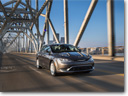
  • The 2015 Chrysler 200 named Top Safety Pick Plus

    2015-Chrysler-200_thumb2015-Chrysler-200_651

    Cars are a nice thing but there is always a risk involved with them. You may be the best and most careful driver ever but no matter how slow you may drive, the driver in the opposite lane may still hit you and cause injuries and other bad things. Clearly you need a car that is as safe as possible.

    Well, your choice has become a bit easier thanks to the efforts of the US Institute for Highway Safety (IIHS). If you want a safe car then you should take a look at the 2015 Chrysler 200, which was just named “2014 Top Safety Pick Plus” by this same institute. The highest safety rating was awarded to models that come with front crash prevention.

    “The 200 aced the challenging small overlap front test with a good rating in every measurement category,” said IIHS President Adrian Lund. “Chrysler should also be commended for offering forward collision warning with autonomous braking on this mainstream midsize car. Our research shows that these systems are effective in preventing some kinds of crashes from happening altogether.”

    The tests conducted include a side impact with a large SUV or pickup truck, front moderate-offset impact, roof-crush consistent with a rollover, a rear collision capable of inducing whiplash, a new small-offset frontal impact and new crash prevention evaluation. In all tests the Chrysler 200 achieved the highest possible rating. This is not surprising though – the car comes with a comprehensive array of 60 active and passive safety and security features, including driver-warning/assist systems and state-of-the-art occupant restraints. In addition to all this about 65 per cent of the body of the car consists of hot-stamped, high-strength, advanced high-strength and boron steels for greater overall chassis strength.

    The new 2015 Chrysler 200 comes with various extras such as a nine-speed automatic transmission, full electronic shifting, an innovative all-wheel drive system, a choice of two engines, paddle shifters, an available sport mode, highway fuel economy of US 36 mpg (6.5 liters per 100 km), cruise control and ParkSense Parallel/Perpendicular Park Assist technologies. A unique feature of the 2015 Chrysler 200 is that the car comes with a segment-exclusive standard electronic brake with SafeHold that secures the vehicle if the driver opens the door and unlatches the seat belt while forward or reverse gears are still engaged. Other standard and available features include electronic stability control, electronic roll mitigation, four-wheel anti-lock disc brakes, ParkSense rear backup sensors, ParkView rear backup camera, blind-spot monitoring, Rear Cross Path Detection and LATCH child seat anchors.

    The new 2015 Chrysler 200 starts at USD 21,700 (excluding a USD 995 destination fee) and is available at various Chrysler dealers in the United States.

    Source: Chrysler
  • Diesel engines likely to be used in general aviation aircraft

    Audi-diesel-engine_thumbAudi-diesel-engine_651

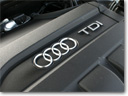
    The US general aviation aircraft industry is likely to see a major change in the near future as diesel engines are more than likely to replace traditional kerosene engines used today. In fact major makers of aircraft and aviation engines have already announced development of diesel engines that will be used in aircraft in the near future so the first diesel-powered airplanes are just around the corner.

    The reason for the change is quite simple – diesel fuel and diesel engines have undisputed advantages when compared to kerosene and kerosene-fueled engines. These are the same reasons why diesel-powered vehicles exist in the first place. In a few words airplanes that have diesel engines will have lower fuel consumption, lead-free emissions, increased range and better performance at various altitudes, which are really serious improvements, welcomed by the general aviation industry.

    Major aircraft makers such as Cessna and Continental Motors, American Champion Aircraft, Lycoming and DeltaHawk engines have already announced new diesel engines designed to power various types of aircraft.

    The change to diesel fuel in the aircraft industry follows a clear trend in the US automotive industry that has started offering a number of diesel-powered cars in the United States where just 10 years ago virtually all cars sold featured gasoline engines. The reason for the change is simple – cleaner, more powerful and more fuel efficient engines than ever.

    Source: Diesel Technology Forum

  • The 2015 Range Rover Sport SVR is a high-performance vehicle

    Range-Rover-SVR_thumbRange-Rover-SVR_651

    Range Rover has proudly presented the 2015 Range Rover Sport SVR, which is the first Range Rover to come with the new high-performance SVR badge.

    The new vehicle comes with a 5.0-liter supercharged V8 engine that produces 550 horsepower (404 kW) of power and 502 lb-ft (681 Nm) of torque, which is 40 HP (29 kW) and 41 lb-ft (56 Nm) of torque more than what the standard supercharged V8 engine produces. The advanced ZF 8HP70 eight-speed transmission and the four-wheel drive chassis are also tuned to complement this fantastic performance. The engine’s advanced and highly efficient design characteristics include: low internal friction; high-pressure direct injection with a centrally mounted, multi-hole, spray-guided injection system; dual independent variable camshaft timing (VCT); and an advanced intelligent Stop/Start system that stops the engine instead of idling and instantly restarts it when the driver is ready to proceed. This allows the car to achieve 0-60 mph (97 km/h) in just 4.6 seconds. Top speed is electronically limited to 162 mph (261 km/h), though.

    Showcasing an electronically controlled two-stage active exhaust, the SVR produces an inspired soundtrack at higher engine speeds while maintaining refinement during steady-state driving. Emphasizing all-terrain capability, vehicles are equipped with 21-inch alloy wheels with 275/45 R21 all-season Continental Cross Contact tires.

    The new 2015 Range Rover Sport SVR also comes with an eight-speed ZF 8HP70 transmission with eight close ratios and reduced shift times (by 50 per cent) for shorter and better shifts while utilizing engine inertia for a sense of acceleration through the shift. The transmission’s adaptive shift strategy monitors acceleration and brake inputs, lateral cornering forces, kickdown requests and even the severity of gradients, before choosing one of 25 pre-determined programs to seamlessly adapt to driver behavior and road conditions. Sportier driving triggers more aggressive gearshifts and defers upshifts.

    On the outside the 2015 Range Rover Sport SVR offers a front bumper with muscular trapezoidal air intakes, dark Range Rover script on the clamshell hood, which also features revised vents, and a new grille in a dark finish that contrasts with the headlights’ LED signature lighting. At the side of the vehicle, an all-new fender incorporates a distinctively designed vent, while unique side moldings add muscularity. At the rear, prominent Range Rover Sport SVR badging and a pronounced high-level spoiler with a centrally mounted brake light signal the vehicle’s sporting intent. The unique rear bumper features a gloss black diffuser, which incorporates unique quad exhaust pipes, instantly differentiating this high-performance derivative. Additional brake cooling has also been introduced for the six-piston Brembo brake set-up, ensuring optimal stopping power.

    On the inside the SVR sports distinctive leather sports seats with generous legroom and full 14-way electric adjustment. The rear seats have been redesigned to echo the performance-oriented front seats. This leads to having space for a fifth passenger. They also offer full 60/40 folding capacity and up to 62.2 cubic ftee (1761 liters) of load space.

    The 2015 Range Rover Sport SVR will sell for USD 110,475 excluding a USD 925 destination fee. This is a minimum suggested retail price so local pricing may vary.

    Source: Range Rover

  • Jaguar unveils continuation E-Type vehicle

    Jaguar-Lightweight_thumbJaguar-Lightweight_651

    The famous car maker Jaguar has unveiled the prototype of its continuation Lightweight E—Type vehicle, six of which will be built and sold.

    Jaguar announced in May 2014 that it would create six continuation Lightweight E-Type vehicles, each built by Jaguar Heritage, part of Jaguar Land Rover’s new Special Operations division. Each of the six cars will be built to the specification of the last Lightweight E-Type delivered in 1964 and will be hand-crafted at a new Heritage facility located at the spiritual home of the E-Type, Browns Lane in Coventry, England. The cars will be sold as competition vehicles and all will be suitable for FIA homologation for historic motorsport purposes.

    These six cars are special – they are the “missing” six vehicles from the “Special GT E-Type” project, which originally started in February 1963 with the objective of building 18 cars. Only 12 of the aluminum-bodied Lightweight E-Type vehicles were eventually built and the remaining six designated chassis numbers have lain dormant, until now. The six new cars will carry these unused Lightweight E-Type chassis numbers. A race winner in the hands of a variety of famous drivers during its competitive career, the car achieved worldwide fame, and today, original examples are highly sought after.

    The upcoming Lightweight E-Type will come with an aluminum body shell that reduces the car weight by 250 lbs (114 kg) versus the production steel bodywork. Although no modern materials and build methods will be used the new vehicles will have advanced technology applied to ensure the highest quality and most faithful rendition of the Lightweight E-Type. Using advanced scanning technology, the inner and outer surfaces of a Lightweight body shell were digitally mapped. The resulting detailed scan, which recorded dimensions and shape down to a fraction of a millimeter, was assessed to validate how the body was assembled in the 1960s. This also revealed how consistent the structure was side-to-side, and how it could be engineered today to produce the highest quality results.

    There are 230 individual elements in the body of the continuation Lightweight E-Type. About 75 per cent of them are made in-house at Jaguar Land Rover but some of them are delivered by external partners of the company. The aluminum used is almost the same when compared to the material used for the first cars. The aluminum body will be completed with the addition of an aluminum hood, doors and trunk lid. An aluminum hard top is standard, just like in the original.

    The new Lightweight E-Type will have an engine, based on the 3,868 cc (236 cu. in.) engine, which won Le Mans in 1957 in the D-Type. A similar cylinder head is used, but in place of the D-Type’s cast iron block, Jaguar introduced an aluminum block with steel liners for the Lightweight E-Type, which substantially reduced the amount of weight over the front wheels. A dry sump lubrication system reduces oil windage, maintains oil pressure during fast cornering and allows for higher oil capacity. The compression ratio is 10:1 and the car also comes with three 45 DCOE carburetors. This results in over 300 horsepower (221 kW) and 280 lb-ft (380 Nm) of torque at 4500 rpm. The power is transferred to the road via a lightweight, low inertia flywheel, a single-plate clutch, and a close-ratio, four-speed, fully-synchronized manual gearbox. The standard rear axle ratio is 3.31:1 and a variety of final drive ratios will be available. All Lightweight E-Type vehicles will be delivered with the Powr-Lok limited-slip differential.

    The car will be built at the Jaguar Land Rover facility in Whitley, England where it is mated to its tubular engine sub-frame and then shipped to the JLR Gaydon facility for painting. It is then taken to Jaguar Heritage facility at Browns Lane where the car receives its’ powertrain, suspension, brakes, steering, electrical items, instrument panel and soft trim. This process takes place in a dedicated work area close to where the original Lightweight E-Type vehicles were assembled. No word on pricing and availability though.

    Source: Jaguar

  • First official photos of all-new Kia Sorento now available

    Kia-Sorento_thumbKia-Sorento_651

    The first official photos of the all-new Kia Sorento are now available and they show a vehicle that features a striking and more mature appearance with bold and swept-back styling and sophisticated surface detailing.

    The new look of the Kia Sorento is an evolution of the current vehicle, incorporating fresh visual elements inspired by the Kia Cross GT concept that debuted at the 2013 Chicago Auto Show, carrying over the long bonnet and the distinctive treatment of the wide D-pillars from the previous generation. The exterior style has been created by Kia’s Namyang design studio in Korea but significant levels of input were received from the Kia studios, based in Frankfurt and California, USA.

    Soon-Nam Lee, Vice President of Overseas Marketing, Kia Motors Corp., said, “While we have retained the name based on the tremendous success of the current model, the all-new Sorento has been completely redesigned and re-engineered, and promises to surprise customers with its thoroughly updated styling, a host of new convenience and safety technologies, as well as enhanced space, driving comfort and handling response.”

    The new car is 95 mm longer and reaches 4,780 mm. At the same time it is 15 mm shorter, down to 1,685 mm, while the 80 mm longer wheelbase, now 2,780 mm, gives passengers more space in all three seat rows.

    The all-new Sorento will be showcased in Korea in late August and the European premiere of the vehicle is scheduled for October, 2 at the 2014 Paris Motor Show. Sales are expected to commence in spring 2015.

    Source: Kia

  • Volkswagen fans can now order the new Jetta

    Volkswagen-Jetta-front_thumbVolkswagen-Jetta-front_651

    Volkswagen has announced that the new and revised Jetta is now open for ordering at Volkswagen retailers. The first deliveries will occur in December of this year.

    The new Jetta arrives with better efficiency, revised styling for the front and rear parts of the car and enhanced features and trims. The car is now sleeker than before and the overall improvement when it comes to aerodynamics reaches 10 per cent. A revised radiator grille is up front and it comes with three horizontal fins; a reprofiled bumper is beneath. In the back the boot lid has been revised to incorporate an aerodynamically efficient lip that extends into the wings at the side. New tail lights and a revised bumper are underneath.

    On the inside the new Jetta offers a new design for the steering wheel, a variety of new trims around the center console, revised instruments and new fabric designs for the seats and the door trims. The ambient light inside the Jetta has also been updated. There are a few optional assistance systems too including Blind Spot Detection and Rear Traffic Alert.

    Volkswagen-Jetta-rear_651

    And now we come to the sweetest spot – engines. We can tell you that all of them come with BlueMotion Technology that features some modifications too, including stop/start and battery energy recuperation. All engines also fully meet the latest EU6 requirements. There are four of them – a 1.4-liter TSI unit with 125 horsepower (92 kW) and a six-speed manual gearbox; a 1.4-liter TSI unit with 150 horsepower (110 kW) and a six-speed manual or seven-speed DSG gearbox; a 2.0-liter TDI engine with 110 horsepower (81 kW) and a five-speed manual or seven-speed DSG gearbox and a 2.0-liter TDI engine with 150 HP (110 kW) with either a six-speed manual or six-speed DSG gearbox. Three trim levels are available – S, SE and GT. The standard equipment includes a DAB digital radio, Electronic stability control, electric windows and air conditioning.

    SE trim adds to the list 16-inch “Atlanta” alloy wheels, lumbar support, Bluetooth telephone connectivity, a leather-trimmed multifunction steering wheel, MDI multi-device interface and cruise control. The top-of-the-range GT trim comes with 15 mm lower sports suspension, 17-inch ‘Lancaster’ alloy wheels, front fog lights, front sports seats, automatic headlights and rain-sensing wipers, an auto-dimming rear-view mirror, heat-insulating tinted rear glass, a color multifunction trip computer, driver alert system and ambient interior lighting.

    Source: Volkswagen

  • Bentley to present Continental GT3-R at 2014 Pebble Beach

    Bentley-GT3-R_651

    Bentley will debut its Continental GT3-R vehicle at the upcoming 2014 Pebble Beach event, which will be the car’s North American debut. Bentley says that the Continental GT3-R is the most dynamic and fastest-accelerating Bentley ever produced. Continental GT3-R will be a hand-built car and only 300 of it will be built with 99 of them to be sold in the United States and four in Canada.

    Christophe Georges, President and CEO, Bentley Motors, Inc. comments: “Pebble Beach is the perfect location for the debut of the rarest and most dynamic Continental GT, the GT3-R. It is a testament to the Bentley trademarks of luxury and performance and we’re excited to share it with the friends of Bentley during this gathering of fine automobiles.”

    All the power inside the Continental GT3-R comes thanks to the installed road and race proven 4.0-liter V8 engine. This is a retuned version of the 4.0-liter twin turbo V8 engine used in the new two-seater Bentley GT. The engine delivers 572 bhp (580 horsepower/426 kW) and 516 lb.-ft. (700 Nm) of torque and makes the Continental GT3-R the fastest-accelerating Bentley ever. The car is now able to reach 60 mph (97 km/h) in just 3.6 seconds and all this is done with an engine that is 220 lb (100 kg) lighter than before.

    On the outside the car will offer a Glacier White exterior with two-tone graphics that trace the two prominent power lines to the side profile of the car. A new front splitter provides an assertive look to the front of the car, balanced by a new fixed rear wing fitted to the boot lid – both finished in carbon fiber. Additional unique exterior features adding to the sporting design include gloss black headlamp bezels, matrix grille, window surrounds and bumper strips. The look is complemented by an all-new lightweight 21” wheel finished in gloss black. The theme continues under the bonnet where the 4.0-litre V8 receives a unique GT3-R carbon fiber cover.

    On the inside the GT3-R offers a two-seat configuration of new bespoke sporting seats, finished with Beluga black leather with diamond-quilted Alcantara. A unique trimmed rear cabin is in the place of the rear seats, complete with a carbon fiber surround and finished in leather and Alcantara. Unique GT3-R badging adorns the center console and passenger fascia panel, while headrests receive stitched logos in contrast green thread. All 99 models bound for the US will receive sequentially numbered GT3-R sill treadplates identifying the car’s one-of-a-kind status.

    The new Bentley Continental GT3-R will sell for USD 337,000 and if you want one you can order it now at a Bentley dealer near you. For the Americas region deliveries will start in Q1 2015.

    Source: Bentley

  • McLaren to debut 650S Sprint at 2014 Pebble Beach

    McLaren-650S-Sprint_thumbMcLaren-650S-Sprint_651

    The 2014 Pebble Beach Concours d’Elegance will be remembered with the debut of one more sports car – the McLaren 650S Sprint. This will be the race car’s global debut along with a number of other models from McLaren Automotive, four of which will debut at the same Californian event, scheduled for later this year.

    As the name of the vehicle suggests the McLaren 650S Sprint is based on the already released McLaren 650S Coupe but the newcomer arrives with a number of important enhancements that include new developments to the Brake Steer system, more refined aerodynamics and a race set-up for the ProActive Chassis Control (PCC). All these improvements deliver a more engaging GT racing experience, without losing any of the refinement and balance found in the road car.

    But the new features of the McLaren 650S Sprint do not end here – the new car comes with an aerodynamically optimized design, increased levels of downforce and optimized cooling for the 3.8-liter twin-turbo M838T engine the car comes with. This is the same engine, which is featured in the McLaren 650S Coupe but it also comes with unique engine and transmission calibration for even better on-track driveability and driver engagement. Weight has also been minimized thanks to the strong carbon fiber MonoCell chassis but driver safety has not been compromised. A lightweight carbon fiber HANS-approved racing seat, with full six-point harness, offers an optimized driving position, while an air-conditioning system is retained adding comfort. An integrated fire extinguisher system is also installed.

    At the same time the McLaren 650S Sprint shares some design features with the McLaren 650S GT3 race car like a larger motorsport fuel “bag” tank with quick-fill connectors, optimized cooling from the larger GT3-developed front radiator with a GT3-inspired bonnet integrating radiator exit ducts and more. The 650S Sprint  has a lower ride height with recalibrated adaptive damping for revised spring rates, and sits on 19-inch center-locking racing wheels, fitted with Pirelli slick or wet tires, while an onboard air jacking system enables quick tire changes. Stopping power is also enhanced and provided by a race-prepared braking system developed for the 650S Sprint. This system combines with the road car’s highly effective Brake Steer system and enhanced active aerodynamics to offer superior braking performance. This allows for later braking into corners, but also improved brake feel and greater cornering speeds. A range of options is also available including a computational fluid dynamics developed aerodynamics package including carbon fiber rear wing and front splitter a passenger seat with six-point harness, and further lightweight components including a polycarbonate windscreen.

    In the UK the new McLaren 650S Sprint will cost GBP 198,000 and will be available from all official McLaren retailers around the world.

    Source: McLaren Automotive

  • Aston Martin to showcase Q by Aston Martin bespoke service

    Q-by-Aston-Martin_thumbQ-by-Aston-Martin_651

    The famous automobile brand Aston Martin will showcase a new collection of bespoke commissions created by the company’s Q by Aston Martin division at the Pebble Beach Automotive Week next week.

    There is a total of four new Q by Aston Martin designs, led by the Los Angeles-based dealer partner, Galpin Aston Martin. All new designs are based on the DB9 Volante, V12 Vantage S and Vanquish sports cars.

    The Q by Aston Martin Vanquish Coupe comes with amplified colors, bold contrasts and a new and innovative enlarged carbon fiber weave structure. The exterior is painted in Abor Orange, which is an exclusive new Q paint finish, and offers the vibrancy of a rich orange red fired with an intensity emphasized by a shimmering pearl effect. Ensconced in the Obsidian Black leather interior, the carbon theme is continued with a printed leather in a design called ‘Helix’; inspired by a carbon molecule helix and influenced by experimental rapid prototyped furniture. Running like a spine down the centre of the car, the Helix print is set on an unbroken expanse of leather headliner panel, and is revealed again in the door panels.

    The Q by Aston Martin Vanquish Volante comes with a new exterior paint finish – Frosted Silver – that offers better light to dark travel. Graphite-finished 10-spoke alloy wheels are set against classically styled polished calipers that match the Solid Sterling Silver seen in the Aston Martin wings and Q badges.

    The Q by Aston Martin DB9 Volante offers an Ashen Blonde exterior – warm silver taken from the exclusive Q palette and paired with polished alloy wheels. Inside, the DB9 adopts a blush pearl leather, Piano Ice Mocha facia and drawing inspiration from luxury furniture, a blanket stitch which runs the length of the central spine of the interior. As a final touch a pink Rhodachrosite stone is inlaid in the Q buckle badge strapped to the console.

    Finally the Q by Aston Martin V12 Vantage S comes with a rich purple amethyst exterior paint that gets combined with bright painted Monterey Pearl front grille and rear diffuser. An Obsidian Black interior is punctuated with Vivid Purple leather details on a number of details including seat stripe, headlining, steering wheel and glove box lining. Also included are a series of special carbon fiber details such as the rotary controls which are each hand wound from a single filament of carbon fiber.

    Matthew Bennett, The General Manager for Q and VIP Sales said: “The Q by Aston Martin collection of cars shown at Pebble Beach are a bold statement of the intent and capability we are developing within Q. They show how customers can be inspired to create truly unique cars and the breadth of bespoke capability at their disposal.”

    Source: Aston Martin

  • BBR upgrades the 2005-2014 Mazda MX-5 with “Super 200” package

    Mazda-BBR_thumbMazda-BBR_651

    The famous performance tuner BBR has unveiled the so-called “Super 200” upgrade package for owners of 2005-2014 Mazda MX-5 vehicles. In particular the upgrade package targets people who own the 2.0-liter Mazda MX-5 Mk3 / 3.5 / 3.75 (NC) models. The main perk of the package is engine power that was previously considered impossible.

    “BBR knows that the Mazda MX-5 owners’ community is a broad church and not everyone wanted the supercar style performance of our highly successful turbocharged upgrades,” says BBR-GTI’s Neil McKay. “Therefore we decided to develop a package that built upon our entry level Super 175 and 180 upgrades by incorporating exclusive BBR hardware and further electronic development to deliver the first genuine 200 bhp normally aspirated conversion to an eager Mazda performance aftermarket, whilst being designed for everyday use and offering exceptional value for money,” he continues.

    The “Super 200” package includes the following components: high flow BBR panel air filter, BBR stainless steel 4-into-1 exhaust manifold, BBR high performance intake and exhaust camshafts, BBR 3.5-inch diameter branded tailpipes with stainless steel clamps, BBR ECU remap and BBR badges for front wings and bootlid. Thanks to these hardware improvements the BBR Super 200 upgrade boosts peak power to 201 bhp (204 horsepower) at 7450 rpm, which is a remarkable tested gain of 43 bhp (44 horsepower).

    Having more peak power is nice but BBR has put extra effort into delivering all this power to the right spots. Thanks to a carefully designed and tested pair of exclusive camshaft profiles with unique lift and timing specifications, the Super 200 package delivers strong gains from just 3000 rpm upwards with standard power output exceeded at every point in the rev range. These efforts have results that can be measured in numbers. Thus the MX-5 2.0-liter 16-valve engine with the upgrade package produces 166 lb.-ft. of torque (225 Nm), which is 19 lb.-ft. (26 Nm) more than in the original, with the peak value arriving at just 4000 rpm, which is 1100 rpm lower than in the original.

    Mindful of both costs and occupant comfort for high speed, long distance driving, the standard exhaust centre section, catalytic converter and rear silencer are retained with the BBR Super 200 upgrade, but the package includes a set of 3.5-inch branded stainless steel tailpipe trims which are adjustable to accommodate different bumper options on Mk3 / 3.5 / 3.75 models. In addition, exclusive yet subtle BBR wing and bootlid badging is included in the Super 200 upgrade.

    In the UK the new upgrade package costs GBP 2,195 and this price includes drive-in, drive-out installation. A do-it-yourself version sells for GBP 1695. You can also find the Super 200 upgrade package at certain Mazda UK dealers.

    Source: Mazda

  • Chevrolet to debut next-gen Volt at 2015 NAIAS

    2016-Chevrolet-Volt_thumb2016-Chevrolet-Volt_651

    Official sources from Chevrolet have announced that the US car maker will debut the new Volt at the 2015 North American International Auto Show in Detroit, United States.

    The upcoming 2016 Chevrolet Volt will be based on the award-winning original’s strong foundation and technology innovations. The car enjoys continued popularity in the US where sales were up by 13 per cent in July and more than 65,000 vehicles have been sold since the Volt debut in 2010. According to Chevrolet Volt owners drive more than 63 per cent of their overall miles in electric vehicle mode, having covered more than 500 million miles with no gasoline usage. This has saved more than 25 million US gallons (94.5 million liters) of gasoline so far. Volt owners who charge regularly typically drive more than 970 miles between fill-ups and visit the gas station less than once a month.

    The Volt has received multiple customer satisfaction awards from leading third-parties. According to a recent leading independent satisfaction survey, the Volt is the highest-rated compact car under USD 55,000. Owners are showing their satisfaction as well. For the past three years, a leading customer publication has reported survey results showing more than 90 percent of Volt owners said they would definitely buy a Volt again. Among its accolades, the 2014 Volt has been recognized for its safety, most recently receiving the Insurance Institute for Highway Safety 2014 Top Safety Pick+ designation for vehicles equipped with an available Forward Collision Alert system.

    Source: Chevrolet

  • Bugatti to honor Ettore Bugatti with last Legend

    Ettore-Bugatti-Legend_thumbEttore-Bugatti-Legend_651

    During the week of 11-17 August Bugatti will celebrate the conclusion of its “Les Legendes de Bugatti” edition (Bugatti Legends) with the world premiere of the company’s sixth Legend. The car, which is based on the historical model Type 41 Royale, will honor the founder of the Bugatti car company Ettore Bugatti and only three units will be produced, just like with the five previous Legends. A single Ettore Bugatti vehicle will cost EUR 2.35 million. In addition Bugatti will present all six Bugatti Legends together for the first and only time.

    “Ettore Bugatti is our ‘patron’. His demand that an automobile be a perfect harmony of technology and aesthetics still applies to us today,” said Wolfgang Dürheimer, President of Bugatti Automobiles S.A.S. “Ettore Bugatti always strived for the creation of a total work of art. His ideas and vehicles set the foundation stone for an automobile brand that was lauded then and now as the most valuable in the world. Ettore Bugatti himself is a legend. It was clear from the start that we should dedicate the final Legends model to him personally.”

    The “Ettore Bugatti” Legend is based on the Bugatti Veyron 16.4 Grand Sport Vitesse, just like all other Legends. The luxurious sports car is driven by a powerful 1200 horsepower (882 kW) 8-liter W16 engine that produces unequalled 1500 Nm (1106 lb.-ft.) of torque at 3000-5000 rpm and takes the car from 0 to 100 km/h (0-62 mph) in just 2.6 seconds. In addition the “Ettore Bugatti” Legend reaches a top speed of 408.84 km/h (254 mph), which makes it the world’s fastest production roadster ever built.

    On the outside the “Ettore Bugatti” Legend is made of carbon and hand-polished aluminum. Bugatti is the only manufacturer to use clear-coated aluminum on a production vehicle. For the first time, this material is used for the entire front and side panels including the bonnet, the mirror bases and housings, the exterior door handles and the corners of the bumpers, the wings, the doors and the regions just behind them, the so-called “medallions” (in French). The vehicle’s rear, sill panels and A-pillar trims are finished with dark-blue exposed carbon. The car also features polished, diamond-cut wheel rims with eight spokes and a dark-blue finish.

    On the inside the “Ettore Bugatti” Legend makes use of two types of leather – traditional calf’s leather – here in a natural brown (Brun Cavalier) – is used throughout the vehicle interior. Cordovan leather is used for the steering wheel rim, gear lever, door handles, center console armrest and door handle recesses, the switches in the door trims and in the roof module. The eye-catching feature of the interior is the platinum-coated dancing elephant that is inset in the cover of the rear centre box and reminiscent of the hood ornament of the Type 41 Royale.

    You can see all six models of the Legends Edition on Friday, August 15 at “The Quail: A Motorsports Gathering” and also on Sunday, August 17 at the “Pebble Beach Concours d’Elegance”.

    Source: Bugatti