Author: autoview

  • New Maserati MC20 Cielo Global Premiere

    2023 Maserati MC20 Cielo

    The MC20 super sports car, now also a spyder: Maserati presents MC20 Cielo, a one-of-a-kind car that can deliver the performance of a true super sports car, together with a holistic and immersive driving pleasure the like of which has never been seen before.

    MC20 Cielo announces its special features in its very name: MC stands for Maserati Corse (‘Racing’); 20 refers to 2020, the year that began the brand’s new era; Cielo (‘sky’) highlights the fact that it is a model devoted to driving pleasure in the great outdoors, while maintaining all the prerogatives of the coupé.

    Equipped with the revolutionary V6 Nettuno engine, the Cielo offers a perfect mix of sportiness and luxury, courtesy of a specification unique to the segment: the innovative retractable glass roof.
    In actual fact, the new spyder acts a meeting point between Maserati audacity and the infinite sky, featuring a special “sky feeling”.
    The model is equipped with a state-of-the-art electrochromic (smart glass) window that can instantly be transformed from clear to opaque at the touch of a button on the central screen, courtesy of Polymer-Dispersed Liquid Crystal (PDLC) technology. The roof is also best-in-class in terms of thermal insulation and of opening and closing speed (just 12 seconds).
    Courtesy of this epitome of technology, MC20 Cielo provides a multi-sensory driving experience: all-encompassing with the roof closed and opaque; unique for the in-cabin brightness when the roof is transparent; holistic with the top down.

    Developed at the Maserati Innovation Lab and produced at the historic plant on Viale Ciro Menotti, the spyder is 100% made in Italy and 100% made in Modena, as is the coupé version.

    MC20 Cielo is designed for perfection. It weighs just 65 kg more than the coupé, made possible by meticulous, precise work during the stages of the car’s design. As well as its outstanding weight-to-power ratio, the carbon fibre chassis (the same for all three configurations to come: coupé, spyder and the future electric version) also guarantees uncompromising torsional rigidity, offering a combination of extraordinary handling on the road and on the track.

    The new spyder is a car with an elegant yet highly sporty design. Its character and personality are truly eye-catching for the purity of its forms and the refined aerodynamics subjected to 360° testing in a wind tunnel, whether the roof is open or closed.
    Nothing is superfluous in the design; everything has its own function. The only concession to a surprise effect is the butterfly doors, as in the MC20 super sports car.
    The butterfly door provides much easier access into and out of the cabin, as well as showing off the carbon fibre cockpit and the completely unmasked front wheel.

    From an aesthetic perspective, the launch version features a new three-layer metallic colour known as Acquamarina, available as part of the Maserati Fuoriserie customisation programme.
    A colour that interacts with light, revealing itself in a surprising way. The base is a pastel grey inspired by racing, reminiscent of the MC20’s sporty DNA, accompanied by an iridescent aquamarine mica that enlivens the hue and makes it exceptional.

    The new model also adds a wide range of Active Safety Systems. As well as the parking sensors, rear-view camera and blind spot monitoring included in the MC20 since the MY22, the new spyder introduces autonomous emergency brake, traffic sign information and a new 360° camera.

    MC20 Cielo is equipped with an optional High Premium Sonus faber audio system. The MC20 Coupé system, an EISA award-winning in-vehicle audio system, has been specifically optimized to fit the unique acoustic and positioning needs of the spyder’s cabin, situating the system’s 12 speakers to result in the Natural Sound that distinguishes Sonus faber audio systems.
    Finally, the in-car experience is managed from the Maserati Intelligent Assistant (MIA) Multimedia system, and from Maserati Connect.

    At the World Premiere of the new Maserati spyder, the bond with the sky will be the central theme, to take you into a new, holistic dimension: just raise your eyes and look up to the sky.

  • Toyota 4Runner Celebrates Historic Run with 40th Anniversary Special Edition

    2023 Toyota 4Runner 40th Anniversary - Front Angle

    Forty candles. The “big four-0.” The Toyota 4Runner will reach the 40-year mark with the 2023 model year…  and, to celebrate, Toyota is offering a distinctive 4WD-only 2023 4Runner 40th Anniversary Special Edition. Appropriately, Toyota will make 4,040 of these special editions available for the U.S. market. Over the past four decades, 4Runner has amassed more than 4 million cumulative sales while carving out its place as the ready-for-anything SUV that’s equally at home on pavement or trail.

    The 2023 Toyota 4Runner 40th Anniversary Special Edition is based on the SR5 Premium grade and will be available in three colors: White, Midnight Black Metallic and Barcelona Red Metallic. It will stand out from the lineup thanks to bronze-colored 17-inch alloy wheels, a body-color-matching TOYOTA heritage grille and a bronze-colored 40th Anniversary exterior tailgate badge.

    The biggest eye-catcher, though, is likely to be the heritage graphics package created especially for this anniversary model. The first 4Runner was built on the Toyota pickup platform, which itself founded the heritage of Toyota’s illustrious success in off-road racing. As an homage to those early racers, the 4Runner 40th Anniversary Edition will be wearing some very cool, retro-inspired yellow/orange/red body graphics.


    2023 Toyota 4Runner 40th Anniversary - Side Angle

    The anniversary theme continues inside, where the 4Runner 40th Anniversary Special Edition gets exclusive badging on the center console and features a bronze-colored cross-stitch shift knob, bronze-colored seat stitching, 40th Anniversary floormats and a 40th Anniversary logo on the Black SofTex-trimmed seats. Topping it off is a standard power moonroof.

    Fun facts: When the first 4Runner arrived, “Star Wars: Return of the Jedi” was the top-grossing movie in America, and “Every Breath You Take” by the Police had ended the year at #1 on the Billboard 100. (Yep, that was then “Jedi” was the third Star Wars movie, not “Episode Six.”)

    A 4Runner for All Seasons and Reasons

    The 2023 4Runner lineup covers a broad range of tastes and needs in a high-capability SUV. The line includes grades SR5, SR5 Premium, TRD Sport, TRD Off-Road, TRD Off-Road Premium, Limited and TRD Pro. The 4Runner exudes a rugged look in all grades yet maintains a timeless SUV style all its own. The SR5 and TRD models ride on 17-inch alloy wheels that are available in three designs: 6-spoke for SR5 models, 7-spoke for TRD Off-Road models and flow-form matte black alloy wheels for TRD Pro.

    The TRD Off-Road and TRD Off-Road Premium grades are distinguished by color-keyed bumpers and overfenders, hood scoop and silver-colored painted front and rear bumper accents. “TRD Off-Road” badges adorn the C-pillars. The Limited is the only 4Runner with a chrome-plated grille insert and chrome-finished exterior trim. All 4Runner models have LED fog lights as standard equipment, with the TRD Pro featuring Rigid Industries LED fog lights.

    The Ready-for-Adventure SUV

    The 4Runner’s inherent strength starts with its tough-as-nails, body-on-frame construction featuring a four-link rear axle and coil-spring suspension. The robust chassis is also the foundation of 4Runner’s comfortable ride quality.

    A 270-horsepower DOHC 4.0-liter V6 engine with 278 lb.-ft. of peak torque gives 4Runner plenty of get-up-and-go. The engine’s Dual Independent Variable Valve Timing with intelligence (VVT-i) helps optimize torque across the engine’s operating range, enhancing responsiveness in a variety of driving conditions.

    The five-speed ECT-i automatic transmission features a sequential shift mode for manually shifting when desired. All 4Runner grades are standard-equipped with an integrated tow-hitch receiver and wiring harness, and all models can tow a maximum of 5,000 pounds.

    The 2WD 4Runners provide an ample 9.0 inches of ground clearance, while 4WD models offer an even more generous 9.6 inches. All 4Runner 2WD models feature standard Automatic Limited Slip Differential (Auto LSD), a function of the traction control (TRAC) that allows some wheel slippage to help the vehicle dig out from sand or snow, for example.

    4×2 and Two Kinds of 4×4

    The available part-time 4WD system uses Active Traction Control (A-TRAC) and bolsters off-road capability with a two-speed transfer case with selectable low-range. By distributing drive force to any one wheel in contact with the ground, A-TRAC can help maintain traction when it senses wheel slippage occurring on terrain irregularities and slippery patches.

    Exclusive to the 4Runner Limited, a full-time 4WD system uses a Torsen center differential with locking feature and a three-mode, center console-mounted switch. The system employs a 40:60 torque split in most driving situations and alters that in response to slippage. In addition, if the front wheels are slipping while the vehicle is turning, the Torsen® differential changes the torque split to 30:70. If the rear wheels slip while the vehicle is turning, the split changes to 53:47.

    Maximum Traction Tech

    The Toyota 4Runner offers a variety of tools to suit different off-road missions. An array of technologies enhances the capability provided by the 4Runner’s high-strength chassis and available 4WD. Standard Hill-Start Assist Control (HAC) provides additional control when accelerating from a stop on a steep incline. The system helps to briefly hold the vehicle stationary while the driver transitions from the brake pedal to the accelerator.

    Limited and SR5 models equipped with 4WD also feature standard Downhill Assist Control (DAC). This feature augments low-speed descending controllability by helping to maintain a constant slow speed and preventing wheel lockup, therefore allowing the driver to concentrate primarily on steering.

    The 4Runner TRD Off-Road and TRD Pro models add the capability of an electronic-locking rear differential and Toyota’s Crawl Control (CRAWL) feature. With the transfer case shifted into low range, CRAWL is designed to regulate engine speed and braking force to slowly move the vehicle forward or in reverse at one of the five driver-selectable, low-speed settings. This function allows the driver to focus on steering without having to also modulate the throttle or brake pedal in challenging terrain.

    As trail conditions change, the driver can adapt the vehicle using the standard Multi-Terrain Select system using a dial (located overhead along with CRAWL settings) to choose a mode that matches prevailing surface conditions. The system will then adjust wheel slip control accordingly.

    Both 4Runner TRD Off-Road and TRD Pro feature the Multi-Terrain Monitor on the list of off-road tech features. Using strategically placed cameras, the system lets the driver check surroundings on the trail, with the ability to spot potential obstacles not easily seen from the cabin. The TRD (and Limited) models also add a premium Multi-information Display.

    Road-Hugging TRD Sport

    The 4Runner TRD Sport grade, which first joined the line for 2022, focuses less on the trail and more on road-focused features while adding style and flair. For an emphasis on everyday comfort and road dynamics, the 4Runner TRD Sport employs the Cross-Linked Relative Absorber System (X-REAS) suspension to enhance on-road handling. The X-REAS system adjusts the damping force of shock absorbers when driving over bumpy surfaces or when cornering. A center control absorber cross-links the shock absorbers on opposite corners of the vehicle, like an “X,” to help reduce pitch and yaw by offsetting opposing inputs.

    The 4Runner TRD Sport is available with either 2WD or part-time 4WD with a 2-speed transfer case. Based on the SR5 grade, the 4Runner TRD Sport swaps the SR5’s 17-inch wheels for machine-faced 20-inch wheels with Dark Gray accents. Notably, all 4Runners come equipped with a full-sized spare tire, regardless of wheel size.

    The TRD Sport gets its own look with color-keyed accents on the grille, rocker panels and body molding, plus the signature TRD-style hood scoop and a front spoiler and black roof rails. Inside, TRD Sport replaces the SR5 grade’s cloth seat surfaces with power-adjustable black SofTex-trimmed seats. The seats feature unique gray-colored contrast stitching, and the front headrests have gray-colored TRD stitched logos. TRD Sport floor mats are included, and a standard TRD shift knob completes the cabin makeover.

    2023 Toyota 4Runner 40th Anniversary - Side

    TRD Pro Earns Its Name

    The TRD Pro badge on any Toyota truck or SUV signifies the most off-road-capable vehicle in its respective Toyota lineup. The 2023 4Runner TRD Pro is also a bold looker, offering Solar Octane, White, Magnetic Gray Metallic and Black color options. Leading the way for off-road upgrades are some of the features not as easily seen, because tucked away at each corner are specially tuned Fox internal bypass shocks and TRD-tuned coil springs yield an inch of front lift for improved trail-tackling capability. The rear Fox shocks feature piggyback-style remote reservoirs to maintain damping performance over demanding off-road terrain. Delivering the best of both worlds, the shock tuning improves trail driving isolation and high-speed performance without compromising on-road comfort and steering response.

    Like other Toyota TRD Pro vehicles, the 4Runner TRD Pro features a 1/4-inch-thick aluminum front skid plate with red TRD lettering. The TRD roof rack is exclusive to 4Runner. Black TRD alloy flow-form wheels come standard on TRD Pro and are fitted with Nitto Terra Grappler tires.

    A standard TRD-branded cat-back exhaust gives this trail star a powerful-sounding growl for the V6 engine. Inside, the TRD Pro features upgraded HVAC controls like those found in the Limited grade, plus a standard moonroof and Premium Audio with JBL speakers and Clari-Fi™ technology for enhancing digital music formats.

    For 2023, TRD Pro will offered in the exclusive exterior color of Solar Octane, which is available alongside staples Black, White and Magnetic Gray Metallic.

    On and Off-Road Suspension

    For even greater off-road prowess, the TRD Off-Road grade can be equipped with Toyota’s optional Kinetic Dynamic Suspension System (KDSS), which allows extended wheel travel at slow speeds for greater off-road capability and control. The KDSS system hydraulically adjusts the lean resistance provided by the stabilizer bars. Sway resistance is reduced for off-road driving to help minimize any tendency for wheel lift. On pavement, KDSS enables the bars to work conventionally, reducing body lean to enhance agility and control.

    The 4Runner Limited, while certainly off-road capable, emphasizes everyday comfort and pavement handling with the X-REAS suspension system also shared with the TRD Sport.

    Adventure Expert With Emphasis on Safety

    With room for up to seven, the fifth-generation 4Runner offers room for the whole family. All 2023 4Runner models come standard with Toyota Safety Sense-P, an advanced suite of driver-assist technologies that includes Pre-Collision System with Pedestrian Detection, Lane Departure Alert with Sway Warning System, Automatic High Beams and High-Speed Dynamic Radar Cruise Control.

    For the 2023 model year, Blind Spot Monitor + Rear Cross Traffic Alert is standard on all grades. All models have standard LED high beams, in addition to the LED low beams and fog lights on most grades.

    Along with TSS-P, all 2023 4Runner models also come equipped with Toyota’s Star Safety System that includes Vehicle Stability Control (VSC) with traction control (TRAC, or A-TRAC with 4WD) and Anti-Lock Brake System (ABS) with Electronic Brake-force Distribution (EBD), Brake Assist (BA) and the Smart Stop Technology (SST) brake-override system.

    Eight standard airbags include driver and front passenger Advanced Airbag System; front seat-mounted side airbags; driver and front passenger knee airbags; and all-row, roll-sensing side curtain airbags. All 2023 4Runner models add Rear Occupancy Alert. When operational parameters are met, the system does what its name suggests, it reminds the driver to check the rear seat for a child or pet before exiting the vehicle.

    Space for People and Gear

    For carrying gear, 4Runner offers multiple options. With the second-row seats in use, the cargo area offers up to 47.2 cu. ft. of carrying space. If it’s just two people hitting the road or trail, folding the second row opens a cavernous 89.7 cu.-ft. cargo area. The second-row seats fold flat without having to remove the headrests.

    The 4Runner SR5 and Limited grades offer available third-row seating, with a split 50:50 seat that folds flat. When so equipped, the 40:20:40 second-row seat has a one-touch walk-in function to provide easy access to the third row. The seats can be folded from the side or at the rear, using separate one-touch levers. The second-row seats, which include a center armrest, individually recline up to 16 degrees in four steps.

    For power on the go, the 4Runner has a standard 120V outlet and two 12V outlets. The available pull-out cargo deck can support up to 440 pounds to make loading and unloading heavy items easier. It also provides seating for tailgating and campsite relaxation.


    2023 Toyota 4Runner 40th Anniversary - Front Angle - Interior

    Toyota Value from Bumper to Bumper

    All 4Runner grades are equipped with Smart Key with Push Button Start. The SR5 Premium and TRD Off-Road Premium add a significant comfort upgrade with SofTex®-trimmed seats, heated front seats and an auto-dimming rearview mirror.

    The 4Runner Limited delivers a luxury experience with leather-trimmed, heated and ventilated 8-way power adjustable driver’s seat (with memory) and 4-way power adjustable front passenger seat, along with dual-zone automatic climate control. Limited grade’s standard front and rear clearance sonar system helps make parking maneuvers easier and safer. The Limited’s Panoramic View Monitor (PVM) provides a 360-degree bird’s-eye view to help the driver see objects around the 4vehicle.

    The Premium Audio system in the 4Runner Limited and TRD Pro adds 15 JBL speakers including a subwoofer and amplifier, Dynamic Navigation with 3-year trial, Dynamic POI Search, Dynamic Voice Recognition, Destination Assist with 1-year trial, Remote Connect with 1-year trial and Wi-Fi Connect with up to 2 GB within 3-month trial.

    Limited Warranty and ToyotaCare

    Toyota’s 36-month/36,000-mile basic new-vehicle warranty applies to all components other than normal wear and maintenance items. Additional 60-month warranties cover the powertrain for 60,000 miles and corrosion with no mileage limitation. The 2023 4Runner also comes with ToyotaCare, a plan covering normal factory-scheduled maintenance for 2 years or 25,000 miles, whichever comes first, and 24-hour roadside assistance for two years, unlimited mileage.

    https://www.youtube.com/watch?v=QF-tCBKmV74

  • 50 Jahre BMW M: The BMW M3 and BMW M4 edition models marking the company’s anniversary.

    2023 BMW M4 Coupe 50 Jahre BMW M

    Within the framework of spectacular events featuring sensational new model innovations and together with its worldwide community, BMW M GmbH is celebrating the first five decades of its existence during these weeks and months. On 24 May 1972, the partnership agreement for BMW Motorsport GmbH was signed. Exactly 50 years later to the day, the company now known as BMW M GmbH is presenting an exclusive collection of edition models as a current anniversary highlight.

    With the BMW M 50 Jahre edition of the BMW M3 Sedan (fuel consumption combined: 10.2 – 9.8 litres/100 km; CO2 emissions combined: 231 – 223 g/km according to WLTP; data according to NEDC: – ) and the BMW M4 Coupe (fuel consumption combined: 10.1 – 9.8 litres/100 km; CO2 emissions combined: 230 – 223 g/km according to WLTP; data according to NEDC: – ), M enthusiasts around the globe can express both their passion for racing and their awareness of tradition. Limited editions, exclusive design features and individually selectable equipment options ensure that each edition vehicle can become a unique car that reflects the personal style of its owner.

    The BMW M 50 Jahre edition is based on the current generation of the most successful model series in the history of BMW M GmbH. Worldwide, the model designations BMW M3 and BMW M4 are synonymous with high performance in the premium mid-range segment. The edition models are powered by a straight six-cylinder engine with up to 375 kW/510 hp, M TwinPower Turbo technology and high-revving characteristics. Depending on the model variant, its power is transferred to the rear wheels via a 6-speed manual transmission or an 8-speed M Steptronic transmission with Drivelogic, or fully variably distributed to all four wheels using M xDrive technology.

    The exclusive character of the edition models is the result of a market-specific configuration with unique design features and a strictly limited number of units in each case. In this way, fascinating rarities are created for the most important automotive markets around the world. For the exterior paintwork of the edition vehicles, style-defining colours from the history of BMW M GmbH are being reissued. These are complemented by M forged wheels in a similarly exclusive colour scheme and striking accents in the interior.

    In Europe and other selected sales regions, BMW M GmbH is offering an exclusive edition of the BMW M4 Coupe to mark its anniversary. The two-door BMW M 50 Jahre edition comes in the exterior colours Carbon Black, Macao Blue, Brands Hatch Grey, Imola Red and San Marino Blue. Their expressive appearance is enhanced by 19-inch M forged wheels on the front axle and 20-inch wheels on the rear axle featuring a double-spoke design, which are being offered for the first time in the colours Orbit Grey Matt and Gold Bronze matt.

    In addition, a similarly limited number of edition vehicles of the BMW M4 Coupe are being produced for the Chinese automotive market and available in the exterior paint finishes Fire Orange and Stratus Grey. This colour selection relates to the fact that the anniversary of BMW M GmbH is being celebrated in China in the Year of the Tiger. The M forged wheels on these vehicles are finished in matt Orbit Grey in conjunction with the Fire Orange body colour and in matt Gold Bronze in conjunction with the Stratus Grey exterior paint finish.

    In the interior of all edition vehicles based on the BMW M4 Coupe, door sill panels bearing the lettering “Edition 50 Jahre BMW M”, a metal plaque on the centre console with the lettering “M4 Edition 50 Jahre BMW M” and a corresponding imprint on the headrests of the standard M sports seats and the optional M carbon bucket seats for driver and front passenger hint at the anniversary.

    The edition model on the basis of the BMW M3 Sedan was designed exclusively for the US and Canadian automotive markets. There is a choice of five exterior paint finishes for the 500 models of the four-door high-performance sports car available there, each of which is reminiscent of one of its five predecessors: from Cinnebar Red to Techno Violet, Interlagos Blue and Fire Orange to Limerock Grey. All body colours are combined with M forged wheels in Orbit Grey matt and selected BMW M Performance Parts. The components, which are inspired by racing in terms of design and technology and likewise included in the range of equipment available for the anniversary edition, also comprise the BMW M Performance front splitter Carbon, the BMW M Performance rear spoiler Carbon and the BMW M Performance tailpipe trims Carbon/Titanium.

    The “Edition 50 Jahre BMW M” lettering on the door sill trims and M stripes on the headrests of the front and outer rear seats characterise the interior. Moreover, an exclusive seam pattern adorns both the standard M sports seats and the optionally available M carbon bucket seats of the edition vehicles. A metal plaque on the cupholder cover of the centre console bears the inscription “M3 Edition 50 Jahre BMW M” and the reference “1/500”.

    CO2 EMISSIONS & CONSUMPTION.

    BMW M3 Sedan

    Fuel consumption combined: 10.2 – 9.8 litres/100 km; CO2 emissions combined: 231 – 223 g/km according to WLTP; data according to NEDC: – .

    BMW M4 Coupe

    Fuel consumption combined: 10.1 – 9.8 litres/100 km; CO2 emissions combined: 230 – 223 g/km according to WLTP; data according to NEDC: – .

  • The BMW M3 Edition 50 Jahre BMW M

    2023 BMW M3 50 Jahre BMW M - Front view

    On this day in 1972, the agreement that created BMW Motorsport GmbH was signed. Over the past 50 years, on streets and tracks around the world – corner by corner, lap by lap – BMW M has built a passionate community of extraordinary fans. And today, as we celebrate BMW M’s 50th birthday, it’s those enthusiasts who will get the present. The company now known as BMW M GmbH is presenting a limited edition model exclusive to North America, the M3 Edition 50 Jahre BMW M.

    Based on the 2023 BMW M3 Competition xDrive, the M3 Edition 50 Jahre BMW M will be offered in modern formulations of five iconic paint colors – one from each of the previous five generations of M3. The legendary E30 M3 is represented in vibrant, non-metallic Cinnabar Red. The E36 M3 is evoked by dazzling Techno Violet. Deep Interlagos Blue is taken from the palette of the storied E46 M3. Fire Orange III will be remembered from the limited Lime Rock Park Edition of the ferocious E92 M3. And Limerock Grey graced the rare and thrilling F80 M3 CS. Two of the colors, Techno Violet, and Interlagos Blue, were revived just for this Edition, and starting with July production will be available only on the M3 Edition 50 Jahre BMW M for model year 2023.

    Regardless of paint color, each M3 Edition 50 Jahre BMW M will come equipped with forged Style 826M wheels in a sleek matte Orbit Grey finish unavailable on the standard M3. Behind those wheels, customers may choose the standard M Compound brakes and specify red, blue, or black calipers, or they can opt for M Carbon Ceramic brakes with their characteristic gold calipers. Motorsport-inspired exterior enhancements from the M Performance catalog are also part of the package. Up front, the 50 Jahre BMW M edition receives a carbon fiber front splitter.  At the back, the signature M quad tailpipes are trimmed in carbon fiber and titanium, and the trunk lid sports a distinctive M Performance carbon fiber spoiler, all of which complement the standard carbon fiber roof.

    Classic BMW Motorsport logos are fitted to the hood, trunk, and wheel center caps in place of the usual BMW roundels. With its staggered semicircles in blue, navy, and red, the anniversary emblem is reminiscent of the original BMW M GmbH trademark that was first used on racing cars in 1973.

    Upon opening the doors, the driver and passenger are greeted by “Edition 50 Jahre BMW M” lettering on the door sill trims. The inscription is repeated on an aluminum plaque on the cupholder cover below the dashboard, accompanied by a reminder that this very special M3 is “1/500”. Customers have the choice of the standard M Sport seats or the optional, track-ready M Carbon bucket seats, upholstered exclusively in Black Extended Merino leather. Both seat designs feature a unique seam pattern utilizing stitching in the M colors. They are complimented by tri-color M stripes on the headrests. The M stripes are also found on the folding headrests of the outboard rear seats.

    Included with the vehicle is the 50 Jahre BMW M Boardcase. This 42L roll-aboard suitcase is constructed of durable and lightweight Makrolon Polycarbonate adorned with the 50 Jahre BMW M logo on the front.

    The M3 Edition 50 Jahre BMW M will be available in only one, well-equipped configuration.  This includes the Executive and Parking Assistance packages, Icon Adaptive LED headlights with Laserlight, carbon fiber interior trim, wireless device charging, and M Shadowline headlights.  All customers have to do is choose their exterior color, brake caliper color, and style of seat.  The M Carbon Ceramic Brakes and M Carbon bucket seats are the only extra-cost options.

    Beginning with model year 2023, all BMW M3s will feature the BMW Curved Display and the 8th generation of BMW iDrive. A 12.3-inch information display behind the steering wheel and a 14.9-inch control display merge into a single, fully digital, high-resolution unit. The new BMW Operating System 8 offers many more options for drivers to enjoy easy, intuitive, multimodal control of vehicle, navigation, infotainment, and communication functions, as well as digital services.

  • Rolls-Royce Boat Tail: the next chapter

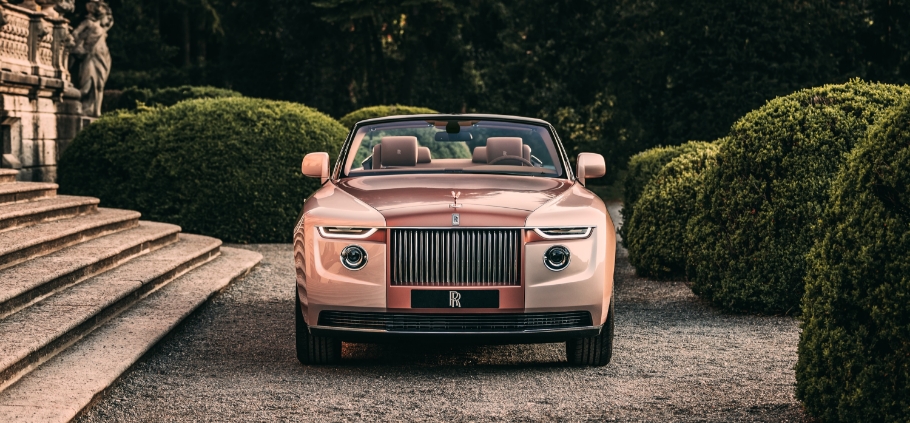
    2022 Rolls-Royce Boat Tail - front view

    “Coachbuild elevates our work as a House of Luxury into a new space; it is the haute couture of our industry. For the commissioning patron it offers the ultimate in individuality, self-expression and Bespoke service. Far more than just a beautiful motor car, a coachbuilt creation becomes a legacy that embodies something extraordinarily personal and emotionally resonant for each client. For our designers, too, Coachbuild provides unparalleled creative freedom; opportunities to take design, materials, engineering and craftsmanship to the very highest levels. For Rolls-Royce as a marque, it is both a return to our roots and a contemporary revolution, in which we deliver the impossible in conventional automotive manufacturing into a stunning reality.”
    Torsten Müller-Ötvös, Chief Executive Officer, Rolls-Royce Motor Cars

    “Every Rolls-Royce Coachbuild commission is, of course, incredibly special; but in this case, there was an additional depth of feeling. Creating a motor car in honour of a revered client’s father and family history is an extraordinary privilege; a responsibility that we took very much to heart. The commissioning patron’s deep-rooted connection to Boat Tail is an inspiration – the result far exceeds a means of conveyance to become, quite literally, a moving work of art.”
    Alex Innes, Head of Coachbuild Design, Rolls-Royce Motor Cars

    Rolls-Royce Motor Cars is honoured to present the next chapter of its Boat Tail coachbuilt commission – one of just three that have been, and ever will be made.

    The essence of Rolls-Royce Coachbuild is that each commission tells a story entirely unique and personal to its owner, reflecting their own history, tastes and sensibilities. With this in mind, Boat Tail, revealed at Concorso d’Eleganza, Villa d’Este 2022, on the shores of Lake Como in northern Italy, is a masterwork of restraint, sophistication, elegance and attention to detail.

    Boat Tail is entirely hand-built, with the body panels fashioned from vast, single sheets of aluminium to create the distinctive outline inspired by the racing yachts of the early 20th century. In every respect, this remarkable motor car is entirely unique.

    It was commissioned by a patron whose family business has grown from his father’s origins in the pearling industry. Widely travelled, internationally educated and cosmopolitan in his tastes and influences, the client is an established patron of the arts, who additionally owns a sizeable collection of classic and modern cars, housed in a dedicated private museum.

    A level of sophistication, garnered from the client’s extensive knowledge of luxury, is clearly visible in this coveted objet d’art. The overall design aesthetic is restrained; a study in carefully considered materials and precise details that together create a highly personal and emotionally resonant homage to the client’s father.

    At the onset of the commissioning process, the client presented Rolls-Royce Coachbuild Designers with a selection of four pearl shells, personally chosen from his private collection for their unique colour and complexity. The shells provided inspiration for the exterior colour, which is one of the most complex Bespoke finishes ever created by Rolls-Royce.

    The foundation of the colour is a shimmering blend of oyster and soft rose, with large white and bronze mica flakes adding a unique pearlescent quality that changes subtly under different light conditions. The contrasting cognac-coloured bonnet, created specifically for this Boat Tail, contains fine bronze and gold coloured aluminium mica flakes complete with a layer of crystal and iced matt clear coat, adding significant warmth and depth to the car’s appearance. The technical fibre lower sills of Boat Tail incorporate a rose gold woven thread.

    The rear deck, which houses Boat Tail’s unique ‘butterfly-design’ hosting suite, is swathed in Royal Walnut veneer, inlaid with rose gold-plated pinstripes with a satin-brushed finish to ensure a sensitive and sophisticated appearance. The Royal Walnut was specifically selected by the client for its beautiful properties as it matures over time, a material that will gradually transition to the tonal properties of the cognac colour. From above, one observes a harmonious balance and satin effect of the iced bonnet and tactile wooden rear deck, in contrast with the high-gloss front and side perspectives.

    From the front, the Pantheon Grille, milled from a single, solid billet of aluminium, is graced with a Spirit of Ecstasy fashioned in rose gold.

    The interior is a beautifully curated combination of perfectly matched cognac and oyster-coloured leathers and Royal Walnut veneer, with rose gold and mother-of-pearl accents throughout. The leathers, complete with a pearlescent finish, accentuate the surfaces and forms of Boat Tail’s seats and interior design. The transmission tunnel is formed from Royal Walnut veneer with rose gold pinstripes, drawing a direct visual reference to the rear deck and adding a glowing warmth to Boat Tail’s interior.

    The centrepiece of the dashboard is a timepiece made from mother-of-pearl, chosen and supplied by the client from his own collection; the fascia of which is pure and minimal in its appearance so as not to detract from the precious material. The same prised substance graces the control switches and instrument dials, creating a strong visual and material connection between the car, the owner, and his family heritage.

    Alex Innes, Head of Coachbuild Design, said, “Boat Tail is a step-change in ingenuity and creative liberty. Building a motor car by hand offers a new realm of exploration and possibility: we can accomplish things and resolve challenges that normal industrialised methods would prohibit. This is the tale of two worlds: a modern motor car of contemporary design, made possible by historical techniques and time-honoured craft. It is truly, one-of-a-kind.”

  • Nissan unveils all-new minivehicle in Japan

    2023 Nissan Sakura EV

    Nissan today unveiled the all-new Sakura electric minivehicle in Japan. Sales of the newest addition to Nissan’s EV lineup are scheduled to start in the market this summer.

    Named after the iconic Japanese cherry blossom, the Sakura’s affordable price provides more consumer choice in the EV market. Nissan Executive Vice President Asako Hoshino says: “The all-new Sakura follows the LEAF and Ariya as a mass-market EV. We believe it will be a gamechanger for the Japanese market and will make EVs much more accessible to customers in Japan.”

    The Sakura EV takes the minivehicle class to the next level. Its nimble handling and 4.8 meter turning radius allows drivers to execute sharp maneuvers with ease. Despite its size, the Sakura has a spacious interior and an ample driving range, making it perfect for daily driving needs such as commuting and shopping. It also features ProPILOT Park1, an automated system designed to make parking easier and driving more pleasurable.

    Powerful, smooth driving performance

    The Sakura features the instant, smooth power and quietness that are the hallmarks of EVs. Equipped with advanced control technology and a motor producing 47 kW and 195 Nm of torque, the Sakura’s quick and steady acceleration makes merging on highways effortless. Meanwhile, the technology Nissan has cultivated through its development of the LEAF over more than a decade has enabled the Sakura to have the highest level1 of cabin quietness in the minivehicle class.

    Three drive modes — Eco, Standard and Sport — provide optimal performance for different situations. Using e-Pedal Step, the driver can decelerate smoothly and steadily by easing off the accelerator pedal — an action that also charges the battery through regenerative braking. The Sakura’s speed can be modulated using just the accelerator pedal. This makes driving more enjoyable on city streets, where repeated acceleration and deceleration are necessary, and on snow-covered roads that require smooth deceleration.

    In addition, the Sakura’s low center of gravity enhances stability and offers superior ride comfort over uneven road surfaces.

    State-of-the-art e-powertrain

    The Sakura is equipped with a state-of-the-art lithium-ion battery that has a track record of performance and reliability in the LEAF. Thanks to the special stacking method of its cells, the battery is compact, allowing the Sakura to have a spacious interior. Yet it offers a range of up to 180 km (based on WLTC Japan cycle), making it perfect for daily use. The battery can also be used as a mobile power source during emergencies and provide a day’s worth of electricity to a home.2

    Advanced driving systems — a first for minivehicles

    In addition to the ProPILOT driver assistance system3, the Sakura is equipped with the ProPILOT Park system — a minivehicle first. ProPILOT Park automatically controls steering, acceleration, braking, shifting and the parking brake while parking. These advanced technologies enhance driving ease and pleasure, from city streets and parking lots to highways.

    High quality, sophisticated design

    Exterior
    – The Sakura’s exterior design exudes sophistication and strength. Its front end and glowing badge epitomize Nissan’s next-generation vehicles. The elegant slim headlights with projector-type triple beams — a minivehicle first1 — increase nighttime safety. The G and X grades are also equipped with wide LED rear combination lamps3 whose appearance is inspired by the rear door’s latticework.
    – The design of the aluminum wheels3 draws inspiration from the Japanese mizuhiki decorative knots that are commonly found on gift envelopes and packages. Embodying traditional Japanese aesthetics, this accent adds chicness to the Sakura.
    – The charging port, located on the right-side back of the Sakura, lights up when the lid is opened to facilitate nighttime use.
    – Fifteen body colors are available, including four two-tone options that evoke the seasons.

    Interior
    – The centerpiece of the Sakura’s cockpit is a 7-inch Advanced Drive Assist Display meter and a large 9-inch navigation display placed horizontally to allow viewing with minimal eye movement. The NissanConnect navigation system3 offers a range of features to enhance the Sakura’s driving experience, including route setting based on charging needs, an emergency SOS call service4 and Apple CarPlay5 wireless connectivity.
    – The seats have a comfortable sofa design and are upholstered in luxurious fabric. Their horizontally positioned copper-colored trim3 gives the interior a modern look and a sense of roominess.
    – The cup holders are designed to grip beverages to prevent wobbling. Ample storage space is available for daily needs. For example, the horizontal instrument panel center tray can hold a smartphone, a wallet and other small items.
    – The twin-spoke steering wheel3 adds a sense of sportiness and the optional Premium Interior Package version comes leather-wrapped.
    – Three interior colors are available: black, beige and blue grey.

    Scheduled to go on sale in Japan this summer6, the Sakura is priced starting at approximately 1.78 million yen (including consumption tax and the clean energy vehicle subsidy7). Nissan will offer online purchasing options such as video chats and a dedicated website which will enable customers to choose from conventional face-to-face services all the way to full online orders from the comfort of their home.

    Nissan Sakura recommended retail prices (including consumption tax)

    Driveline Battery capacity Grade Price (yen)
    2WD 20 kW S 2,333,100
    X 2,399,100
    G 2,940,300

    Nissan Sakura specifications

    Battery Lithium-ion
    Battery capacity 20 kWh
    Output 47 kW
    Torque 195 Nm
    Top speed 130 km/h
    Range (WLTC mode) Up to 180 km
    Charging time8 Standard charge: 8 hours (from battery warning light illuminated to fully charged)
    Quick charge: approximately 40 minutes (from battery warning light illuminated to 80% charged)
    Length 3,395 mm
    Width 1,475 mm
    Height 1,655 mm
    Wheelbase 2,495 mm
    Weight
    (depending on model and equipment)
    1,070 kg – 1,080 kg
    Luggage capacity 107 liters
    Seating capacity 4
    1. Nissan figures as of May 2022
    2. Assuming 12 kW per day, the average power consumption for general households in Japan
    3. Varies by grade
    4. Registration required for NissanConnect
    5. Apple CarPlay is a trademark of Apple Inc.
    6. Sales timing may change
    7. Clean energy vehicle subsidy is expected to be 550,000 yen
    8. Charging time and amount of charge depends on various factors, including ambient temperature

    https://www.youtube.com/watch?v=myrmw4UTXYI

  • The all-new BMW M4 CSL – The Re-Edition of a Legend.

    2023 BMW M4 CSL

    As part of its 50th anniversary celebrations, BMW M GmbH is presenting a special-edition car based on its successful high-performance models in the premium midsize segment. The new BMW M4 CSL blends old-school racing passion with innovative technology to create an inimitable performance experience.

    With its next-level power and intelligent lightweight design, two-seater configuration, model-specific chassis upgrades and equipment features selected specially for the job at hand, the new BMW M4 CSL has track driving as its raison d’être. The genes the M4 CSL shares with its competition-spec sibling, the BMW M4 GT3, are also reflected in its performance attributes. In test runs on the Nürburgring’s Nordschleife circuit, the BMW M4 CSL posted the fastest lap times ever for a series-produced BMW car. On the version of the track traditionally used for comparison purposes – which is 20.600 kilometres / 12.8 miles in length and doesn’t include the straight at section T13 – it stopped the clock at 7 min. 15.677 sec. Its official and notarised lap time for the 20.832-kilometres / 12.943-mile circuit (the complete lap) was 7 min. 20.207 sec. Acceleration figures of 3.7 seconds from 0 to 100 km/h (62 mph) and 10.7 seconds for the sprint from 0 to 200 km/h (124 mph) are similarly impressive.

    “Competition, Sport, Lightweight”: a recipe with a rich tradition.

    The stripped-back racing character of the BMW M4 CSL is underpinned by a time-honoured concept that harnesses cutting-edge development expertise and the latest technology to create an enthralling end result. “CSL” stands for “Competition, Sport, Lightweight”, referencing the critical role of weight-minimised design in achieving success in motor sport. The BMW 3.0 CSL developed by BMW Motorsport GmbH according to this same principle won the European Touring Car Championship at the first attempt in 1973. And the M4 CSL is also following in the tyre tracks of successful special-edition models from earlier generations of the BMW M3/M4, most notably the legendary BMW M3 CSL from 2003 and the BMW M4 GTS unveiled in 2016.

    For BMW M GmbH, the world premiere of the new BMW M4 CSL at the Concorso d’Eleganza Villa d’Este (20 – 22 May 2022) will be one of the highlights of its 50th anniversary year. Production of the special-edition model will begin – in a limited run of exactly 1,000 examples – at BMW Group Plant Dingolfing in July 2022.

    Present and correct in the fundamentals and the details: intelligent lightweight design in the BMW M4 CSL.

    Its talent for innovation and racing-car know-how enabled BMW M GmbH to restrict the special edition’s DIN kerb weight to 1,625 kilograms. A standout power-to-weight ratio of 2.95 kilograms per hp (4.01 kg/kW) provides the ideal platform for a dynamically sublime driving experience.

    Fitting M Carbon full bucket seats reduced weight by around 24 kilograms on its own compared with the standard seats fitted in the BMW M4 Competition Coupé. 21 kilograms were saved by removing the rear seats and seat belts, integrating a partition and making the associated modifications to the luggage compartment. And chassis changes, including the addition of extra-lightweight M Carbon ceramic brakes and special light-alloy wheels, springs and struts, lowered the figure by around another 21 kilograms. Paring back the amount of soundproofing plus switching to ultra-lightweight sound insulation saved around 15 kilograms, while the use of components made from carbon-fibre-reinforced plastic (CFRP) deducted some eleven kilograms. For example, in addition to its CFRP roof, the bonnet and boot lid of the BMW M4 CSL are also hewn from this lightweight high-tech material, as is its centre console. And a titanium rear silencer cuts more than four kilograms from the weight of the exhaust system. Detail modifications to areas such as the BMW kidney grille, rear lights, floor mats and automatic climate control shave off another four kilograms.

    Exclusive exterior paint finish, model-specific design features.

    The body of the BMW M4 CSL is painted in the exclusive Frozen Brooklyn Grey metallic as standard. This exterior shade teams up with exposed carbon-fibre surfaces and red accents to create a visually expressive appearance of sporting purity. Alternatively, customers can specify their new M4 CSL in Alpine White solid or Sapphire Black metallic.

    The carbon-fibre structure of the body components is visible in various areas, including the two chiselled indents in the bonnet. The surfaces of the indents – which are not painted in body colour – are highlighted additionally by red outlines. Red accent lines also bring extra emphasis to the two fins on the CFRP roof of the new BMW M4 CSL, the contours of its side sills, the black model badges, and the model-specific CFRP splitters and air curtain inserts in the front apron.

    BMW Laserlight: yellow headlights and innovative rear lights.

    The optionally available BMW Laserlight headlights bring another head-turning accent to the front end of the new BMW M4 CSL. Both in the welcome effect triggered when unlocking the doors and when the low and high beam are switched on, these headlights illuminate in yellow rather than white, bringing to mind the look of successful GT racing cars.

    The LED rear lights of the new BMW M4 CSL are equipped as standard with technology making its debut in a series-produced car. Their glass covers have intricate light threads woven into them which are illuminated using laser technology, bringing a vibrant structure to the surface of the lights. This creates a highly distinctive light signature that is recognisable from a long distance during the hours of darkness.

    Six-cylinder in-line engine with race-focused character.

    The model-specific power unit of the BMW M4 CSL is based on the same high-revving, six-cylinder in-line engine with M TwinPower Turbo technology found in the BMW M4 GT3 racing car. Its substantial performance reserves enabled a major hike in power without having to make any concessions in terms of stability or durability. Key to this power boost was an increase in the maximum charge pressure of the two mono-scroll turbochargers from 1.7 bar to 2.1 bar and model-specific tweaks to the engine management. The BMW M4 CSL’s engine develops peak torque of 650 Nm (479 lb-ft) between 2,750 and 5,950 rpm. Its maximum output of 405 kW/550 hp is produced at 6,250 rpm.

    The race-derived design of the 3.0-litre engine is focused squarely on high revs and maximum power development. The crankcase’s sleeve-free, closed-deck construction helps to make it extremely rigid, while the forged lightweight crankshaft allows it to handle extremely high levels of torque. Another special M-specific feature is the cylinder head core made using 3D printing techniques.

    Both the cooling and oil supply systems are designed to handle the particular challenges presented by track driving. The twin-tailpipe exhaust system with electrically controlled flaps and weight-minimised titanium rear silencer additionally generates a racing-car-inspired, emotionally engaging engine note created especially for the new BMW M4 CSL.

    The drive torque produced by the engine is relayed to the rear wheels of the new BMW M4 CSL via an eight-speed M Steptronic transmission with Drivelogic. Model-specific mountings for the engine and transmission ensure the engine’s power is translated into dynamic performance in exceptionally rapid and direct fashion. The firmer connection of the engine and transmission to the car’s structure is clearly perceptible, especially under hard driving.

    Optimised body rigidity, model-specific chassis technology.

    Like the engine in the new BMW M4 CSL, its chassis technology benefits from a wealth of detail upgrades – which have been tailored to the power unit’s performance characteristics. These modifications also factor in the substantial reduction in vehicle weight at play here and the model-specific improvements to body rigidity, allowing the blend of handling agility, dynamism and precision for which BMW M cars are renowned to be taken to new heights.

    In the engine compartment, a composition of front-end strut braces developed entirely from scratch raises the body rigidity of the new BMW M4 CSL up another level. Using numerical models, the geometry of the cast aluminium elements between the spring strut towers and the front end has been adapted precisely to the forces exerted in different driving situations.

    The individually tuned axle kinematics and model-specific wheel camber settings, dampers, auxiliary springs and anti-roll bars optimise steering precision, transmission of lateral control forces when cornering, spring and damping response, and wheel location. The model-specific wheel suspension is accompanied by a drop in ride height of eight millimetres compared with the BMW M4 Competition Coupé. Also to be found on the standard equipment list for the special-edition model are adaptive M suspension with electronically controlled dampers, electromechanical M Servotronic steering with variable ratio and M Carbon ceramic brakes. An M-specific version of the integrated braking system offers the driver excellent pedal feel even when pushing the dynamic limits and in adverse road conditions.

    M Traction Control optimised for the track.

    The standard-fitted M Traction Control function with model-specific track tuning lets the driver set individual intervention thresholds for wheel slip limitation. On dry surfaces, stages 1 to 5 of M Traction Control help the driver to execute controlled drifts. Stages 6 to 10 are based on the application developed for touring car racers and make allowance for both surface conditions and tyre temperature to maximise traction and directional stability.

    Also specified as standard are forged M light-alloy wheels in an exclusive cross-spoke design (19 inches at the front axle and 20 inches at the rear). These are fitted with high-performance tyres specially developed for the special-edition model in size 275/35 ZR19 (front) and 285/30 ZR20 (rear).

    Equipment designed to provide a race-car feeling and everyday usability.

    Model-specific equipment features give the BMW M4 CSL a distinctive balance between sports car purism, unrestricted everyday usability and exclusive premium substance. The M Carbon full bucket seats for the driver and co-driver are marked out by their self-supporting CFRP structure and purposeful rejection of comfort-enhancing features. They have a fixed backrest angle, forward/back adjustments can be made manually, and the seat height can only be adjusted in a workshop using a three-stage screw linkage. The M Carbon full bucket seats also have detachable head restraints and allow the integration of a six-point belt system.

    The M Alcantara steering wheel, anthracite-coloured headliner, Carbon Fibre interior trim strips, “CSL” badges on the seats, centre console and rear panel, plus M-specific displays also help to create the perfect on-board setting for concentrated driving pleasure. Merino leather trim with extended features and M seat belts are also standard. Two helmet storage units can be found in the rear compartment.

    The M-specific control/operation system includes the M Setup button for direct access to numerous vehicle settings and two M buttons on the steering wheel for storing preferred configurations. Standard equipment also features the M Drive Professional system including M Drift Analyser and M Laptimer, plus the M Mode button for activating the ROAD, SPORT and TRACK settings.

    The likewise standard BMW Live Cockpit Professional comprises a fully digital screen grouping made up of an instrument cluster with a 12.3-inch screen diagonal behind the steering wheel and a 10.25-inch control display. Among its functions are the navigation system BMW Maps, the BMW Intelligent Personal Assistant, smartphone integration, telephony with wireless charging and a Wi-Fi interface. The BMW Head-Up Display with M-specific elements and the BMW Drive Recorder can be ordered from the options list.

    The range of comfort-enhancing features and driver assistance systems fitted in the BMW M4 CSL are focused on the essentials, in keeping with its intelligent lightweight design approach and puristic vehicle concept. Standard specification includes automatic climate control, Park Distance Control, Front Collision Warning, Lane Departure Warning and Speed Limit Info. Two-zone automatic climate control, an alarm, and the Driving Assistant and Parking Assistant systems are available as options.

    CO2 EMISSIONS & CONSUMPTION.

    The BMW M4 CSL
    Combined fuel consumption: 10.1 – 9.8 l/100 km; combined CO2 emissions: 227 – 222 g/km according to WLTP; NEDC data: – ,

    * All figures relating to performance, fuel/electric power consumption and emissions are provisional.

  • Vision AMG show car offers glimpse of all-electric future of Mercedes-AMG

    2022 Mercedes-Benz Vision AMG Concept

    Spectacular proportions defined by a long wheelbase and emphasised by short overhangs, powerful shoulders, large wheels, a distinctive rear spoiler and star-shaped headlamp signature – the Vision AMG makes an emotional statement from every perspective. This extraordinary show car from Mercedes-AMG offers a glimpse of the all-electric future of AMG Driving Performance. Beneath the breath-taking exterior design of the four-door coupé is the equally extraordinary dedicated AMG.EA platform, which is currently under development in Affalterbach for all-electric performance models.

    “AMG is reinventing itself. As was once the case with our founding fathers, there has been an amazing feeling of new beginnings here in Affalterbach for quite some time now. The course has been well and truly set for an electrified future, and we’ve set the bar high. That’s because our customers expect something very special from all-electric cars. We have already well and truly proven our expertise in this regard with the SLS AMG Electric Drive, our own E PERFORMANCE hybrid technology and the first Mercedes-EQ derivatives. With this study, we are now offering a first glimpse of how we are transferring the AMG DNA into the all-electric future, starting in 2025. Gorden and his team are pointing the way from a visual perspective with this extraordinary design. At AMG, we have always stood for that extra shot of emotion, driving fun, handling, ingenious aerodynamic features and other innovative solutions. And that’s what we continue to stand for with our first BEV developed entirely in Affalterbach. We’re developing everything from scratch, from the dedicated AMG.EA platform to the revolutionary drivetrain technology with which we will take performance electric mobility to a whole new level,” says Philipp Schiemer, CEO of Mercedes-AMG GmbH.

    “The Vision AMG shows in spectacular style what electrification could look like at Mercedes-AMG, while staying true to the brand aesthetic. The study’s extreme proportions create fascination and passion for performance – that’s what AMG is all about. The Vision AMG is an impressive embodiment of the brand’s dual polarity – the interplay of beauty and the extraordinary. At the same time, elements from the future, such as the light signatures with the illuminated high-tech grille, underscore the progressive evolution of our design language of Sensual Purity,” says Gorden Wagener, Chief Design Officer of Mercedes-Benz Group AG. “With its contrasting modern surfacing and radical proportions, this car showcases the next design step, building on the VISION EQXX and moving further towards performance luxury. The seamless flow of beautifully formed surfaces and the monolithic sculpture complete the powerful aesthetic of the Vision AMG. The result is an electric supercar, a style icon that stimulates desire – and that’s exactly what sets a luxury sports car apart.”

    Monolithic sculpture and radical proportions

    The concept car is characterised by flowing, beautifully formed surfaces. Joints and shut lines are reduced to a minimum, and the rear and side windows are painted in the same Alubeam silver as the car itself. The result is an overall look that reinforces the impression of a monolithic sculpture.

    The sporty proportions are particularly evident from the side, and are defined by the technical layout – long wheelbase, sharply raked A-pillar positioned far forward, short front overhang and slightly longer, aerodynamically optimised rear overhang. It clearly expresses the design language of Sensual Purity with distinctive sports car cues such as the widely flared wheel arches and broad, muscular shoulders at the rear.

    The graceful greenhouse is integrated into the flowing overall form and blends seamlessly into the low-lying silhouette. The roof tapers as its line drops elegantly towards the rear, flowing directly into the rear spoiler. The overall effect is a visually fascinating and aerodynamically advantageous teardrop form, not unlike that of the VISION EQXX. The sensual surfacing and the powerfully defined sculpture are representative of the hallmark Mercedes design language. Similarly, the brand’s aspiration to the extraordinary is realised through the radical proportions and sharply chiselled shark nose. The Vision AMG is thus an impressive example of the dual polarity of the brand’s design approach embracing “Beauty & the Extraordinary”.

    The sharply angled tear-off edge at the rear incorporates an active spoiler, elongating the side view while at the same time improving the aerodynamics. It is framed by a precisely cut band of light that accommodates a variety of different light installations, providing an effective contrast with the large black AMG logo on the rear of the car.

    Breathtaking technology for hallmark performance

    The technology of the Vision AMG tributes the spectacular design in many ways. All of its drivetrain components are developed entirely from scratch: not only the AMG.EA platform itself, but also the dedicated high-performance high-voltage battery and the revolutionary drive technology. The powerful heart of the Vision AMG is its innovative Axial Flux Motor developed by Mercedes-Benz’ wholly owned subsidiary YASA. With its compact and lightweight design it delivers substantially more power than conventional electric motors.

    Closed-off AMG grille with illuminated bars

    The AMG-specific grille with vertical bars is retained as a distinctive brand feature – despite the fact that an all-electric drivetrain does not require a classic radiator at the front. The high-tech development of the grille is therefore closed off, painted in body colour and fully integrated into the front end. As the visual focal point, the grille emphasises the futuristic look of the Vision AMG with its illuminated bars and three-dimensional exterior contour. The three-pointed star is positioned prominently on the bonnet – as on the Mercedes-AMG Project ONE.

    Extraordinary star-shaped light signature

    The headlamp light signature points directly into the future. Three LED elements form a stylised, three-dimensional Mercedes star, ensuring the Mercedes and AMG branding is immediately apparent and unmistakable by night and day. The two headlamps are visually connected via the horizontal band of light above the grille. This light band can display a variety of animations – ranging from a welcome signature to constant light.

    The round lights at the rear have a light design that is new yet familiar. On each side, three LED rings are positioned in cylindrical tubes. Here, too, small stars offer a nod to the Mercedes brand. By way of contrast, the expressive rear diffuser is painted deep black.

    Connection to Formula 1 through form and colour cues

    The direct connection to the successful Mercedes-AMG Petronas F1 team is evident in further visual details. These include the silver paintwork with a large-format star pattern across the shoulders and rear wings, functional elements in exposed carbon-fibre, the aerodynamic design of the 22-inch wheels with aero claddings, the AMG logo and elements on the sills and diffuser in the Petronas colours.

    The sporty high-tech seamless design and the breath-taking proportions give the Vision AMG a futuristic character. The four-door configuration also makes clear that the show car offers a taste of a functional all-Mercedes-Benz Vision AMG Conceptelectric sports car of the future. Despite the battery pack in the floor of the car between the axles, the study sits considerably lower than the EQS and, thanks to its intelligently designed interior floor, offers plenty of space for four.

  • Toyota Marks 25th Anniversary of Sienna with Special Limited Edition

    2023 Toyota Sienna Special Limited Edition - front view

    The 2023 Toyota Sienna marks the model’s first quarter-century of success and celebrates with a limited-availability 25th Anniversary Edition. Based on the sport-infused XSE grade, the special model gains additional luxury cabin features from the Limited grade and adds exclusive exterior and interior trim. Toyota will build just 2,525 of these models for the U.S., making this a “gotta have it” minivan.

    Toyota has sold more than 2.2 million Sienna models since its debut in 1997. The fourth-generation Sienna debuted for the 2021 model year, offering hybrid power exclusively and giving customers the benefit of Toyota’s 20+ years of global hybrid leadership and well documented quality, durability and reliability. The 2023 Sienna lays down impressive numbers. Its Toyota Hybrid System II delivers 245 total system horsepower and earns the vehicle an EPA-estimated 36 combined MPG fuel economy (front-wheel drive).

    The Hybrid-exclusive strategy has been a winner for Sienna, which was the top-selling minivan in America for 2021, capturing 35% of the segment. The new-generation Sienna offers the choice in front-wheel drive or Electronic On-Demand All-Wheel Drive, which employs a separate rear electric motor rather than a heavy AWD transfer case and space-robbing driveshaft to the rear wheels. As a result, EPA-estimated combined fuel economy is 35 MPG, nearly matching the 36 combined MPG for front wheel drive.

    Happy Silver Anniversary

    The ultra-sporty XSE model on which the 25th Anniversary Edition amps up the sporty factor with available dark 20-in. split-5-spoke wheels, bolder looking front and rear bumpers, black-painted caps and a sport-tuned suspension that are unique to the XSE. The Sienna 25th Anniversary Edition is available in front-wheel drive or all-wheel drive and includes the XSE Plus Package, which equips the Sienna 25th Anniversary Edition with roof rails, Premium Audio with JBL speakers and navigation, wireless charging and a 1500-watt converter.

    Appropriately for the occasion, the Sienna  25th Anniversary Edition is available in Celestial Silver, with Wind Chill Pearl as a second color choice. Special black badging and exterior trim, including mirrors caps and shark fin antenna, accents the two available exterior colors.

    From there, this celebration model adds a slew of features from the Limited grade, including the exterior mirrors with memory, auto-dimming, puddle lights, power-fold and reverse-tilt down function. Inside, the Limited also donates black leather-trimmed seating with silver-colored stitching, including heated and ventilated front seats with memory. The Limited’s memory steering column and second-row seats with ottomans enhance onboard comfort, and illuminated door sills greet front occupants. Special “25th Anniversary” floormats treat the feet, and an exclusive black key fob cover with silver-colored stitching features a “25th Anniversary” badge.

    Sienna’s Journey

    As minivans entered the market and gained popularity in the eighties and nineties, Toyota first imported its rear-drive Van and then the more market-suitable Previa. Meanwhile, Toyota was preparing a much more focused entry, and it arrived for 1998: the Sienna.

    The Sienna proved to be right on target for the market, and through each design generation has evolved to a state of family vehicle perfection. Here’s a look at how it got there.

    First-Generation: 1998-2003

    Designed expressly for the U.S. market, the 1998 Sienna was assembled at Toyota Motor Manufacturing, Kentucky, Inc. in Georgetown, Kentucky. Toyota called the first Sienna “The Camry of Minivans,” and for good reasons. Firstly, it was based on a larger version of the Camry’s front-wheel drive platform, which ensured an excellent balance of handling agility and ride comfort. Also, the Sienna was designed to give buyers the same combination of quality, user-friendly operation and value that had made the Camry so popular.

    The first Sienna was 193.5 inches long on a 114-inch wheelbase, making it easy to maneuver and park. The powertrain paired a 3.0-liter, 194-horsepower V6 with a four-speed electronically controlled automatic transmission. The 1998-2003 Sienna had an EPA-estimated 17 city MPG / 23 highway MPG / 19 combined MPG fuel economy ratings.

    The Sienna offered the choice of 7- or 8-seat configurations and provided renowned Toyota value in CE, LE and XLE grades. A driver’s side sliding rear door was standard on LE and XLE and optional for CE, and the XLE offered optional leather-trimmed seats.

    Toyota engineered the first Sienna with the safety that family van buyers sought. Anti-lock brakes were standard, and Sienna was one of the few vans at the time to offer available front seat-mounted side torso airbags and Vehicle Stability Control. The first Sienna achieved the highest rating (“Good”) in all six IIHS frontal crash tests.

    Second-Generation: 2004-2010

    Customers loved the first-gen Sienna so much, they wanted more … more room, more versatility, more power and more safety. The second-gen Sienna for 2004 delivered on all counts. The chief engineer for the new model, Yuji Yokoya, and his family drove a first-gen Sienna throughout North America and met with minivan owners to gain a deeper understanding of how owners used these vehicles in daily life. Influenced by that input, the second-gen Sienna introduced for 2004 grew significantly to offer more room and versatility. Wheelbase and length both increased by five inches, and the new Sienna was also four inches wider and 1.6 inches higher than the first-generation model.

    The second-gen Sienna debuted an all-wheel drive option, and the Sienna would remain the only minivan to offer AWD for many years. All models gained a 3.3-liter V6 with 230 horsepower, teamed to a new 5-speed electronically controlled automatic transmission. Fuel economy ratings increased to 17/25/20 EPA-estimated MPG for the front-wheel drive model.

    Seating and cargo room increased all around. Notably, as minivans were frequently used for trips to warehouse stores, the Sienna could now easily carry 4×8-foot sheets of plywood. The second-gen Sienna debuted a luxurious new Limited trim. And, recognizing the value of keeping passengers entertained, Toyota offered an optional rear-seat DVD entertainment system with two 110V outlets.

    In the safety category, side curtain airbags, optional on certain 2004-2005 trims, became standard on all for 2006. Vehicle Stability Control was made standard for all models in 2008. Continuous evolution brought new features such as Bluetooth wireless tech for hands-free phone use and music streaming, a power-folding third row, rear view camera, rear parking sensors and navigation. For 2007, the Sienna received a 266-horsepower 3.5-liter V6.

    Third Generation: 2011-2019

    The third-generation Sienna introduced for 2011 ushered in a bolder design, along with a growing roster of luxury and tech features. The design emerged from Toyota’s CALTY studios, with engineering handled by Toyota Technical Center in Ann Arbor, Michigan, as well as in Japan. Sized the same as the second-gen Sienna, the new model added versatility.

    A new 2.7-liter four-cylinder engine became standard but was discontinued after two years. The 3.5-liter V6 continued and was paired with a six-speed automatic transmission. For 2018, power jumped to 296 horsepower with the addition of Toyota’s D4-S direct fuel injection, and an eight-speed automatic replaced the six-speed. EPA fuel economy estimates with this combination were 18 city / 24 highway / 20 combined.

    Standard features included three-zone climate control, three power ports, power door locks and remote keyless entry. As a fun surprise, a new SE model grade added some sport sedan verve to the driving experience. Front styling was even bolder, with side skirting that visually lowered the vehicle and smoked taillights that made a distinctive statement. Specially tuned suspension, revised steering and 19-inch alloy wheels boosted agility and driving engagement. This was the minivan with attitude.

    The third-gen Sienna brought a major advance in active safety for 2015 with optional Pre-Collision System and Dynamic Radar Cruise Control. Toyota Safety Sense P (TSS-P) was made standard for all model grades in 2018. TSS-P included Pre-Collision System with Pedestrian Detection, Lane Departure Alert with Steering Assist, Dynamic Radar Cruise Control and Automatic High Beams.

    Additional safety features included a rear-view camera with 180-degree view, driver’s knee airbag and Toyota Safety Connect. On the luxury and user tech side, the Smart Key System with Push-Button Start added new convenience, and the available second-row sliding Lounge Seating could slide up to 23 inches rearward to open up enormous legroom.

    The Sienna’s Entune 3.0 multimedia system included a live-traffic map, while the higher grades also featured Wi-Fi connectivity for up to five devices. An available 11.6-inch dual-view rear seat entertainment system was a real passenger pleaser.

    Fourth Generation: 2020-

    Toyota reimagined the fourth-generation Sienna to support a wider array of life stages and activities than the typical minivan. That included answering the call for more luxury, multimedia and outdoors-amenable features.

    Assembled in the U.S., the fourth-generation Sienna was designed by the combined effort of CALTY’s Newport Beach, California, and Ann Arbor, Michigan, studios. It is built around an all-new minivan structure based on Toyota’s versatile TNGA-K Platform architecture, and the evocative design was influenced by the bold and robust character of SUVs.

    The Sienna delivers a confident, agile driving experience with exemplary ride comfort, thanks in large part to the TNGA-K Platform combined with a trailing-arm multi-link rear suspension. The sporty XSE and lavish Platinum grades fill their wheel wells with standard 20-inch aluminum clad wheels with P235/50R20 tires for FWD. (All-Wheel Drive versions have 18-inch wheels.)

    The 2023 Sienna line includes LE, XLE, sporty XSE, outdoors-oriented Woodland Edition, luxurious Limited and ultra-plush Platinum trims. The Woodland Edition introduced for 2022 combines adventure-inspired rugged styling, a standard Electronic On-Demand All-Wheel Drive System and increased ground clearance to take family fun further afield.

    The 2023 Sienna offers many available premium features across the model line (depending on model grade), such as kick-open and closed sliding side doors and rear gate, four-zone climate control system, heated second-row Super-Long Slide captain’s chairs with ottomans, power tilt and telescoping steering column with heated steering wheel, 10-in. color head-up display and 12-speaker JBL® Premium Audio system.

    All 2023 Sienna models come standard with Toyota Safety Sense 2.0 (TSS 2.0), a comprehensive active safety system that includes:

    • Pre-Collision System with Pedestrian Detection
    • Lane Departure Alert with Steering Assist
    • Full-Speed Range Dynamic Radar Cruise Control
    • Automatic High Beams
    • Lane Tracing Assist
    • Road Sign Assist

    The Sienna LE and some XLE models come equipped in 8-seat configurations with a stowable middle seat. The Super-Long Slide second-row captain’s chairs in some 7-seat models slide 25 inches, providing ample legroom and flexibility to maximize comfort, especially when used with the available ottoman feature. (Standard for 25th Anniversary Edition, Limited and Platinum and available for certain others.)

    Cutting-edge visibility tech and the available Bird’s Eye View Camera with Perimeter Scan provides a live, 360-degree view to help the driver see potential obstacles.

    The 2023 Sienna offers a smorgasbord of connectivity and entertainment, with versatile Toyota Audio systems providing something for everyone. The base Toyota Audio system in the LE grade is jam-packed with features, including a 9-in. touchscreen, six speakers, Android Auto™, Apple CarPlay® and Amazon Alexa compatibility, seven USB media ports, hands-free phone capability and music streaming via Bluetooth® wireless technology, SiriusXM® with 3-month Platinum Plan trial subscription and Safety Connect® with 1-year trial and Wi-Fi Connect with up to 3 GB within a one-month trial.

    And, did we mention an up to EPA-estimated 36 combined MPG rating and available Electronic On-Demand All-Wheel Drive. That is the anatomy of a minivan innovator and leader.

  • The Bentayga EWB Azure First Edition: first and foremost

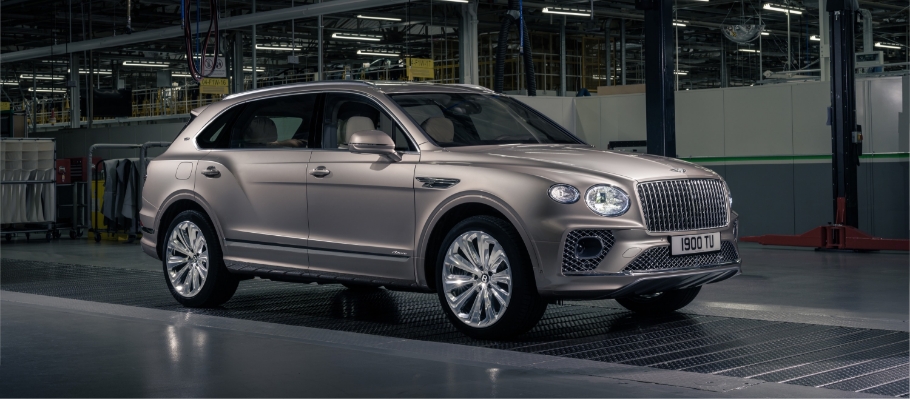
    2023 Bentley Bentayga EWB Azure First Edition

    To celebrate the arrival of the new Bentayga EWB, an exclusive First Edition is now available. Subject to a limited production run for the first twelve months of orders, it combines many of the most desirable options available for the car with a package of eye-catching details found only on Bentley First Editions.

    First Edition badging can be seen to the exterior of the car – a theme that extends inside, with badging on the veneered fascia, as well as embroidery on the seats. Unique First Edition contrast stitching and embroidery adorns the seats and, depending on the choice of veneers, handcrafted metal overlays just 0.075 mm thick can be applied to the fascia and waistrails in the front and the rear door veneer.

    The First Edition offers elegant and timeless design, focusing on maximum comfort and well-being. This specifically tailored specification includes a unique 22” ten-spoke directional wheel and bright lower bumper grilles. Other additional features as standard include unique quilted seats, mood lighting, a heated steering wheel, and increased driver’s assistance aids. Attention to detail is clear, from the badging that identifies the car to the jewelled caps on the fuel and oil fillers.

    Illuminated treadplates welcome guests into the cabin and the powered rear doors close at the push of a button. The exceptionally spacious interior features a new, elongated quilting and perforation pattern emphasising the extended space. With Bentley Diamond Illumination as standard for the First Edition, LED lights in 30 user-controlled colours shine through tiny perforations in the handcrafted quilted leather trim for an incredible visual effect.

    The entire cabin offers a cosseting experience, from the deep pile overmats adorning the floor to the contrast stitching that adds visual definition to the hides.

    The First Edition not only includes premium features such as Bentley Diamond Illumination and LED welcome lights, but also Naim for Bentley – the world’s best in-car sound system with 1,720 Watts of power across 20 speakers.

    The optional Bentley Rear Entertainment system, meanwhile, allows rear-seat passengers to stream content from their mobile devices to 10.1” screens on the backs of the front seats.

    Despite the high specification of the First Edition, customers can still choose from an incredibly extensive options list. In addition to the standard palette of 16 exterior finishes, customers can also opt for a colour from the Extended Paint Range, which brings the total choice to 60+ colours.

    Bentley’s entire hide colour range includes two-tone colour splits. Contrast stitching, piping and hand cross-stitching, add further detail to the class-leading interior, and a full range of veneers are available, including high-gloss wood. Open-pore options such as Crown Cut Walnut, Dark Burr Walnut and Koa add a sustainable and contemporary approach. Technical finishes include carbon fibre, the pearl-like Piano Linen by Mulliner or Dark Tint Diamond Brushed Aluminium.

  • 350 GT: the V12 that laid the foundations for Lamborghini’s DNA

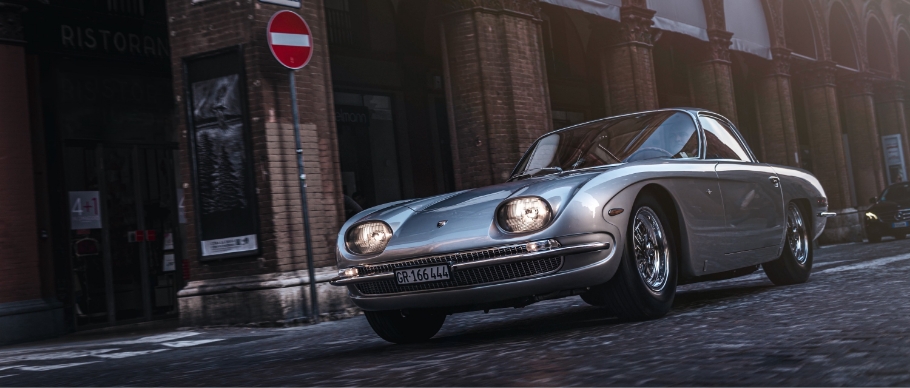
    1964 Lamborghini 350 GT

    For Lamborghini, 2022 is the year of the V12, its legendary 12-cylinder engine that has powered iconic models for almost 60 years of history and became a symbol of technological innovation, vision, and engineering expertise: the foundations of Lamborghini’s DNA.

    Before entering the hybridization phase in 2023 with the advent of the first series-production model, Lamborghini is paying tribute to its most memorable engine in a retrospective account of the cars that have featured it. The first ever Lamborghini to leave the Sant’Agata Bolognese factory in 1964 was the 350 GT, more recently taken to the historic center of Bologna for an epic encounter with the latest V12 in the brand’s history, the Aventador Ultimae.

    The genius Giotto Bizzarrini and the story of a contract ‘with a bonus for every 10 extra horsepower’

    To design the engine, Ferruccio Lamborghini chose an exceptional external consultant, the engineer Giotto Bizzarrini, born in Quercianella (province of Livorno) in 1926, still today considered one of the best engine designers who ever lived. Bizzarrini was a huge fan of racing and dreamed of building an engine for Formula One.

    The agreement with Lamborghini was simple and created the basis for something absolutely extraordinary: 12 V-cylinders, displacement of 3.5 liters, and lots and lots of horsepower: at least 350.

    As an incentive for Bizzarrini, Lamborghini included in the contract a bonus for every additional 10 horsepower. When the engine ran on the test bench for the first time in July 1963, the readings were spectacular, with 360 HP at 9000 rpm. Ferruccio Lamborghini paid what he owed, including the bonus for the extra horsepower, but he realized he was in trouble. In fact, Bizzarrini had designed a Formula One engine that was unsuitable for road use and mass production.

    The arrival of Paolo Stanzani: the engine was rationalized and reached over 250 km/h

    It was then Paolo Stanzani, one of the most highly regarded engineers in the history of Lamborghini, who was entrusted with the job of “civilizing” this engine. His work, though capable of maintaining the engine’s exceptional performance and making it pleasantly drivable even at medium and low revs, did not alter the basic technical specs, which in many points would become a first for a series-produced car.

    Its maximum power output of 280 HP at 6500 rpm was enough to propel the 350 GT, the first production Lamborghini model debuting in 1964, to a top speed of over 250 km/h.

    The first customer launches the brand’s popularity in the entertainment world

    The first 350 GT was delivered to Livorno-native drummer Giampiero Giusti, who was at the height of his success with the band “I 5 di Lucca”, which later became the “Quartetto di Lucca”, considered one of the most important jazz ensembles in Italy. Formed in the late 1950s, the group stood out not only for its jazz credentials but also for its pop music spirit, which led to its participation in the Sanremo Music Festival; to record covers of songs by the Beach Boys and Bruno Martino; and to collaborate with Enzo Jannacci.

    This marked the beginning of a close relationship between Lamborghini and the entertainment world in which many actors and musical performers became passionate customers of the company.

    The same car, now the oldest production Lamborghini in existence, perfectly restored and certified by Polo Storico, won Best in Show at the Lamborghini & Design competition held in Trieste and organized in 2019 by Lamborghini Polo Storico.

    Paul McCartney and his red 400 GT

    Paul McCartney, a true living legend both as bass player and vocalist for the Beatles and as a solo artist, has been a loyal Lamborghini customer for many years, with several cars of different models in his collection. His red 1968 400 GT, chassis #1141 was the car that appeared in the video filmed on 30 January 1969 on the occasion of the band’s famous last concert on the roof of their building at 3 Savile Row in London, as well as in numerous Beatles documentaries. McCartney kept the 400 GT for ten years.

    From music to movies

    The starring cinematic role for a 350 GT was in the 1967 Columbia Pictures film Kill Me Quick, I’m Cold directed by Francesco Maselli, where it was used as a means of transport for the leading couple, the celebrated Monica Vitti and Jean Sorel.

    A benchmark up to the 1990s

    From its debut in 1964, the Lamborghini V12 became a benchmark for its torque, elasticity, reliability and durability. The same unit, with only minimal modifications, would remain in production until the 1990s, growing to 7 liters of displacement with power over 500 HP before subsequently receiving more substantial structural modifications.

  • Nissan JUKE Hybrid Rally Tribute: where hybrid meets adrenaline

    2022 Nissan JUKE Hybrid Rally Tribute

    Following the release of images last June to celebrate Nissan’s participation in the East African Rally 50 years earlier, the Nissan JUKE Hybrid Rally Tribute has come to life.

    The JUKE Hybrid Rally Tribute moved from design sketch to fully operational one-off vehicle following the overwhelmingly positive reaction to the release of the original concept images. Its unveiling previews the European introduction of the JUKE Hybrid this summer. The prototype has the production version’s hybrid powertrain at its heart.

    Speaking about the decision to bring the JUKE Hybrid Rally Tribute to life, Coralie Musy, Vice President, Brand and Customer Experience, Nissan’s AMIEO region, said: “The JUKE Hybrid Rally Tribute represents our optimism and daring mindset. We are currently preparing an exciting new chapter of JUKE history in advance of the introduction of the new JUKE Hybrid in the summer. It will offer the excitement and agility customers would expect of our iconic crossover, with both improved performance and efficiency. The JUKE Hybrid Rally Tribute takes its playful character to a new level.”

    Advanced hybrid powertrain

    The use of powertrain from the forthcoming JUKE Hybrid reflects both the additional performance it offers in the production version, as well as the improvements to its efficiency and emissions.

    The JUKE Hybrid powertrain consists of a new generation, state-of-the-art Nissan internal combustion engine specifically developed for working in a hybrid powertrain application. It produces 69kW (94hp) and 148Nm of torque.

    On the electric side, the main electric motor produces 36kW (49hp) and 205Nm of torque, while there is a 15kW contribution from a high voltage starter/generator, all of which is fed by a 1.2kWh water-cooled battery. The net result is a powertrain providing 25% more power than the current petrol engine option, with a fuel consumption reduction of approximately 40% in the urban cycle, and up to 20% combined. (Figures subject to homologation)

    Smart automatic gearbox

    Also carried over from the production version of the JUKE Hybrid and key to the driving pleasure at its heart is an advanced low friction multi-modal gearbox that provides optimal use of the propulsive power, whether electric, petrol engine, or both.

    To reduce friction, this motorsport-inspired gearbox uses dog clutches instead of conventional synchroniser rings to shift the 4 “ICE” gears and 2 “EV” gears. Additionally, to reduce friction, this gearbox does not use a clutch. All vehicle starts are 100% electric, and the 2 EV motors are used in combination to synchronise the gears, delivering smooth, connected and responsive acceleration.

    The gearbox is controlled by an advanced algorithm, managing the shift points, battery regeneration, as well as the advanced series-parallel architecture. The powertrain can seamlessly navigate through different hybridisation combinations (series, parallel, series-parallel) according to acceleration and power requirements and without any driver input.

    Rally-inspired modifications

    Like the Gripz concept car that was presented at the 2015 Frankfurt motorshow, preceding the introduction of JUKE, it takes its design cues from the iconic 240Z that competed so successfully in the desert rally over half-a-century ago.

    The most obvious modification are the enlarged wheel arches to accommodate the tailor-made off-road tyres, while the additional lights mounted on the hood and roof echo those of 50 years ago.

    Similarly, the black hood and enlarged black wheels are a visual homage to the 1971 vehicle that competed in the East African Rally. The use of vintage sponsor logos and the number 11 also reflect aspects of the 240Z rally car, as do the additional of reinforced plates under the front and rear valances which offer protection to the vehicle’s underside. Reinforced and long-travel suspension has been fitted all-round, to give the Juke Hybrid Rally Tribute exceptional poise over the challenging terrain it will navigate. The tyres are 265/70 R16, giving phenomenal grip and traction in all conditions, in the most difficult conditions.

    Inside, the interior has been modified with the fitment of a tubular cage to stiffen the bodyshell and to offer protection in the case of an incident at speed in the challenging desert environment. The rear seats have been removed to provide space for spare wheels and four-point harnesses have been added to secure the driver and navigator safely in their racing seats.

    Other modifications to the interior include the fitment of a competition fire extinguisher, an intercom system with a pair of headphones to simplify communications between driver and navigator, the fitment of Alcantara trim on the steering wheel and a hydraulic handbrake with high-reach handle for quick and easy activation.

    “As part of our commitment to electrify our range, this year will see an unprecedented wave of new Nissan electrified powertrains and vehicles. As well as the new JUKE Hybrid, we will also introduce our boldly innovative e-POWER drivetrain on the Qashqai crossover. We’ve already started taking orders for our new flagship Ariya EV, while the Townstar Light Commercial EV will go on sale later this year. And in the second half of the year, the all-new X-Trail Crossover will also be introduced,” said Coralie Musy.

    As part of the Juke Hybrid Rally Tribute project and in line with exploring the excitement of rallying while being as eco-conscious as possible, the Juke Hybrid Rally Tribute’s powertrain uses liquids and biofuels provided by Shell, Nissan’s partner for the 1971 East African Rally.

    Nissan in the East African Safari Rally

    In 1971, the legendary 240Z that took the victory of the gruelling East African Safari Rally was driven by Edgar Herrmann with navigator Hans Schüller. Indeed, the rally was a resounding success for the brand, with the 240Zs coming home in second and seventh positions. Furthermore, the victory represented the brand’s second consecutive victory in the rally.

    The low-slung 240Z was powered by a 2.4 litre straight six cylinder engine, producing 210PS, with power sent to the rear wheels. The victorious car was restored to good order in 2013 and is part of Nissan’s heritage collection which is housed in Zama, close to Nissan global headquarters in the Kanagawa prefecture of Japan.