 In 1976 the Mk I Golf GTI was launched as a low volume addition to the Golf range. Thirty two years, five generations and 1.7 million sales after that car established the breed, the sixth generation of the GTI has been unveiled in concept form ahead of its public debut next month at the Paris Motor Show. (more…)
Author: autoview
-
Faster, sharper, cleaner: the new Golf GTI concept
-
Four world premiers for Kia at Paris motor show
 Seven versions of the all-new Kia Soul urban crossover passenger car will star in a special ‘Soul World’ as the new segment-busting vehicle makes its world debut at the Paris Mondial de l’Automobile from 2 October 2008. (more…)
-
New state-of-the-art wind tunnel helps shape efficient Volvo cars
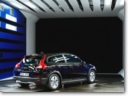 One of the world’s most advanced wind tunnels is Volvo’s new tool in the quest to lower fuel consumption and reduce carbon dioxide emissions. Volvo Car Corporation is the first car manufacturer to own a wind tunnel that fully simulates the airflow around and underneath the car’s body, combined with wheel rotation on a flat road surface. (more…)
-
1975 – 2008: The history of the Golf GTI
 The Volkswagen Golf GTI was unveiled in 1975 at the Frankfurt Motor Show. The UK market had to wait a further two years for vehicles to arrive – 1977 saw 34 examples, all of them left hand drive, sold in the GTI’s first tentative year. (more…)
-
A new Lamborghini. The elegant realisation of technical potential
 Automobili Lamborghini will unveil its new project at the Volkwagen Group Event ‘Driving Ideas’, in Paris on 1 October.
Come to the Lamborghini stand at the 2008 Paris Motorshow on press days, 2 and 3 of October – Hall 4, Stand 110 (more…) -
GranTurismo MC Concept
 Races have always been the most demanding test-bed for all cars. Traditionally, rellability and performance are checked on the circuit. It is in races that new technologies and materials are tried out. And it is on the circuit that Maserati has decided to raise the much-praised sporty verve of its Maserati GranTurismo S to even higher levels to create the GranTurismo MC Concept. (more…)
-
Controlled Power Technologies ready with electric superchargers for a new generation of cars and their radically smaller engines
Low cost micro-hybrid technology will help reduce fuel consumption and carbon emissions
UK-based Controlled Power Technologies (CPT) says that its electric supercharger known as VTES (or Variable Torque Enhancement System) is now ready for production applications and the company is supporting carmakers with this low cost technical solution to the ever tightening CO2 reduction and fuel efficiency targets facing the automotive industry.
“The low investment requirements of our electric supercharger provide the opportunity to bring early niche applications to market cost effectively and on multiple vehicle lines,” says Guy Morris, engineering director, CPT, who will present the latest findings of the company’s research, development and testing programme at a special supercharging conference for vehicle engineers being held this week in Dresden on 25/26 September 2008.
CPT says it is progressing a number of confidential development contracts that will lead to commercial applications, initially for small and medium volume production, and will continue to work with the industry’s powertrain developers to verify the benefits of electric superchargers.
“Our electric supercharger is an ideal enabling technology for the extreme engine downsizing being advocated by carmakers,” adds senior engineering manager Mark Criddle, who co-authored the technical presentation. “The technology has been designed to be sufficiently flexible to enable use of a common solution across a wide range of engine platforms. It delivers the required economies of scale and matches existing micro-hybrid strategies.”

Extreme engine downsizing typically means replacing a 2.5-litre engine in a full-size family saloon or MPV with a 1.2-litre turbo-charged engine. A new generation of cars, with radically smaller engines, will be more able to deliver the fuel economy and low CO2 emissions demanded by legislators and motorists alike. Increasing the efficiency of the powertrain through extreme downsizing is fast becoming a widely-recognised near term solution for both gasoline and diesel engines.
Motorists, however, have certain minimum expectations for vehicle performance. Boosting the charge of air into the engine by mechanical supercharging or exhaust turbocharging is the most effective way to satisfy this requirement, but only if sufficient low-speed transient torque is delivered quickly enough to meet customer expectations for vehicle drivability. The critical reference point remains the response time of the larger naturally aspirated engine that is being replaced.
Based on naturally aspirated engine characteristics, motorists have come to expect a significant torque rise to be available almost instantaneously. This means typically within half a second during wide open throttle transients, when engine revs may be less than 1,500rpm. Although engines equipped with conventional single-stage turbochargers have seen significant improvements in their low speed dynamic behaviour, even systems that are state-of-the-art struggle to satisfy these critical customer criteria.
Moreover, to further reduce CO2 emissions, carmakers are not only downsizing engines, but also increasing the gearing to reduce the speed of the engine for even greater efficiency. In this case, high load operating modes can extend well below 1,500rpm, and can even approach 1,000rpm, particularly when the driver suddenly demands a high level of torque from an idling engine.
CPT tests confirm that when applied to a radically downsized and down-speeded engine, its VTES technology dramatically increases the initial transient response, delivering significantly more torque at low engine speeds, thereby enhancing a car’s low speed drivability characteristics. The combination of a highly dynamic electric supercharger, in series with a conventional fixed geometry turbocharger, also makes it relatively easy to optimise the overall response of the system, compared to other air charging methods.
The VTES system can also help reduce soot and particulate emissions from diesel engines, particularly when the driver accelerates at low engine revs, which, in turn, creates an opportunity to reduce the size and cost of the diesel particulate filter (DPF).
“Fast response air-boost systems are essential for delivering radically-downsized engines,” says Morris. “Even the most dynamically optimised turbocharger cannot deliver an air-side response approaching the fuel control capability of the latest injection systems. The consequence is ‘air limited’ combustion, which imposes many compromises on the engine developer.
“Series boosting solutions are gaining popularity because of their extended low speed boosted air delivery capability, but their dynamic performance is still frustratingly linked to engine speed and air mass flow rates. The provision of a cost-effective electric supercharger, in series with a conventional fixed geometry turbocharger, offers a combined transient effect, which as yet cannot be matched by other air charging systems.”
The VTES electric supercharger, which operates independently of engine speed, can significantly increase the air charge density over the critical first 10 combustion cycles of a low speed transient. Fitted with a low inertia compressor, the supercharger accelerates from its 5,000rpm idle speed to a maximum speed of 70,000rpm in less than 0.35 seconds. The system is highly dynamic and the intake charge boosting and resulting torque enhancement is achieved very typically in less than a quarter of a second (250ms).
Until recently the only intake charging solution with the potential to deliver comparable torque enhancement was a crankshaft driven mechanical supercharger, either operating on its own or combined with a conventional exhaust waste-gated turbocharger for better overall efficiency. However, this approach has proved excessively complex for a number of engine developers. The complexity results from the sophisticated requirements of the supercharger, turbocharger, clutch and air-bypass valves needed to deliver the response characteristics, and the demanding package and NVH (noise, vibration and harshness) requirements of the installation.
CPT’s development of an electric supercharger with a near instantaneous air delivery system creates a viable cost-effective alternative. With recent refinements to the bearing design and power electronics, it has been possible to almost halve the bill of material costs for the assembly of the supercharger, compared with earlier prototype designs. Eight years of continuous product development has resulted in a mature well-proven cost-effective system.
-
Renault announces new Megane hatch pricing
 Ahead of its much anticipated world debut at the Paris Motor Show next week, Renault has released UK pricing for its stylish New Mégane Hatch range, with ordering due to open on 2nd October 2008. (more…)
-
Bentley Arnage Final Series
 Since its debut in 1998 the Arnage has conveyed an air of sophisticated understatement as the four-door flagship of the Bentley range. Over the last decade the car has undergone a process of constant refinement to its body, design, chassis and powertrain to maintain its class-leading position in the high luxury market. (more…)
-
Volkswagen showcases new 1-Tonne Pickup concept
 Volkswagen has revealed the fourth model in its commercial vehicle line-up with the debut at the IAA in Hanover this week of an all-new Pickup concept. (more…)
-
2009 Audi S4/S4 Avant
 Audi is introducing its new sporty top models in the midsize class – the S4 and the S4 Avant. Their engine, a three-liter V6 with direct fuel injection and mechanical turbocharging, delivers a powerful 245 kW (333 hp). (more…)
-
Lancia Ypsilon VERSUS will be introduced at the 2008 International Paris Motor Show
 It will be introduced at the 2008 International Paris Motor Show, a Lancia Ypsilon VERSUS show car produced with the Versace Group brand that will also dress the models on the stand with garments chosen to suit the expressive motifs of the exhibition space. All this confirms the strong bond between Lancia and the world of Fashion. (more…)