 Hyundai is to unveil an all-new concept car at this year’s Salon International de L’Automobile in Geneva on March 3rd. This innovative concept portrays a dramatic new look for compact SUVs and was styled at the company’s European Design headquarters in Rüsselsheim, Germany. (more…)
Author: autoview
-
Hyundai To Reveal Suv Concept At Geneva Motor Show
-
LEGACY CONCEPT in Geneva
 Fuji Heavy Industries Ltd. (FHI), the maker of Subaru automobiles, today announced that it will exhibit the LEGACY CONCEPT as an European premiere at the 79th Geneva International Motor Show slated for March in Geneva, Switzerland (Press days: March 3 and 4; Open to the public from March 5 through 15). (more…)
-
Audi sets 2009 model-year prices for all-new Q5 crossover
Audi set the base price for its all-new and segment-redefining 2009 Audi Q5 crossover vehicle at $37,200. The Audi Q5 will begin to arrive in U.S. dealerships next week and will be offered in three equipment levels. Manufacturer’s Suggested Retail Price for the 2009 model-year Audi Q5 Premium starts at $37,200. Pricing for the Audi Q5 Premium Plus starts at $41,500, and the Audi Q5 Prestige starts at $48,200. Prices do not include a destination charge of $825, taxes, title or dealer charges.
With the new Q5, Audi will have its first crossover vehicle for luxury car buyers who otherwise might have considered buying the Lexus RX, the BMW X3 or the Mercedes-Benz GLK.
The launch of this new vehicle allows Audi its first opportunity to surpass those, and other, contenders in the popular luxury crossover vehicle segment. The new Audi Q5, with its combination of head-turning exterior and interior design, comprehensive safety features expected of a premium luxury vehicle, technological innovation and responsive Audi performance, more than achieves that goal.
“Luxury crossover vehicles appeal to a wide audience seeking both practicality and performance,” said Johan de Nysschen, President, Audi of America. “But monotony has developed in that segment – sameness we’re certain the Audi Q5 now disrupts with its array of distinctive styling cues and forward-thinking features.”


The Q5 indeed offers plenty of unique features that give it a balance of functionality, luxury and performance. The Q5 will be the only vehicle in its segment with three-zone climate control, which lets drivers and passengers select their own comfort levels. It is the only vehicle in its segment with 40/20/40 rear seats that recline and offer fore-aft adjustment for the comfort of passengers and for balancing cargo-carrying capabilities.
Audi is also equipping the Q5 with its signature LED tail lights as standard equipment, including running lights, brake lights and turn signals. The Audi Q5 will offer standard hitch preparation for 4,400-pounds of towing capacity, which puts it at the head of its class. Also standard are roof rails with aluminum cross bars that sync with the Audi ESP system to adapt accordingly.
Audi has a strong reputation for outstanding automotive interiors and that tradition carries through in the Q5 with standard twelve-way power front seats, leather seating surfaces throughout and genuine wood or brushed aluminum inlays. Available exclusive luxury touches on the Audi Q5 include the Bang & Olufsen Sound System and the exclusive Audi drive select system that allows motorists to choose among four distinctive driving configurations.
The Audi Q5 will be the first model sold in the U.S. with available MMI Navigation plus, the third generation of Audi’s acclaimed MMI (Multi-Media Interface) system, which manages entertainment, communications and navigational information.
The new MMI Navigation plus offers a high-capacity hard disk with 40 gigabytes of memory (including 10 GB for media storage), DVD drive and an automotive grade NVIDIA™ chip for graphics processing. The added processing power allows MMI Navigation plus to render 3D maps of the entire U.S., including branded points of interest, and detailed images of buildings while offering real-time traffic information. The system also features a new, larger screen that measures seven inches from corner to corner, a vocal command recognition system that understands complete words in a variety of languages and improved joystick controls.
The Audi Q5 is derived from the same Audi-exclusive platform first developed for the A4 model range. The versatility of that vehicle platform gives the Q5 the driving comfort and performance characteristics of a luxury performance automobile and the longest wheelbase in its class. The efficient engineering and design of the Q5 also translated into shorter front and rear overhangs for better weight distribution to help stability. Audi also widened the vehicle platform to increase shoulder room inside the Q5 and to optimize the driver’s seating position for a more commanding view of the road.
The Audi Q5 will also lead the segment of AWD, gasoline-powertrain crossover vehicles in fuel economy. According to the U.S. EPA, the Audi Q5 achieves 18 mpg city mileage and 20 mpg combined – both tops in the category – along with 23 mpg highway mileage.
-
S Tronic Sports Transmission Now For Audi A4 And A5
Shifting into a higher gear in Audi A4 and A5 models could take as little as 0.2 seconds from this month as the latest performance-oriented S tronic twin-clutch automatic transmission makes the transition to 2.0 TFSI quattro versions of the acclaimed compact Saloon, Avant and Coupe. The new S tronic option adds £1,420 to the prices of A4 2.0 TFSI quattro and A5 2.0 TFSI quattro models, taking them to £27,170 OTR and £31,065 respectively.
Despite its rapidity, the latest incarnation of the twin-clutch gearbox also acts responsibly, maintaining fuel economy and CO2 output at the same level, or below, manual equivalents.
Launched to critical acclaim in the first generation TT, the advanced transmission added a new string to its bow during 2008 when it was further upgraded to enable installation in Audi models with longitudinal, ‘North-South’ engine installations. The new addition made its debut in the Q5 SUV, and soon after in the latest supercharged S4 Saloon and Avant.
Linked to an all-new engine
It now brings its lightning fast changes to the A4 2.0 TFSI quattro with its brand new turbo charged and directly injected FSI engine enhanced by Audi valvelift technology for improved engine ‘breathing’. In Saloon form, the A4 2.0 TFSI quattro S tronic can power to 62mph from rest in 6.5 seconds – a 0.1 second improvement over the manual version – reach a top speed of 150mph and return 38.2mpg according to the combined cycle test. In the A5 2.0 TFSI quattro S tronic, the sprint to 62mph can be completed 0.3 seconds more quickly than in the manual at 6.2 seconds, and a top speed of 150mph can be reached, while combined economy and CO2 output match the A4 at 38.2mpg and 172g/km.
These impressive economy figures are identical to manual A4 and A5 equivalents, and in terms of CO2 output the A5 S tronic actually shows a reduction versus the manual version’s 173g/km, highlighting the fact that in contrast to most automatic transmissions S tronic demands no compromise in return for added convenience.

Advanced electro-hydraulic controls and the alternate use of two clutches enable the S tronic gearbox to deliver lightning fast automatic or manual shifts via the gear lever or steering wheel-mounted paddle controls with no interruption of the engine’s power delivery across seven ratios.
The first of the two clutches serves the odd-numbered gears and reverse, and the second the even-numbered gears, so when the A4 or A5 are travelling in third gear, for instance, fourth is already pre-selected in anticipation. As soon as the shift command is given, the first clutch is disengaged and the second engaged in just a few hundredths of a second, virtually seamlessly.
The sporting credentials of both A4 and A5 2.0 TFSI quattro models can not only be enhanced by the new S tronic transmission, but also by the extra cost option of the Audi drive select adaptive dynamics system. With its influence over throttle response, transmission points, steering weighting and damper control Audi drive select delivers the sharpest possible response and the highest degree of poise in all situations.
New Executive SE and Executive S line models
In A4 models it is also now possible to further enhance appeal through highly cost effective specification upgrades following the introduction of new Executive SE and Executive S line trim lines. In addition to the SE equipment list, which among its highlights features 17-inch 7-arm alloy wheels, three-zone climate control, an Audi Concert CD audio system and automatic headlight and wiper operation, Executive SE specification brings an upgrade to 17-inch 10-spoke alloy wheels, an Audi Symphony audio system with six CD autochanger, cruise control and mobile phone preparation. The Executive SE trim line carries a premium of £635 over the SE model, representing a saving of £480 compared with the cost of adding each item individually.The more sporting S line option that is available at extra cost for all A4 Saloon and Avant models includes 18-inch alloy wheels, a unique S line front and rear bumper design, extended side skirts, xenon headlights flanked by distinctive LED daytime running lights and S line sports suspension lowered by 20mm. Inside, it adds leather and cloth combination sports seats, a 3-spoke S line sports steering wheel, matt brushed aluminium inlays and a perforated leather gear knob.
S line models can also be given the Executive treatment – the Executive S line models that are new for 2009 upgrade to Alcantara and leather combination sports seats, the Symphony audio system with CD changer, cruise control and mobile phone preparation. At £635, the Executive S line premium saves £650 over the cost of the individual items.
-
Ferrari ‘Pontoon-Fender’ Testa Rossa Expected To Break World Auction Record
 RM Auctions, in association with Sotheby’s, will present one of the most historically significant and valuable Ferrari racing cars ever offered at auction, the legendary 1957 Ferrari 250 TR (chassis no. 0714TR), when the famed Ferrari Leggenda e Passione event returns to Maranello, May 17, 2009. Held during the final stretch of the famous Mille Miglia retrospective, the exclusive annual event will offer an unprecedented collection of historic Ferraris for auction. (more…)
-
New 500 Start&Stop Gets Started
 A new option on the Fiat 500, which will give the popular city car even better fuel consumption and CO2 emissions figures, has just been introduced.
Called Fiat 500 Start&Stop, the new technology is based on the most successful 500 version – the 1.2 Lounge – and benefits from the combined expertise of automotive parts specialist Bosch and Fiat Powertrain Technologies. (more…)
-
New Bravo Diesel 2.0 Multijet: More Power, Less Fuel, Lower Emissions
 A stylish new fleet challenger from Fiat will allow company car drivers to enjoy increased power and performance, while maintaining impressive fuel economy and low tax bills.
Fiat’s stylish mid-size Bravo hatchback is now available with a new 165bhp 2.0-litre 16v MultiJet engine, which will replace the current 1.9 MultiJet. The new engine is ‘greener’ than its predecessor, thanks to Euro V compliance and a diesel particulate filter that reduces CO2 emissions to just 139g/km – resulting in low 18 per cent Benefit in Kind tax bills for company car drivers. (more…)
-
Santa Pod’s ‘Podzilla’. The Ultimate Snow-mobile?
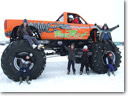 Arctic conditions may have ground the entire country to a halt, but staff at Santa Pod Raceway in Northamptonshire came up with a unique solution to the problem. Their 12 foot tall Monster Truck, ‘Podzilla’!
The impressive beast usually entertains the crowds at many of the venues exciting events, but when a lack of gritters made the entire 180 acre site inaccessible, General manager, David Lloyd-Jones decided to pull off the covers and have some fun in the snow. (more…)
-
SEAT is presenting the new 2009 León and Altea models
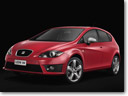 Taking place from 5 to 15 March, 2009, the Geneva Motor Show is the backdrop chosen by SEAT to showcase the new 2009 León and Altea models for the first time. With these models, the Spanish brand’s intermediate range has undergone a considerable evolution, with their identity traits visible on the front and rear of all the body styles, and a completely updated engine range including common rail Diesel variants. All these novelties combine with an outstanding level of equipment, with special emphasis on comfort and safety elements. (more…)
-
Citroen DS Inside Concept
CITROËN launching a new line of products to broaden its current range. The new line will consist of three new cars, positioned in the small, medium and large car segments, launched successively from 2010.
The first illustration of this new product line is the CITROËN DS INSIDE concept car. The concept car and vehicle line are characterised by forthright choices on styling, onroad performance and use. These are accessible objects of desire, cars that stand apart by their creativity, intelligent design and build quality, embodying the very best of CITROËN. The new product line will perfectly illustrate CITROËN’s new spirit of “Créative Technologie”.
The new line will also have a new naming system. Like the main range vehicles, which carry the letter C and a number, and, like the MPVs, which sport the Picasso signature, the new models will feature a special name: the DS line.
DS stood and continues to stand for a new approach to automobiles and the future. CITROËN is taking inspiration from its design DNA to strengthen the positioning of its new product line. The range instills the different spirit, that the name DS inspires. Hence the distinctive model line up will be called DS3, DS4 and DS5. DS: Different Spirit.


-
The most beautiful car of all time
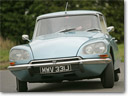 What’s the most beautiful car of all time? A multi-million pound Ferrari or the curvy Jaguar E-type perhaps? No, it is now officially Citroën’s humble DS, the car most famous for saving President De Gaulle from assassination. (more…)
-
2009 Toyota Yaris: Less Is So Much More
Too often motorists are expected to make sacrifices in performance or comfort for the sake of environmental considerations. Toyota doesn’t believe that needs to be the case and with the launch of its 2009 Yaris demonstrates that lower emissions and fuel consumption can be delivered without compromise.
No model in the new 2009 Toyota Yaris range emits more than 120g/km of carbon dioxide, thanks to the successful adoption of Toyota Optimal Drive across the entire range. At the same time, Yaris is every bit as well-specified, comfortable, reliable and safe as before.
Money-conscious motorists will be encouraged by Yaris’s value compared to its key competitors. Adjusting on-the-road prices in line with equipment specifications, Yaris offers a significant saving. Taking the 1.33 SR five-door model as an example, it represents a price advantage in real terms of up to more than ?1,000, against its market rivals, as the table below shows.
TOYOTA YARIS
1.33 SRFORD FIESTA 1.4 ZETEC
VAUXHALL CORSA
1.4 SXi A/CPEUGEOT
1.4 VTI
SPORTDoors 5
5
5
5
OTR price ?10,915
?11,255
?11,6704
?11,793
Stop & Start Alloy wheels Air conditioning Rear privacy glass 6sp transmission Curtain airbags Side airbags Knee airbag Full specification adjusted price –
?11,470
?11,734
?11,928
Yaris added value –
+?555
+?819
+?1,103
Figures from JATO, correct January 2009


Toyota Optimal Drive
Toyota Optimal Drive, introduced at last year’s Paris motor show, covers a range of technologies that promote greater powertrain efficiency. In line with Toyota’s guiding principle of kaizen – continuous improvement – engineers have improved combustion efficiency, reduced engine and transmission weight and reduced friction to produce engines that deliver more power and are fun to drive, yet at the same time are more efficient and economical.The 2009 Yaris features a range of new and revised engines that benefit fully from the technical advances delivered by Toyota Optimal Drive. The line-up comprises a new 1.33-litre Dual VVT-i petrol unit with a Stop & Start system and improved versions of the award-winning 1.0-litre VVT-i three-cylinder petrol unit and the 1.4-litre D-4D diesel. A new six-speed manual transmission also debuts in Yaris. Matched to the 1.33 VVT-i and 1.4 D-4D engines, it is smaller, lighter and more efficient than the five-speed gearbox it replaces.
New 1.33 Dual VVT-i Engine
- CO2 emissions from 119g/km
- 55.4mpg combined cycle fuel consumption
- Dual VVT-i valve timing
- Stop & Start system standard with manual transmission
Toyota’s 1.33-litre petrol engine is new to the Yaris range, having made its debut in Auris and new iQ at the end of last year. It features state-of-the-art Dual VVT-i (variable valve timing – intelligent), produces 100bhp (101 DIN hp) and has the highest compression ratio of any petrol engine on the market at 11.5:1.
The in-line four-cylinder unit produces 132Nm of torque at 3,800rpm and returns 55.4mpg in combined cycle driving, with both six-speed manual and MultiMode transmissions.
Applying Toyota Optimal Drive technologies gives the engine superior emissions and fuel consumption performance compared to the previous 1.3-litre unit, reducing CO2 output by 22g/km and improving combined cycle mpg from 47.1 to 55.4 (both figures for manual transmission with Stop & Start). The engine is also smaller and lighter, but produces greater torque.
Advanced engineering was applied through the development of the new engine, with streamlining of the intake channel, and smoothing of surfaces and rounding off of all angles and edges inside the block to improve airflow and reduce turbulence.
Using a resin cylinder head and intake manifold has yielded substantial weight savings and a new, highly rigid aluminium crank case is connected to the transaxle case, which improves the rigidity of the joint in the powertrain and reduces friction and noise levels.
Further changes that benefit all-round performance include a new camshaft profile, reduced friction and weight in the valve gear, and a maintenance-free hydraulic lash adjuster.
Stop & Start Technology
A new Stop & Start system is featured as standard on the 1.33 Dual VVT-i engine with six-speed manual transmission. This automatically stops the engine when the gear shift is moved to neutral and the clutch pedal is released; the engine restarts as soon as the clutch is depressed again.Immediate restarting is made possible by a permanently engaged gear mechanism and there is no hesitation in a rapid stop and start sequence – the engine does not have to stop fully before firing into life again. The system reduces fuel consumption and CO2 emissions, and operates smoothly and silently.
Leading B-segment on economy, performance and cost of ownership
The introduction of the 1.3 Dual VVT-i engine with Stop & Start gives Yaris a strong competitive edge in the B-segment, delivering performance and emissions that its key competitors simply cannot match. This advantage extends into on-going ownership cost benefits.While the new engine’s emissions and fuel consumption are better than rival 1.2-litre units, power and torque are also superior to other 1.4-litre power plants.
In performance terms, the Yaris 1.33 delivers 35 per cent more power than the Renault Clio 1.2 and about 25 per cent more than the 1.2 engines in Ford’s new Fiesta and the Vauxhall Corsa and the 1.4 unit in the Volkswagen Polo. At the same time, official combined cycle fuel consumption is 12 per cent lower than the next-best rival, the new Fiesta 1.25.
Within the B-segment the Yaris 1.33 Dual VVT-i is also the only model in its class to fall within band B for Vehicle Excise Duty, giving an annual road fund licence bill for 2008/9 of just ?35.
In the longer term the cost benefits quickly accrue. Working on the basis of 12,000 miles drive a year, with fuel at an average 99.9p per litre, owners can save around ?600 to ?960 over a three-year period in fuel and road tax costs compared to leading competitor models, as the table illustrates.
TOYOTA YARIS 1.33 Dual VVT-I TR
FORD FIESTA 1.25 STYLE+
VAUXHALL CORSA 1.2 ACTIVE
RENAULT CLIO 1.2 EXPRESSION
VOLKSWAGEN POLO 1.4 MATCH
Max. power (bhp) 100
80
79
75
79
Max. torque (Nm) 132
114
110
105
132
CO2 emissions (g/km) 119
133
139
139
150
Combined cycle fuel consumption (mpg) 55.4
49.6
48.7
47.9
44.8
VED 2008/9 ?35
?120
?120
?120
?120
VED 3 years vs Yaris –
+?250
+?250
+?250
+?270
Fuel cost 3 years vs Yaris –
+?351
+?405
+?461
+?697
VED + fuel cost 3 years vs Yaris –
+?601
+?655
+?711
+?967
Fuel costs calculated at 99.9p per litre over 12,000 miles driven per annum; VED costs based on current charges for 2008/09, 2009/10 and 2010/11. Competitor data sourced from official manufacturer web sites. All data correct at January 2009.
Award-winning 1.0 VVT-i petrol engine
- CO2 emissions 118g/km
- Fuel consumption 56.5mpg (combined)
Toyota’s three-cylinder VVT-i petrol engine has twice been a category winner in the sub-1.0-litre category of the International Engine of the Year Awards and enters 2009 with even better fuel consumption and emissions performance. Toyota engineers have worked on the unit to deliver the following improvements: –
- A new cut-off system to save fuel during gear changes
- Improvements to the Electronic Fuel Injection (EFI) management
- Use of low viscosity oil for less engine resistance
- Adoption of an exhaust gas recirculation system and cylinder block water jacket spacer to increase efficiency
One of the lightest engines on the market today, it delivers class-leading specific power and torque, with 68bhp (69 DIN hp) at 6,000rpm and 93Nm at 3,600rpm.
TR versions of the 2009 Yaris ride on low rolling resistance tyres, further contributing to lower fuel consumption and CO2 figures. Together the measures achieve a reduction in CO2 of close to 10 per cent compared to the previous model.
Upgraded 1.4 D-4D Diesel Engine
- CO2 emissions 109g/km (manual)
- Combined cycle fuel consumption 68.9mpg (manual)
The 1.4 D-4D diesel engine features latest-generation common rail technology and an intercooled turbocharger. Power has been increased slightly to 89bhp (90 DIN hp) and maximum torque is greater by 15Nm at 205Nm, produced between 1,800 and 2,800rpm, giving more pulling power at lower engine speeds.
Official combined cycle fuel consumption is substantially improved, cut from 62.8 to 68.9mpg with manual transmission, 67.3 with the MultiMode (M/M) gearbox. Likewise emissions have been reduced, falling from 119 to a class-leading 109g/km (110g/km with M/M).
New Six-speed Manual and MultiMode Transmissions
As part of the Toyota Optimal Drive technology applied to the new 2009 Yaris. A six-speed transmission has been developed for the 1.33 Dual VVT-i and 1.4 D-4D 90 engines. This new unit delivers world-class efficiency and improved fuel economy, thanks to a wider ratio for sixth gear. Driving performance is also enhanced. And shift feel is better, with a new shift structure that is quiet and gives a smooth feel to clutch operation.A six-speed version of MultiMode, Toyota’s electrically operated (robotised) manual transmission has also been developed and introduced in Yaris. It uses two electric motors and an electronically operated clutch to provide either automatic or sequential gear changes, using three operating modes: M for sequential shifts; E for automatic shifts; and Es for quicker automatic gear changes.
The system has been tuned to give sportier performance than before, with a reduced clutch activation time and the addition of paddle shifts on the steering wheel. With less of an interruption in the driveline during gear shifts, the shift-shock effect has also been reduced.
Evolutionary Yaris Design
Styling changes for the 2009 Yaris are evolutionary, designed to strengthen the car’s dynamic and sophisticated qualities.Exterior
The bonnet and bumper are more closely integrated, and protection mouldings have been incorporated. Changing the bumper design has increased the car’s overall length by 35mm.The radiator grille has a new rippled mesh design that radiates out from the central Toyota badge. The larger front spoiler, spats and changes to the underfloor design contribute to the car’s all-round smooth aerodynamics.
The front headlamps have been re-sculpted for a more hi-tech appearance, while at the rear the bumper and integrated LED combination lamps have been refreshed.
Interior
Changes to the interior include a new black finish for the centre console, with titanium silver finish around the centre console, gearshift and steering wheel trim. The steering wheel cover gains silver stitching, and TR, SR and T Spirit models feature a chrome finish for the side vent bezels and parking brake release knob.Grade Structure
The Yaris grade structure has been revised with two new focus grades, TR and SR, plus the established T2 and T Spirit trim levels.T2
The entry point to the range, the T2 grade typifies Yaris’s high specifications, with standard features including a leather trimmed steering wheel with tilt and telescopic adjustment and audio controls, electric front windows, remote central locking, rear seats with slide and recline function and 60:40 split-fold, Toyota Easy Flat one-touch rear seat folding system, audio system with Aux-in connection and MP3/WMA file playing capability, driver and passenger front and side airbags and ABS with Electronic Brakeforce Distribution (EBD) and Brake Assist (BA).TR
TR grade models are expected to account for around 68 per cent of all new Yaris sales, offering a strong combination of equipment features with a competitive price. Among the key features are air conditioning, electric door mirrors, a special TR interior trim design with chrome detailing, six-speaker audio system, driver’s knee airbag and curtain airbags, and body-coloured door mirrors and handles.SR
SR trim adds a sporty styling dimension to Yaris, introducing 15-inch alloy wheels, front fog lamps, rear privacy glass, dark-tinted headlight covers, sports front grille design, amber-lit analogue speedometer and tachometer, leather trimmed sports steering wheel and special interior trim design.T Spirit
T Spirit is at the pinnacle of the Yaris range, equipped with 15-inch alloys, front fog lights, automatic air conditioning, Bluetooth, Smart Entry and Start system and an exclusive interior trim design.Key Equipment Features
T2 TR
SR
T SPIRIT
4-speaker audio with CD player, Aux-in and MP3/WMA file playing from disc
Body coloured, electrically adjustable heated door mirrors
15-inch sport alloy wheels
15-inch alloy wheels
Electric front windows
6-speaker audio
Front fog lamps
Bluetooth
Driver’s seat height adjustment
Chrome interior trim details
Rear privacy glass
Automatic air conditioning
Leather steering wheel trim and gear shift knob
Curtain airbags
Smoked headlamp glass
Smart Entry and Start
Steering wheel audio controls
Driver’s knee airbag
Interior sports trim
Exclusive interior trim design
Steering wheel reach adjustment
Manual air conditioning
Analogue meters
Body coloured bumpers with corner protection mouldings
Leather sports steering wheel and gear shift knob
Sports front grille
European Production
Yaris continues to be built at Toyota’s Valenciennes factory in France. The plant began operations in 2001 and now exports cars to 25 countries across Europe. Production capacity was recently increased to a maximum 270,000 units a year.
Valenciennes built its one millionth Yaris in December 2006 and to date has attracted investment of around €897 million. Approximately 3,850 people work at the factory.
Valenciennes was the first Toyota plant outside Japan to adopt the Global Body Line, a configuration of robots that can be programmed to build a number of different vehicle styles, without the entire factory having to be modified.
Although only a single model is built there, it is produced in four derivatives: left and right-hand drive, with petrol or diesel engines. Each version requires different parts and production steps. The flexibility of the Global Body Line can also be harnessed to build completely different models on the same assembly line at the same time.
Environmental Management
Toyota Motor Manufacturing France (TMMF) has achieved a three-year plan target to recover and recycle 100 per cent of the waste products from industrial and housekeeping processes. Having achieved zero waste to landfill since the site opened in 2001, and a 50 per cent reduction in the amount of waste generated, the company has now gone even further by sending no waste for incineration.Manufacturing a Yaris produces 9.5kg of waste, more than 4kg of which is directly recyclable (cardboard, metal, oil solvents, etc). The remaining 5.5kg are used as substitute fuel, for example in place of oil, in industrial processes.
2009 Yaris prices, VED and insurance
GRADE POWERTRAIN BODY OTR PRICE
VED BAND
INSURANCE
GROUPT2 Toyota Optimal Drive 1.0 VVT-i 5MT 3-door ?8,585
B
1E
T2 Toyota Optimal Drive 1.0 VVT-i 5MT 5-door ?9,075
B
2E
TR Toyota Optimal Drive 1.0 VVT-i 5MT 3-door ?9,540
B
2E
TR Toyota Optimal Drive 1.33 VVT-i 6MT 3-door ?10,275
B
3E
TR Toyota Optimal Drive 1.33 VVT-i 6M/M 3-door ?10,745
B
3E
TR Toyota Optimal Drive 1.4 D-4D 6MT 3-door ?11,125
B
4E
TR Toyota Optimal Drive 1.4 D-4D 6M/M 3-door ?11,715
B
4E
TR Toyota Optimal Drive 1.0 VVT-i 5MT 5-door ?10,030
B
2E
TR Toyota Optimal Drive 1.33 VVT-i 6MT 5-door ?10,765
B
3E
TR Toyota Optimal Drive 1.33 VVT-i 6M/M 5-door ?11,235
B
3E
TR Toyota Optimal Drive 1.4 D-4D 6MT 5-door ?11,615
B
4E
TR Toyota Optimal Drive 1.4 D-4D 6M/M 5-door ?12,205
B
4E
SR Toyota Optimal Drive 1.33 VVT-i 6MT 3-door ?10,915
B
4E
SR Toyota Optimal Drive 1.33 VVT-i 6M/M 3-door ?11,385
B
4E
SR Toyota Optimal Drive 1.4 D-4D 6MT 3-door ?11,765
B
4E
SR Toyota Optimal Drive 1.4 D-4D 6M/M 3-door ?12,355
B
4E
SR Toyota Optimal Drive 1.33 VVT-i 6MT 5-door ?11,405
B
4E
SR Toyota Optimal Drive 1.33 VVT-i 6M/M 5-door ?11,875
B
4E
SR Toyota Optimal Drive 1.4 D-4D 6MT 5-door ?12,255
B
4E
SR Toyota Optimal Drive 1.4 D-4D 6M/M 5-door ?12,845
B
4E
T Spirit Toyota Optimal Drive 1.33 VVT-i 6MT 5-door ?12,005
B
4E
T Spirit Toyota Optimal Drive 1.33 VVT-i 6M/M 5-door ?12,475
B
4E
T Spirit Toyota Optimal Drive 1.4 D-4D 6MT 5-door ?12,855
B
4E
T Spirit Toyota Optimal Drive 1.4 D-4D 6M/M 5-door ?13,455
B
4E
2009 Yaris options
OPTION GRADES
PRICE
VSC, traction control & rear disc brakes All
?345
Metallic paint All
?370
Protection Pack (rear parking sensors, mudflaps, side mouldings, boot protection plate) TR, SR, T Spirit
?440
Tech Pack (Bluetooth, iPod/iPhone/USB integration kit) TR, SR
?410
2009 TOYOTA YARIS TECHNICAL SPECIFICATIONS
Toyota Optimal Drive 1.0-litre VVT-I petrol Code 1KR-FE
Type In line transverse 3-cylinder
Valve mechanism DOHC 12 valve VVT-i
Bore x stroke (mm) 71.0 x 84.0
Displacement (cc) 998
Compression ratio 10.5:1
Max power (bhp/DIN hp @ rpm) 68/69 @ 6,000
Max torque (Nm @ rpm) 93 @ 3,600
Toyota Optimal Drive 1.33-litre Dual VVT-i petrol Code 1NR-FE
Type In line transverse 4-cylinder
Valve mechanism DOHC 16 valve Dual VVT-i
Bore x stroke (mm) 72.5 x 80.5
Displacement (cc) 1,329
Compression ratio 11.5:1
Max power (bhp/DIN hp @ rpm) 100/101 @ 6,000
Max torque (Nm @ rpm) 132 @ 3,800
Toyota Optimal Drive 1.4-litre D-4D 90 diesel Code 1ND-TV
Type In line transverse 4-cylinder
Valve mechanism SOHC 8-valve
Bore x stroke (mm) 73.0 x 81.5
Displacement (cc) 1,364
Compression ratio 16.:1
Max power (bhp/DIN hp @ rpm) 89/90 @ 3,800
Max torque (Nm @ rpm) 205 @ 1,800-2,800
PERFORMANCE
1.0 VVT-i
5 M/T1.33 Dual
VVT-i
6 M/T1.33 Dual VVT-i
6 M/M1.4 D-4D
6 M/T1.4 D-4D
6 M/M0-62mph (sec) 15.7
11.7
11.7
10.7
10.7
Maximum speed (mph) 96
96
109
109
109
FUEL CONSUMPTION, EMISSIONS & VED Combined (mpg) 56.5
55.4
55.4
68.9
67.3
Urban (mpg) 47.1
45.6
45.6
55.4
55.4
Extra Urban (mpg) 62.8
64.3
64.2
78.5
78.5
CO2 emissions (g/km) 118
120
119
109
110
VED band B
B
B
B
B
DIMENSIONS
Overall length (mm) 3,785
Overall width (mm) 1,695
Overall height (mm) 1,530
Wheelbase (mm) 2,460
Track width – front (mm) 1,470
Track width – rear (mm) 1,460
Overhang – front (mm) 755
Overhang – rear (mm) 570
Interior length (mm) 1,865
Interior width (mm) 1,390
Interior height (mm) 1,270
Head room – front (mm) 1,000
Head room – rear (mm) 963
DIMENSIONS (Cont)
Shoulder room – front (mm) 1,300
Shoulder room – rear (mm) 1,269
Leg room – front (mm) 1,048
Leg room – rear (mm) 865
Couple distance (mm) 880
VDA luggage capacity – rear seat up (l) 272 – 363
Boot length – rear seat down (mm) 477
Max. boot width (mm) 510
Boot height (mm) 767
Coefficient of drag (Cd) 0.30
Fuel tank (l) 42
SUSPENSION
Front MacPherson struts with anti-roll bar
Rear Torsion beam
BRAKES
Front o258 mm ventilated discs
SR 1.8: o275mm ventilated discsRear o203mm drums
SR 1.8: o259mm solid discsAdditional features ABS with Electronic Brakeforce Distribution and Brake Assist
Additional features SR 1.8 Vehicle Stability Control and Traction Control
STEERING
Type Rack and pinion, electric motor power assisted
Ratio 14.2:1
Turns – lock to lock 3.0
Min turning radius – tyre (m) 4.7
TRANSMISSION 1.0 VVT-i
5 M/T1.33 Dual VVT-i
6 M/T & 6 M/M1.4 D-4D
6 M/T & 6 M/MGear ratios First 3.545
3.538
3.538
Second 1.913
1.913
1.913
Third 1.310
1.310
1.310
Fourth 1.027
1.029
0.971
Fifth 0.850
0.875
0.714
Sixth –
0.700
0.619
Reverse 3.214
3.333
3.333
Final drive ratio 4.411
4.053
3.550
TYRES & WHEELS
Wheel sizes 15in steel or alloy
Tyre sizes 185/60R15
Spare tyre Space saver


