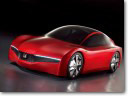
 Honda has unveiled a concept model which represents its interpretation of how a future hybrid model might appear. Honda Small Hybrid Sports Concept, a design study model, demonstrates a unique fusion of advanced environmental technology, exciting styling and fun-to-drive characteristics. This is its world premiere for the model, which has been penned by the design studio at Honda R&D Europe based in Offenbach, Germany. (more…)
Author: Zahari Mladenov
-
Honda Small Hybrid Sports Concept
-
Spyker C12 Zagato

 Victor Muller, CEO of Spyker Cars, and Andrea Zagato, CEO of Zagato, today unveiled the Spyker C12 Zagato at the 77th Geneva International MotorShow. Norihiko Harada, Zagato’s Automotive Chief Designer, and Muller co-operated closely to design this limited edition of 24 sports cars to be delivered from March 2008 onwards. The world première of this ultra-exclusive version of the C12 range celebrates Spyker’s entry into the world of Formula One and marks the first integration of design elements and styling cues from the Spyker F8-VII Formula One car into the Spyker road car range. This point was underlined by the unveiling of the car being performed by Spyker’s Formula One race driver, (more…)
-
Nissan X-Trail
 Nissan has revealed its second-generation X-TRAIL at the Geneva Motor Show, and it appears the new model is almost identical to the outgoing version. Major changes are the all-new chassis and body design, a range of four different engines including two diesel variants with an automatic transmission, upgraded Intelligent ALL MODE 4WD and a more comfortable interior.
The first X-TRAIL was an exceptional success for Nissan, so when it came time to develop that car’s replacement, designers weren’t willing to muck with the basic formula. This meant that the new model would have to remain a hugely capable compact SUV with serious off-road credentials and class-leading performance.

Nissan X-Trail 


Each model comes standard with air conditioning, power windows front and rear, and Bluetooth mobile phone connectivity, as well as a side and curtain airbags, ABS and EBD. Optional extras include Xenon headlamps, roof rails with fully integrated driving lamps, and satellite navigation with a full color screen shared with the rear parking camera.
The new chassis features strut-type suspension at the front with a multi-link system at the rear. Engines on offer include a revised version of the 2.5L gasoline four-cylinder unit found in the current model, two new turbo-diesel units and third 2.0L gasoline unit, with all three engines sourced from Renault. Standard on all versions is a six-speed manual transmission, though a new six-speed auto and another CVT unit are optional on some models.
-
Toyota Hybrid-X
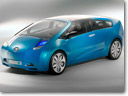 Toyota presents a world premiere at the Geneva Motor Show with the reveal of Hybrid X – a concept car that proposes a new design language for hybrid models, while also acting as an innovative technology showcase for future generation hybrid cars.
Hybrid X is a vision for future environmentally friendly motoring. It fits clearly within Toyota’s environmental strategy of offering sustainable mobility for modern families. Hybrid X further extends the use of Hybrid Synergy Drive® which is becoming an enabler for vehicle concept innovation and allowing Toyota to push forward to new frontiers.
Hybrid X is designed as a four door, four seat open-space concept. It has the dimensions of a conventional family car with an overall length of 4,500mm and wheelbase of 2,800mm. The width is 1,850mm and height 1,440mm.
Hybrid X has been created and developed by Toyota’s European styling centre, ED², in the south of France. It proposes unconventional creative solutions that will themselves potentially become the signature points of a specific hybrid identity.

Toyota Hybrid-X 


Hybrid X follows the core values of the Toyota brand design philosophy under two consistent themes: J-Factor and Vibrant Clarity. J-Factor refers to the local and global acceptance of Japaneseinspired design and cultural form, while Vibrant Clarity is the design language used to express the J-factor. Through Vibrant Clarity, designers will infuse future vehicles with a completely original identity and emotional intensity that will be uniquely identifiable as coming from Toyota.
In this context, designers created an unconventional fusion of strength, lightness and emotion through the futuristic body shape. There is fusion of thought also – a symbiosis between the exterior and the interior so that, as you look at the exterior, you can imagine the interior with clarity and vision.
Interior designer, Laurent Bouzige, says: “Hybrid X is conceived as a multi-sensory experience. There is a formal style in the shape of the vehicle and the material used but every other reaction is linked to the passengers’ senses of sound, smell, sight and touch through interactive ambience.”
The strongest form element of the exterior shape is the two ‘U’ shapes created by the massive upper glass frame area and the unconventional A and C pillars. When viewed from above this gives the impression of a vast X – hence the name of the concept, Hybrid X.
The U-shaped pillars allow the general shape of Hybrid X to achieve a superior aerodynamic form which is further enhanced by smooth surface lines and the integrated rear spoiler.
At the same time the glass area greatly enhances visibility to create an ‘open-space’ concept which “frames the vision” in all directions, including up.
Access and innovation are features of the rear-hinged passenger doors which open electronically at the touch of a button. Dynamic hints of driving performance are provided by the customised 20-inch alloy wheels with ultra-low profile 225/40 R20 tyres.
The smooth, aerodynamic lines of the front are unbroken by headlamps which are integrated into the dashboard and are now part of the interior of the car. These LED lamps are ‘intelligent’ and display graphic forms through animation, adopting the interactive concept of Hybrid X to communicate safety information to pedestrians or other drivers, such as safety distances, acceleration and braking.
Across the rear the energy-efficient LED lights form another U shape, reflecting the design signature of vehicle as a whole.
Fusion between exterior and interior styling is clear from the swooping curves of the interior surfaces. Here there are classic ergonomic solutions and the multi-sensory experience is most keenly developed as the car responds to human interaction. The human element is further emphasised by an artistic drawing printed on the inside door panel.
The driver can set the ambience within the car via an interface in order to control the four senses of sight, sound, touch and smell. LED lighting systems within the car provide a variety of illumination and are changing in harmony with different musical backgrounds. A perfume diffuser fills the air with gentle, relaxing aroma while the use of many different materials and textures on the interior surfaces provides variety to touch.
The drive-by-wire steering pad features a screen in its centre to relay vital energy information to the driver about the energy flow path, fuel consumption, gear position. Interactive navigation and Bluetooth connectivity is provided by a second screen in front of the driver.
A third touch screen, in the console, controls the ambience settings, such as the entertainment and audio systems, lightning operation and air conditioning. A sensitive touch on the steering pad allows the driver to switch information on the screens.
Space saving seats are formed using injected foam techniques which create comfort while reducing weight. In order to further promote human interaction, the two independent rear seats can swivel by 12 degrees to allow passengers to enjoy the scenery or a more intimate ‘tête-à-tête’.
For now, it is clear Hybrid X is an innovative vehicle that conceives how Hybrid Synergy Drive® technology can deliver economical, cleaner and more comfortable motoring. It is a step closer to Toyota’s vision of the ultimate environmental driving technology and its design will influence the entire Toyota brand and its hybrid models in the future.
-
Renault Clio Grand Tour
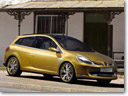 Renault introduces Clio Grand Tour Concept at the 2007 Geneva Motor Show. A glimpse of developments to come within the Clio III range, Clio Grand Tour Concept targets drivers looking for a small, dynamic and attractive estate car with the abilities of a classic grand tourer. Finished in special Comet Gold paintwork, Clio Grand Tour Concept is powered by the 2.0 16V 200hp petrol engine, a unit that promises incomparable driver appeal. The cabin is bright, practical and comfortable – the perfect place for relaxing journeys.
And with its large, easy-to-load cargo area, Clio Grand Tour Concept is geared very much towards leisure activities. Developed around photographic and multimedia themes, the show car has a very high specification and includes a number of benchmark electronic features.
A powerful, dynamic presence
At 4.2 metres in length, Clio Grand Tour Concept will appeal to drivers who want a compact estate with the panache of a grand tourer. There is no mistaking its provenance. Clio III’s distinctive profile is easily detectable, although the shape is enhanced by more pronounced curves. Fitted with bespoke side panels and a rakish tailgate topped by an aerofoil, Clio Grand Tour Concept fizzes with power and energy. The three-door bodyshell, roof bars, wider front and rear wings, sculpted sills, air ducts and rear diffuser underline its potency.
At the front, a wide air intake grille cools the naturally aspirated 2.0 16V 200hp engine. The streamlined front lights house high-performance LEDs and the compact rear lights encapsulate Clio Grand Tour Concept’s nononsense character. The rear-view mirrors and bumpers are painted Comet Gold, like the bodywork. A subtle array of pixels can be picked out on the sides of the bodywork, suggesting the worlds of multimedia and photography. Hunched on aluminium wheels – 18-inch rims at the front, 19-inch at the rear – Clio Grand Tour Concept looks effervescent and dynamic.

Renault Clio Grand Tour 


A large, practical boot
Clio Grand Tour Concept’s generous proportions will meet the needs of customers looking for a car that blends practicality and character. Its adaptable interior and longer rear overhang (bigger than that on a standard Clio III) combine to provide excellent load-carrying capacity. Clio Grand Tour Concept has an impressive 430-litre boot and the cargo area measures 1.7 metres in length. Svelte, individual seats with integral head-rests offer comfort and good body support for up to four occupants. The rear seats fold easily to create a flat load area. In an instant, the Clio Grand Tour Concept transforms into a two-seater coupe – a 100% fun car with a 1,275-litre load capacity.
Comfort and driver appeal
A cocktail of the Clio III’s remarkable roadholding and sheer driving pleasure, Clio Grand Tour Concept is a car for free spirits. Its dynamic attributes allow the naturally aspirated 2.0 16-valve engine to show its full potential. It’s a flexible (215Nm of torque at 5,500rpm), powerful (200hp [145 kW] at 7,250rpm) unit that is lively when required, yet docile and tractable in everyday driving. Mated to a six-speed manual gearbox, it accelerates from 0-100kph in just 7.2 seconds.
Underneath, however, Clio Grand Tour Concept is still a Clio – and that means it’s supremely comfortable and easy to live with. The practical interior is perfect for relaxing journeys. The wide, panoramic glass roof creates a bright, airy ambience that highlights the generous cabin dimensions and large boot. The elegant dashboard incorporates a navigation screen and analogue/digital speedometer. A great deal of attention was paid to interior lighting. Yellow in tone – Renault’s corporate colour – it gives the cabin a certain vibrancy, which echoes the car’s entertaining character. The centre console, boot floor and door trims also disseminate streaks of yellow light.
-
ItalDesign Vadho

 Once again, Geneva offers the opportunity to develop research on form and contents that break away from the industrial approach that Italdesign Giugiaro adopt daily in order to supply their worldwide clients with designs that best suit their markets. The challenging “diversion” this year represents a niche theme meant to be heatedly discussed: a super-sporty extreme two-seater fuelled by hydrogen to meet the increasingly pressing need to promote and develop alternative and environment friendly propulsion systems and to explore the potential challenge offered to design by a more flexible “displacement” of the chassis lay-out in new engine, mechanical, and electronic equipments.
The decision to remove the steering wheel took Italdesign Giugiaro to the creation of a highly innovative driving system: two joysticks are fixed on the armrests of the pilot’s seating and pedals unit, where all elements can be adjusted and customized to the driver’s needs. The armrest/joystick/ electrical pedals and seating unit is not connected to the chassis. This and its by-wire impulses system allow to adapt the different versions with right, centre and left driving with no onerous works once the vehicle should go into production. This system presents design – construction and performance – characteristics that prompted Italdesign Giugiaro to patent it.
VAD.HO is meant to be an open “work in progress”: it has been positively welcome by BMW that accepted to provide for it their series 7 12 cylinders hydrogen powered engine.
One curiosity: the acronym “VAD.HO” is a play on words that uses the name of the Vadò industrial area in Moncalieri where Italdesign Giugiaro headquarters have been located since 1974, and also refers to the hydrogen propulsion system adopted for the vehicle (vado – or “I go” in Italian – on H).


The cockpit
This model immediately puts all its ambitions on the line: a longitudinal cockpit in polycarbonate emerges on the left-hand side while the right side houses the engine and hydrogen propulsion devices in the centre. The two Argonauts are seated in tandem in the fuselage, settled into a comfortable and super-equipped ergonomic cockpit.The joysticks are fixed in the armrests that are integral with the pilot seat (the left armrest can be raised to facilitate getting in and out of the vehicle).
Designers and technicians believe that this solution facilitates naturally comfortable – and therefore stable and precise – steering manoeuvres and activation of all the joystick commands, including driving and secondary devices such as entertainment and other options.
In order to facilitate manoeuvres in curves without having to twist or rotate your wrists, the joysticks were conceived with two grips that help the necessary movements. The joystick moves back and forth along the armrest to ensure driver comfort, as well as the sliding pedal block that, hinged on the lower part, adjusts to the seat, which is in turn fixed to the chassis.
The control group is designed as an IT console with liquid crystal displays designed for aeronautic applications (EFIS – Electronic Flight Information Systems). The digital driving instrumentation is positioned centrally under the rear-view continual video monitors and the navigator; side video cameras project films externally. The surface occupied by the instrumentation is in any case limited, in order to allow the pilot maximum external visibility.
Access to IT data from the console is also available to the rear passenger by means of a dedicated joystick, similar to the driver’s, and two monitors built into the back of the driver’s seat. The faces of both pilot and passenger are filmed by video cameras and may appear on reciprocal monitors to enhance team interaction.
Thanks to video cameras installed in the frontal optical group, the driver can use the monitors either for parking radar and for an infrared effect for night-time driving, or interactive driving between the car and road infrastructures, when they become available.
Passengers get into the vehicle through two integrated doors/domes that are hinged lengthwise onto the structure and lift gull-wing style. The living space for the pilot and passenger are definitely comfortable because they were calculated at an “OSCAR percentile” larger than 95% and therefore more spacious than those of a luxury sedan. The rear passenger is able to stretch out his legs and change his position by adjusting the footrest platforms on the sides of the front seat. The armchairs are also equipped with four-point belts that can be regulated all around.
Passenger safety in case of collision or overturning is guaranteed by structural side reinforcements, the steel roll bar on which the two semi-domes rest, and the activation of the air bags in the oval strip under the structure at the cockpit base. The cell is equipped with “umbrella” airbags that surround both the pilot and the passenger. The upholstery materials chosen for the interior are in metallic and phosphorescent opaque grey tones: both for the silver leather armchairs and the synthetic pieces in aeronautic styling. Bolder effects were used in areas around the control console.
The package
The sporty-racy ambitions of this project have imposed a wedge-shaped volume, backed up by very subtle lines and modulations that are never forced or exasperating, but rather in perfect harmony with those parameters of balance and elegance that distinguish the Giugiaro trademark. The introduction of stylistic features was intentionally avoided on this project, which is undoubtedly oriented towards contents. In fact, the VAD.HO body is characterised by a feasible decomposition with regards to production logics and meets international homologation regulations (including pedestrian accidents).Even the overall dimensions are “reasonable”. The figures are close to those of the Ferrari Maranello, a compact two-seater with similar performances: 4550 mm long, 1980 mm wide, and 1150 mm high, like Enzo model.
Naturally, the aerodynamic penetration requirements are enhanced by the reduction in the main section because the windscreen/cockpit impacts on only half of the vehicle.
The nose presents a screwed-on bumper block with ample air intakes. The lower zone of the bonnet features an adjustable spoiler in between the “pagoda”-shaped ridges formed by the fenders that smooth off into the sides.
The optical devices are housed in a drop-shaped recess that begins with the bumpers and narrows towards the sides: this cavity houses the dual-function projector, the position and direction LEDs, a video camera at the top, and the passenger compartment air intake.
The asymmetric transparent dome gives this car a strong personality; the windscreen wiper is hidden under the small crowl. From the side, the profile of the fender crest is sinuous and dips towards the centre, while a bird’s eye view confirms the designer’s will to make the front more aggressive and modulated and the tail softer and sharper.
The originality of the cockpit’s asymmetric solution is even more visible in VAD.HO central body. The fairing of the engine air system, the filter, and the electronics can be seen on lowered section that houses the engine. Since the cut of the passenger door is repeated symmetrically on the engine side, the engine block can be simply accessed by raising the large panel/trapezoidal door hinged onto the centre line with a gull-wing movement. The recess of the side indicator also serves as housing for the video camera.
The blunt one-piece rear end recalls the Corvette, but is characterised by the line of the bonnet with its asymmetric profile because it must converge with the dipping line of the cockpit and the side/engine line.
The trunk capacity for a super-sporty two-seater is truly remarkable: 550 dm3.
The rear end view is “carved” to emphasize all the aggressiveness of this vehicle’s nature. The “G” Giugiaro logo was adopted to house the rear stop LEDs with striking media impact. VAD.HO is following up the content research started by Italdesign Giugiaro with 2004 Toyota Alessandro Volta with hybrid propulsion and the 2005 Mitsubishi Nessie that runs on hydrogen; while the formal aspects evoke the design of the 1988 Aztec, which even then offered driver and passenger a chance to slide into a definitely attractive “aeronautic” atmosphere with a formula that today is much more easily feasible thanks to IT innovations and by wire technologies that have been tested and nowadays are considered to be reliable.
This evocation of the world of aeronautics is shown again in the colours choice for the body – opaque silver-grey -, in the service decals on the engine equipment and the fuel tank, and the use of large 20″ solid tyres.
Source: Italdesign
-
Citroen Cruise Crosser
 Andre Citroen organised the first motor crossing of the Sahara in 1922. Five half -track vehicles, tough enough to cross rocky and inhospitable terrain, were the first to journey from Algeria to French West Africa. Galvanised by this exploit, André Citroën followed it up with the Croisière Noire in 1924 and the Croisière Jaune in 1931. The public was thoroughly captivated by these truly adventurous Asian and African expeditions, which were recognised at the time as important economic, humanitarian, scientific and cultural missions.
Citroen is alluding to this past with Cruise Crosser, a rough and ready all-terrain concept car produced by the Espera Sbarro School in partnership with Citroen Styling. This off-road concept, based on Citroen’s first luxury SUV, the C-Crosser, is fitted with three axles and six wheels that, just like those first half -track vehicles, give it traction in the harshest possible conditions, come snow, sand or mud.

Citroen Cruise Crosser 


Off-road adventure and recreation
The orange-coloured Citroen Cruise Crosser is easily spotted wherever it roams. The large red compasses on each side of the vehicle underline its mission to travel everywhere and anywhere, north, south, east or west.
2007 Citroen Cruise Crosser has a big open space at the back to provide seating for extra passengers (removable row 3) or a vast loading area for trouble -free transport of luggage, shovels, tents and other accessories. The opening mechanism of the tailgate makes loading easier, while step plates on both sides of the vehicle facilitate access to the rear compartment.
The Cruise Crosser is equally impressive inside. The leather seats in rows 1 and 2 boast a particularly high-tech design, with mesh-style hide confirming both the vehicle’s sporting vocation and the care that went into providing passengers with total travelling comfort. The orange body colour is stylishly echoed in the seat contours, on the dashboard and on the door panels. These and other details bring a generous dose of visual and tactile pleasure to Cruise Crosser’s efficient and functional cabin.
Technology with minimal environmental impact Citroen Cruise Crosser is fitted with high-performance technology for serious off-road adventure.
Passengers can rest assured that Cruise Crosser will never let them down. On poorly surfaced mountain roads and other uncivilised terrains, drivers can activate the third electric axle for outstanding traction. The vehicle also has sand boards at the rear for extrication. Finding your way around is a cinch with the navigation system, and Cruise Crosser also features a DVD player that makes for more pleasurable journeys.
These escapades do not come at the expense of the environment. Faithful to its commitment to cutting fuel consumption and CO2 emissions, Cruise Crosser has a hybrid diesel drivetrain combining a combustion diesel engine with an electric motor located under the tipper bed.
Traction is boosted by the third axle, used along with the other drive wheels on harsh terrainfeaturing rocks, sand or snow. Used alone, this third axle makes it possible to drive in “Zero Emission Vehicle” mode. In this mode, the silent and non-aggressive Cruise Crosser is in perfect harmony with its environment and enables occupants to wholeheartedly enjoy the journey.
Cruise Crosser can journey in the farthest flung regions and get from A to B in the roughest possible conditions. It embodies a new kind of adventure. An adventure made possible by efficient, cutting-edge technology. An adventure that is sporting and daring, full of vitality and energy – but one that is intelligent, too, made in the greatest respect for the environment.
-
Volvo XC70
 The all-new Volvo XC70 has admittedly dressed up for a luxurious night out in town, but its appetite for exciting adventure is as large as ever.”The dark-coloured plastic panels at the bottom are less obvious than on the current model. But as with exclusive outdoor clothing, the protection is placed exactly where it needs to be to withstand the rough stuff,” says Volvo Cars Design Director Steve Mattin.
The large dark-coloured plastic panels on the current XC70 model have now been mostly replaced with painted surfaces. This in combination with refined lines and contours and a more dynamic rear section give the all-new XC70 a more elegant, more luxurious appearance.
But don’t be fooled into thinking the XC70 is ready to abdicate its position as the sportiest, most capable XC model. Quite the contrary.

Volvo XC70 


“Imagine you are driving comfortably on an open motorway. When you look out the side window across the bleak landscape, you are surprised to be overtaken by a car driving in the rough desert with a trail a cloud of dust behind it. That was the vision and that was the car we had in our minds when we started designing the all-new XC70,” explains Stefan Jansson, who is in charge of the exterior design.
Larger painted area at the front
At the front the characteristic dark nose of the current XC70 has been abandoned and replaced with a new, unique soft nose. The headlamps and grille have grown and now have the same trapezoidal shape that was first seen on the XC60 Concept in Detroit in early 2007.
In order to retain the rugged stance, the plastic panels at the corners have been emphasized around the bumper air intakes, which are more clearly pronounced.
“They look like “boxing-gloves”, while the shape of the air intakes is inspired by a jet engine’s frontal profile. These lines are echoed around the red reflectors at the rear, which accordingly trace the shape of the extractors on a jet engine,” explains Stefan Jansson.
The silver-coloured protective skid-plate at the front has been widened and integrated to take on a spoiler-like shape.
Tall and spacious with rippling muscles
Along the sides the contrasting, protective sections have been supplemented with a chrome moulding at the bottom of the doors to emphasise the required stance of a tall, spacious car with elegant lines and rippling muscles. The roof-rail is integrated into the A-pillar moulding.
“The framed side windows, the distinct shoulders and the clean lines create harmony between the rounded, sporty front and the spacious rear of a genuine estate car. The raised rear section is also an important element in creating the well-balanced impression,” says Stefan Jansson.
The pronounced wheel housings are another important feature of the XC70 model’s confident statement that this is a highly capable car. The all-new XC70 can be specified with a variety of wheels all the way up to sporty six-spoke 18-inch alloys.
Intelligent overlapping tailgate
The rear of the all-new XC70 gives a more dynamic, more sculpted impression with the hexagonal design language taken from the remarkable glass tailgate of the new Volvo C30. The rear glass window also extends further down than the side windows to give the driver better rearward visibility.
“The shape of the outside is now more dynamic without compromising the car’s practical properties. With the help of the intelligent overlapping tailgate, which takes the tail lamps up with it when it is opened, the space inside the car is larger than before and easy to load,” says Steve Mattin.
At the rear, the Volvo name on the tailgate features more pronounced lettering with wider spacing than before. A new feature that was first shown on the XC60 Concept in Detroit this year.
Luxurious and adventurous
The all-new XC70 model represents Scandinavian design at its best – that is to say every little detail has been designed with one hundred percent focus on clean lines and intelligent functionality.
Comfort in the front seat includes superb seats and ergonomically designed instruments – naturally including an elegant, super-slim centre stack and an audio system of absolute world class.
“One could say that the XC70 has a dual personality. On weekdays it’s a sophisticated and elegant car for an active urban life. Come the weekend and it transforms into a rugged partner for all kinds of exciting adventures,” says Jonathan Disley, who has designed the interior of the all-new XC70.
Espresso Brown interior and royal inspiration
In addition to Sandstone Beige and Anthracite Black there is an Espresso Brown option where the warm dark colour of the seats, door panels and instrument panel contrasts with the sand-coloured detailing of the rest of the interior trim.
The special XC70 feeling inside the car has been inspired by one of the best-known patterns of Swedish design history – “Virrvarr” (Chaos or Confusion) by Swedish prince and later internationally renowned designer Sigvard Bernadotte.
“The ‘tangled’ theme in “Virrvarr” served as the inspiration for a number of details: the stitching of the leather, the cross-brushed aluminium panels and the mesh pockets at the rear. The idea is that the criss-crossing lines should be echoed throughout the interior to make the car even more exciting,” says Boel Hermansson, head of colour and material design for the all-new XC70.
-
Cobra Suzuki SX4
 Exclusive accessories for the Suzuki SX4 are the latest additions to the extensive product line-up from Cobra Technology & Lifestyle. To make the front of the Japanese Cross-Over from compact car and SUV even more striking Cobra Technology & Lifestyle offers a high-gloss stainless-steel front guard with a tube diameter of 60 millimeters. This accessory part successfully passed the crash test which is necessary to meet all current EG guidelines for pedestrian protection. The part, which has flexible mounts and is designed to absorb energy, comes with an EG operation certificate, eliminating the need for a technical inspection and for amending the vehicle papers.
Additionally the Suzuki can be refined with a bumper grate made from high-gloss stainless steel. The exactly fitting and easy-to-mount accessory can be alternatively mounted with or without the Cobra Technology & Lifestyle front guard.
The Cobra Technology & Lifestyle 60 millimeter stainless-steel tubular sill guards with integrated step are attractive and practical since they also facilitate entering and exiting the vehicle. They also round out the Off Road look.

Cobra Suzuki SX4 The tire/wheel combinations from Cobra Technology & Lifestyle are custom-tailored for all versions of the Suzuki SX4: Altogether there are three different wheel designs in sizes ranging from 7.5Jx16 to 8Jx17. The most exclusive wheel is the multi-piece Cobra Grenada five-spoke wheel in size 8Jx17 with 225/45 R 17 tires.
-
Opel Grand Turismo Coupe Concept
 On the eve of the 77th Geneva Motor Show, Opel illuminated the night. Supported by a dramatic light show, the Opel GTC Concept (Gran Turismo Coupé) made its spectacular debut at the “GM Premiere Night.”
Heralding a new design era for the brand, the GTC Concept gives an insight into how Opel’s design language will look in the future. Adding to progressive shapes and surfaces, the four-seat coupé features unique LED lighting concepts in the front and rear, providing a new signature lighting style for the brand. (more…)
-
Audi Q7 4.2 TDI
 240 kW/326 bhp and 760 Nm of torque – Audi proudly presents the most powerful diesel SUV on the world market. A state-of-the-art eight-cylinder engine with common rail fuel injection and Piezo injectors not only stands out on account of its sheer output but also demonstrates outstanding efficiency: the 4.2 TDI has an average fuel consumption of just 11.1 litres of diesel per 100 kilometres. (more…)
-
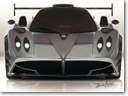
Pagani Zonda R – Ultimate Racetrack Performance
 While we certainly cannot say the Zonda F lacks performance figures, driving around the Nürburgring in 7:32 and achieving lateral G forces of almost 1.5 G, it is however a road car, easy to drive, intuitive and setting the benchmark for comfort, safety and lightweight. Paired with a quality finish and the attention to detail this made the Zonda F one of the most desirable supercars resulting in the 25 Coupé models being sold out in record time. (more…)


