Author: Georgi Boychev

  • 2020 Volkswagen Golf 8 GTI comes with enhanced drivetrain system and sexy new looks!

    2020 Volkswagen Golf 8 GTIGolf GTI is considered an icon all around the world. And there’s a fine reason for that – this best-selling model has been changing the motorsport world since its launch 45 years ago. Now, Volkswagen launches its eighth Golf GTI generation and tries to make it the most digital of all previous versions. Additionally, engineers have added new gadgets and technical solutions, so there’s a lot to be reviewed! Let’s hop in!

    Exterior design

    2020 Volkswagen Golf 8 GTI

    As expected, the body language embodies every aspect of the Golf GTI DNA. The vehicle showcases a clean and minimalistic design with numerous straight lines and flat surfaces. As it seems, along with making it technologically advanced, the Volkswagen team has aimed a futuristic aesthetics. Engineers have achieved this result via incorporating a clean and aggressive front face, accompanied by sexy wheels and a tight and expressive rear-end.

    Furthermore, the design adopts a LED strip in the headlights mirrors in the red line, which runs across the front of the vehicle when the daytime running lights are activated, or when the driver approaches with the key. Another instantly recognizable feature is the large and single-peace honeycomb grille. The optional foglights are now in the form of X and integrated into the grille. Neat!

    The mentioned wheels are 17-inch Richmond aluminum-alloys and can also be specified in an 18-inch variant set. Furthermore, there are also different designs that are available in 17-, 18-, and 19-inch sizes. These all are accompanied by sexy red brake calipers and bespoke spoiler that extends the roofline – and all together contribute to that aggressive and sporty stance.

    Interior design

    2020 Volkswagen Golf 8 GTI

    As with the exterior design, the interior features tons of GTI styling cues, all along with next-gen technologies.

    The sporty steering wheel has been transformed into a new multifunctional wheel with touch controls. Also, the three silver spokes have been retained, with a red outline on the lower spoke. The plaid seat design is now being called Scalepaper and features red seams with grey and black plaid with all the decorative seams and edges are in red. Neat!

    Furthermore, the digital display starts up as soon as the doors are opened. The entire cluster is comprised of the well-known Digital Cockpit and the Infotainment system suite. There are an 8.25-inch screen and a larger 10-inch Discover Pro monitor available as an optional feature. Regardless of which system is fitted, the visual and functional fusion of internal technologies creates a consistent and pretty impressive digital architecture.

    Drivetrain system

    2020 Volkswagen Golf 8 GTI

    New Golf GTI features a new Vehicle Dynamics Manager control system, which controls the XDS electronic differential lock, the VAQ electronically-controlled, and torque-sensing limited-slip differentials, and also the optional DCC adaptive damping system.

    Additionally, the vehicle is powered by a 2.0-liter turbocharged direct-injection EA888 TSI power unit that generates a total of 242hp and 370Nm of torque. This unit is mated to a standard six-speed gearbox or the optionally available dual-clutch automatic one.

    Additionally, vehicle’s control arm bearings, springs and bump stops on the front suspension have been completely revised, as well as the damping hydraulics. The rear axle also features a new bearing and spring setup, with reconfigured helper springs and damper bearings. As with the front axle, the rear one also features new damping hydraulics.

    SEE ALSO: Audi extends warranty in order to aid customers in the times of pandemic

    And last, but certainly not least, the progressive variable-rate steering system is now a standard feature in the latest Golf GTI. This system is different from a standard one because of the variable steering rack and the pinion gearings. Also, the system has been further enhanced with a more direct ratio and new software and software algorithms. The variable-ratio on the steering reduces the effort required when maneuvering and parking, but on winding roads the steering is more direct. From lock to lock there are exactly 2.1 turns. Sweet!

    Source: Volkswagen 

  • Audi extends warranty in order to aid customers in the times of pandemic

    2020 Audi Q5Audi of America announced that additional measures to help customers during the COVID-19 pandemic. Automobiles with the New Vehicle Limited Warranty or Certified pre-owned Limited Warranty set to expire between March 1, 2020 and May 31, 2020 will have their warranty coverage extended by three months in order to allow customers to have their Audi machines warranty work completed under warranty.
    Furthermore, this three-month extension will benefit owners of new and certified-pre-owned machines whose warranty is set to expire between March and May 2020, is giving owners additional peace of mind during these unprecedented times. In fact, the extension is automatic and requires no additional actions by the owners. However, if New Vehicle Limited Warranty or Certified pre-owned Limited Warranty expires due to mileage coverage rather than time, no extension is allowed.

    SEE ALSO: New Honda Jazz will benefit from F1 technologies! Details here!

    Audi and Audi Financial Services have also announced an extension to the customer payment relief options put in place as a result of the ongoing pandemic. The program remains in place through June 1. Customers are strongly encouraged to access and manage their accounts online in order to request assistance and extend their lease agreements.

    Source: Audi

  • Karma’s new E-Flex Platform: additional information

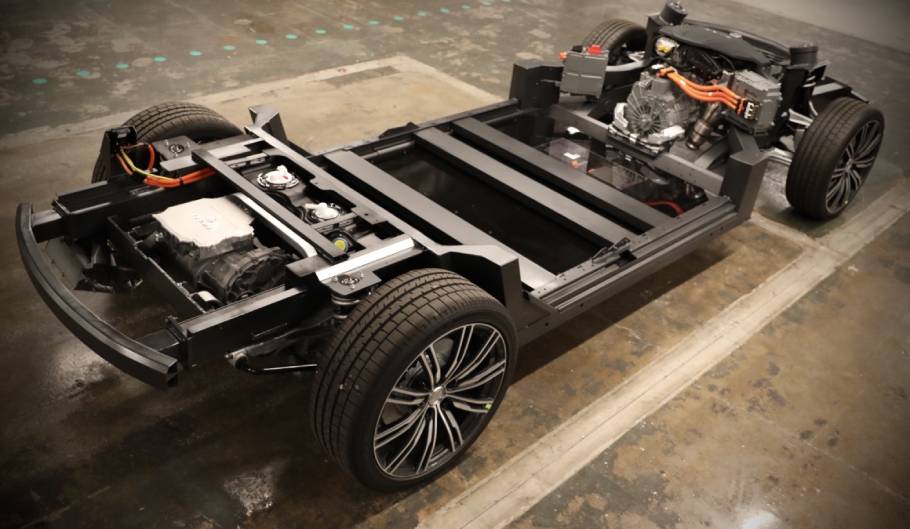
    2020 Karma AutomotiveKarma Automotive today announced its latest and most advanced modular E-Flex platform with two motor AWD and extended-range electric vehicle architecture. This new platform is the final of five demonstrative projects designed in order to illustrate Karma’s technical direction and overall capabilities using the highly versatile EREV and battery electric vehicle (BEV) based rolling chassis systems.

    Karma’s latest flexible platform has been engineered with a wide range of solutions in mind. Such is the single motor e-drive unit at the front and at the rear. Also, the platform is geared with Karma’s Silicon Carbide iventer e-drive system, which features an 80 kWh flat floor battery. This setup is targeted to achieve an all-electric range of up to 240 miles and when blended with the EREV, this number can rise to 495 miles, depending on configuration and commercial application.

    Furthermore, all Karma E-Flex platforms leverage the brand’s proprietary technology, manufacturing, and design services in order to offer partners innovative electric mobility solutions. By using the Karma E-Flex Platform, manufacturers can optimize development costs to engineer, test, certify, and build an EREV or BEV platform, which allows the electrification of their products with greater speed and efficiency.

    SEE ALSO: New Honda Jazz will benefit from F1 technologies! Details here

    Additionally, Karma’s E-Flex platform solutions are developed at the karma Innovation and Customization Center, brand’s assembly plant in Moreno Valley, California. All E-Flex platforms feature proven Karma technology solutions as Revero GT drives motors in various configurations, gearbox, suspension, subframes, steering, battery, and electrical systems, in addition to production body structure parts. Many of these components have undergone over a million miles of Karma testing and in-market validation, which ensures Karma’s proven knowledge and award-winning vehicle technology are present in each platform unit.

    Source: Karma Automotive 

  • New Honda Jazz will benefit from F1 technologies! Details here!

    2020 Honda JazzNew Honda Jazz will be launched later this year and according to the Japanese manufacturer, the latest family member will feature tons of advanced technologies and systems. Let’s find out more, shall we?

    As it seems, Honda engineers are drawing inspiration from the Formula 1 Hybrid Power Unit program – the goal is to improve the efficiency of the hybrid system, but also boost the performance rates. As you might know, the latest Honda Formula 1 Hybrid Power unit, named RA620H, uses an advanced 1600cc six-cylinder internal combustion power unit, blended with an Energy Recovery System.

    Additionally, there’s an advanced electrical system that further recycles energy produced by the brakes and exhaust gases. By doing so, the technology generates extra boost for acceleration and also reduces turbo lag.

    The latest road-going beneficiary of the F1 benefits is the recycling cycle of the e:HEV system. By incorporating the same approach in the new Jazz, engineers achieve better battery energy output, more agile performance, and seamless switch between the selectable modes.

    SEE ALSO: Mazda celebrates 60 years of coupe design. Here are some highlights!

    As expected, the e:HEV is exclusively shaped and molded in order to fit the new Jazz. The system consists of two powerful electric motors which are further connected to a 1.5-liter DOHC i-VTEC petrol unit and also to the lithium-ion battery and the entirely revised transmission. All these components work harmoniously in order to provide a smooth and direct response. Furthermore, the e:HEV system offers three interchangeable driving modes:

    • EV Drive: the lithium-ion battery supplies power to the electric propulsion motor directly.
    • Hybrid Drive: the engine supplies power to the electric generator motor, which in turn supplies it to the electric propulsion motor.
    • Engine Drive: the petrol engine is connected directly to the wheels via a lock-up clutch and drive force is transmitted directly from the engine to the wheels.

    Enjoy!

    Source: Honda

  • Mazda celebrates 60 years of coupe design. Here are some highlights!

    2020 Mazda Coupe VehiclesAs a preferred layout for attractive and futuristic design since the 1930s, the traditional two-door coupe has long been seen as one of the most stylish and sexy designs in the automobile world. From the elegant high-class appeal of the early European coupes to the outstanding and extravagant American variants, these vehicles tend to focus more on style rather than anything else.

    What is also notable about the coupe segment, is the performance-enhancing structure. Many of the coupes feature rigid and aerodynamic bodies, all along with lightweight materials and enhanced performance rates. And all of these are central elements of Mazda’s product philosophy. In fact, the Japanese manufacturer has been setting coupe benchmarks since its foundation. As you may know, its first vehicle was a coupe – an affordable and practical, the 2.96m-long Mazda R360 was also the lightest vehicle ins class! Sweet!

    Mazda’s first performance vehicle was also a coupe, unveiled at the 1964 Tokyo Motor Show. Back then the Japanese manufacturer revealed the Cosmo Sport 110S – world’s first sports car with a twin-rotor power unit. With its futuristic looks and peculiar engine roar, this machine marked the beginning of an illustrious age of unconventional rotary sports coupes at Mazda.

    2020 Mazda Coupe Vehicles

    However, the big strike came with the unveiling of the Familia/R100 and Capella/616/RX-2 series – the respective forerunners to the well-known Mazda3 and Mazda6, all along with the Grand Familia. A few years later, Mazda also revealed its stunning Luce R130 coupe. Designed at Bertone by Giorgetto Giugiaro, it was brand’s only front wheel-driven rotary model and is now a sought-after collector’s item. Furthermore, the hardtop coupe version was available with an AP (Anti-Pollution) rotary that improved emissions and enhanced the overall fuel economy.

    In the following years, Mazda has unveiled numerous more coupes as the RX-7, brand’s unique approach towards the late 70s. Then came the Eunos Cosmo, the Japan-exclusive sports coupe built from 1990 to 1995. This was the only production vehicle with a three-rotor power unit. It was capable of producing 300hp via a twin-turbo 20B-REV engine. Furthermore, the vehicle introduced some new cutting-edge technologies as the first built-in GPS system and a touch-screen display. Neat!

    2020 Mazda Coupe Vehicles

    SEE ALSO: Mazda’ mesmerizing Kodo Design philosophy – here’s what makes it special!

    In recent days, Mazda continues to push design boundaries beyond the conventional limits and reveals numerous sexy and advanced vehicles. Such is the new MX-5 Roadster Coupe, the RF’s one-of-a-kind- power hardtop. What is special about it is that it features Mazda’s new design concept: Kodo: Soul of Motion. Adopted by numerous contemporary models, the design concept has been a key feature in the award-winning models as the latest Mazda3 model. Sweet!

    2020 Mazda Coupe Vehicles

    Source: Mazda 

  • Lotus and Centrica will reshape the automobile world. Here’s how!

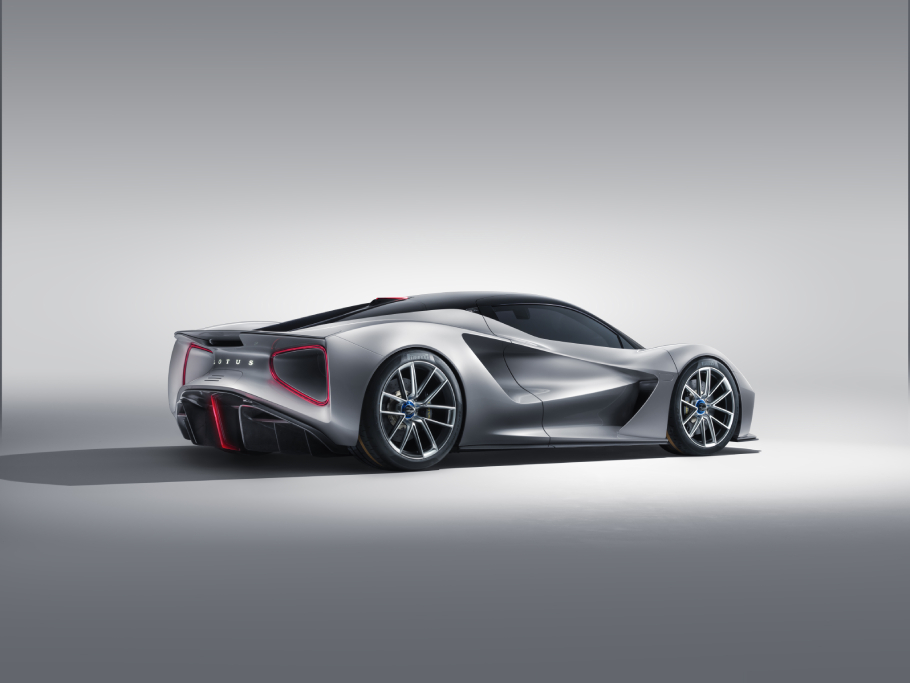
    2020-Lotus-Evija-910Centrica plc, the parent company of British Gas, and the Lotus team are working together to develop a new model of electric vehicle ownership which will fully integrate the future mobility capabilities and the green energy benefits.

    The teams will try to make the vehicle an extension to the home – the car will be capable of storing electricity, minimizing emissions, and generating new income by providing services to the energy market. Furthermore, the energy company will also facilitate a sustainability program that leverages the innovative low carbon technologies and helps mitigate the environmental impact of everything from manufacturing through sales and the day-to-day activities of Lotus employees, heling achieve brand’s carbon reduction goals.

    The new partnership aids towards establishing a new global charging and energy infrastructure for new products as part of Lotus’ path towards the zero-emission driving experience.
    Centrica Group CEO Chris O’Shea said: “We are committed to helping our customers and communities achieve net-zero and to do so, we must enable the change to electric vehicles. We have the technology, the skills and the scale to do this and our partnership with Lotus is another step in bringing our commitment to life.”

    Lotus Cars CEO Phil Popham said: “Our journey to net-zero carbon is absolutely lock-in-step with the Vision80 strategy for Lotus – taking us to eighty years of the business in 2028.  By then we will have transformed Lotus into a truly global player in the high-performance high-technology sector with a new range of cars that remain true to our fundamental promise of always being ‘For The Drivers’.  The difference is the energy and infrastructure that will power and support these products in the future – this new partnership demonstrates the progress being made and the ambition of our vision.”

    Carl Bayliss, Vice President of Centrica Innovations, said: “Owning an electric vehicle isn’t the same as owning an internal combustion engine car. We see a future where the customer, car and home are connected, enabling new services beyond charging the car, and new products and experiences replacing the unremarkable standard relationship with energy and the ownership of a car today.

    SEE ALSO: Jeep makes further approaches to become a greener brand

  • Jeep makes further approaches to become a greener brand

    2020 Jeep Wrangler UnlimitedIn its ever-evolving efforts to monitor and reduce the environmental impact on vehicles, FCA has completed its latest Global Warming Potential analysis. The endeavors result in the revised 2018 Jeep Wrangler Unlimited – compared to its predecessors, this machine offers an overall GWP which is lower with 15 per cent. This GWP improvement was calculated using industry-standard software which examines numerous factors associated with vehicle’s design, production and on-road performance. Such factors include:

    • the environmental impact of fuel production and delivery
    • material use
    • the vehicle’s own fuel consumption

    This GWP improvement was calculated by using industry-standard software which examines numerous factors associated with vehicle’s design, production and on-road performance. Such factors include:

    • Determinations are based on 150,000 miles of operation. And improvements are measured by contrasting anticipated C02-equivalent greenhouse-gas (GHG) emissions, with those of comparable vehicles.
    • C02-equivalent, or CO2e, is a term for describing various greenhouse gases as a common unit. For any quantity and type of greenhouse gas, CO2e signifies the amount of CO2 that would have an equivalent effect on global warming.
    • In this case, the comparison was made with the previous-generation Wrangler Unlimited, as powered by its only available engine – FCA’s award-winning 3.6-liter Pentastar V-6 – and a since-discontinued five-speed automatic transmission.

    Additionally, new Wrangler’s performance was measured as equipped with the optional 270hp, 2.0-liter turbocharged I-4 power unit, featuring a built-in stop-start function. Each new Wrangler Unlimited has the potential to account for a 14-metric-ton reduction in GHG emissions, which is equivalent to:

    • GHG emissions of three passenger cars, driven for one year
    • C02e output from 7.7 tons of coal burned in a power-generation plant
    • C02e produced when powering 2.4 average American homes for one year

    2020 Jeep Wrangler Unlimited

    Further improvements include FCA’s TroqueFlite eight-speed automatic gearbox, which can be mounted to either the 2.0-liter turbocharged I-4 unit or the optional 3.6-liter Pentastar V-6. Additionally, for the first configuration, the advanced gearbox helps the 2020 Wrangler Unlimited achieve a 21 miles-per-gallon rating in the US Environmental Protection Agency’s combined city/highway test cycle.

    SEE ALSO: Volkswagen Group makes further investments in automobile battery supplies

    In fact, for the Sahara trim level, 2020 Jeep Wrangler Unlimited may be geared with a version of the 2.0-liter turbocharged I-4 that features FCA’s eTorque mild-hybrid technology. Additionally, the new-gen Wrangler Unlimited can be specified with a 3.6-liter V6 from FCA’s award-winning Pentastar engine lineup. It also comes with a choice of a TorqueFlite eight-speed gearbox or a six-speed manual system. Neat!

    Source: Jeep 

  • Volkswagen Group makes further investments in automobile battery supplies

    2020 Volkswagen GroupThe joint venture between Volkswagen Group and the Swedish battery manufacturer Northvolt AB is gaining momentum! Both teams have decided that VW will erect the buildings and infrastructure for the “Northvolt Zwei” factory, which will produce lithium-ion batteries. There are about $500m USD invested in the project and it is expected that the joint venture will then rent the factory space. Furthermore, battery cell production is scheduled to commence in early 2024 with an initial production capacity of 16-gigawatt hours. Neat!

    Back in September 2019, VW and Northvolt established a joint venture in order to prepare for the large-scale production of lithium-ion batteries in Germany. Volkswagen’s endeavor to erect the structures and infrastructure is of key importance. Construction work at the site is scheduled to commence before the end of the year.

    SEE ALSO: Karma Autmotive reveals new electric E-Flex platform

    As you might know, Volkswagen Group is amassing technological expertise in the field of battery cell production and technologies as part of brand’s electrification process. Furthermore, VW maintains its strategic relations with numerous producers in order to retain its battery supplies in all world areas. At the moment, these suppliers are LG Chem, Samsung, and SKI for Europe as well as CATL for China and Europe. Additionally, SKI will also supply battery cells for the US market. In Europe alone, VW expects annual demand of over 150-gigawatt hours from 2025 onwards with demands in Asia at a similar level.

  • Karma Autmotive reveals new electric E-Flex platform

    2020 Karma Automotive PlatformKarma Automotive announced its flexible and modular E-Flex platform with an efficient flat floor battery electric vehicle (BEV) architecture. This new platform is one of the five demonstration projects that are exclusively designed in order to showcase Karma’s technical direction and capabilities via the use of the versatile extended-range electric vehicle (EREV) and BEV based rolling chassis system.

    Brand’s “Everyday BEV” E-Flex structure features a single motor, flat battery pack, a front-wheel-drive platform with an 80 kWh battery, and Karma’s latest Silicon Carbide (SiC) inverter e-drive system. Sweet! Designed with compact electric architecture in mind, the new platform design also offers an economic total cost of ownership and a low cost-per-mile performance with a range of consumer and commercial applications. The versatile electric platform can further be used on everyday sedans, mass-transit and ridesharing, last-mile delivery, and more.

    Furthermore, all Karma E-Flex platforms boost the brand’s proprietary technology, manufacturing, and design services in order to offer partners innovative electric mobility solutions. Additionally, by using the Karma E-Flex Platform, automobile manufacturers can optimize development costs to engineer, test, certify, and build an EREV or BEV platform, allowing electrification of their products with greater speed and efficiency.

    SEE ALSO: Volkswagen ARVW: the story of the most aerodynamic VW so far!

    Also, the new E-Flex platform is developed at the Karma Innovation and Customization Center (KICC), the brand’s state-of-the-art assembly plant in Moreno Valley, California. All E-Flex units come with the proven Karma technology goodies. In fact, the new Revero GT is based on the platform. Most of these components have been tested for millions of miles and Karma engineers ensure the highest quality possible. Neat!

    Source: Karma


  • Volkswagen ARVW: the story of the most aerodynamic VW so far!

    1970s Volkswagen ARVWAerodynamics are still a vital part of every contemporary vehicle. The less drag there is, the less energy the automobile consumes. Also, it is quieter, which becomes a kind of a luxurious feature in the era of information.

    Throughout the years, automakers have experimented with extreme and peculiar shapes in order to demonstrate the bond between drag and power output levels. However, few have been more radical than the Aerodynamic Research Volkswagen of 1980, a single-seater with the shape of an arrow. This design remains the most aerodynamic automobile VW has ever built!

    1970s Volkswagen ARVW

    Prompted by the oil crises of the 1970s, the ARVW was meant to showcase how aerodynamics and lightweight could generate enhanced speeds and power output even from an everyday-use automobile. First, the main challenge was to squeeze the driver, the engine, and the four wheels into a body that can feature the smallest profile possible. With its 33 inches of length and 43.3 inches of width, the ARVW’s form was optimized in every way in order to reach the next level of aerodynamic standards.

    1970s Volkswagen ARVW

    The ARVW is built from an aluminum frame under a fiberglass-and-carbon-body. Additionally, the power is generated from a 2.4-liter, turbocharged inline-six power unit, which is capable of producing a total of 177hp and is placed right behind the driver and gives power to the rear wheels via a chain drive. Furthermore, by using an onboard water tank, the engine cools itself by using numerous cooling vents positioned in the nose to let air flow freely over its radiator and exit on top of the world.

    Overall, all these approaches result in a coefficient of drag of 0.15, a number that is still far sleeker than any other production vehicle. In October 1980, a small team of VW engineers and a top-tier open-wheel racing driver went to the Nardo test track in Italy in order to demonstrate what the ARVW was capable of. The ARVW has managed to hit the outstanding 221mph and eventually topped out at 225mph, setting two world speed records.

    SEE ALSO: Lotus reveals the limited-run of Elise Classic Heritage Editions

    The notable shape of the ARVW would later influence the radical and Europe-exclusive XL1. This design concept will also play an essential role in the upcoming ID. electric vehicle model.

    1970s Volkswagen ARVW

    Source: Volkswagen 

  • Lotus reveals the limited-run of Elise Classic Heritage Editions

    2020 Lotus Elise Classic Heritage EditionsLotus has launched four new limited-edition vehicles of the Elise lineup, every single one with a distinctive and exclusive exterior color, which pays tribute to the brand’s pioneering and highly successful racing history.

    These exterior color blends are indeed black and gold, white and gold, blue red and silver, and blue and white.

    • The black and gold color scheme is a reference to the legendary Lotus Type 72D which Emerson Fittipaldi drove to five victories over the course of the 1972 Formula 1 season.
    • The red, white, and gold colors resemble the Type 49B that Graham Hill used back in 1968, while the blue, red, and silver blend is inspired by the Lotus Type 81 1980 driven by Nigel Mansell, Elio de Angelis, and Mario Andretti.
    • The last Elise in the super exclusive lineup, indeed the blue- and white-covered one pays tribute to the Lotus Type 18 from 1960 – exactly 60 years ago, this was the first Lotus vehicle to achieve a Formula 1 pole position and victory, courtesy of the late Sir Stirling moss, at the Monaco Grand Prix.

    2020 Lotus Elise Classic Heritage Editions

    Officially named the Elise Classic Heritage Editions, all four machines feature numerous exclusive exterior and inter facets over the Elise Sport 220 on which these beauties are based. The vehicles are already on sale and can be purchased from Lotus dealers worldwide.

    Along with the unique color schemes, each vehicle comes with an exclusive numbered “build plaque” on the dashboard referencing the limited production run. There are a total of 100 units made, with the final numbers of each model dictated by customer demand.

    SEE ALSO: Hyundai revels new i20 N Prototype – check out the test results! [VIDEO]

    Furthermore, each vehicle from the lineup comes with an extended list of technical features that were previously part of an optional and premium list. Such include DAB digital radio with four speakers, air-conditioning, cruise control, ultra-lightweight forged alloy wheels with a racing livery finish, two-piece disc brakes, and black carpet with floor mats. Sweet!

    2020 Lotus Elise Classic Heritage Editions

    Additionally, along with the exterior changes and added technical features, the Lotus team has also included some interior changes. These include upper door trim and central seat insert finished to match the exterior color scheme with details on the door, gear selector, and dashboard picking out key colors of the entire body design. Neat!

    2020 Lotus Elise Classic Heritage Editions

    Prices for new Elise Heritage Editions start from $57,150USD.

    Source: Lotus

  • Hyundai revels new i20 N Prototype – check out the test results! [VIDEO]

    2021 Hyundai i20 PrototypeHyundai Motor has released two new videos that feature winter testing for its high-performance models, including the prototype of the new i20 N in camouflage. The videos, shot in Arjeplog, Sweden, show Hyundai WRC driver Thierry Neuville putting the i20 WRC, RM19 and new i20 N on the test. Additionally, Hyundai team has officially released a set of new images of the i20 N. Neat!

    The videos2021 Hyundai i20 Prototype

    The first clip showcases the new i20 WRC rally car departing from a vehicle transporter and driving through dark roads in Lapland, bonnet-mounted headlamps lighting its way. As the dawn breaks, it picks up speed and drives through snow-covered forests and hairpin curves to reach its final destination.

    https://www.youtube.com/watch?v=ZkLiYpKMs1g&feature=youtu.be

    The second video includes scenes of the all-new i20 N prototype, Neuville provides commentary to the footage to the footage and describes what it is like to drive each model and outline the character for each vehicle from his personal perspective. Neuville also tested the new i20 N prototype by driving it altering with the i20 WRC and RM19.

    https://www.youtube.com/watch?v=Q1JqDjmeKc8&feature=youtu.be

    The winter tests

    2021 Hyundai i20 Prototype

    The evaluation took place earlier this year on a frozen lake in Arjeplog, Sweden, which is a popular winter testing destination. The year-round deep cold makes it a perfect platform for experiments and tests with the vehicles in extreme weather conditions. In fact, there are times that the temperature drops to minus 30 degrees Celsius!

    In these tests, Hyundai experts wanted to evaluate the reliability of their machines under extreme cold, as well as test their performance in motorsport-like conditions. What is notable about these particular evaluating conditions is that the high speeds and sharp turns on the snow and in the cold put a high amount of mechanical stress, which reveals vehicles’ true nature in harsh situations.

    The Hyundai Motorsport Division

    2021 Hyundai i20 Prototype

    Back in 2012, the Hyundai team established its Motorsport division and signed Belgian rally driver Thierry Neuville as its lead driver. Two years later, in 2014, the crew began its first season in the WRC with the revised i20 WRC car. That same year, Neuville scored his and Hyundai’s first WRC victory at the Rally Deutschland event. Up until now, Neuville has achieved nine wins, 26 podiums and 129 stage win by racing for Hyundai. Furthermore, he once again led the team to victory as the Hyundai Motorsport division won its first WRC manufacturer’s title. Cool!

    Source: Hyundai

    Video Source: YouTube; Hyundai